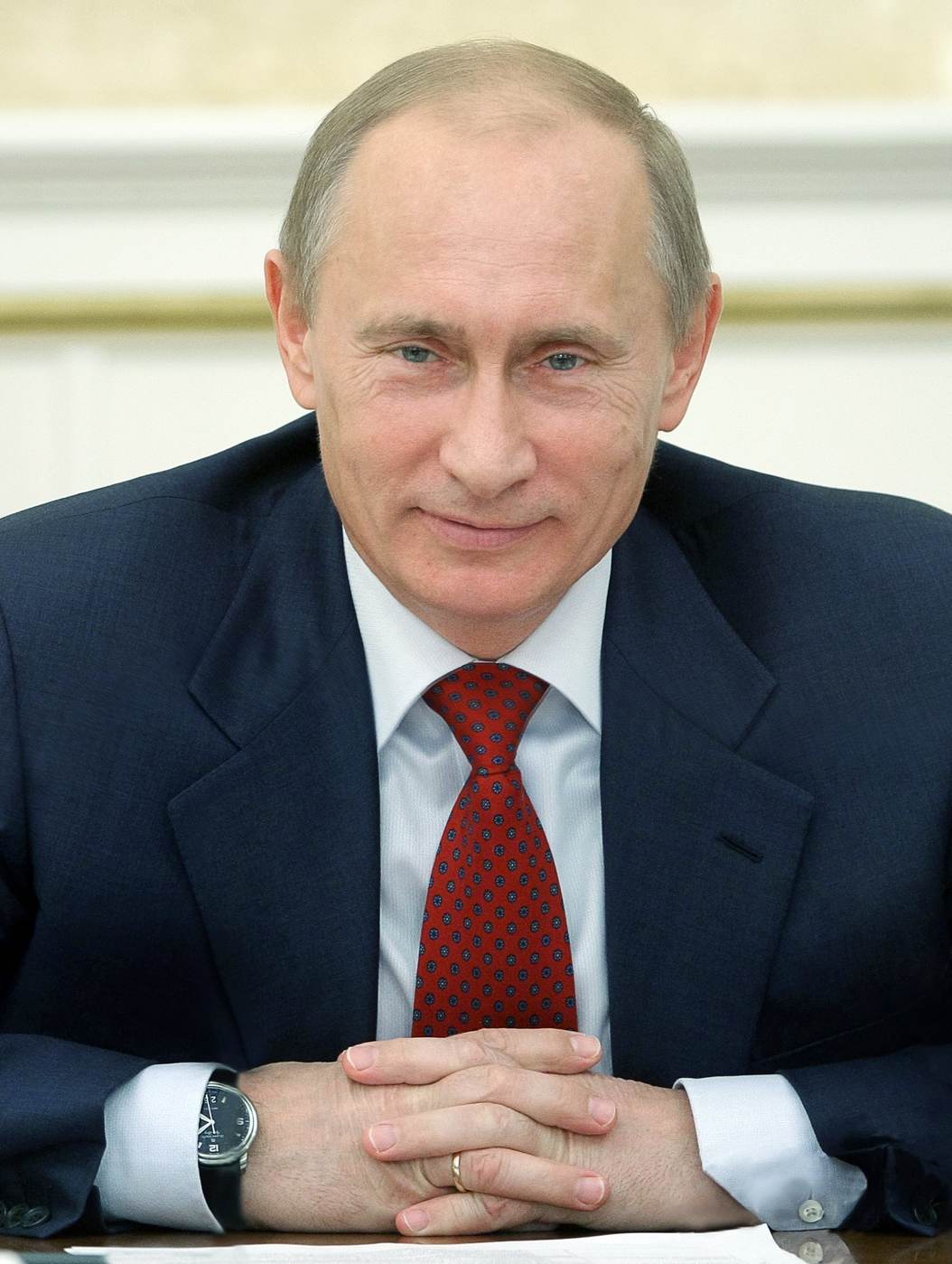
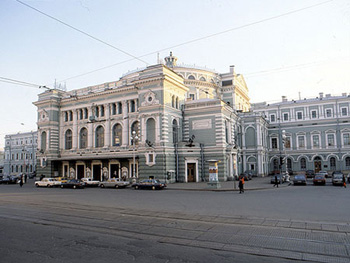
Putin peace proposals on the table — that was the headline message from St. Petersburg on Friday, as Vladimir Putin told Russian journalists that every proposal for a settlement of Russia's four-and-a-half-year war with Ukraine "remained on the table," even as he warned of harsh retaliation for Ukrainian strikes and flatly denied that Moscow is preparing for military action against Europe. "They are all on the table. It's all possible," he said, speaking after the plenary session of the Forum of United Cultures at the Mariinsky Theatre, according to Reuters reporting of the briefing. But he added that Moscow still needed "to think carefully about what we need to do in response" and that any decision would be taken based on Russia's interests.
It was Putin's first major public statement since a violent day of long-range strikes on both sides of the war's widening map, and it landed with the deliberate ambiguity of a leader keeping two doors open at once. In one hand, the door to negotiation: all offers under consideration, a readiness — at least in his telling — to resume talks with Kyiv. In the other, the door to punishment: a warning that Ukraine will be made to "feel Russia's retaliatory strikes" and that Kyiv's attempts to "stir up the situation" are, in his words, "only making things worse for themselves."
Putin's St. Petersburg statement on Ukraine: every offer 'on the table'
The setting mattered. The Forum of United Cultures is a set-piece Russian cultural event in Putin's home city, and he used its margins — a briefing for Russian journalists rather than a formal address — to deliver the day's most consequential diplomatic signal. He said Moscow had been ready to resume negotiations with Kyiv after last week's Russian parliamentary elections, but he accused Ukraine of launching attacks on Moscow and hitting polling stations during the voting period. That is his claim, and it was reported as his claim; Reuters and the AAP republication carried it as an assertion from the Russian president, not as an independently verified fact.
The framing does real political work. By presenting Russia as the party that was prepared to talk and Ukraine as the party that spoiled the moment, Putin supplied a justification for the hardline posture that followed in the same briefing. Whether Western and Ukrainian officials accept that account — Kyiv has said nothing about strikes on Russian polling stations — the message to his domestic audience was plain: diplomacy failed because the other side would not stop fighting.
Inside Putin's retaliation warning over Ukraine's strikes
The sharper edge of the briefing was the retaliation warning. "They are the ones who started it. Everywhere, on every front. Are these playthings, child's play?" Putin said, in Reuters' account of his remarks. Then the threat itself: "They should therefore be made to feel Russia's retaliatory strikes and understand that no provocative actions, no stirring up the situation to secure a result will work. They're only making things worse for themselves."
He went further, claiming that Ukraine's calls for a ceasefire were themselves a result of Russia's response being severe — that Kyiv is asking for quiet because Moscow's punishment has bitten. That is Putin's interpretation of his adversary's motives, and it cannot be tested from the podium; Kyiv describes its ceasefire positions in entirely different terms. But the logic he offered reveals how Moscow reads the current exchange: not as a prelude to talks, but as a contest of pain in which each side is trying to make the other's costs unbearable.
The deep-strike wave behind the words: Ukraine hits Russian refineries
The backdrop to the warning was one of the most aggressive days of Ukraine's deep-strike campaign. On September 25, Ukrainian forces struck the LUKOIL refinery in Perm — roughly 1,500 kilometers inside Russia — hit the Iskra electronics plant in Ulyanovsk, and struck targets in Voronezh and Belgorod. The Novoshakhtinsk refinery went offline. Put that distance in perspective: 1,500 kilometers is farther than the distance from Berlin to Kyiv, and it represents a strike reach that would have been difficult to imagine in the war's first year. Ukraine describes its deep-strike campaign as attacks on legitimate military and military-industrial targets, and Kyiv has cast the campaign as economic warfare against the fuel supplies that power Russia's war machine.
Russia's answer on the same day was lethal in a different register: a drone strike on Kyiv's Pechersk district killed a 14-year-old boy, and Odesa came under attack as well. The two countries' strike campaigns have settled into a grim rhythm — Ukraine going after Russian energy infrastructure at ever-greater range, Russia answering against Ukrainian cities — and Putin's briefing was the first time he had addressed the cycle publicly since this latest round. Notably, he did not offer a gesture toward pausing it; he promised to intensify it.
The polling-stations attack claim, and why it matters to timing
Putin tied his readiness to negotiate to a specific timeline: after last week's Russian parliamentary elections. The allegation that Ukraine struck Moscow and hit polling stations during the voting period serves a dual purpose. Domestically, it casts the election as an event that had to be defended — a wartime ritual under attack, with the president as its defender. Diplomatically, it supplied a reason that talks are not already happening: the talks were ready, and then the strikes came.
Attribution discipline matters here. Reuters reported the claim as Putin's accusation; independent confirmation was not offered in the wire coverage, and the AAP republication carried the same attribution. Readers should hold it as what it is: the Russian president's stated reason, not an established fact about Ukrainian operations. The history of this war is full of such claims deployed for their timing value, and this one arrives precisely at the moment Putin needs to explain why negotiation has not resumed.
The Black Sea vessels claim: 100-plus ships, attributed not verified
Putin also claimed that Ukrainian attacks had damaged more than 100 vessels in the Black Sea — Russian and foreign-flagged ships — and that Russia had repaired the damage, while Ukrainian forces also hit civilian and energy infrastructure. Again, the numbers come from him, not from an independent audit. Reuters could not independently verify the figure, and no breakdown of the claimed damage has been made public. The claim feeds a broader Russian narrative that Ukrainian operations endanger civilian and commercial shipping in the Black Sea, a narrative that sits in tension with Ukraine's stated focus on military and energy targets. Until satellite imagery, insurance records, or port-level reporting substantiates the count, the 100-vessel figure should be read as a wartime claim advanced for its rhetorical weight — a number large enough to justify the retaliation he was promising in the same breath.
No military action against Europe, Putin insists
The briefing's other headline was the categorical denial of any Russian design on Europe. "We are not preparing for any military action with Europe… We have no such plans. And, most importantly, there are no grounds for them," Putin said. He accused "aggressive circles" in Europe of using Ukraine as a tool and of portraying Russia as a threat in order to justify continued support for Kyiv.
The denial did not arrive in a vacuum. Germany has accused Moscow of a planned drone attack at Leipzig airport in August; Poland has warned of possible Russian drone and missile attacks on countries supporting Ukraine; and NATO's Eastern Sentry posture — the alliance's stepped-up presence along its eastern flank after a series of drone incursions — is built on the premise that Russian risk-taking near allied territory is rising. Putin's statement is aimed squarely at that audience: the hawks in European capitals who argue that Russian escalation requires a military answer, and the doves who are already skeptical of one. Whether the denial calms or hardens the European debate is the open question; denials from the Kremlin have a long record of being read differently by different audiences, and the record of what Moscow says versus what it does in the drone-incursion space is precisely what European defense ministers will cite back at him.
Russia-Ukraine peace talks 2026: the diplomatic backdrop
Putin's "on the table" formulation did not emerge from stillness. The diplomatic backdrop is unusually crowded for a war that has spent most of 2026 grinding through attrition. The United States has proposed UAE-hosted trilateral technical talks bringing Ukraine, Russia, and the United States to the same table; the Kremlin said Friday that such a meeting "could happen soon." Separately, President Volodymyr Zelenskyy said he had asked President Donald Trump to press Chinese leader Xi Jinping on Moscow — an acknowledgment that Beijing's economic lifeline to Russia is one of the few levers left that Kyiv cannot pull itself. And hanging over all of it is the unresolved question of the Patriot-production "final decision": Zelenskyy has claimed Trump approved licensed production of Patriot missiles in Ukraine, while the U.S. State Department has characterized the process as "still underway." That dispute over a signature matters because air defense is the hardware counterpart to the diplomacy — the question of whether Ukraine can protect its cities this winter while talks proceed.
Against that backdrop, "all proposals on the table" reads as positioning rather than commitment. It keeps Moscow inside the diplomatic process — hard to accuse a leader who says everything is possible of obstruction — while the retaliation warning sets the price of any talks. It is also, notably, the Kremlin's answer to the UAE proposal without saying the word "yes": the meeting "could happen soon," and in the meantime, all proposals remain alive.
Why this matters: negotiating through escalation
The central tension of the briefing — openness to talks paired with a promise of sustained retaliation — is not a contradiction so much as a strategy. Call it negotiating through escalation: Moscow signals that the settlement menu is open while demonstrating that the cost of waiting for a settlement keeps rising. The logic is older than this war; it is the same logic that shaped every round of negotiations since 2014, when each side has sought to improve its battlefield position before sitting down. What is new is the geography of the escalation: Ukrainian drones reaching 1,500 kilometers into Russia, Russian drones killing children in Kyiv's Pechersk district, and a cultural forum in St. Petersburg serving as the stage for both messages at once.
There is a second, quieter signal embedded in the "on the table" line. Putin has spent much of the past year projecting that time is on Russia's side — that attrition favors Moscow's larger population and industrial base. A leader who believes the clock is working for him does not need to say that every proposal is possible; he can afford to let offers expire. Saying they are all on the table suggests, at minimum, that the Kremlin feels some pressure to be seen as constructive — whether that pressure comes from Washington's diplomacy, from the economic drag of the refinery strikes, or from the approaching winter, which will test both countries' energy systems. The statement does not prove Moscow wants a deal. It proves Moscow wants to be seen as open to one, which is itself information.
Who benefits and who loses
The winners and losers of any shift Putin signaled are easier to map than the signal itself. An energy-strike pause — if the retaliation cycle ever produced one — would relieve Russia's fuel crunch, which has already forced a diesel export ban, a concrete sign that Ukraine's refinery campaign is biting into Moscow's domestic supply and export revenues. But the same pause would also relieve Kyiv's cities, which have paid for the exchange in civilian lives, including the teenager killed in Pechersk on the very day Putin spoke. The asymmetry is the story: Ukraine strikes infrastructure, Russia strikes cities, and both claim military necessity while civilians absorb the error.
In Europe, the briefing's two audiences split the spoils. Hawks who have built their case around the Leipzig allegations and the Eastern Sentry posture will read the denial of war plans with Europe as cheap talk, and the retaliation warning as confirmation that pressure must continue. Doves will seize on "no grounds" and "all on the table" as evidence that diplomacy still has a lane — and as ammunition against further escalation of European military aid. The briefing, in that sense, is a Rorschach test: each European capital will see in it what its politics already required.
The losers, in the immediate term, are anyone hoping the September 25 strike wave was an aberration. Putin's message was explicit that retaliation is policy, not accident. The people who pay for that policy are not at the Mariinsky Theatre.
The UAE trilateral talks: diplomacy's narrow window
What happens next runs through three clocks. The first is the diplomatic clock: the 10-day window Zelenskyy has described for the UAE trilateral talks, with the Kremlin saying a meeting "could happen soon." Technical talks between delegations — not leaders — would be a modest step, but in a war where direct contact has been rare, even technical talks would change the atmosphere. The second is the military clock: winter is approaching, and with it the question of whether Ukraine's air defenses, the Patriot-license dispute, and Russia's fuel supplies hold under a campaign that now reaches refineries 1,500 kilometers from the front. The third is the political clock: Putin explicitly anchored his negotiation readiness to Russia's election cycle, and both Moscow and Washington will be reading domestic calendars as the year turns.
Three scenarios follow. In the first, the UAE technical talks convene within days and produce something narrow — a maritime understanding in the Black Sea, a localized energy-strike pause, an exchange of prisoners — that becomes the scaffolding for more. In the second, the retaliation spiral outruns the diplomacy: Putin's promised retaliatory strikes draw a deeper Ukrainian response, the refinery campaign widens, and the UAE meeting, if it happens at all, becomes a crisis-management session rather than a negotiation. In the third, the stalemate simply persists — talks convene and adjourn without result, strikes continue at the new range, and both sides keep negotiating through escalation until the winter decides something for them. Friday's briefing, read carefully, does not choose among these futures. It keeps all of them, like the proposals, on the table.
The analytical bottom line is this: Putin's statement was a masterclass in strategic ambiguity, and its significance lies less in any single sentence than in the combination. "On the table" keeps the diplomatic lane alive. The retaliation warning keeps the pressure campaign alive. The Europe denial keeps NATO's debate frozen where Moscow wants it. None of it is a peace plan, and none of it is a declaration of escalation. It is the posture of a leader who believes he can have both — and who is betting that the cost of testing him keeps rising faster than the world's patience for the war.
Related reading
Sources and reporting notes
- Reuters: Putin says all Ukraine peace proposals on table but Russia must weigh its interests (reporting by Maxim Rodionov, writing by Marina Bobrova)
- AAP: Putin says all Ukraine peace proposals on the table
- Devdiscourse (Reuters syndication): Putin says all Ukraine peace proposals on table, but Russia must weigh its interests
Reporting cutoff: September 25, 2026. Putin's remarks were delivered on the record at a press briefing for Russian journalists after the Forum of United Cultures plenary session in St. Petersburg. His accusations against Ukraine — strikes on Moscow, attacks on polling stations during Russia's parliamentary elections, and damage to 100-plus Black Sea vessels — are reported as his claims; Reuters could not independently verify the vessel-damage figure. Ukraine describes its deep-strike campaign as targeting legitimate military objectives. Nothing in this analysis is presented as a jointly verified agreement between the parties.