Published September 30, 2026 at 11:23 a.m. PDT
Putin Duma speech September 2026
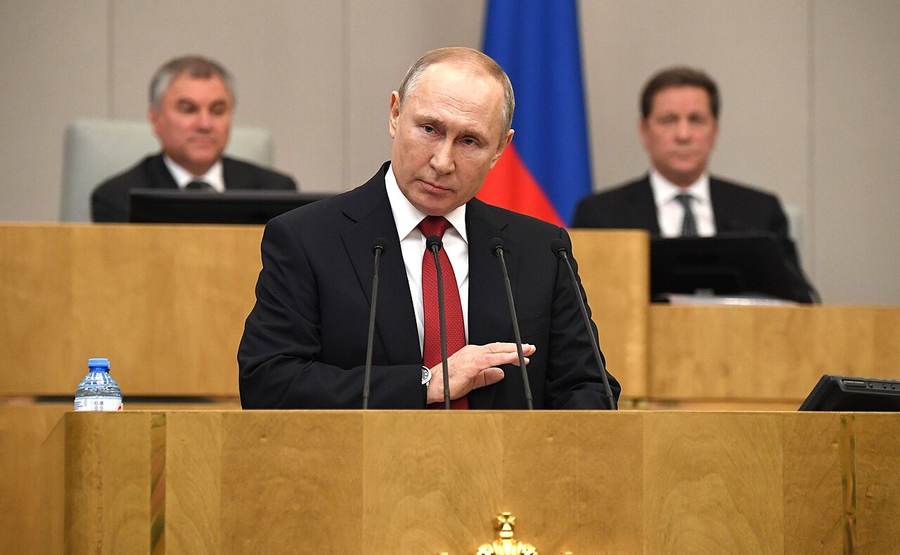
Putin State Duma address sets a wartime governing frame
MOSCOW — President Vladimir Putin used the first session of Russia's newly elected ninth State Duma on Wednesday to bind parliament's domestic agenda to the war in Ukraine. Putin said the Russian people “cannot be broken or intimidated by anyone,” welcomed veterans of what Moscow calls its “special military operation” into the chamber and asked lawmakers to do “everything for our victory.” Those are Kremlin claims and political instructions, not independent assessments of the war.
The speech followed a morning announcement from Kremlin spokesman Dmitry Peskov, reported by Reuters, that Putin would address the newly elected parliament. In the delivered remarks, carried in matching excerpts by APT, Times Now and other outlets, Putin praised the veterans' “front-line comradeship,” called defense and support for military families top priorities, and said Russia's financial system and economy were “feeling confident.”
The Putin cannot be broken intimidated line was the speech's headline assertion. Its political function was broader than morale: it presented a managed election result, the arrival of military veterans and an annexation anniversary as one continuous demonstration of national resilience. That construction leaves little room inside the parliamentary story for dissent over the war's aims or costs.
Why this matters: parliament, SVO veterans and Reunification Day
The most consequential element of the Putin speech Ukraine war was not any single policy. It was the package. The president addressed a legislature dominated by his governing party on Russia's Reunification Day, welcomed combat veterans as lawmakers and linked their service to the chamber's authority. The symbolism fuses battlefield sacrifice, electoral legitimacy and territorial claims into one account of state purpose.
That is a classic wartime-politics move: institutions that might scrutinize executive choices are instead invited to authenticate them. The Putin SVO veterans parliament message gives veterans a genuine constituency role, especially on benefits and family support, while also making military experience a credential for legislative loyalty. Veterans may press agencies harder on unpaid benefits or equipment failures; they are less likely to form an organized bloc against the war's basic direction.
The timing amplifies the message. Russia marks September 30 as the anniversary of its 2022 claim to have incorporated Donetsk, Luhansk, Zaporizhzhia and Kherson. Putin called that process “clear” and “lawful” and said the whole country was rebuilding the territories. Ukraine and most of the international community do not recognize the annexations, and Russia does not fully control all four regions. Deputies from those territories sitting in the Duma for the first time gives Moscow an institutional image of permanence even while sovereignty remains disputed and fighting continues.
Background: Putin ninth convocation Duma opens after a managed vote
The State Duma ninth convocation emerged from voting held September 18–20. Election reporting put United Russia at roughly 355 of 450 seats, or about 79% of the chamber, with turnout near 59.3%. That is a commanding constitutional majority and, on the reported numbers, a larger share than the party held after the previous cycle.
The turnout comparison requires care. Reporting put 2021 turnout at about 51.7%, so the 2026 figure is roughly 7.6 percentage points higher. The Kremlin can point to that increase as evidence of mobilization under pressure. Western observers and independent reporting described the contest as tightly managed, citing the exclusion or restriction of meaningful anti-war opposition, the removal of Yabloko's federal list and the absence of OSCE observers. Russian authorities defended the process as legitimate and said voters participated despite security threats.
Those competing interpretations are not equivalent claims about procedure; they are the political dispute surrounding the result. The Putin ninth convocation Duma begins with a supermajority capable of passing ordinary legislation, budgets and constitutional measures without relying on opposition parties. That makes the chamber efficient for the Kremlin, but weakens the argument that legislative votes will test the executive's program.
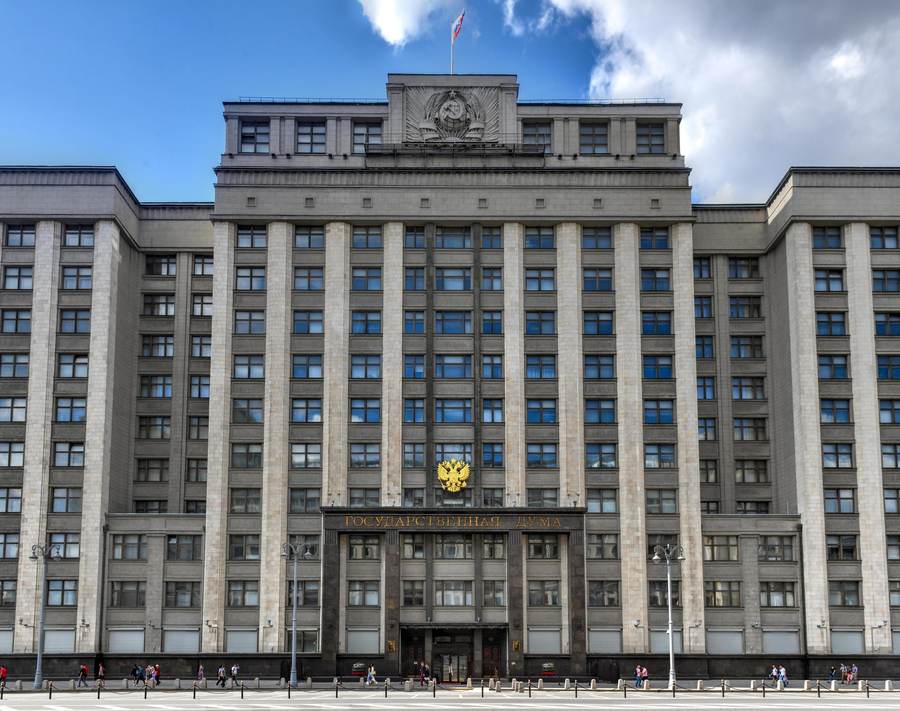
Russia Reunification Day 2026 and the annexation claim
The Russia Reunification Day 2026 setting converted the opening session into more than a parliamentary ceremony. In the Kremlin's telling, lawmakers from the four Ukrainian regions demonstrate that the 2022 annexations have progressed from military fact to administrative normality. In Ukraine's view, and under the position held by most UN member states, the territories remain sovereign Ukrainian land under partial Russian occupation.
The presence of Russia annexed regions Duma deputies therefore serves two audiences. Domestically, it says reversal is off the table and reconstruction spending is a national obligation. Internationally, it signals that Moscow is integrating the territories into federal institutions rather than treating them as bargaining chips. That raises the political price of any future settlement requiring withdrawal, even if battlefield or economic conditions change.
Putin budget populism warning puts limits on promises
The budget language matters because it places a fiscal constraint immediately beside the victory language. Putin said the three-year federal budget should be the first priority and described the required plan as balanced and realistic. His warning that populism can “undermine Russia from within” tells lawmakers not to compete with the executive by promising spending that the wartime state cannot comfortably sustain.
The Putin budget populism warning also reveals the trade-off inside the promise to meet social obligations “without exception.” Defense outlays, military pay, veterans' benefits, reconstruction in occupied territories, regional transfers and civilian services all draw from the same fiscal base. A large parliamentary majority makes appropriation easier; it does not remove inflation, borrowing costs, labor shortages or sanctions-related constraints.
Putin's call for technological leadership and fewer outdated regulations supplies the growth side of that argument. The message is that domestic innovation can widen the resource base while the state keeps defense and social commitments intact. Whether that happens depends on investment, productivity and access to technology—not on parliamentary wording alone.
Who benefits, who loses and how critics read the speech
The Kremlin benefits from a legislature framed as a partner in victory rather than an arena of uncertainty. United Russia's seat share gives the presidency a predictable path for the budget and war-related measures. The ceremony also distributes ownership: if the winter campaign is costly, parliament has been publicly enlisted in the policy.
Veteran lawmakers and military families can benefit if the rhetoric becomes tighter oversight of benefits, rehabilitation, housing and casualty support. Their proximity to the war may bring implementation failures into committee work faster. The risk is that “front-line comradeship” becomes a loyalty test that narrows scrutiny to execution while excluding debate about strategy.
Civilian ministries and regions may lose fiscal room. The budget must absorb defense priorities and the cost of rebuilding territories Russia claims to have annexed. Even if headline social obligations are protected, lower-profile infrastructure, health or local programs can be squeezed through delayed investment or real-terms erosion.
Critics lose institutional leverage. Anti-war groups, excluded candidates and voters seeking a different course face a chamber with no plausible governing alternative. Western critics will read the ceremony as another stage in the consolidation of a tightly managed political system; Moscow will answer that the turnout and seat result demonstrate public consent. The numbers settle control of the chamber, not that dispute over legitimacy.
The numbers in context: seats, turnout and budget power
A projected 355 seats amounts to about 78.9% of the Duma. That is 54 seats above the 301 threshold for a two-thirds constitutional majority and leaves the remaining parties collectively unable to block the governing party. For budget votes, the practical margin is even wider because Russia's parliamentary opposition has often supported major Kremlin priorities.
Turnout around 59.3% compares with approximately 51.7% in 2021—an increase of about 7.6 percentage points. Higher participation gives the Kremlin a mobilization story, especially after drone attacks and wartime security warnings during the campaign. It does not by itself measure support for each war policy, because ballot access, media conditions and administrative control shape what choices voters can make.
The three-year horizon matters because a budget is a forecast of political durability. Funding defense, veterans, families, reconstruction and technology across multiple winters assumes no quick return to a prewar spending model. Putin's demand for realism is an instruction to translate victory rhetoric into annual ceilings, revenue measures and trade-offs that parliament will own.
Putin self sufficiency speech meets the reality of war finance
In the Putin self sufficiency speech, rejecting foreign “handouts” contrasts Russia with states that depend on external wartime support. The assertion is politically potent, but self-sufficiency is not isolation: Russia's energy exports, trade partners, imported components and financial arrangements remain part of the economy Putin described as confident. Attribution matters here—the confidence judgment is his, not an independently verified balance-sheet conclusion.
The same day supplied a harder security backdrop. Russia launched a massive overnight strike against Kyiv and energy infrastructure involving roughly 190 drones plus ballistic missiles; a child was among those killed. Signal Post News reported the strike and the renewed winter pressure on Ukraine's power grid. NATO also denounced a Russian nuclear-warning nonpaper involving Kaliningrad, covered in this desk's analysis of the escalation signal.
What happens next: the budget and the winter campaign
The first test is legislative. The government must turn Putin's priorities into a three-year budget that protects military production and personnel support while limiting inflationary or politically destabilizing cuts. Watch defense allocations, classified expenditure, regional transfers, veterans' programs and reconstruction lines. Those numbers will show whether “without exception” applies equally across social and military commitments.
The second test is operational. By placing defense and victory at the center of the Duma's opening, Putin signaled no near-term pivot away from the war before winter. The likely implication is continued pressure on Ukraine's energy system, continued investment in drones and missiles, and a parliamentary calendar built to sustain that campaign. Ukraine's own warning that Russia had launched more than 2,200 drones in a month is examined in this report on the scale of the air campaign.
The third test is political accountability. A supermajority can pass money quickly, but winter exposes whether promises reach soldiers, families and regions. If shortages or inflation intensify, the same veterans praised on opening day could become the most credible messengers of failure. If the budget holds and military output rises, the Kremlin will present the Duma as proof that Russia's wartime system can convert political control into endurance.
Sources
- Reuters — Kremlin announces Putin's address to the newly elected parliament (September 30, 2026)
- APT — video report carrying Putin's budget, defense and self-sufficiency remarks (September 30, 2026)
- Times Now World — report on the ninth-convocation speech, veterans and Reunification Day (September 30, 2026)
- Election reporting — United Russia's 355 seats and 59.3% turnout (September 21, 2026)
Source note: Direct quotations and claims about the economy, annexation and national unity are attributed to Putin or the Kremlin. Election figures are reported figures; the political environment and annexation status remain contested.