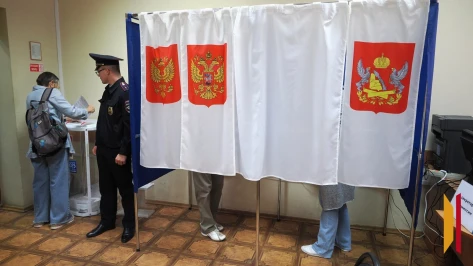
Russia opened a three-day parliamentary election on Friday, September 18, the first State Duma vote since the full-scale invasion of Ukraine began in February 2022. Voters are choosing 450 deputies. Initial results are expected Sunday, with a near-complete count anticipated Monday.
The central question is not whether President Vladimir Putin’s United Russia party will remain dominant; the political system and candidate field make that the expected result. The question is what the process reveals about the state’s demand for public participation, the narrowing of opposition and the way an election functions when dissent over war is heavily constrained.
Why turnout matters to a predictable result
In a competitive election, turnout helps determine who wins. In a managed system, it also becomes a measure of administrative capacity and claimed legitimacy. Authorities want enough participation to present continuity as a public choice, while opponents and outside observers look at access, exclusions and counting conditions before treating the headline result as evidence of consent.
Three-day voting broadens the window for participation, but it also complicates independent observation because ballots and polling places must be monitored across a longer period. That does not prove a particular irregularity. It does mean the quality of observation matters as much as the final percentage.
The result may be predictable. The political meaning lies in how predictability was produced.
The missing anti-war contest
Most candidates identified with an anti-war position were excluded from the ballot, sharply limiting the election’s ability to measure disagreement with the invasion. A voter may still express frustration through abstention, a protest vote or support for another registered party, but none of those choices offers a clean national referendum on the war.
This is why raw seat totals should not be read like those from a broadly open parliamentary contest. United Russia’s institutional advantage includes the resources of incumbency, access to media and a candidate environment in which the strongest challenge has already been filtered.
Who gains and who loses
The Kremlin gains a renewed legislature and a public ritual of continuity. Regional officials can demonstrate organizational loyalty through turnout and delivery. Approved opposition parties retain representation and a controlled role inside the system.
Excluded candidates and voters seeking a clear anti-war option lose meaningful representation. The Duma itself loses autonomy when electoral competition is too narrow to create uncertainty. That matters beyond Russia because parliamentary approval can still give legal form to budgets, security measures and future mobilization decisions.
What the 450 seats can and cannot tell us
A large majority can make lawmaking faster, but it does not automatically measure enthusiasm. Seat distribution depends on the electoral rules, candidate access and how votes translate into mandates. Analysts should separate turnout, vote share and seats rather than collapsing them into one claim about national support.
The most useful comparisons will be regional turnout, the performance of United Russia against earlier elections and whether local races show pockets of discontent. Even those figures require caution where media access and observation are restricted.
Why this matters
The vote renews the institution that authorizes budgets and laws during war. Its democratic value depends not only on casting ballots but on whether citizens had a genuine choice, candidates could compete and the count could be scrutinized.
How we got here
United Russia built dominance through incumbency, legal control and a fragmented opposition long before 2022. Wartime censorship and repression then raised the cost of direct opposition, turning the election from a contest over direction into a demonstration of system stability.
Winners, losers and critics
State institutions and approved parties preserve control; excluded movements and independent observers face the greatest constraints. Critics argue the result is predetermined, while authorities frame participation as proof of public confidence. The evidence that separates those claims is access, observation and the treatment of dissent.
What happens next
Watch the regional map, turnout claims, formal complaints and the composition of key Duma committees after Monday’s count. The next consequential test is whether the renewed legislature simply ratifies the existing course or becomes a venue for economic pressure from war spending to surface.
Source: Election timing, 450-seat scope, candidate restrictions and expected count schedule from Reuters, September 18, 2026. Analysis is original to Signal Post News.