World · Asia · Thailand
The Phuket fire kills 11 count is confirmed by the island’s governor: a pre-dawn blaze above a Patong motorcycle rental shop, in a building holding about 100 motorcycles, stored fuel, oil and tyres, with rented rooms above — and an injury count that officials have not yet reconciled.
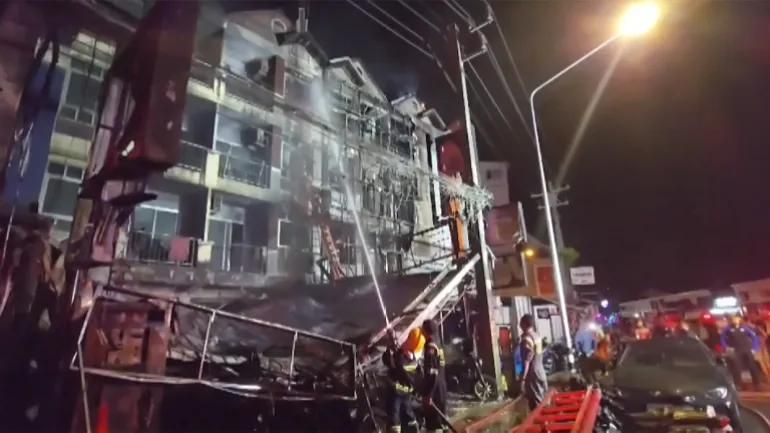
PATONG, PHUKET, November 16, 2026 — A Phuket fire kills 11 people and has left a resort town counting a second kind of cost: the fire tore through a commercial shophouse in Patong, on Phuket’s western coast near Patong beach, in the early hours of Monday, November 16, killing 11 people who were sleeping in rooms above a motorcycle rental shop and injuring at least 16 others, according to police. The death toll was confirmed by Phuket’s governor; police told Reuters that 16 people were injured — 15 Thai nationals and one Myanmar national — and that no tourists were among those killed or injured. The blaze broke out at about 3:17 a.m. local time (20:17 GMT on Sunday) and took firefighters about two hours to bring under control, Reuters reported, by which time it had spread from the rental building to nearby buildings in one of the most densely built streets in Thailand’s best-known beach town.
The building, on Phang Muang Sai Kor Road in Patong, in Phuket’s Kathu district, was the kind of mixed-use structure that defines the working geography of Thai resort towns: a vehicle and motorcycle rental business at ground level — local reports name the shop as Ohm Racing Patong — with a restaurant and rented accommodation above and around it. Inside the shop, by the governor’s account, sat about 100 motorcycles, together with stored gas and petrol, engine oil, plastics and tyres: an inventory that reads, in the aftermath, like a list of accelerants. The people above that inventory were asleep. Most of the dead are believed to have died not from burns but from smoke — the thick, toxic smoke that a deputy mayor said filled the building within minutes, in the dark, at the hour when escape is hardest and help is slowest to arrive.
What happened in Patong
The fire began at about 3:17 a.m., according to Thai authorities cited by Reuters, in the building housing the rental business, and spread to several nearby buildings before it was controlled. Firefighters took about two hours to bring it under control, Reuters reported; accounts of the fire’s duration and even of the building itself differ in detail — reports variously describe a structure of four to six storeys — and those discrepancies are noted here rather than resolved, because on the first day of an investigation they are normal, and pretending otherwise would manufacture a certainty the record does not yet contain. What is consistent across Reuters, Al Jazeera and the Associated Press is the toll: 11 dead, confirmed by Governor Chodnarin Koedsom, in what is now one of the deadliest building fires in Thailand this year.
Patong’s deputy mayor, Sanakorn Keesin, described dense black smoke building within minutes of the fire’s start — the detail that explains the shape of the casualty list. Fire kills in two ways, by flame and by smoke, and in buildings where people sleep above fuel, smoke is almost always the faster of the two: it rises through stairwells and voids ahead of the flames, it incapacitates before it kills, and at 3 a.m. it works on people who begin the emergency already unconscious. The dead are believed to be mostly smoke-inhalation victims who had been asleep in the rooms above the shop. Their bodies were taken to Vachira Phuket Hospital. The injured were taken to Patong Hospital, where treatment, by the accounts carried in wire reporting, centred on smoke inhalation and on injuries including broken glass — the signature wounds of people who escaped through windows and wreckage in the dark.
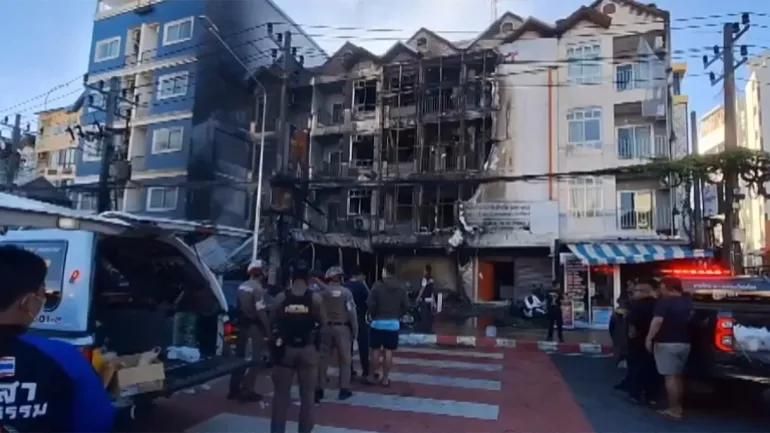
The injured, and the counts that do not yet agree
What the police figure says — and what later counts add
The Phuket fire deaths are fixed, for now, at 11; the injury count is not, and the disagreement is worth stating plainly rather than smoothing over. Police told Reuters that 16 people were injured: 15 Thai and one Myanmar national, with no tourists among the killed or injured. The Associated Press reported 17 injured. Later Thai reporting put the number taken to hospital far higher — at up to 36 to 38 people, most of them treated for smoke inhalation. Those figures cannot all be describing the same set in the same way, and they have not been reconciled by the authorities. The likeliest explanation is also the most ordinary one in mass-casualty reporting: an initial police count of the seriously injured, overtaken through the day by hospital counts of everyone who presented for treatment, including the lightly smoke-affected who walked in hours later. This article uses the Reuters police figure of 16 as its baseline, attributes the AP figure where it differs, and records the higher Thai counts as reported but unreconciled — because a reader deciding what happened in Patong deserves to know which numbers are confirmed, which are preliminary, and which are still moving.
Identification is moving at its own pace. Six of the 11 dead had been preliminarily identified, according to The Phuket News, and the authorities opened a family registration point for relatives seeking news of the missing and the dead; the names of the victims had not been released. That sequence — bodies to the hospital, a registration desk for families, names withheld until identification is formal — is the grim administrative shape of every disaster of this kind, and in Patong it carries a particular weight: the dead were, on the evidence so far, workers and residents rather than visitors, Thai and Myanmar nationals living in rented rooms above a rental shop in a town whose economy is built on other people’s holidays. No tourists were among the dead or injured, police said. The town’s catastrophe and the town’s industry passed each other, this time, without touching — a fact that will shape how the story is told, and should not be allowed to shape how seriously it is taken.
What may have started it — preliminary only
The cause of the Patong fire has not been established, and the investigation is ongoing; everything in this section is preliminary and unconfirmed, and is labelled as such because the difference between a first theory and a finding is the difference this article exists to respect. Phuket police commander Surachai Sooksai told the Associated Press that an initial inquiry had found that an electrical transformer near the building exploded shortly before the fire, and that arson had been ruled out. The governor’s preliminary view pointed the same way, at a different component: a short circuit at a utility pole during rain, sending sparks toward the motorcycles and fuel stored below. The two accounts agree on family — an electrical fault, outside the building, in the rain — and differ on the precise device, which is exactly the kind of difference a forensic investigation exists to settle. Neither account has been confirmed. What investigators must establish is a chain: where the first spark or flame occurred, what it ignited, how the fire entered and climbed the building, and why the people above it did not get out.
The state’s response has already widened beyond the spark. Deputy Interior Minister Jaset Thaiseth ordered an investigation and raised the possibility of unauthorised building extensions and of oil-dispensing equipment at the premises, with legal action to follow if violations contributed to the disaster. That framing matters: it signals that Bangkok is preparing to examine not only how the fire started but how the building was permitted to be what it was — a fuel store with bedrooms on top of it. The Phuket Red Cross and the Kusoldharm Foundation, the rescue foundation whose volunteers are a fixture of Phuket’s emergencies, are providing funeral assistance of 35,000 baht per victim, according to local reports: a sum that will bury the dead, and that measures, in its modesty, the distance between the economy the victims worked in and the one they served.
Why this matters
Analysis. The Patong shophouse fire is a Thailand fire today story, but it is not a new story; it is the latest verse of the country’s longest-running safety failure. Four months ago, a Bangkok bar fire killed at least 27 people — the comparison Reuters itself drew in its first report from Phuket. Behind that fire stands a longer ledger: a Bangkok nightclub fire on New Year’s Eve 2009 that killed 67, a Phuket nightclub fire in 2012 that killed four. The venues differ — bars, clubs, and now a motorcycle rental shop with rooms above it — and the mechanism does not: crowded or sleeping people, combustible contents, electrical faults, and smoke that does the killing before flame arrives. Thailand’s recurring mixed-use fire-safety problem is not a mystery awaiting a solution. It is a known configuration — homes above businesses, fuel stored under sleeping quarters, extensions added faster than inspections follow — that reproduces the same casualty list in a new province every few years.
The responsibility angles are correspondingly layered, and the investigation Jaset ordered will have to climb all of them. The operator’s layer: how much fuel, oil and tyre stock was stored, where, and in what relation to the rooms above. The municipal layer: what Patong’s permitting and inspection regime knew about the building — its extensions, its oil-dispensing equipment, its use as accommodation — and what it did with what it knew. The national layer: whether Thailand’s building and fire codes, as written, even prohibit the configuration that killed 11 people on Monday, and if they do, why the prohibition did not reach Phang Muang Sai Kor Road before the fire did. A short circuit may have started the blaze; if the governor’s preliminary account is right, a spark fell on what a rental shop legitimately keeps. Sparks fall everywhere, every rainy season. The question a serious investigation answers is not why a spark fell, but why eleven people were sleeping in the one place in Patong where a falling spark could kill them all.
Context: the town, the island, and the pattern
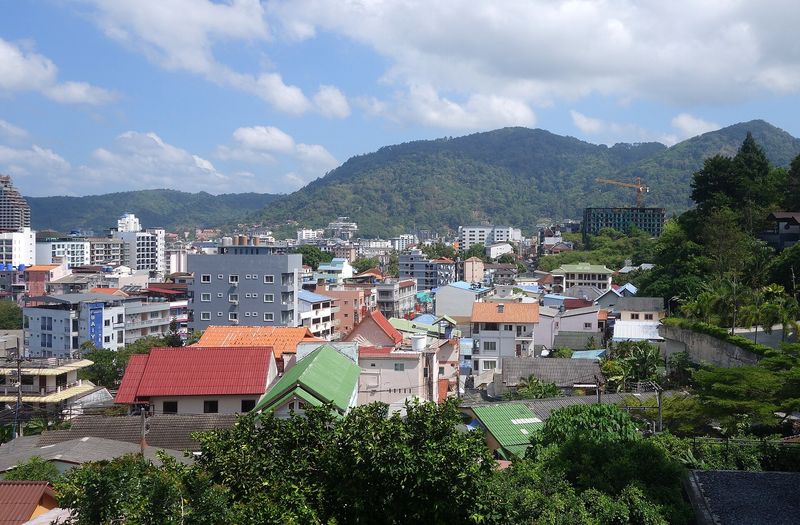
Patong is the most famous name on Phuket, the beach town that anchors the island’s tourism industry — and, as this newsroom’s recent coverage of the island’s floods recorded, a town whose dense, low-lying commercial streets concentrate risk of more than one kind in the same few blocks. The fire street was not a resort enclave. Phang Muang Sai Kor Road is a working street: rental shops, restaurants, and the rented rooms where the people who staff the tourism economy live. That is the demographic fact at the centre of Monday’s toll. The dead and injured were Thai workers and at least one Myanmar national — the same migrant workforce on which Thai hospitality quietly runs — and the absence of tourists among the casualties, while a relief, is also the reason disasters of this kind struggle to hold attention once the first news cycle passes. The Bangkok bar fire comparison cuts the other way: when the victims are customers, Thailand reforms; when they are staff, it mourns. Patong will test which response a death toll of 11, in the country’s flagship resort town, in the age of the smartphone camera, now produces.
The scrutiny is not only domestic. Phuket sells safety as surely as it sells beachfront — to tour operators, insurers and the foreign governments that advise their citizens — and a mass-casualty fire in Patong travels through that machinery whether or not a single tourist was harmed. The island has absorbed floods, a pandemic shutdown and the long aftermath of the 2004 tsunami; its resilience is real, and so is the pattern that each emergency reveals the same seam between the regulated, insured, inspected tourism economy facing the sea and the informal one behind it, where the workers sleep above the fuel. Monday’s fire happened on the informal side of that seam, in a building type — the commercial shophouse — that Thailand has in the tens of thousands. Whatever investigators find about one transformer on one road, the finding will be read, correctly, as a finding about all of them.
What happens next
The investigation comes first, and it has specific work to do: fix the point of origin between the competing preliminary accounts — transformer or utility pole — establish the fire’s path into and up the building, and determine what role, if any, unauthorised extensions and oil-dispensing equipment played in the spread and the smoke. Identification of the remaining dead, and the release of names, will proceed through Vachira Phuket Hospital and the family registration point. The legal track Jaset promised — action if violations contributed — will test whether the post-fire accountability that followed the Bangkok bar fire four months ago has become a system or remains a sequence of announcements. And the policy question will arrive, as it always does, wearing the clothes of the last disaster: inspections of mixed-use shophouses, enforcement on fuel storage in buildings with accommodation, and the status of the rented rooms above a thousand shops like this one, in Patong and far beyond it.
For the families registering at the desk in Patong, none of that is next; what is next is a funeral, assisted by 35,000 baht and the volunteers of the Kusoldharm Foundation, in a town already returning to the business of other people’s holidays. The 11 people who died above a motorcycle shop at 3:17 on a Monday morning were not killed by an exotic failure. They were killed by a familiar one, in a building type Thailand knows intimately, from a cause investigators describe as ordinary, in smoke that a deputy mayor said took minutes to fill the rooms where they slept. The investigation will name the fault. Whether it names the system that stacked fuel under bedrooms and called the stack a shophouse is the finding that will decide whether Patong is a verdict or merely a date.
Related coverage: Phuket Flash Floods Bury Patong in Mud and Rock as All Three Districts Go Under Water · Bangkok Flood Disaster: All 50 Districts Declared as Rains Swamp the Capital
Sources
Reuters — reporting of November 16, 2026: 11 killed and 16 injured according to police (15 Thai nationals and one Myanmar national; no tourists among the killed or injured); fire broke out at about 3:17 a.m. (20:17 GMT Sunday) in a building housing a vehicle rental business near Patong beach and spread to nearby buildings; firefighters took about two hours to bring it under control; cause under investigation; the comparison to the Bangkok bar fire four months earlier that killed at least 27. Al Jazeera — reporting of November 16, 2026 (with AFP and Reuters): the building housed a restaurant, rented accommodation and a motorcycle rental shop; Governor Chodnarin Koedsom on the shop’s roughly 100 motorcycles and stored gas, engine oil, plastics and tyres. Associated Press — reporting of November 16, 2026, via Business Today: police commander Surachai Sooksai on the initial inquiry’s transformer finding and arson ruled out; 17 injured in the AP count. The Phuket News and Khaosod English — local reporting of November 16, 2026: the shop named locally as Ohm Racing Patong on Phang Muang Sai Kor Road; six of the 11 dead preliminarily identified and a family registration point opened; later Thai counts of up to 36–38 people taken to hospital, mostly for smoke inhalation, unreconciled with the police figure; Deputy Interior Minister Jaset Thaiseth’s investigation order and the 35,000-baht funeral assistance via the Phuket Red Cross and Kusoldharm Foundation. Scene photographs: Thai PBS via AFP, as published with the Reuters and Al Jazeera coverage of November 16, 2026. Patong photograph: QLDGold (CC BY 4.0), via Wikimedia Commons.