The water came down the hill in the dark. In the early hours of Monday, after a night of torrential rain at the tail of the monsoon, runoff poured off the hills behind Patong — Phuket’s busiest resort town — carrying mud, branches, rocks and sand through residential streets, hotel driveways and shopfronts. The Phuket flash floods that followed inundated all three districts of Thailand’s best-known holiday island, including its capital, Phuket City, left vehicles half-buried in piles of mud and debris, and forced officials to open shelters and draw up plans to move tourists out of damaged hotels. About 100 households were affected. By late morning the water was receding — but the Thai Meteorological Department is warning of heavy rain across the south until Wednesday, with the risk of more flash floods and landslides still to come.
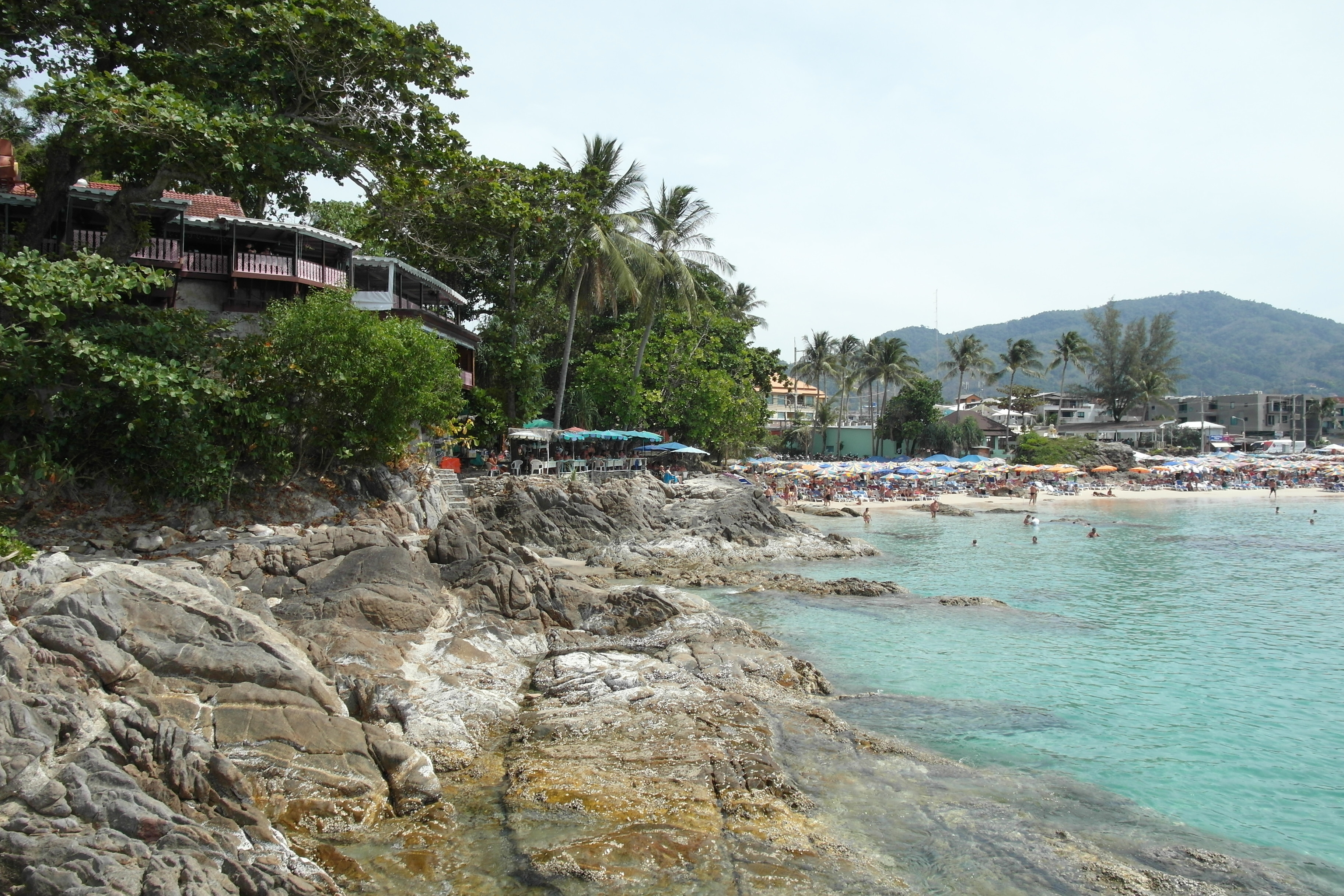
Patong took the worst of it. Flooding began surging at around 2 a.m., according to Sompong Triamtua, head of the municipal enforcement division at Patong Municipality, and by about 3:05 a.m. torrents were pouring down toward the Nanai neighbourhood, piling rocks, soil and mud around the Makro Nanai area, shattering shopfront windows and submerging parked cars. The Bangkok Post reported damage along Nanai 5 and Nanai 8 roads and in tourist venues across the town. In the Ban Nai community in Soi 8, runoff off Khao 50 Pi hill entered homes and businesses within minutes. One hotel owner, 27-year-old Meenarin Sittipornphat, told reporters the water broke through her property’s gate and damaged furniture and electrical appliances inside, leaving mud caked through the building; she appealed for staff and equipment to help clear it so the hotel can reopen to tourists. Residents described the flooding as among the most serious they had seen in 50 years.
What happened, district by district
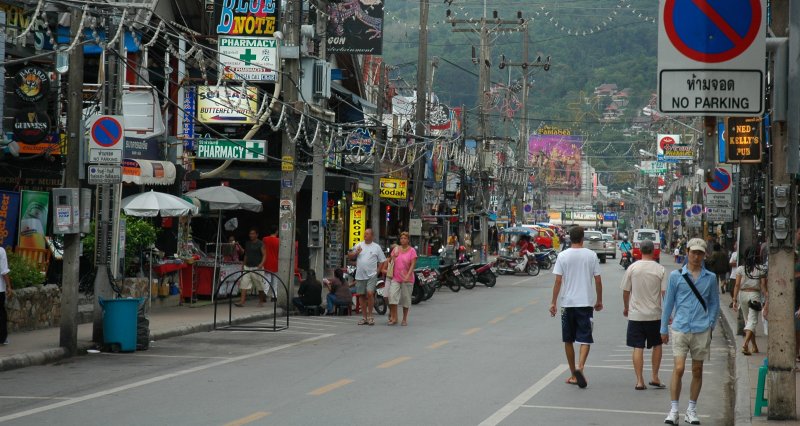
The confirmed picture, drawn from the Associated Press wire, the Bangkok Post, The Nation and Thai reporting carried by ASEAN Now, is of an island-wide event rather than a single flooded street. All three of Phuket’s districts — Mueang Phuket, Kathu and Thalang — were hit, Phuket City included. Mudslides accompanied the flooding in parts of the province, and provincial crews spent Monday clearing debris specifically to stop it washing into canals and obstructing the waterways the island depends on to drain. In Patong, mud, rocks and sand blocked access along Phang Muang Sai Kor Road, the roundabout in front of Soi 8, Bangla Walking Street — the town’s famous nightlife strip — and Soi Nanai 8, while cars and motorcycles sustained widespread damage. Rainfall reached as much as 142.8 millimetres in 24 hours in Phuket, the Bangkok Post reported; monitoring figures carried by The Nation put 117 millimetres at Ban Na Yai in the 24 hours to early Monday, 93.2 millimetres at Rawai and 94.4 millimetres at the Bang Neaw Dum Reservoir. Monday’s damage followed a dress rehearsal on Sunday, when Thepkrasattri Road near Si Sunthon became impassable to small vehicles and water affected roads in Rawai, Chalong and Choeng Thale.
The official response moved quickly once the scale was clear. Deputy Governor Romdon Hayiawae told the Associated Press that about 100 households were affected and that there were no reports of casualties — a mercy, given the speed of the water and the hour it arrived. Patong authorities opened temporary shelters at the municipal office, Wat Suwankeereewong School and the Patong Bay Hill Hotel for residents who could not stay in their homes. Deputy Governor Romdon and Patong Mayor Lalita Maneesri toured the damage on Monday, and the province said it was coordinating plans to transfer tourists from affected hotels to safe accommodation elsewhere — both to look after the visitors and, officials said frankly, to restore visitor confidence. The flooding came only hours after Governor Chotinarin Kerdsom had issued a provincial warning; some residents suggested wood and rubbish carried by the water may have blocked drainage grates and slowed the runoff, though authorities have not confirmed any cause.
The warning is not over
The Thai Meteorological Department’s October 26 advisory warned that heavy and locally very heavy rain could continue across southern Thailand through Wednesday, October 28, with accumulated rainfall capable of triggering further flash floods, overflowing waterways and landslides — particularly near foothills, rivers and low-lying communities, which in Patong describes much of the town. The department also warned of waves above two metres in thunderstorms in the Andaman Sea and the Gulf of Thailand, advising vessels to avoid storm areas. Phuket’s provincial alert, issued Monday afternoon, urged residents and visitors to avoid flooded roads and landslide-prone routes, not to swim or take part in marine activities in rough conditions, and to keep basic supplies — dry food, drinking water, medicines — ready. Phuket was not the only southern province underwater: the Department of Disaster Prevention and Mitigation also reported affected districts in Trang, Satun and Nakhon Si Thammarat.
Why this matters
A flooded resort street is a local emergency; a flooded Phuket is an economic story. Phuket is one of Thailand’s major tourist destinations and its wealthiest province, an island whose hotels, bars, boat tours and beach clubs employ a large share of its people and anchor the national tourism brand. When the island’s flagship resort town is digging mud out of hotel lobbies at the start of the high season, the costs run in two directions at once: the immediate bill for damaged homes, shops, vehicles and small hotels like Meenarin’s — many of them family businesses with thin margins and, as one stranded tourist from Surat Thani noted of his own flood-damaged, uninsured car, often no insurance to fall back on — and the reputational bill, as images of a half-buried Patong travel further than any marketing campaign. Provincial officials understood this instinctively: the plan to move tourists to safe hotels was announced as a confidence measure, not just a welfare one.
The second reason this matters is the pattern, not the night. Monday’s flood did not arrive in a dry country. Flooding has battered many parts of Thailand since mid-September, and at least 83 people had been reported killed as of Monday, according to the Department of Disaster Prevention and Mitigation figures carried by the Associated Press; Bangkok itself was inundated in late September after days of torrential rain, forcing thousands to evacuate. Phuket’s flood is the latest entry in a six-week national emergency that has repeatedly overwhelmed drainage, roads and warnings. And it struck at the most predictable moment of the year: Phuket’s monsoon runs from May to October, with the heaviest rain typically in September and October. Nothing about the timing was a surprise. The question the island’s residents are entitled to ask — and some did, pointing at blocked drains — is why a town built in a bowl between steep hills and the sea, at the end of a monsoon everyone can set a calendar by, still floods this hard.
How we got here
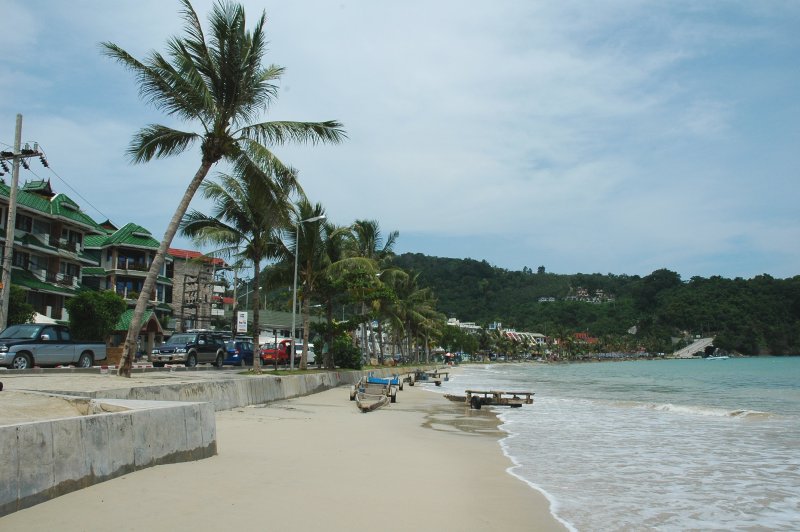
Patong’s geography is its vulnerability. The town is pressed into a narrow strip between the Andaman Sea and a wall of green hills, and its neighbourhoods climb the lower slopes. In dry weather that is a postcard. In a monsoon downpour it is a funnel: rain that falls on the hills has nowhere to go but down, fast, through the streets, picking up whatever the slopes and the town itself have left loose — soil, rock, branches, rubbish — and delivering it to the flat ground where the hotels, shops and homes are. The details of Monday morning read like a diagram of that process: a surge beginning around 2 a.m., the worst runoff between 2 a.m. and 4 a.m., debris dams blocking roads, and water that rose quickly and, once the rain eased, drained quickly too. High tide compounded the problem, slowing the sea’s ability to take the water away. Sunday’s flooding had already saturated the ground and filled the channels, so Monday’s rain ran off almost immediately.
Layered on the geography is the season Thailand is having. Six weeks of flooding since mid-September, a death toll in the dozens nationwide, a capital city inundated, and now the country’s premier island resort under water — the through-line is a monsoon delivering rain in intense bursts onto ground, drains and rivers already full. Phuket’s own warning system worked, in the narrow sense: the governor warned residents hours before the worst of it, and the meteorological department’s southern advisory now runs days ahead. But a warning tells people water is coming; it does not widen a drain, clear a grate, or move a hotel off a flood path. The gap between Thailand’s increasingly good forecasts and its ground-level defences is where Monday’s damage lived.
Who gains, who loses — and what critics say
The losers are easy to name. The roughly 100 affected households; the small hotel and shop owners of Nanai and Ban Nai, who face cleanup bills and lost bookings in the weeks the island should be filling up; the tourists whose cars, scooters and holidays were washed out, some uninsured; and the municipal workers who will spend days moving other people’s mud. The tourism industry loses more diffusely — every cancelled boat trip and shortened stay in a warning period that runs to Wednesday, and every headline that pairs “Phuket” with “flood” in the minds of travellers choosing between Southeast Asian beach destinations for the winter.
Critics of the island’s development model will say — as they do after every Phuket flood — that decades of building on the flat, paving the runoff paths and crowding the foothills have engineered exactly this outcome, and that drainage maintenance is the unglamorous budget line that loses every year to more visible spending. The residents’ suggestion that debris-choked grates slowed Monday’s drainage, unconfirmed as it is, points the same way. Defenders of the authorities can fairly answer that 142.8 millimetres of rain in 24 hours, falling in a few night-time hours on saturated hillsides at high tide, would flood almost any coastal town on earth; that the warning went out in advance; that shelters were open by morning; and that, on the most important measure of all, nobody died. Both things can be true: the rain was exceptional, and the town it fell on has been made more floodable by how it was built. The honest argument is about proportions, and it will be re-run, as it always is, until the next flood settles it again.
What happens next
The immediate story is the sky. The meteorological department’s warning runs through Wednesday, and the province’s own alert covers the same window: more heavy rain on saturated ground means the cleanup crews in Patong are racing the weather, clearing canals and waterways precisely so the next burst drains faster than Monday’s did. Travellers on the island should expect localised road flooding, possible disruption to boat trips and island excursions in rough seas — no specific ferry cancellations had been established in Monday’s reporting — and should check road conditions with hotels and operators before crossing the island. If the rain through Wednesday is lighter than feared, Monday will close as a damaging but casualty-free flood, and the story becomes the damage assessment the deputy governor’s teams began on Monday and the assistance residents like Meenarin have asked for.
The longer story is whether this six-week national flood season changes anything structural — in drainage investment, in building rules on flood paths, in how warnings translate into preparation on the ground — or whether, as after previous Thai flood years, the water recedes, the high season arrives, and the drains wait for next October. Phuket’s economy cannot afford to become a byword for flooding; Thailand’s death toll since September says its people cannot afford that either. For now, the island is digging out, the shelters are open, and the rain is not finished.
Sources
Associated Press, “Flash floods inundate several areas of Thailand’s Phuket island after heavy rain” (October 26, 2026) — island-wide scope, Deputy Governor Romdon Hayiawae, 100 households, no casualties, nationwide toll of at least 83 since mid-September via the Department of Disaster Prevention and Mitigation. Bangkok Post reporting via Focus on Travel News (October 26, 2026) — Nanai 5 and Nanai 8 damage, 142.8mm rainfall figure. The Nation monitoring figures via Focus on Travel News — Ban Na Yai 117mm, Rawai 93.2mm, Bang Neaw Dum Reservoir 94.4mm. Daily News reporting via ASEAN Now, “Patong flash floods damage hotels and block roads” (October 26, 2026) — Khao 50 Pi runoff, hotel damage, shelter and tourist-transfer plans, resident accounts. Thai Meteorological Department advisory (October 26, 2026) and Phuket provincial alert (October 26, 2026) — heavy rain and landslide risk through Wednesday, marine warnings.