Bangkok floods September 2026
The Bangkok floods of September 2026 became a citywide emergency on Saturday, when Governor Chadchart Sittipunt declared all 50 districts of the Thai capital flood disaster areas — a dramatic expansion of an earlier declaration that covered only three districts. The designation hands the Bangkok Metropolitan Administration, other state agencies and local administrations special powers to coordinate the emergency response, unlock relief funds and override bureaucratic bottlenecks. It came after almost 48 hours of near-continuous rain dropped nearly 300 millimeters — almost 12 inches — of water on a low-lying megacity laced with canals, with some major waterways receiving more than 20 centimeters. At least 13 roads were flooded, water stood waist-deep in the worst-hit areas, and nearly 1,000 people spent Friday night in temporary shelters. The Thai Meteorological Department warns that heavy to very heavy rain could continue through Sunday.
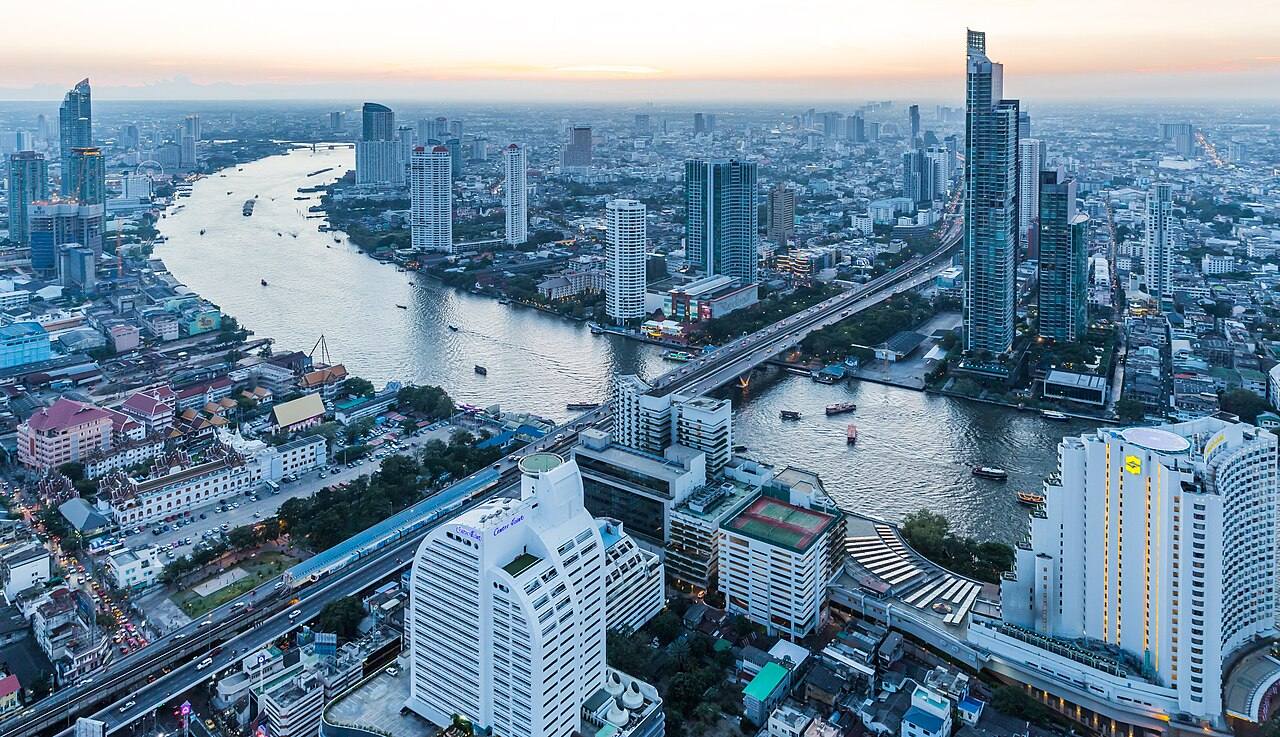
Forty-eight hours of rain: how the capital drowned in two days
The timeline matters because it shows how quickly a monsoon can overwhelm a modern Asian capital. The rain began on Thursday afternoon, September 24, and barely stopped. By Friday, canals across Bangkok were swelling beyond their banks, and the Bangkok Metropolitan Administration took the first legal step: declaring three districts disaster areas, triggering emergency powers in the zones under the most stress.
Eastern Bangkok bore the brunt. AFP reporters who walked the flooded streets on Saturday described a capital improvising its own defense: residents in On Nut filling sandbags by hand, commuters wading through knee-high water, and streets in some districts under waist-deep water. Thirteen roads were officially reported flooded — a number that understates the disruption, since every flooded road in Bangkok reroutes tens of thousands of motorbikes, cars and buses through the remaining dry grid.
By Saturday, the scale forced a different decision. Governor Chadchart expanded the disaster declaration from three districts to all fifty. That is not a rhetorical flourish. In Thailand's administrative system, a disaster-zone designation is a legal trigger: it gives the BMA, national agencies and local administrations special powers to coordinate the response — requisitioning equipment, mobilizing personnel across jurisdictions, and opening the financial taps for emergency relief and compensation. A governor does not put an entire capital of more than 10 million people under that status unless the normal machinery is no longer enough.
Chadchart himself took to social media to urge residents living near waterways to move vehicles and possessions to higher ground, and he advised families with bedridden relatives dependent on medical equipment to consider temporary stays in hospitals. Thirty-six bedridden residents had already been transferred to hospitals, according to BMA figures. "The public doesn't have to panic," the governor said publicly — the sentence every official utters, and the sentence every resident weighs against the water at their door.
Why this matters: a disaster declaration is a legal machine, not a headline
The story here is bigger than one weekend's rain, and the disaster declaration is the key to understanding why. Bangkok is a sinking city — parts of it sit only centimeters above sea level, and it is subsiding as the weight of its towers and the depletion of groundwater compress the soft soil beneath. It is threaded with canals, the khlongs, that were once the city's transport network and are now its drainage skeleton. When the khlongs fill, as they did this week — some received more than 20 centimeters of rain — the water has nowhere to go but up and out, into streets and homes.
A disaster declaration converts that hydrological fact into state power. It is the moment when a flood stops being a weather event and becomes an administrative one: procurement rules loosen, military engineers and national disaster agencies can be folded into the BMA's command structure, and relief money flows. For the canal-side poor — the vendors, motorbike riders and shopkeepers whose homes back onto the waterways — that machinery is the difference between a submerged shop and a compensated one, between a ruined week and a ruined year.
But there is a second, darker significance. Listen to Somkid Pheuk-ngam, 67, a vendor who lives near a canal north of central Bangkok. She told AFP that the water kept coming into her home, that it was hard to go out, that it had reached her waist — and that her shop had been closed for two days. Then she said the sentence that should frighten every policymaker in the country: "I think this time is worse than the 2011 flood."
The 2011 floods were Thailand's worst in half a century. More than 500 people were killed and millions of homes were damaged or destroyed as waters swept down the Chao Phraya basin and sat on parts of Bangkok and the central plains for months. When a 67-year-old woman who lived through that catastrophe says this week feels worse, it does not matter whether the hydrology agrees with her. It matters that public confidence in the city's defenses is cracking — and that confidence is itself a resource the authorities need.
The ghost of 2011: why this parallel will not go away
The 2011 comparison deserves to be handled with care, because it cuts two ways. On the one hand, this weekend's rain — 300mm in roughly 48 hours — is a concentrated burst, whereas 2011 was a months-long accumulation of floodwater moving south from the northern river basins. The events are hydrologically different. On the other hand, the vulnerability they expose is identical: a capital built on a floodplain, defended by pumps, barriers and canals that must all work at once or fail together.
Bangkok's drainage limits are chronic. The city relies on a combination of the khlong network, pumping stations and, when the Chao Phraya itself runs high, the painful arithmetic of how fast water can be pushed out to sea against tides and runoff. In 2011 the arithmetic failed across the country; this week the test is whether the capital's more recent investments in drainage and pumping can absorb a shock of this intensity. The answer is not yet in, and the Thai Meteorological Department's warning of more heavy rain through Sunday means the system will be tested further before it gets relief.
Zoom out, and the monsoon context sharpens the unease. Across Asia, this year's monsoon season has been unusually destructive, and researchers have increasingly linked the heaviest downpours to a warming climate that loads the atmosphere with more moisture. Reporting on flooding in Nepal this season has cited research connecting climate change to the severity of the deluge — a finding worth noting with appropriate caution, since it is a reported study's conclusion, not an established fact about any single storm. But the pattern is real: warmer air, heavier rain, cities engineered for the twentieth century's weather.
Who is losing — and who is being tested
Floods are never democratic. The first losers are the canal-side communities — precisely the people like Somkid, whose homes and livelihoods sit closest to the water. A vendor's closed shop is not an anecdote; it is the unit economics of the flood. Two days without trade for a woman of 67 with a canal-side shop is a loss that no insurance product reaches, and it is being multiplied across thousands of households this weekend.
The second group of losers is the commuters. Samruay Nakkamnueng, a motorbike rider in the Ari neighborhood, woke up to go to work and found the street in front of his house flooded — and immediately began calculating whether his motorbike could wade through it. That calculation, made in millions of variations across the city, is the morning cost of the flood: lost shifts, missed work, wages evaporated. Bangkok runs on motorbikes and road transport; thirteen flooded roads are thirteen amputations of the commute.
Then there is the BMA's pumping capacity itself, and with it Governor Chadchart's political standing. Chadchart — an engineer by training, elected on a technocratic promise to fix the city's plumbing — is now facing the examination his career prepared him for. His public message has been calm competence: the canals are full, the water should begin to recede once the rain stops, do not panic. But every disaster declaration expands a governor's powers and his accountability in equal measure. If the waters linger, or if the pumping stations falter, the same declaration that empowered him will be the document his critics cite.
Above the city government sits Thailand's national government, which must now coordinate relief across 21 provinces where more than 84,000 people have been affected, according to wire reporting. A Bangkok flood commands cameras; a national flood commands budgets. The insurers are watching too — Thailand's 2011 experience rewrote Asian catastrophe insurance — and so is the tourism machine. Bangkok is one of the world's most visited cities, and a capital under disaster status, with flooded roads and warnings to move to higher ground, is a travel story as well as a weather one. Airport and transport disruption has not yet materialized at scale, but every traveler with a booking this week is now checking the forecast.
The numbers, and what they actually say
Nearly 300 millimeters in roughly 48 hours: that is the headline figure, and it deserves context. Bangkok's wet season is built for heavy rain, but 300mm in two days is roughly what some districts would expect across much of a normal September — compressed into a single event. It is the compression that kills. Drainage systems are designed for rates, not totals; a month of rain in two days is a rate problem, and rate problems are exactly what filled the canals and the streets this week.
Eighty-four thousand people affected across 21 provinces tells the second story: this is not only Bangkok's flood. The capital gets the cameras because the declaration was citywide and the images are dramatic, but the monsoon is a national event. Nearly 1,000 people in temporary shelters and 36 bedridden residents moved to hospitals are BMA figures for the capital alone — the leading edge of a relief operation that will widen as provincial tallies come in.
Thirteen flooded roads sounds modest until you remember that Bangkok's road network is the city's circulatory system. Waist-deep water in the worst spots, knee-high on commuter routes, sandbag lines in On Nut: these are the textures of a city whose margin between functioning and failing is measured in centimeters of water.
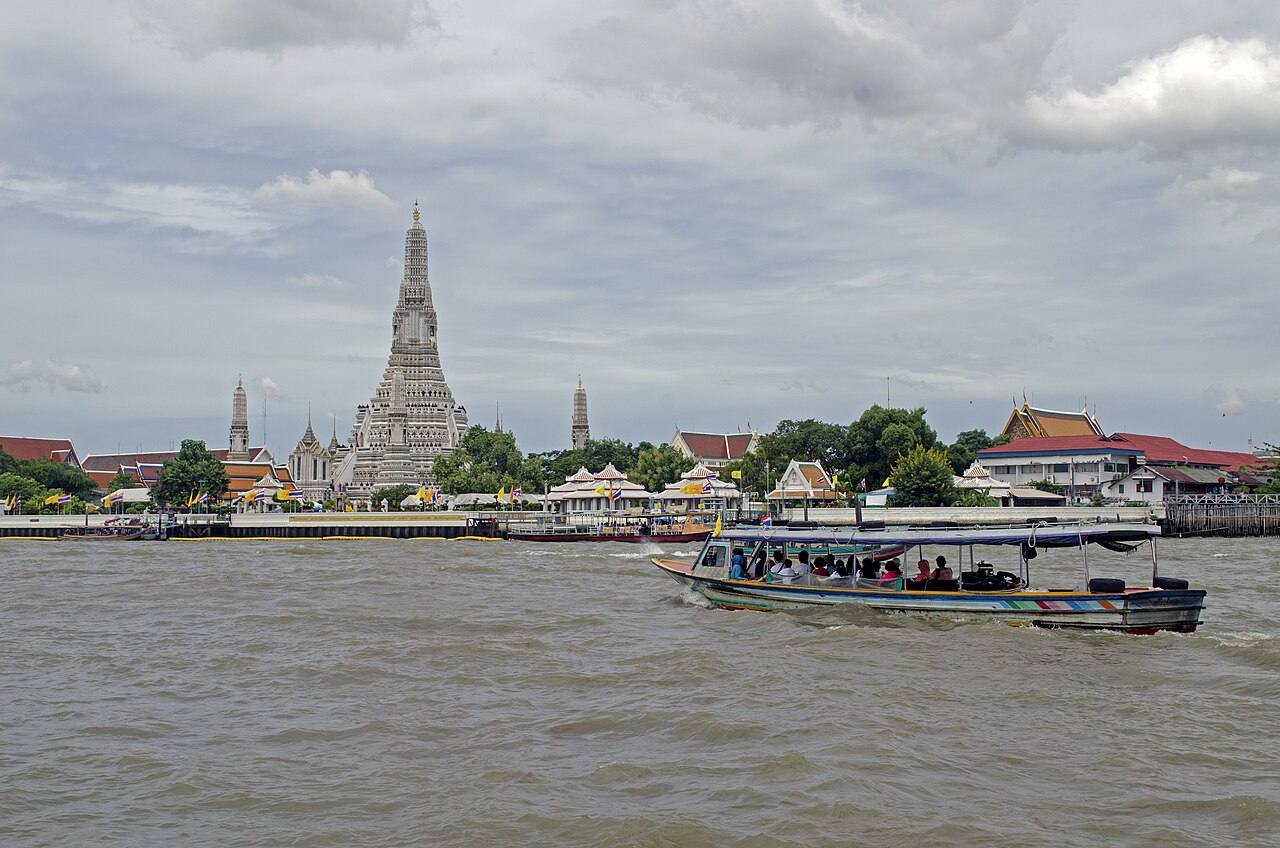
What happens next: the Sunday forecast and the long audit
The immediate question is the sky. The Thai Meteorological Department's warning of heavy to very heavy rain through Sunday means the worst-case scenario — saturated canals, full pumping capacity, and a second wave of runoff — is still on the table. Governor Chadchart has said the water should begin to recede once the rain stops; the operative word is "once."
The second question is the Chao Phraya. Bangkok's river is the final drain, and its level, combined with tides in the Gulf of Thailand, determines how fast the pumps can empty the city. If upstream runoff and high tides conspire, even the best-run pumping operation can only stall. That is the 2011 lesson the engineers carry: the city is the bottom of a very large funnel.
The third question is political and will outlast the water. A citywide disaster declaration unlocks relief — and it also starts a clock. Residents like Somkid will measure the BMA not by the declaration but by the drainage: how fast their street dried, how quickly compensation arrived, whether the promised pumping capacity existed or was aspirational. Chadchart staked his reputation on being the engineer who could fix Bangkok's water. This weekend is the audit.
And the longest question is the one the monsoon keeps asking across Asia: whether a sinking, canal-laced megacity of more than 10 million people can keep living this close to the water in a warming climate. The 2011 flood was supposed to be the warning that changed everything. Fifteen years on, a 67-year-old vendor near a canal is telling reporters this feels worse. Whatever the hydrologists conclude, that verdict is already the story.
Sources
- Phys.org / AFP — "Canals full, roads submerged: Bangkok floods force city-wide disaster declaration"
- TOB News — "Bangkok declares disaster as relentless rain floods capital"
- ExpatGo — "Bangkok Floods: Thailand's Capital Declares Disaster Across All 50 Districts"
- The Daily Jagran — Thailand floods: Bangkok districts declared disaster areas as heavy rain submerges roads
- ASEAN Now — "Bangkok declares all 50 districts flood disaster areas"
Reporting basis: Fixed September 26, 2026 snapshot. Casualty, shelter and rainfall figures are drawn from AFP and BMA reporting cited above; 2011 comparison figures are AFP-sourced. All eyewitness quotations are AFP-reported. Photographs are labeled file photos where they do not depict the current event.