Palestinian elections postponed
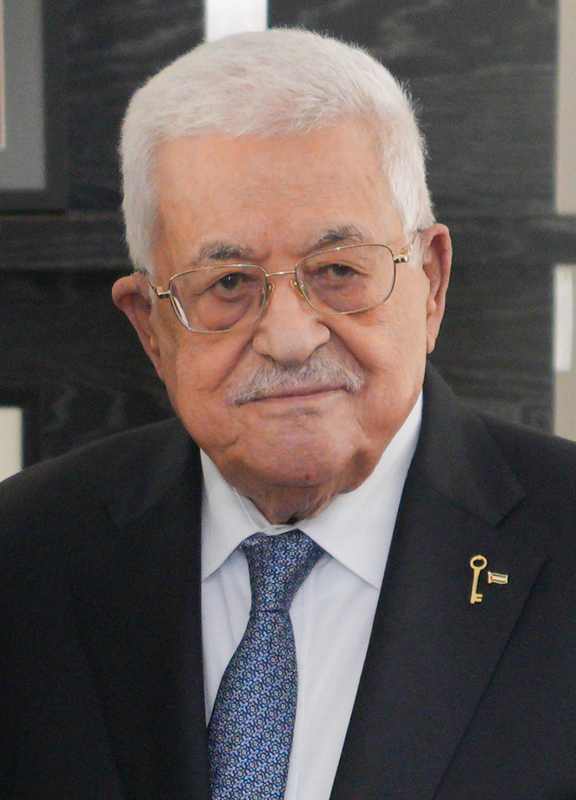
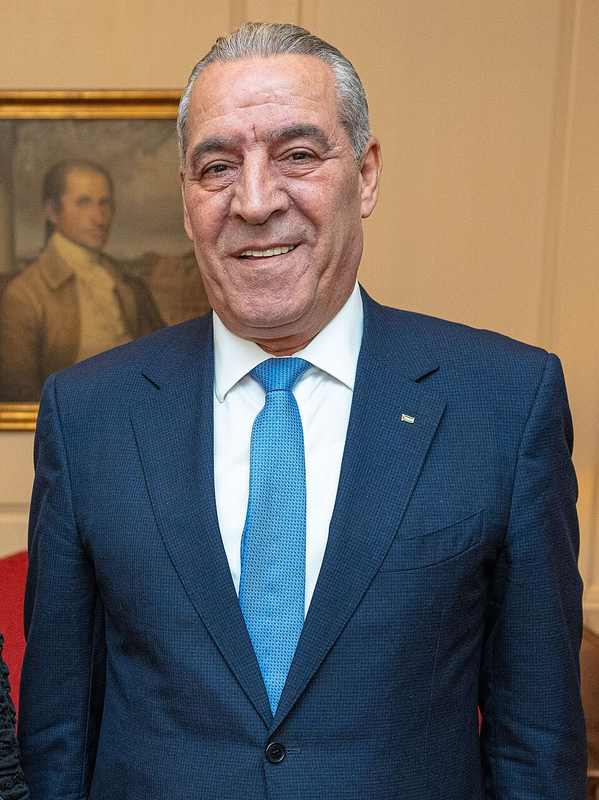
RAMALLAH — The first Palestinian legislative election in two decades is being postponed, according to a letter seen by Reuters and accounts from factions meeting in Cairo. Vice President Hussein Al Sheikh told French Foreign Minister Jean-Noël Barrot in an October 8 letter that the November 28 vote would be delayed for several months because conditions across the Palestinian territories had worsened.
Al Sheikh's letter said the political, security and economic assumptions behind the date had not come together, Reuters reported. It argued that proceeding now would create basic problems for broad participation, a free campaign and a credible count. The letter provides the clearest official signal yet that the calendar announced by President Mahmoud Abbas will not hold.
Factional leaders were moving in the same direction. The Associated Press reported that Islamic Jihad deputy leader Mohammed al-Hindi said the groups had reached understandings to resume national dialogue and put off the vote. Fatah spokesperson Abdel Fattah Doleh was more cautious, saying the timing had to be decided through wider talks and that the Palestine Liberation Organization's Executive Committee would discuss it.
The distinction matters. One account describes a decision already communicated to a foreign government; the other shows Palestinian institutions and factions still negotiating its terms. What is no longer seriously in doubt is the outcome: the Palestine legislative elections November 2026 timetable is slipping.
Why the Palestinian elections postponed decision matters
This was never just another election date. The vote had been presented as a test of whether Palestinian political institutions could be renewed after war, geographic fragmentation and two decades without a national legislative mandate. France welcomed the November 28 date in July, and the New York Declaration linked credible elections to international support for a future Palestinian state. The European Union said it was ready to send observers.
A delay therefore reaches beyond the composition of the Palestinian Legislative Council. It touches the international argument over who should govern Gaza after the war, whether the Palestinian Authority can claim fresh public legitimacy, and whether donors can attach democratic conditions to a statehood strategy without helping create the conditions needed to meet them.
The strongest case for postponement is practical. Gaza has been devastated by war, East Jerusalem participation remains disputed, and the Palestinian political system is divided between Fatah-led institutions in the West Bank and Hamas rule in Gaza. An election that excludes major communities or cannot operate freely would solve little. It could turn a legitimacy exercise into another contested result.
The strongest case against postponement is historical. Similar obstacles were cited when Abbas cancelled elections planned for 2021. Critics argued then that the Jerusalem dispute provided political cover after Fatah divisions threatened the president's camp. Five years later, any delay inevitably carries that memory. Even sound logistical arguments arrive burdened by a record of missed votes.
The Hussein Al Sheikh letter to France and the Cairo agreement
Reuters reported that Al Sheikh addressed the letter to Barrot because France had been closely involved in the diplomatic framework around Palestinian reform and statehood. Its wording was broad: deteriorating conditions across the Palestinian territories, not a single technical defect, were offered as the reason for waiting several months.
The Cairo track is more political. According to AP, Islamic Jihad described an understanding among factions to postpone while restarting dialogue. Fatah did not publicly match that finality. Doleh said the schedule belonged in a process of national consensus, while the PLO Executive Committee retained a formal role.
Al-Araby TV reporting carried by Israeli media added another layer. It said Abbas was preparing an announcement before electoral-list registration was due to close on Sunday, but that no replacement date had been fixed. The report said Islamic Jihad and the Popular Front for the Liberation of Palestine supported postponement; the PFLP described an understanding with Fatah and Hamas that could move the vote by a year, longer than the several-month delay described in Al Sheikh's letter.
Those timelines are not yet reconciled. Nor are the participation rules. The same reporting said Hamas and Islamic Jihad would remain excluded unless they recognized the PLO as the sole legitimate Palestinian representative and accepted its political program, which includes recognition of Israel. For Fatah and the Palestinian Authority, that condition ties an election to the diplomatic commitments of the body that negotiates internationally. For Hamas and Islamic Jihad, it can be viewed as requiring political surrender before ballots are cast.
From the 2006 Hamas victory to the 2007 split
The last legislative election, on January 25, 2006, produced the outcome that still shapes every new election plan. Hamas defeated Fatah in the parliamentary contest, winning a legislative majority. International governments then faced a choice between recognizing the result and maintaining conditions tied to recognition of Israel, renunciation of violence and prior agreements.
The political crisis deepened into armed conflict. By 2007, Hamas controlled Gaza while the Fatah-led Palestinian Authority governed parts of the occupied West Bank. The elected legislature largely stopped functioning as a normal national parliament. Presidential and legislative terms expired without replacement, while governance continued through decrees, rival administrations and institutions whose legal authority each side disputed.
That history explains why the next election is harder than simply opening polling places. A credible vote needs agreed rules for candidates, security forces, campaigning, media access and the transfer of power. It also needs an answer to the question left unresolved in 2006: what happens if voters choose a faction that foreign donors or rival Palestinian institutions will not accept?
There has been some voting below the national level. Palestinians held municipal elections in the West Bank in April, the first polls since the Gaza war began in October 2023. Local elections can test administrative capacity, but they do not replace a legislature empowered to oversee budgets, laws and national institutions. Gaza's circumstances also mean that a West Bank municipal vote cannot demonstrate that a nationwide contest is feasible.
East Jerusalem and Gaza: real barriers, contested responsibility
The East Jerusalem problem
East Jerusalem is both a practical and symbolic obstacle. Israel annexed the area and regards Jerusalem as its capital; Palestinians seek East Jerusalem as the capital of a future state. Previous Palestinian elections used special arrangements that allowed limited voting through post offices, but every new contest raises the question of whether Israel will permit campaigning and balloting there.
WAFA, the Palestinian official news agency, reported on October 7 that Israel had blocked the Palestinian Central Elections Commission from entering East Jerusalem and Gaza to prepare for the November vote. Commission spokesperson Farid Taamallah confirmed the access problem to Agence France-Presse while maintaining that the election could still go ahead. The reports reviewed for this article did not include an Israeli response to that specific claim.
For Palestinian leaders, accepting a vote without East Jerusalem can look like abandoning their claim to the city. For Israel, permitting Palestinian Authority electoral activity there carries its own sovereignty implications. That collision has repeatedly allowed a dispute over polling access to become a veto point over the entire national election.
Gaza after war
Gaza presents a different scale of challenge. Displacement, damaged infrastructure, insecurity and the absence of a single accepted governing authority complicate voter registration, candidate activity, ballot distribution and counting. Holding a vote without Gaza would undermine the claim that the result represents Palestinians as a whole. Holding one before minimum safeguards exist could expose voters and staff to danger while producing a result many parties reject.
Yet waiting for ideal conditions creates its own trap. If a fully reconstructed Gaza, settled security arrangement and unified Palestinian administration all become preconditions, the vote can recede indefinitely. The burden on leaders who postpone is therefore not merely to explain why November is impossible, but to define measurable steps toward a replacement date.

Who gains time, and who pays the price
Abbas and Fatah avoid an immediate test
President Abbas and Fatah are the most obvious political beneficiaries of delay because incumbents retain authority while the contest is moved. Fatah also gains time to manage internal rivalries, settle candidate lists and negotiate participation rules. That does not prove the obstacles were invented. It does mean the party controlling the existing institutions receives the largest immediate advantage from postponement.
Other factions may also prefer time. Hamas faces the question of whether to accept the PLO's program as the price of participation, while Islamic Jihad and the PFLP must decide whether an election advances or dilutes their influence. Cairo talks give all sides space to negotiate a common framework before exposing their strength to voters.
Voters lose another fixed date
The clearest losers are voters who have not chosen a national legislature since 2006. A generation has reached adulthood without participating in a parliamentary election. The delay also weakens independent candidates and smaller lists that invest in registration, organization and fundraising around a known calendar but lack the permanent machinery of established factions.
European governments lose leverage if the conditions attached to support remain aspirational. EU foreign policy chief Kaja Kallas said after speaking with Al Sheikh that Palestinians should be able to choose representatives through credible, inclusive and transparent elections. The EU's offer to deploy observers can strengthen procedures, but observers cannot create territorial access, reconcile factions or guarantee that a result will be implemented.
The wider statehood campaign also pays a price. France's welcome for the election date and the New York Declaration's emphasis on reform made the ballot part of a diplomatic sequence: renew institutions, establish legitimate governance and strengthen the case for recognition. A postponement interrupts that sequence and gives skeptics evidence that the political timetable is less developed than the diplomatic one.
The numbers in context: 20 years, roughly 78 percent turnout, two postponements
The headline number is the gap: twenty years between scheduled legislative votes. The Palestinian Central Elections Commission recorded turnout of roughly 78 percent in the 2006 legislative election, evidence that participation was not marginal when a national contest was last held. The stakes were also immediate: voters changed the balance of power, and the result altered Palestinian politics and international relations.
The second number is five. Elections planned for 2021 were postponed over the East Jerusalem dispute, and five more years have passed without a legislative vote. Critics see a pattern in which each announced opening closes before voters reach the polls. Officials point to continuing territorial restrictions and political division. Both descriptions can be true: a real obstacle can also serve an incumbent's interest.
The third number is the disagreement over duration. Al Sheikh's letter described a delay of several months. The PFLP account carried by Al-Araby suggested a year. No replacement date has been announced. That gap is not a detail. A short administrative postponement with published milestones would be different from another open-ended suspension.
The planned presidential election in early 2027 adds a fourth clock. If the legislative contest moves only a few months, the two elections could collide or require a compressed campaign. If it moves a year, the presidential timetable is likely to be tested as well. The credibility of both now depends on whether Palestinian institutions publish a coordinated calendar rather than separate promises.
What happens next
Sunday's registration deadline and a formal decree
The first signal is whether officials formally suspend electoral-list registration before its Sunday deadline. An announcement should clarify who made the decision, how long it lasts and which legal provision governs the change. Without that clarity, rival factions can continue describing the same process as either consensus or unilateral cancellation.
Cairo talks and the PLO Executive Committee
Fatah central committee secretary-general Jibril Rajoub said a new round of talks with Hamas was expected in Cairo. Egypt hosted separate delegations from Hamas and Islamic Jihad on Wednesday, according to the Al-Araby account. The immediate bargaining points are likely to include recognition of the PLO program, the eligibility of factions, security arrangements and a shared response to East Jerusalem and Gaza access.
The PLO Executive Committee's meeting will show whether the postponement is folded into a wider institutional plan. A credible decision would pair the delay with deadlines for access negotiations, voter-registration work, factional agreements and observer preparations. A date without those conditions failed once; conditions without a date could fail indefinitely.
The EU observer mission and the early-2027 presidential vote
Europe's next move matters because the EU has both technical capacity and political influence. An observer mission needs notice, access and an accepted mandate. If Brussels keeps the mission ready while pressing all parties for benchmarks, it can help preserve the difference between postponement and abandonment. If the offer simply expires, an important external guarantee disappears.
The presidential election planned for early 2027 is now the larger test. It could proceed separately, move with the legislative vote or become part of a single negotiated package. Watch whether officials reaffirm that timetable after announcing the legislative delay. Silence would suggest the problem is not limited to November 28.
A delay can be justified; an indefinite wait cannot
There is no responsible argument for staging an election merely to meet a date if Gaza cannot vote safely, East Jerusalem is excluded and major factions reject the rules. A ballot under those conditions could deepen rather than repair the legitimacy crisis. That is the case made, in different forms, by the Palestinian officials and factions seeking more time.
There is also no democratic argument for treating impossible conditions as permanent permission to govern without renewal. Twenty years changes the presumption. The burden now rests on those postponing the election to publish a replacement date, define attainable safeguards and report progress in public.
The next few days will reveal whether this is a managed delay or another disappearing calendar. A formal decision, a timetable from Cairo, a PLO framework and continuing EU preparations would keep the electoral project alive. An announcement without milestones would leave Palestinians with the same promise they have heard before: the right to vote, once conditions allow it.
Sources and reporting notes
- Reuters, October 9, 2026 — Al Sheikh's letter to France, the expected length of the delay and the conditions cited by Palestinian officials.
- Associated Press report republished by the Ottumwa Courier, October 8, 2026 — factional discussions, Islamic Jihad's account, Fatah's response and the logistical disputes involving Gaza and East Jerusalem.
- JFeed report summarizing Al-Araby TV coverage, October 8, 2026 — the anticipated announcement, participation conditions, Cairo talks and competing accounts of the delay's length.
This report distinguishes confirmed scheduling developments from analysis. Reuters reviewed the October 8 letter; factional and official positions are attributed to the outlets that reported them. The source reports reviewed did not contain an Israeli response to the specific claim that election officials were denied access to East Jerusalem and Gaza.