Hamas, Islamic Jihad and Mohammed Dahlan's reformist faction say they will support a unified list of independents for the November 28 parliamentary election. The coalition is real. Whether the election is remains the decisive question.
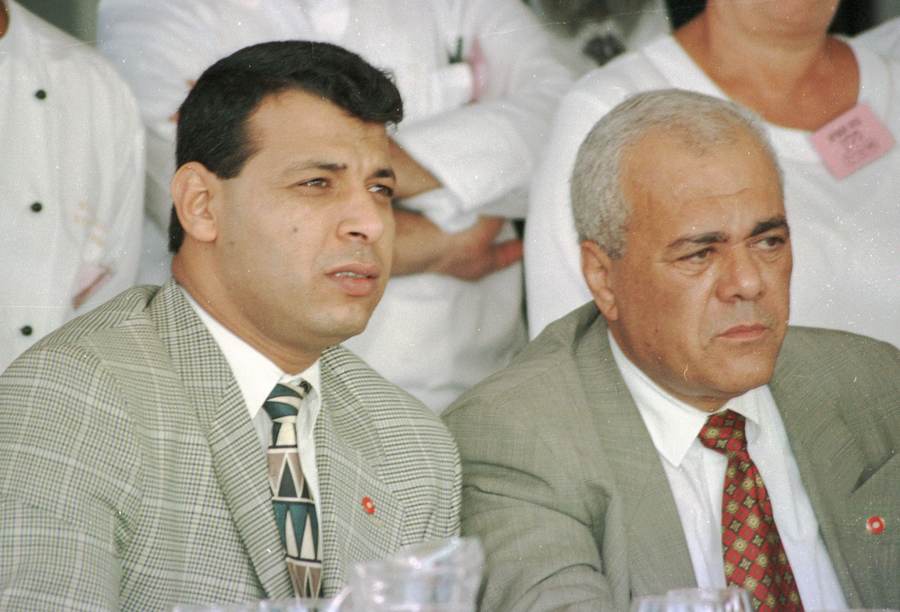
The Hamas Dahlan electoral alliance has brought together three forces with a history of rivalry, repression and mutual suspicion ahead of Palestinian legislative elections set for November 28, 2026. Hamas and Islamic Jihad have agreed with Mohammed Dahlan — the exiled former Fatah security chief now based in the United Arab Emirates — to support what they describe as a unified national list of independent figures rather than formal party candidates.
Mohammed al-Hindi, Islamic Jihad's deputy secretary-general, confirmed the arrangement in a rare interview with the Associated Press in Istanbul on Monday. His organization, which has traditionally refused to contest elections, will not field candidates under its own banner. Instead, al-Hindi said it would “support a national list reached through consensus.” Dimitri Diliani, a spokesman for the Dahlan Reformist Democratic Faction, separately confirmed the plan and framed it as a challenge to the leadership of President Mahmoud Abbas.
The pact rearranges the Palestinian opposition before the first legislative ballot in two decades. Yet it does not settle the larger uncertainty hanging over the entire process: whether ballots, candidates and election workers will actually be able to move through Gaza and the West Bank on November 28 — or whether Abbas will postpone the vote, as he did in 2021.
Why the Hamas–Dahlan pact matters
At first glance, this is a coalition of incompatible actors. Hamas drove Dahlan and his forces out of Gaza in 2007 after a violent struggle for control. Dahlan later broke with Abbas, was pushed out of Fatah around 2010 and built a new political base from exile. Islamic Jihad has long rejected participation in the Palestinian Authority's institutions. Their common platform is not ideological agreement; it is shared frustration with Abbas, the 90-year-old president whose mandate has long expired and whose Fatah movement is showing signs of fragmentation.
That makes the coalition important even before a vote is cast. It offers Hamas a route back to electoral politics without forcing the organization to carry the full burden of a branded slate. It gives Islamic Jihad influence while preserving its formal nonparticipation. And it gives Dahlan the most visible opening in years to return to Palestinian power through allies and independent candidates rather than a direct personal campaign.
For Abbas, the threat is arithmetic. A united opposition list can turn public dissatisfaction into seats, while a divided Fatah can split its own vote across four or more competing lists. The contest may therefore be decided less by which faction is most popular than by which side is least fragmented.
From the 2006 rupture to the 2026 bargain
The vote that split Palestinian politics
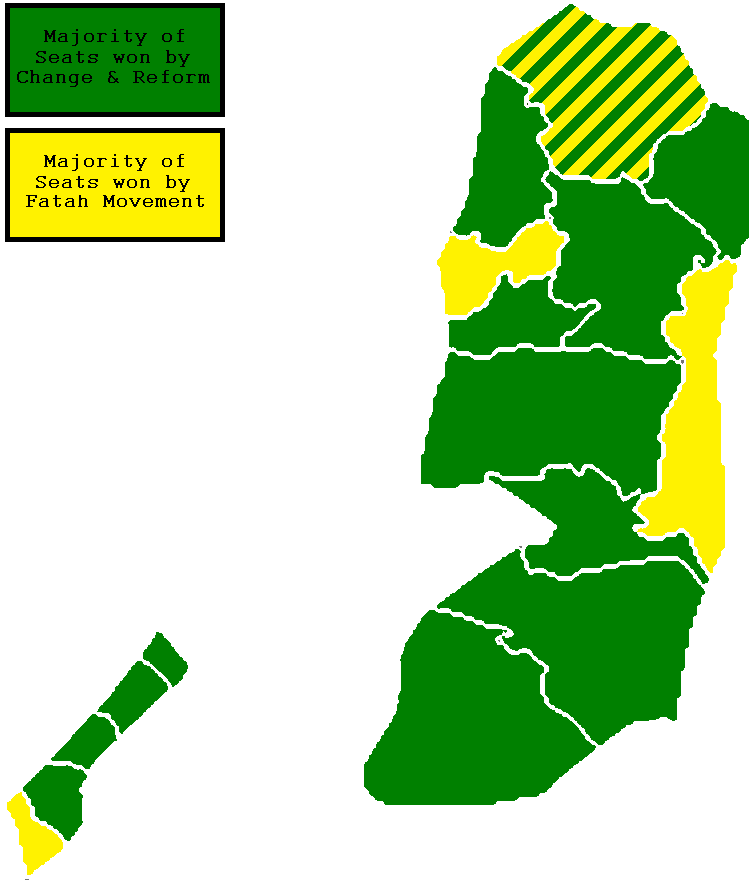
The previous legislative election, in January 2006, produced a result that neither Palestinian institutions nor their international partners successfully absorbed. Hamas won a parliamentary majority. The United States and European governments demanded that any Hamas-led government renounce violence, recognize Israel and accept prior agreements; when those conditions were not met, aid and political recognition were curtailed. Tensions with Fatah hardened into armed conflict, and Hamas took control of Gaza in 2007 while the Palestinian Authority remained dominant in parts of the West Bank.
The Palestinian legislature has not been renewed since. A body meant to represent voters across Gaza and the West Bank instead became another casualty of the territorial and institutional split. That is why the phrase Palestinian legislative elections first since 2006 carries more weight than an ordinary campaign slogan. A vote would test whether one political system can still encompass two territories governed by rival authorities under Israeli occupation and blockade.
Dahlan's exile, the UAE and the Abraham Accords
Dahlan's path back toward Hamas is as striking as the coalition itself. Once Fatah's powerful security chief in Gaza, he was expelled after a falling-out with Abbas and established himself in Abu Dhabi. As a Mohammed Dahlan UAE adviser, he developed extensive contacts in the United States and Israel while retaining networks among Palestinians, especially in Gaza.
His UAE position also places the deal against the backdrop of the Abraham Accords, which normalized relations between the Emirates and Israel in 2020. That history makes Dahlan legible to Arab capitals and Western officials in a way Hamas is not. It also makes him vulnerable to opponents who portray him as too close to foreign power centers. The alliance tries to convert that contradiction into an asset: Hamas supplies an organized constituency, Dahlan supplies regional reach, and both avoid putting their most divisive names directly atop the ballot.
The election Abbas postponed in 2021
Palestinians have been here before. Abbas announced elections for 2021 and then postponed them, citing Israel's refusal to permit voting in East Jerusalem. His critics argued that fear of a poor Fatah showing was at least as important. The precedent shadows every promise attached to the Palestinian elections November 2026. Israel has again refused to allow ballots and election materials into Gaza, creating a practical obstacle that could become a political justification for delay.
Hamas official Hussam Badran has made trips to Cairo to consult other factions, an effort to widen participation and create pressure against another cancellation. But diplomatic meetings cannot by themselves solve the mechanics: candidate registration, campaigning, ballot distribution, polling security and vote counting all require access that no Palestinian faction controls on its own.
Who benefits — and who stands to lose
Dahlan gets a comeback route
Dahlan does not need to top the ticket to gain. A respectable showing by the Dahlan Reformist Democratic Faction and its allies would demonstrate that his political network survives exile and could place loyalists inside a renewed legislature. It would also strengthen his argument that he belongs in any discussion of the post-Abbas order.
Hamas seeks political legitimacy
Hamas gains something different: a means to show that it remains a political actor rather than only an armed movement governing Gaza. A list of independents could appeal beyond the group's core and reduce the international alarm triggered by a slate composed entirely of Hamas members. But branding cannot erase affiliation. Israel, the United States and European governments will examine who selected the candidates, who finances them and whether successful independents vote with Hamas once seated.
Abbas and a fractured Fatah face the downside
The Mahmoud Abbas Fatah party remains the largest established network in the West Bank, but its internal divisions may be more damaging than the new alliance's strength. Munther al-Hayek, a Fatah official, has publicly opposed any joint list with Hamas. Reports that Fatah-aligned figures could run on four or more lists suggest the movement may enter the campaign without a unified succession plan or a single message.
That fragmentation helps explain why the coalition exists. Its members do not need to agree on the future of the Palestinian national movement. They need only agree that Abbas and the current Fatah leadership should not control the next parliament uncontested.
What the August poll says — and what it does not
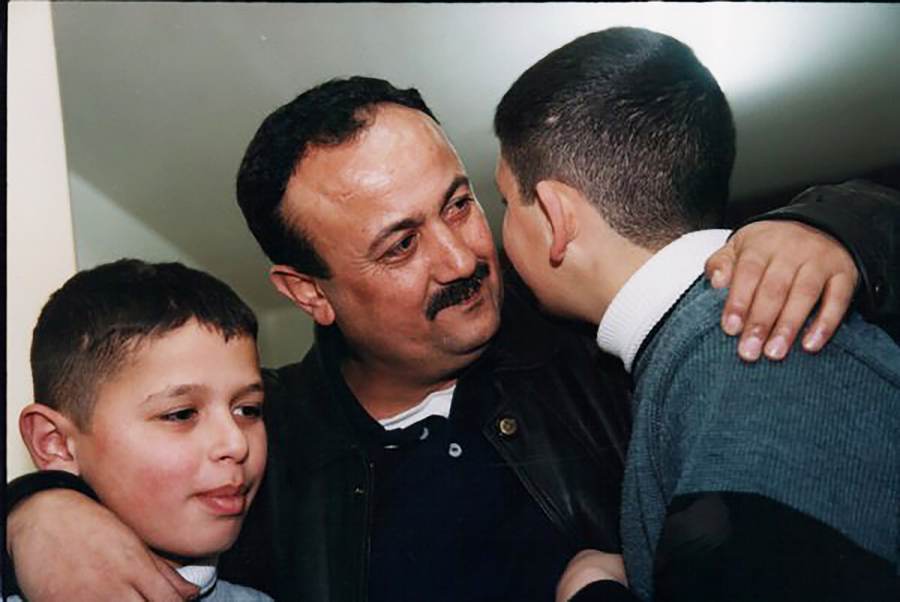
An August 2026 survey by the Palestinian Center for Policy and Survey Research offers the clearest warning to every faction leader. In a hypothetical presidential contest, imprisoned Fatah figure Marwan Barghouti drew 54 percent, Hamas leader Khalil al-Hayya 26 percent and Abbas 14 percent. On the separate question of who should succeed Abbas, Barghouti led with 39 percent, followed by al-Hayya at 16 percent and Dahlan at 15 percent.
The Marwan Barghouti poll 2026 numbers do not translate mechanically into legislative seats. Presidential personalities, party lists and district-level competition are different tests. Nor does a survey guarantee turnout in Gaza under wartime restrictions or in a West Bank where Israeli military operations and Palestinian Authority controls shape daily movement. Still, the direction is unmistakable: Abbas is deeply unpopular, Barghouti has an appeal no active faction chief matches, and Dahlan is competitive enough to matter but not strong enough to dominate alone.
That last point is the coalition's mathematical logic. Dahlan's 15 percent on the succession question is not a mandate. Combined with Hamas's disciplined support, Islamic Jihad's endorsement and independent candidates who can attract voters tired of faction labels, it could become a meaningful parliamentary bloc. The list is designed to make several minorities add up to a majority — or at least to deny one to Fatah.
The boycott risk and the Gaza problem
Critics of the alliance see a replay of 2006. If candidates tied to Hamas win significant power, Israel and Western governments could again refuse to deal with the resulting legislature or government. That could squeeze aid to the Palestinian Authority, complicate security coordination and leave voters with a formally elected parliament that cannot easily transact with the outside powers controlling much of its fiscal and territorial space.
Supporters answer that excluding popular movements produces legitimacy crises of its own. Twenty years without a parliamentary vote has not moderated Palestinian politics or created a durable negotiating process. A managed election whose acceptable outcomes are decided in advance would not repair public trust.
The immediate constraint is Gaza. Israel's refusal to permit election materials into the territory is not a technical footnote; it may determine whether the vote can claim national validity. A Palestinian Authority parliament Gaza West Bank mandate requires participation in both places. Voting only in the West Bank would deepen the split. Voting in Gaza without recognized monitoring, secure polling sites and credible voter rolls would invite disputes that no faction could easily settle.
The issue intersects with Israel's own election scheduled for October 27. Israeli leaders will be campaigning while deciding whether to facilitate a Palestinian vote that could benefit Hamas-linked figures. Concessions on ballot access could be attacked domestically as empowering Hamas; a blanket refusal could be cited by Abbas as grounds to postpone. In either case, Israeli electoral incentives are unlikely to favor quiet administrative cooperation.
What happens next
Scenario one: the November 28 election proceeds
If voting goes ahead across Gaza and the West Bank, the first measure of the alliance will be candidate selection. A genuinely independent list with recognizable civic figures could broaden its appeal. A slate of faction loyalists wearing independent labels would be easier for rivals to attack. Watch, too, whether Fatah consolidates around one list or allows multiple camps to split its base.
Scenario two: Abbas postpones again
A second postponement would preserve the existing Palestinian Authority leadership in the short term and probably intensify the succession struggle. Abbas could point to Gaza access, East Jerusalem voting or security conditions. His opponents would point to the 2021 precedent and argue that the real objective was avoiding defeat. The coalition might then survive as an anti-Abbas front, but without the discipline imposed by an actual ballot its internal contradictions could quickly return.
Scenario three: a vote produces another international boycott
If Hamas-linked candidates win heavily, Western governments will face the same dilemma they mishandled after 2006: whether to respect an election result involving a designated militant organization or isolate the institutions voters chose. A boycott could protect existing diplomatic red lines while weakening the elected body and reinforcing the argument that Palestinian ballots matter only when outsiders approve the winner.
The unresolved test is feasibility
For now, the most important evidence will be logistical, not rhetorical: Are voter rolls updated? Can election officials enter Gaza? Will Israel allow ballot papers and monitors to cross? Can candidates campaign without detention or violence? Will East Jerusalem residents have a workable voting arrangement? Each unanswered question lowers the probability that November 28 becomes more than a date in a decree.
The alliance is therefore both consequential and provisional. It exposes Abbas's vulnerability, gives Dahlan a return route and lets Hamas pursue legitimacy through a broader slate. It does not reconcile the factions, guarantee an election or resolve how the international system would respond to the result. The first Palestinian parliamentary contest in 20 years could reorder power. The harder truth is that the political actors now preparing to win it still do not control whether it happens.
For related context, read Signal Post News on Abbas's UN General Assembly speech and Gaza strategy, the Netanyahu–UAE warning dispute, and the stalled Gaza ceasefire and reported death toll.
Sources
- Associated Press via LA Post, September 29–30, 2026 — coalition confirmations, al-Hindi interview, Dahlan faction response and election context.
- Associated Press via Netscape, September 29, 2026 — full report on the unified national list and faction positions.
- Reuters, September 24, 2026 — Abbas's election pledge, doubts over access and the 2006 and 2021 precedents.
- Foundation for Defense of Democracies, September 30, 2026 — regional security-policy roundup and reactions.
Reporting basis: Information available September 30, 2026. Coalition participation has been confirmed by Islamic Jihad and Dahlan's faction. Candidate names, final list registration, Gaza access and whether the November 28 vote will proceed remain unresolved. Analysis and scenario judgments are Signal Post News's own.