Technology
The ChatGPT maker is still raising a sum most companies could not dream of. But the OpenAI funding round 2026 has shrunk by a third in a matter of weeks — and the reason says as much about public markets in panic as it does about OpenAI itself.
Track it live: live markets tracker

The OpenAI funding target cut reported on Friday is the clearest evidence yet that even the most valuable private technology company on Earth cannot raise money in a vacuum. The Financial Times reported on Friday, October 30, 2026, citing people with knowledge of the matter, that OpenAI has slashed the target for its latest funding round by $10 billion: the company is now seeking about $20 billion at a desired OpenAI valuation 1.25 trillion dollars, down from $30 billion at a $1.4 trillion valuation last month, and it set a Friday deadline for investors to commit. The cut, reported by Reuters on October 30, came amid a selloff in technology stocks driven by worries about artificial-intelligence spending. OpenAI has not confirmed the terms: the figures are reported terms, attributed to the FT's sources, not announced facts.
Even on the reduced terms, the scale is difficult to overstate. If OpenAI raises 20 billion dollars in this round, it will be one of the largest private financings ever attempted. But the direction of travel matters more than the destination. A month ago the ask was $30 billion at $1.4 trillion. On Friday, according to the FT, some investors had already reduced their allocations, and the first close is expected to raise less than $20 billion. Bloomberg News had reported last week that OpenAI was seeking capital at the $1.25 trillion valuation in the final stages of negotiations, suggesting the lower price was being tested before the target itself was cut. The question hanging over the ChatGPT maker funding news is no longer whether OpenAI can raise money. It is what price a rattled market will let it raise money at.
What changed, and who is still writing cheques
Per the FT via Reuters, a consortium of investors from the United Arab Emirates, including the state-backed technology fund MGX, is expected to be the largest participant in the round. The OpenAI MGX investment is not a simple cheque-for-shares exchange: as part of the deal, OpenAI would gain the option to lease newly developed computing capacity in the region, tying the Gulf's capital directly to the Gulf's data centres. Venture firms Founders Fund, Coatue, Sequoia Capital and Andreessen Horowitz are also expected to participate, according to Reuters, and The Hindu BusinessLine, reporting the FT's account on October 31, also names SoftBank Group among the planned participants. After the institutional round, wealthy individuals are to be offered a subsequent retail offering at the same $1.25 trillion valuation, the FT reported.
The response from the named parties, so far, is silence. OpenAI, MGX, Coatue, Sequoia and Andreessen Horowitz did not immediately respond to Reuters' requests for comment, and Founders Fund could not be reached. BusinessLine reports that OpenAI, Sequoia, Founders Fund and SoftBank declined to comment to the FT. None of the reported terms has been confirmed — or denied — by any participant. What is confirmed is the market weather into which the round was launched — and that weather turned violent on the very day investors were asked to commit.
Why did OpenAI cut its funding target?
The FT's reporting points to a straightforward mechanism. A private round is priced against public comparables, and when listed AI stocks fall hard, investors asked to pay a private-market premium start asking why they should. Some, the FT reported, reduced their allocations rather than walking away — the signature of a round being resized to fit demand rather than abandoned. A smaller target at a lower valuation protects the round itself: a $20 billion raise that closes is a show of strength, while a $30 billion target that misses would be read, fairly or not, as rejection. The Friday deadline underlines the urgency.
The market backdrop: Friday's Nasdaq rout
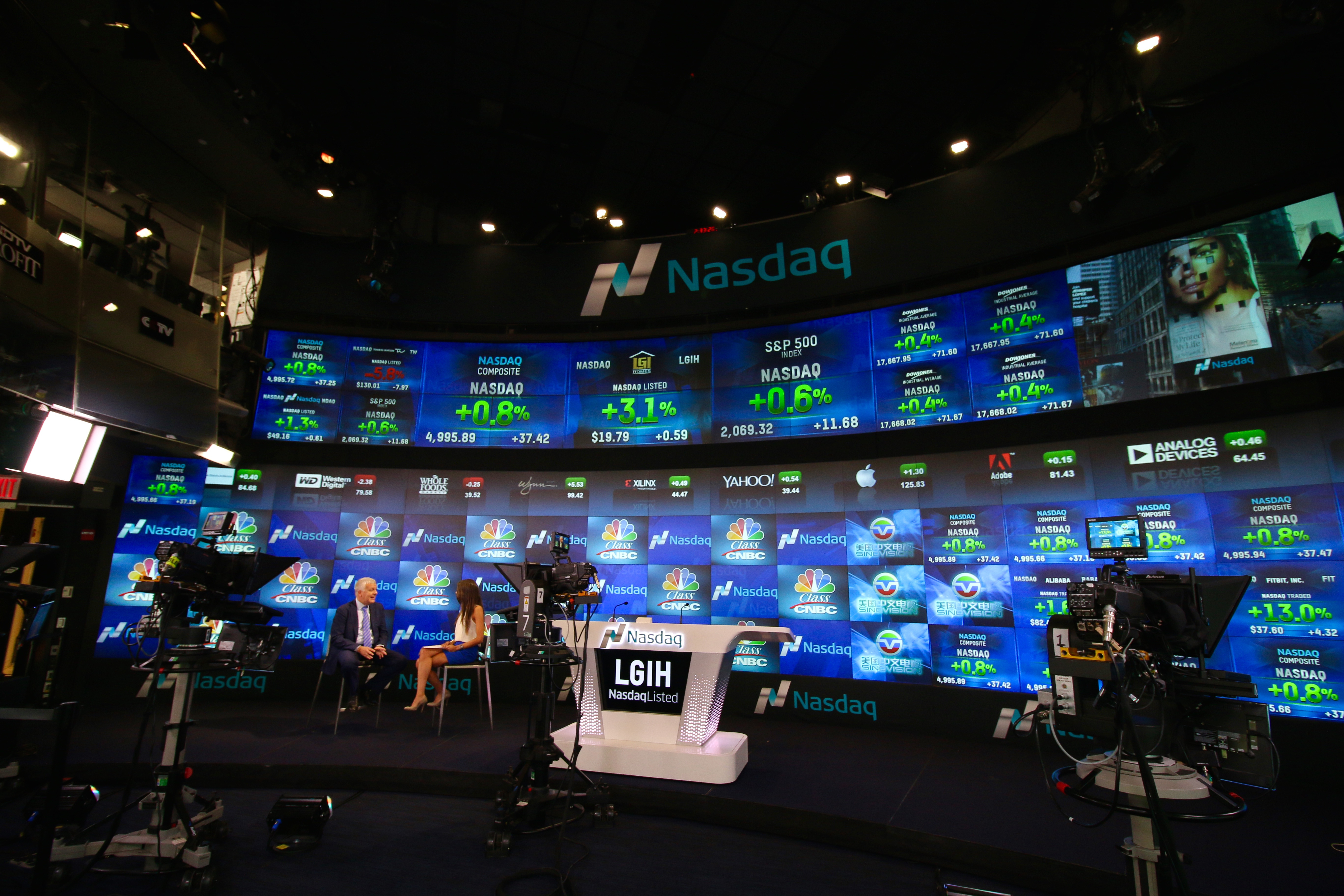
The timing could hardly have been worse. The tech-heavy Nasdaq dropped 2.9 percent on Friday and is now down 7.8 percent from its all-time closing high, reached on October 6, according to Reuters; BusinessLine put the Nasdaq 100's Friday fall at 3.5 percent. Signal Post News covered the session in its report on the Nasdaq's worst day since June, when Intel plunged 29 percent as investors revolted against the cost of the AI buildout. That context is essential to understanding the AI stock selloff Nasdaq investors have just lived through: the market has not stopped believing in artificial intelligence, but it has started demanding to see returns on the hundreds of billions being spent on it.
The Anthropic race: two labs, one pool of money
Reuters reported that OpenAI is pursuing a listing in 2027 and has been keen to close this round partly to get ahead of Anthropic's imminent listing, because the two companies tap a similar investor base. BusinessLine, citing the FT, puts the rival's timetable much sooner: Anthropic is preparing to go public next month at a valuation of at least $1.5 trillion. The Anthropic IPO valuation being discussed — at least $1.5 trillion, tested in public, with public liquidity attached — is higher than the $1.25 trillion private mark OpenAI is now seeking. An investor with a fixed AI allocation is being asked to choose between a private stake in OpenAI at $1.25 trillion with no near-term exit, and a public stake in Anthropic at $1.5 trillion that can be sold the next day. Liquidity is worth a premium, and the reported OpenAI IPO 2027 plan means that premium cannot be matched until next year at the earliest. Signal Post News tracked the rival's approach to market in its coverage of the S&P 500's rise as Anthropic's IPO plans advanced.
Why this matters
A one-third smaller round at a valuation $150 billion lower is, first of all, a data point about the price of compute. OpenAI's model requires capital on an unprecedented scale: data centres, chips and power, contracted years ahead. The MGX structure — capital in exchange, in part, for an option to lease Gulf computing capacity — shows what the money is actually for. When the buildout's cost is fixed by contracts but the valuation at which it can be financed moves with the Nasdaq, a selloff does not merely dent a paper fortune; it changes how much infrastructure a company can promise, and how fast. Gulf capital benefits twice over: it buys into the defining company of the AI era at a lower mark than was asked a month ago, and it anchors the physical buildout — and the leasing revenue that comes with it — in its own territory.
It is equally important to say what the cut is not. A cut target is not a failed round. OpenAI is still, on the reported terms, raising about $20 billion, and the named participants include the most sophisticated technology investors in the world, still writing cheques at a valuation above a trillion dollars. The losers, if the term fits anyone, are the early believers in ever-rising private marks — the assumption that each OpenAI round would be larger and richer than the last simply because the last one was. The historical comparison makes the break vivid. OpenAI raised $122 billion in March 2026, according to BusinessLine's account of the FT reporting — the largest private raise in history, completed in a market still rewarding AI spending as vision. Seven months later, the same company is trimming a round to $20 billion because some investors trimmed first. The product has not collapsed. What changed is the price of belief.
The numbers, side by side
Target: $30 billion last month, about $20 billion now — a cut of $10 billion, or one third. Valuation: $1.4 trillion last month, $1.25 trillion now — $150 billion, roughly 11 percent, lower. Expected first close: less than $20 billion, because some allocations were reduced. Market backdrop: the Nasdaq down 2.9 percent on Friday alone and 7.8 percent below its October 6 record close; the Nasdaq 100 down 3.5 percent on the day. Historical scale: $122 billion raised in March 2026, which means this round — even at its original $30 billion target — was always a top-up rather than a transformation, and at $20 billion it amounts to about one sixth of the March raise. Competitive benchmark: Anthropic preparing to list at at least $1.5 trillion, a fifth higher than OpenAI's new private mark. Numbers like these do not prove the AI boom is over. They prove its financing terms are now set by sceptics as well as believers.
What happens next
Three events will decide how this episode is remembered. The first is the first close itself: if the round closes near $20 billion with MGX, the named venture firms and SoftBank in place, the cut will read as discipline; if it closes far below, it will read as the moment private AI valuations cracked. The second is the retail tranche — wealthy individuals offered stock at $1.25 trillion will make the same calculation institutions just made, with less information, and their take-up will be an unusually honest poll of belief in the OpenAI story. The third is Anthropic's debut: its pricing next month will set the public benchmark against which OpenAI's private mark — and its 2027 listing plans — are judged. A hot Anthropic debut could paradoxically help OpenAI, by proving public demand for frontier-lab equity; a cold one would darken the whole sector. As Signal Post News' reporting on OpenAI's revenue figures and the October tech selloff has shown, the argument is no longer about whether the models work, but about what the cash flows justify. On this week's reported evidence, that argument has moved $10 billion already — and it is not finished.
Sources
- Reuters (October 30, 2026) — “OpenAI slashes funding target by $10 billion amid tech rout, FT reports”: the $10 billion cut, the $20 billion target at a $1.25 trillion valuation, the Friday deadline, the expected first close below $20 billion, the MGX-led UAE consortium and compute-lease option, the participating venture firms, the retail offering, the Nasdaq falls, the 2027 listing plan and the no-comment responses.
- Financial Times reporting as cited by Reuters — the original account, sourced to people with knowledge of the matter, of the reduced funding target and investor allocations.
- The Hindu BusinessLine (October 31, 2026) — “OpenAI funding target cut by $10 billion as AI slumps”: the same $30 billion / $1.4 trillion to $20 billion / $1.25 trillion move, SoftBank among planned participants, Anthropic preparing to list next month at at least $1.5 trillion, the Nasdaq 100's 3.5 percent Friday fall, OpenAI's $122 billion March 2026 raise, and the declined comments to the FT.
- Bloomberg News as cited by BusinessLine — last week's report that OpenAI was seeking capital at a $1.25 trillion valuation in the final stages of negotiations.
The funding terms in this article are reported terms, attributed to the Financial Times via Reuters and to The Hindu BusinessLine; OpenAI has not confirmed them, and OpenAI, MGX, Coatue, Sequoia, Andreessen Horowitz and SoftBank either did not respond to or declined the comment requests described above, while Founders Fund could not be reached by Reuters. Analysis is by Signal Post News.