Markets
October ended with a reckoning. The Nasdaq fell 2.86 percent in its worst session since June, Intel lost more than a quarter of its value in its worst day since 1974, and chip stocks cratered — not because the economy cracked, but because investors finally added up the AI bill and asked who is going to pay it.
Track it live: live markets tracker — indexes, yields, oil and gold

Stock market today closed the month with the kind of session that rewrites the story of a whole earnings season. The Nasdaq Composite plunged 747.73 points, or 2.86 percent, to 25,437.00 — its largest one-day percentage drop since June 5 — while the S&P 500 fell 140.32 points, or 1.82 percent, to 7,580.07 and the Dow Jones Industrial Average lost 572.25 points, or 1.09 percent, to 51,770.31. All three indexes closed lower on the week. The Nasdaq, which set an all-time closing high on October 6, is now down 7.8 percent from that peak and has posted its worst month since March 2025. The S&P 500 also lost ground in October; only the Dow, the index least exposed to the AI trade, finished the month higher.
Nothing about Friday's macro backdrop screamed crisis. There was no bank failure, no geopolitical shock, no disastrous jobs report. What there was, instead, was a pile of earnings reports — from Intel late Thursday, from Amazon, and from Alphabet the day before — that all told the same story from different angles: the artificial-intelligence buildout is consuming cash at a pace that has outrun the revenue it is supposed to produce, and the market has stopped giving the spending the benefit of the doubt.
Why the stock market is down today: the AI bill came due, again
Thursday's session had already cracked the mood, when Alphabet plunged 12.6 percent on an earnings miss and negative free cash flow. Friday turned a crack into a rout. Intel warned it would burn cash this year. Amazon reported a sharp cash outflow and signalled still more capital spending next year. Between them, Amazon, Google, Microsoft and Meta spent more than $200 billion in the third quarter alone, according to Swissquote Bank analyst Ipek Ozkardeskaya, and industry tallies put the five largest spenders' 2026 commitments at roughly $800 billion — a sum approaching the GDP of Switzerland, committed in a single year, largely to data centers whose returns remain mostly promise.
"It's fair to say that this week, not just today, has been very much about the future of AI and what that's going to look like, whether there will be a positive return on investment and if so, how quickly," said Oliver Pursche, senior vice president at Wealthspire Advisors in New York. Joe Tigay of Equity Armor Investments put the phase change more bluntly: "We're moving out of the hopes and dreams phase of the AI trade and into the 'show me' phase." That sentence explains Friday better than any single earnings line. For three years, spending announcements were rewarded as vision. This week, for the first time at scale, they were punished as costs.
Intel stock plunge: the worst day since 1974
The single most violent move belonged to Intel. The chipmaker's shares plunged 28.6 percent — its worst day since 1974 and the second-worst in its history as a public company — after it guided fourth-quarter revenue to between $15 billion and $16 billion, well below the $17.1 billion analysts expected. The headline third-quarter numbers had actually beaten forecasts, with adjusted earnings of 52 cents a share against expectations of 40 cents and revenue of $16.51 billion. Investors did not care. What they heard was everything around the numbers: a weak personal-computer market made worse by soaring memory-chip prices, manufacturing bottlenecks, heavy spending to expand production, and finance chief David Zinsner's warning that the company does not expect to take in more cash than it spends this year. Client computing revenue — the PC business that remains Intel's foundation — fell 5 percent from a year earlier to $8.1 billion.
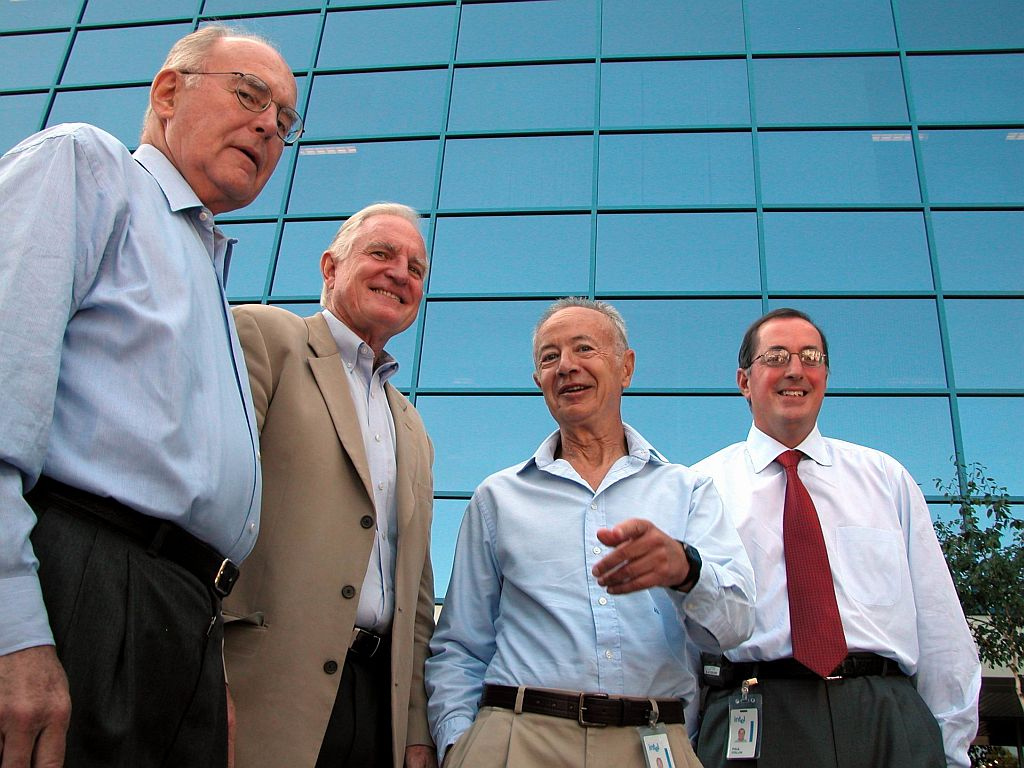
Context matters before writing Intel's obituary. Even after losing more than a quarter of its value in a day, the stock is still up about 78 percent this year, because investors had spent 2026 betting that Intel — the industry's problem child, perpetually restructuring — would be rescued by the same AI demand wave that enriched its rivals. Friday's verdict was narrower and crueler: the AI wave lifts companies that sell the picks and shovels at high margin, and it drowns companies that must spend like hyperscalers without hyperscaler cash flow. Intel guided like a company whose turnaround is real but slow, in a market that has run out of patience for slow.
Amazon, Alphabet and the cash-flow question
Amazon's stock fell 1.4 percent by the close — a modest final number that hides a violent day, with shares down more than 6 percent before the open after its third-quarter results missed expectations. The detail that haunted the tape was cash flow: Amazon reported negative free cash flow of $42.4 billion over the trailing twelve months, against positive cash flow of $14.8 billion a year earlier, while holding its 2026 capital-expenditure forecast at about $220 billion. Alphabet fell another 1.4 percent on Friday, capping the worst month in its history as a public company, a day after a 12 percent plunge wiped roughly half a trillion dollars from its market value on slowing search-advertising growth and a spending plan of up to $205 billion. The contrast with Microsoft — the one giant that beat on cash flow even while raising $25 billion of debt on Thursday — only sharpened the market's new sorting rule: spenders who can show the money are forgiven; spenders who cannot are repriced.
Social media supplied the day's second-worst casualty. Reddit shares fell about 26 percent after weaker-than-expected daily user figures, with the company warning that Google's AI-driven search answers are eating the referral traffic that feeds its growth — the AI boom taxing, in real time, one of the open web's largest communities. It is a useful parable for the whole week: the technology is genuinely transformative, and the transformation's costs are landing on real income statements, including some belonging to the transformers' own ecosystem.
Chip stocks and the damage map
Semiconductors, the trade's aristocracy, took the heaviest fire. The closely watched Philadelphia semiconductor index sank 7.2 percent on Friday and lost more than 15 percent in October. Nvidia fell 4.2 percent, AMD slid 10.9 percent, Broadcom dropped about 5 percent, and server makers Dell and HP fell 10.8 percent and 9.6 percent respectively. The S&P 500's technology sector posted its largest monthly percentage loss since March 2025, and communication services — home to Alphabet and Meta — registered its biggest monthly drop since April 2022. Energy was the conspicuous shelter: Exxon and Chevron beat expectations on Friday, helped by crude prices that the Hormuz crisis has held above $100 a barrel, a reminder that this is a rotation with winners, not a market-wide liquidation.
Why this matters
Three things make Friday more than a bad day. First, the financing math has changed. Much of the AI buildout is now being funded with borrowed money — Microsoft's $25 billion debt sale on Thursday was one of several — just as traders price the Federal Reserve, which held rates steady at 3.75 to 4.00 percent this week, to raise rates by more than 50 basis points by mid-2027, according to LSEG data. Debt-funded spending meets rising borrowing costs at exactly the moment investors start demanding returns: that is how a growth story becomes a credit question. Second, concentration cuts both ways. A market where a handful of companies carry the indexes can rise for years on their strength — and can lose 2.9 percent in a day on their stumble, dragging the retirement accounts of millions of people who never chose to bet on AI at all. Third, the skeptics are not obviously wrong, but neither are the builders. "The AI trade is down, but not out," said Paul Stanley of Arca. "This is not the first tech and AI correction, and it won't be the last." The honest summary of October is that the market did not declare the AI boom a bubble; it declared the boom's free pass over. From here, the spending must be earned, quarter by quarter, in cash.
What it means for your 401(k), your mortgage and your savings
For readers who own the market rather than trade it, Friday's lessons are practical. Your 401(k): a 2.86 percent Nasdaq day feels brutal in an index fund because the fund is, by weight, substantially a bet on a dozen technology companies — October is what that concentration costs when the giants wobble together, and it is the price of the same concentration that powered the gains. Your mortgage and borrowing costs: with traders pricing Fed rate hikes rather than cuts into 2027, the era of cheap money is not returning soon, and loans keyed to bond yields will stay expensive even if the Fed pauses. Your savings: the flip side remains that cash still pays — money-market funds and high-yield savings accounts continue to offer returns unimaginable five years ago. None of this is a reason to trade on one day's headlines; it is a reason to know what you own and why a chipmaker's guidance can move it.
What to watch next
The calendar now turns political and monetary. OPEC+ meets November 1 with oil above $100. U.S. midterm elections fall on November 3, with control of Congress — and the fiscal and regulatory weather for the AI buildout — in the balance. Every inflation and jobs print between now and the Federal Reserve's December meeting moves the hike odds that have become the market's master variable. And the earnings verdicts are not finished: the remaining AI spenders must now do what Microsoft did — show cash alongside ambition — or expect Friday's treatment. October's message to the most valuable companies on Earth was simple, and it will still be the market's message in November: show me.
Sources: Reuters, Wall Street closing report, October 30, 2026; CNN, markets coverage, October 30, 2026; Invezz closing report, October 30, 2026; LSEG data. Closing levels as of the 4 p.m. Eastern close on Friday, October 30, 2026. This article is reporting and analysis, not investment advice.