Technology · Markets
A debate over net versus gross revenue landed on a market already strained by record bond yields and $100 oil. The central question is no longer whether AI demand is growing, but whether it is growing fast enough—and cleanly enough—to support the capital committed to it.
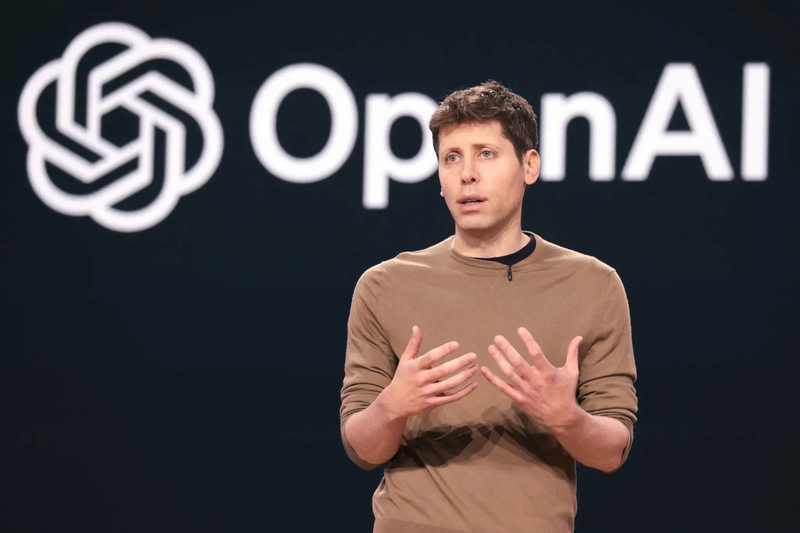
Why the OpenAI annualized revenue $50 billion figure matters
The missing $20 billion is important, but not because it suggests OpenAI is small. A roughly $50 billion run rate would still be extraordinary for a company whose 2025 revenue was reported at about $13 billion. On a simple comparison, that points to revenue running at nearly four times last year's level.
What changed Thursday was the market's confidence in the yardstick. OpenAI is the demand anchor for a network of suppliers, cloud partners, lenders and power developers. Its revenue is not merely a private-company metric; it is a proxy for how much computing capacity the AI economy may be able to pay for. If that gauge is less certain, every forecast built on top of it deserves another look.
That is why the news traveled beyond OpenAI. A lower or differently defined run rate can affect expectations for chip shipments, cloud utilization, data-center leases and project finance. It also feeds the debate examined in Signal Post News coverage of large, debt-backed Nvidia chip purchases.
How $70 billion became $50 billion
OpenAI vs Anthropic revenue is not an apples-to-apples comparison
According to the reports, the $70 billion figure did not come from OpenAI. It reflected assumptions made by investors who tried to put OpenAI's figures on a comparable basis with Anthropic. The companies recognize parts of their businesses differently: Anthropic reportedly books sales generated through cloud partners including Amazon Web Services and Google Cloud as revenue, while OpenAI reports net revenue after partner arrangements.
In practical terms, one calculation grossed up OpenAI's number to include money that moves through revenue-sharing relationships; the other excluded those flows. CNBC reported that the $70 billion estimate included revenue-sharing deals, while the nearly $50 billion figure excluded them. Both can describe economic activity around the same product ecosystem, but they do not describe the same accounting line.
That nuance changes the interpretation. If the difference is primarily presentation, the report is less a collapse in demand than a warning about comparing private companies with different accounting conventions. Yet the episode still matters because a figure used in valuation and infrastructure debates spread widely before its basis was clear.
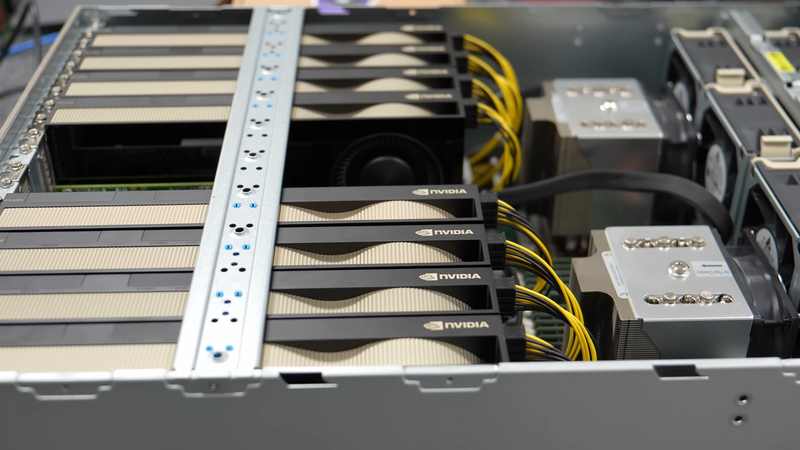
AI stocks tumble as a crowded trade meets expensive money
Nasdaq worst day since August included an Nvidia Intel Oracle drop
The Nasdaq Composite fell 1.25% on Thursday, its worst session since mid-August, while the S&P 500 declined 0.5%. Selling accelerated after the Financial Times report appeared around midday. Nvidia lost 2.9%, Intel fell 5.3% and Oracle dropped 5.5%, with weakness spreading across semiconductors, cloud computing and other AI-buildout names.
The revenue report was not the day's only pressure. The 10-year Treasury yield reached a multi-decade high of 5.36% before easing to 5.22%, and Brent crude moved above $100 a barrel. Higher yields reduce the present value investors assign to profits expected far in the future. That effect is particularly sharp for growth shares whose valuations depend on years of expanding AI demand.
The combination created an unforgiving setup: a heavily owned technology trade, a fresh question about its most important private demand source and a bond market already raising the price of capital. The move cannot be attributed to one headline alone, but the timing showed how sensitive the trade has become to any change in the revenue narrative.
The bull case: accounting artifact, explosive growth
Investors taking the constructive view can point to the scale of the underlying business. A $50 billion annualized pace would still represent rapid expansion from the roughly $13 billion reported for 2025. If the $20 billion gap mostly reflects gross-versus-net treatment, the economic demand flowing through the ecosystem may be stronger than the headline suggests.
They can also argue that different channel strategies naturally produce different revenue presentations. A model company that sells through cloud partners will not look identical to one with a different contractual structure. On that reading, Thursday's shock says more about imprecise comparisons than about end-user adoption.
The bear case: valuation and circular financing
Skeptics see a different risk. OpenAI is reportedly discussing a new funding round at a valuation near $1.4 trillion, with an initial public offering on hold. Relative to a $50 billion annualized revenue figure, that valuation would equal roughly 28 times revenue before accounting for costs, profits or the capital required to serve users. Even exceptionally fast growth leaves little margin for disappointment at that level.
The financing web adds another concern. Chipmakers, cloud providers, data-center developers and lenders increasingly support customers that in turn buy their products. Broadcom is reported to be lining up more than $50 billion in financing for OpenAI-related chip capacity. Such arrangements can speed deployment, but critics ask whether they make demand look self-reinforcing before end customers have proved they can generate durable returns. The same issue shadows financing tied to Anthropic's expansion.

AI spending sustainability now moves to earnings season
Four tests come next. First is OpenAI's funding round: the valuation, investor mix and disclosures will show whether private capital treats the revenue distinction as material. Second is whether investors apply the same scrutiny to Anthropic's gross revenue and cloud-partner relationships, including the questions raised by Anthropic's expanding commercial reach.
Third is quarterly reporting from Microsoft, Amazon, Alphabet, Oracle and the chipmakers. Markets will be listening for hard measures of utilization, customer commitments, depreciation and cash returns—not only capital-expenditure totals. Finally, bond yields will determine how much patience investors can afford. A 5%-plus 10-year yield raises the hurdle for every long-duration growth story.
The neutral conclusion is narrower than either side's strongest claim. The $50 billion figure does not prove the AI boom is faltering, and the gross-versus-net explanation does not make the confusion irrelevant. It shows that the market has reached the point where definitions, cash flows and contractual economics matter as much as model performance. The next phase of the AI trade will be judged less by how much money is committed and more by how clearly the revenue behind it can be measured.