AI Relief Rally Lifts Stocks as Yields Hold Near 5% and Oil Slips
Track it live: live markets tracker — indexes, yields, oil and gold
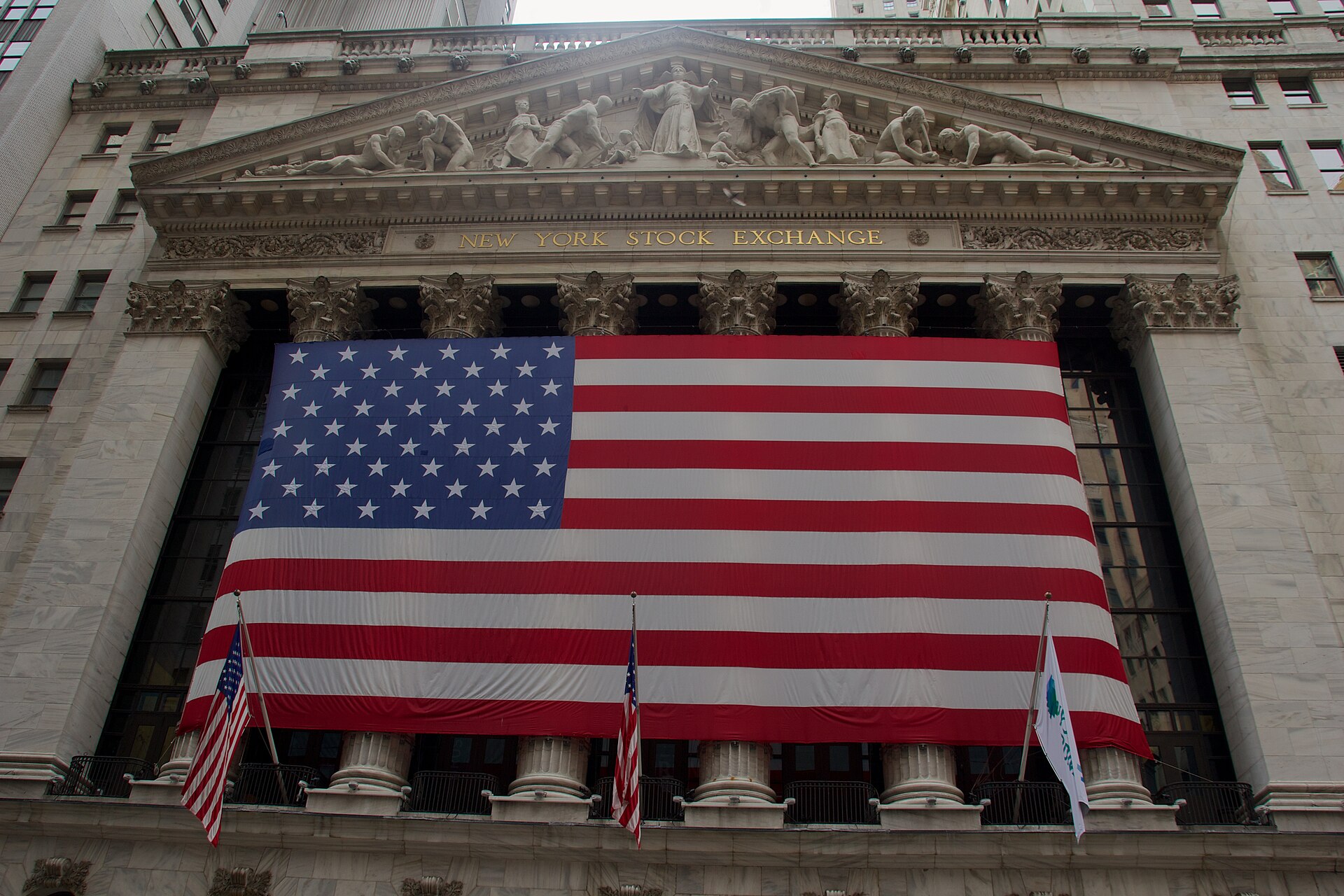
Monday's session was the mirror image of the fortnight that preceded it. The S&P 500 and the Nasdaq had fallen for two straight weeks, knocked first by doubts about the scale and financing of AI spending and then, on Friday, by crude oil above $100 a barrel, which dragged the Dow down 652.82 points in its worst day since August. Monday unwound a piece of both fears at once. The VIX volatility index fell 5.04 percent to 18.47, and the buying was led by exactly the stocks that had been sold hardest: semiconductors, AI infrastructure and Tesla. Yet the day was no broad celebration. Communication services, home to Meta, Alphabet and Netflix, was the market's worst sector, and the split told the day's real story: investors were willing to pay up again for the companies that sell the AI build-out, while remaining deeply sceptical of the giants funding it.
The close in numbers
- S&P 500: 7,676.77 — up 53.10 points, or 0.70 percent, recovering part of Friday's 0.52 percent fall to 7,623.68 and snapping a two-week losing streak.
- Dow Jones Industrial Average: 52,361.58 — up 146.42 points, or 0.28 percent, a partial rebound from Friday's 652.82-point drop to 52,215.16.
- Nasdaq Composite: 26,169.38 — up 214.04 points, or 0.82 percent. The Nasdaq 100 rose 1.09 percent.
- Russell 2000: 2,786.42 — up 0.38 percent, as small companies joined the relief rally.
- VIX volatility index: 18.47 — down 5.04 percent, with late prints at 18.39.
- 10-year Treasury yield: 4.99 percent (about 4.974 percent in Reuters reporting), essentially flat on the day. 30-year: 5.30 percent, down about 1 basis point. 3-month Treasury bill: 4.03 percent.
- WTI crude oil: settled at $101.76 a barrel, down 1.46 percent. Brent crude: settled at $115.81, down 0.78 percent, after briefly topping $117 in early trading.
- Gold: $4,027 a troy ounce, up 0.46 percent. Silver: about $53.96. U.S. dollar index: 102.00, up 0.19 percent. Bitcoin: $79,761, down 0.33 percent. Ethereum: $2,310, down 0.73 percent.

Why markets rose: the Anthropic filing
The day's catalyst arrived in a regulatory filing. Anthropic, the San Francisco AI company founded by former OpenAI researchers and backed by Amazon and Google, publicly filed its S-1 registration statement on Monday for a listing on the Nasdaq under the ticker ANT, with the debut expected in mid-November and pricing reported for November 19–20. Revenue reached $16.3 billion in the first half of 2026 alone, against $4.6 billion for all of 2025 — growth of a speed rarely seen at this scale. Against that, the company reported a net loss of $80.7 billion for the same six months, a figure swollen by the cost of building and renting the computing capacity its models require. The offering is expected to value Anthropic at between $1.5 trillion and $1.75 trillion, according to reports — a level that would rank a company founded in 2021 among the most valuable on Earth from its first day of trading.
Supporters of the deal, cited by Reuters, argue that a pure-play AI listing is precisely what the market has lacked: until now, direct exposure to frontier AI models meant buying the diversified giants — Microsoft, Alphabet, Amazon — whose AI economics are buried inside far larger businesses. A listed Anthropic, they say, gives the AI trade a benchmark of its own, and its revenue trajectory shows corporate demand for AI monetising faster than the sceptics allowed. Monday's read-across was immediate: if Anthropic's growth is real, then the chips, servers and data centres it buys are not a bubble but a supply chain — and Nvidia, Micron, Broadcom and CoreWeave were marked back up accordingly.
The counter-argument, made by analysts quoted by the Associated Press and Reuters, is written in the same document. An $80.7 billion half-year loss is not a rounding error; it reflects an industry building data centres with borrowed money at a pace that assumes demand keeps compounding for years. A debut valued near $1.75 trillion would also divert enormous amounts of capital toward a single new listing, and it arrives after a fortnight in which investors punished exactly this arithmetic. On this view, the filing did not settle the AI-spending debate; it raised its stakes. Both readings were visible in Monday's tape: the suppliers of the build-out soared, while the companies writing the biggest cheques for it — Meta above all — went down again.
Winners and losers
Technology was the S&P 500's best sector, up 1.72 percent on the XLK fund measure, and semiconductors were its engine: the VanEck Semiconductor ETF (SMH) gained 2.74 percent and the Philadelphia Semiconductor Index rose over 3 percent, though it remains down about 12 percent in October. Intel jumped 4.04 percent to $90.47, Micron gained 2.98 percent, AMD rose 2.80 percent, Nvidia added 2.39 percent — nearly 3 percent in Reuters' intraday reporting — and Broadcom climbed 2.33 percent. AI infrastructure names joined in: CoreWeave rose 5.7 percent and Nebius 2.3 percent, while Microsoft and Amazon each gained nearly 1 percent. The day's biggest single-stock story, though, was Tesla, up 5.21 percent to $391.62 after Barclays upgraded the shares to overweight from equal-weight — a reminder that an analyst's change of mind can move even a company of Tesla's size by five percent in a session.
The losers were concentrated where the AI bill comes due. Communication services was the worst sector, down 1.57 percent on the XLC measure. Meta fell 1.88 percent, extending last week's 9.4 percent slide that followed its decision to raise AI spending and sell stock; Netflix dropped 2.96 percent; and Alphabet lost 1.06 percent, extending its 6.0 percent fall of last week — with its own earnings, and its own AI spending plans, due within days. The pattern is the week's defining tension in miniature: the market is rewarding the arms dealers of the AI build-out while interrogating the balance sheets of the armies.
Oil, yields and the 5 percent problem
Crude gave the rally room to run. WTI settled at $101.76, down 1.46 percent, and Brent at $115.81, down 0.78 percent after briefly topping $117 — a retreat from Friday's settlements near $103.27 and $116.72, which had capped a weekly Brent rally of about 6.2 percent driven by attacks on Saudi energy sites and fears around the Strait of Hormuz. The easing had a diplomatic source: Saudi Arabia's defence minister held talks in Tehran, and Qatari mediators travelled to Tehran on Sunday in an effort to lower U.S.–Iran tensions, taking some of the war premium out of the price. What did not change: crude remains above $100 a barrel, a level that still taxes households and hauliers, and a single headline from the Gulf could restore the premium in an hour. You can follow both benchmarks on our live oil price tracker and forecast.

The bond market, by contrast, offered no relief at all — and it is the bond market that now sets the terms for everything else. The 10-year Treasury yield ended at 4.99 percent, essentially flat, with the 30-year at 5.30 percent and three-month bills paying 4.03 percent. A 10-year yield a whisker under 5 percent is the gravity in every valuation model on Wall Street: it anchors mortgage rates and corporate borrowing costs, and it caps what investors will pay for a dollar of earnings expected years in the future — the exact kind of earnings on which AI valuations rest. That is why the Federal Reserve's meeting, which begins Tuesday and ends Wednesday, October 28, at 2:00 p.m. Eastern, matters more than any single earnings report this week. The federal funds target range stands at 3.75 to 4.00 percent and is widely expected to stay there; futures markets on Monday priced only about a 12.7 percent probability of a rate hike at this meeting. But with yields at these levels, the statement's language about inflation and oil will be read as closely as the decision itself.
Brazil's crash, contained
The day's true crash happened 5,000 miles from Wall Street, and American investors mostly shrugged at it. Brazil's Ibovespa index plunged 13.88 percent to 176,608 after Luiz Inácio Lula da Silva won Sunday's presidential runoff, with the exchange operator B3 pausing trading for 30 minutes as the selling overwhelmed the market. The Brazilian real fell 6.60 percent against the dollar to 5.41 per dollar, and the U.S.-listed Brazil ETF (EWZ) dropped 19.82 percent. The final tally from Brazil's Superior Electoral Court (TSE) gave Lula 51.76 percent of the vote against 48.24 percent for Flávio Bolsonaro — a result markets had not priced, having positioned for a Flávio victory, according to reports from São Paulo. For U.S. portfolios, the exposure runs mainly through emerging-market funds and commodity names rather than the S&P 500 itself; Monday's orderly New York session was the market's verdict that, this time, the shock stays in Brazil.
What this means for regular people
For anyone whose retirement savings sit in an index fund or a 401(k), Monday's +0.7 percent day did what such days do: it nudged balances up modestly and, more importantly, it followed two down weeks — a sequence that is a normal feature of investing measured in decades, not a signal that anything about a long-term plan has changed. The numbers from Monday that reach household budgets most directly are not the index closes. They are the 10-year Treasury yield at 4.99 percent, which keeps mortgage rates elevated and refinancing out of reach for most borrowers; the 4.03 percent still paid on three-month Treasury bills, which means cash in savings accounts and money-market funds continues to earn a real return for waiting; and WTI crude above $100 a barrel, which, if it holds, works its way into gasoline and diesel prices over the coming weeks and squeezes every household and small business that drives, delivers or heats with fuel. Monday changed none of those three facts. It changed the price of AI stocks — which matters to a pension, but at one remove, and never as much as the cost of borrowing and driving does.
What to watch next
The calendar now decides whether Monday was a turning point or a pause. The Federal Open Market Committee meets Tuesday and Wednesday, with its decision due Wednesday, October 28, at 2:00 p.m. Eastern and the chair's press conference to follow. About a third of the S&P 500 reports earnings this week, including Alphabet, Microsoft and Amazon — each graded less on its profits than on its AI spending plans, after Meta's experience last week showed how this market now treats a rising capital-expenditure forecast. Later in the week come the first estimate of third-quarter U.S. GDP and the September PCE inflation report, the Fed's preferred price gauge; the European Central Bank and the Bank of Japan also decide policy this week. Behind the data sits November: Anthropic's roadshow and expected pricing on November 19–20, and the OpenAI-listing speculation it will ignite. One relief day has repaired sentiment. It has not repaired yields at 5 percent, or answered what the AI build-out ultimately earns.
Sources: Reuters, Oct. 26, 2026 (closing index levels, Treasury yields, crude settlements, Anthropic S-1 filing details and analyst reaction); Associated Press, Oct. 26, 2026 (market close coverage, AI-spending debate and Brazil market reaction); market close data as reported at the October 26, 2026 close; Anthropic S-1 registration statement, filed Oct. 26, 2026; Brazil Superior Electoral Court (TSE) final runoff tally (Lula 51.76 percent, Flávio Bolsonaro 48.24 percent); CME FedWatch (rate-hike probabilities). Related on Signal Post News: our October 23 market report · the live markets tracker.