U.S. · California · Crime
The Ontario Mills shooting lasted only moments on Friday night, but it emptied concourses at one of the largest outlet malls in California, sent families sprinting for the exits and left a teenager in police custody — and when the Ontario Police Department finished accounting for the evening, the most important fact was the one that did not happen: nobody was struck, and no injuries were reported.
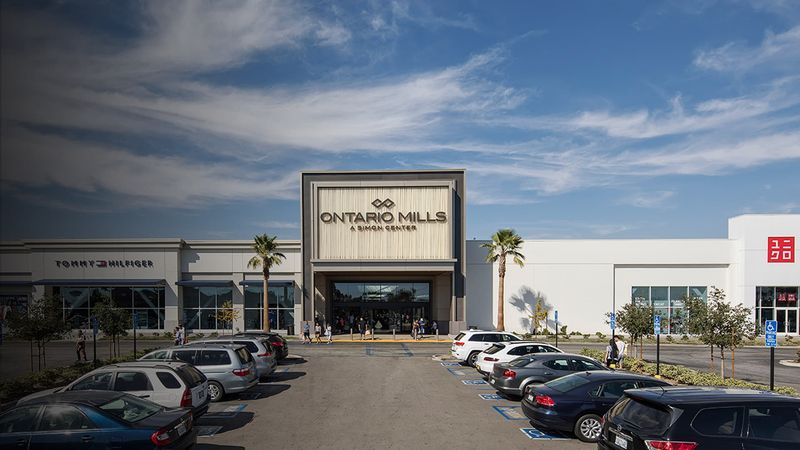
ONTARIO, California — The Ontario Mills shooting began, as far as the official record now stands, at about 7:07 p.m. on Friday, November 13, 2026 — the busiest shopping hour of the busiest shopping night of the week, in a mall that draws visitors from across the Inland Empire and well beyond it. Shots were fired inside the concourse near Dave & Buster’s and Burlington, close to Entrance No. 5, and within seconds the ordinary Friday-night crowd was doing the thing no shopper ever expects to do: running. By the time the Ontario Police Department had contained the scene, a male juvenile suspect was in custody, officers were seeking no one else, and the department was able to say the sentence that separates a frightening night from a catastrophic one. No one had been struck. No injuries were reported.
Everything else about Friday night remains, officially, unresolved. Police have said the cause of the shooting is under investigation, and they have not described what led to it. That restraint is worth underlining at the outset, because the gap between what is known and what is being speculated about online is already wide. What follows is built on what the Ontario Police Department has actually said, reported by ABC7, KTLA, CBS Los Angeles and the New York Post: shots fired, a location, a time, a juvenile in custody, a contained scene, a community told there is no continuing threat, and a mall that resumed normal operations. The analysis around those facts — why a shooting with no injuries still matters, what it reveals about how America’s biggest malls absorb panic, and what happens next for a teenager taken into custody in California — is where this story really lives.
What happened on Friday night
7:07 p.m.: shots in the concourse
The location police gave is specific, and it matters. The shots were fired in the concourse near Dave & Buster’s and Burlington, near Entrance No. 5 of the mall. That is not a remote service corridor or a far corner of a parking structure; it is a main circulation space in a working part of the centre, the kind of wide indoor street along which families move between an arcade-and-restaurant anchor, a major off-price retailer and the rest of the mall. At 7:07 p.m. on a Friday, that concourse would have been carrying its heaviest foot traffic of the day — after-work shoppers, teenagers in groups, families settling the question of dinner, staff mid-shift in the stores on either side.
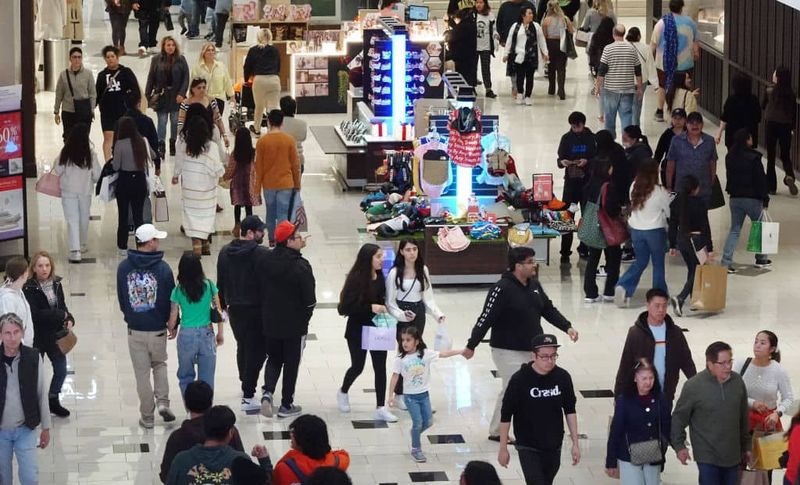
What gunfire does to a space like that is not primarily ballistic; it is acoustic and psychological. A shot indoors, in a hard-surfaced concourse built to carry noise, does not sound like a single event. It echoes, it multiplies, and for the first several seconds almost nobody hearing it can say where it came from. The verified record of Friday night reflects exactly that physics: shopper video from inside the mall showed crowds sprinting through the concourse and the food court, a river of people moving at the speed of rumour, while store after store pulled down its security gates. The gates are the detail that tells the story of modern mall emergencies better than any other. They are the moment retail staff stop selling and start sheltering — a drilled, practised motion, executed in seconds, that turns each shopfront into either a refuge or a wall.
The response, and the all-clear
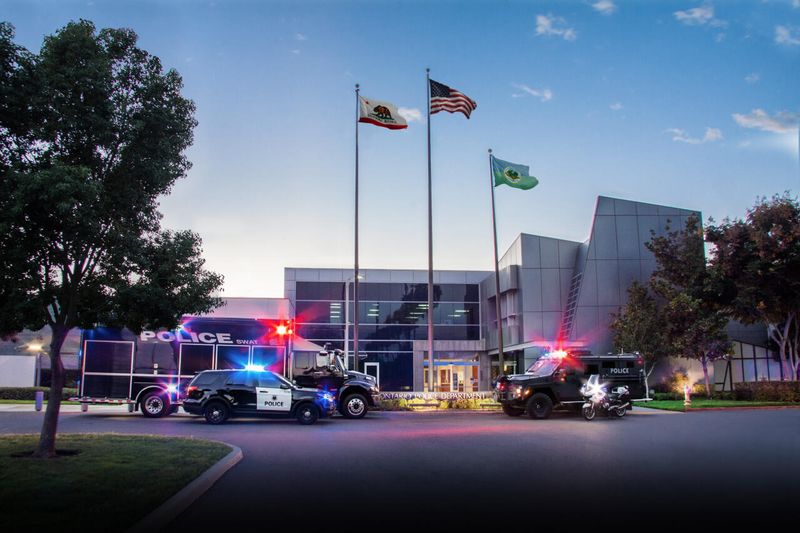
Ontario police moved the incident through the sequence that departments train for and that the public, in the first frightening minutes, rarely gets to see whole. A suspect was taken into custody: a male juvenile, whose name, age and background have not been released — as California law generally requires for minors, a point this article returns to below. Police described the scene as contained and inactive. They said no one else was being sought. They said there was no threat to the community. And they established the fact that will define how this incident is remembered: nobody was struck by the gunfire, and no injuries were reported.
The mall, police said, resumed normal operations. That phrase, standard in police statements, deserves a second look, because it compresses an enormous amount of institutional machinery into four words. It means officers were satisfied the scene held no further danger; it means mall management and its tenants could reopen gates and doors; it means the thousands of people who had fled into the parking lots, or sheltered in stockrooms, or simply driven home shaking, were being told the emergency portion of their evening was over. For the families who ran, of course, normal operations resumed rather later than the statement suggests. They resume at the speed of a child’s questions on the drive home.
What the video shows — and what it cannot
The defining document of Friday night is not a police statement. It is the shopper video: crowds sprinting through the concourse and food court, gates rattling down, the particular chaos of several thousand people simultaneously deciding that the safest direction is away. That footage is why this story travelled nationally within hours, picked up by outlets including the New York Post, and it is worth being precise about what such video can and cannot establish. It establishes the panic, the scale of the evacuation and the speed of the staff response. It does not establish why the shots were fired, and police have not said. Anyone who claims the footage answers that question is selling certainty the evidence does not contain.
There is a second, quieter point about the video. In incident after incident across the United States, the most dangerous phase of a shots-fired event in a crowded public space is not the gunfire itself but the movement it triggers — the crush at exits, the falls, the families separated in the flow. On Friday night, by the official account, that phase also ended without reported injuries. That outcome is partly luck; outcomes in a sprinting crowd always are. But it is also partly design and rehearsal: wide concourses, multiple entrances, gates that close fast, staff who have been walked through what to do, and a police department able to declare a scene contained quickly enough to stop the rumour mill from manufacturing a second emergency outside the doors. The absence of injuries is the headline. It should not be mistaken for the absence of harm, or of lessons.
Why this matters
A Friday night at a super-regional mall
Ontario Mills is not a neighbourhood shopping centre. Opened in 1996 and operated by Simon Property Group, it is one of California’s largest outlet and value-retail destinations — a single-storey ocean of more than 200 stores arranged in a racetrack layout, drawing shoppers from San Bernardino and Riverside counties, from the eastern edge of Los Angeles County and from tour itineraries that treat it as a landmark in its own right. A shots-fired incident in a place like that is never only a local story. It lands in a national argument the country has been having for years about the safety of the shared indoor spaces — malls, food courts, entertainment districts — where American public life still physically happens.
The timing sharpened everything. A Friday evening in mid-November is the front edge of the holiday season, when malls begin their longest hours and their largest crowds of the year. Two weeks from now, on the Friday after Thanksgiving, centres like Ontario Mills will run the single busiest shopping day on the calendar. An incident that empties a concourse in November therefore does its damage twice: once in the moment, and again in the boardroom calculations about staffing, security budgets and holiday readiness that follow it. Every mall operator in America reads a story like Friday night’s as a memo addressed to them.
“No injuries” is not the same as “nothing happened”
Security professionals have a category for Friday night’s event that the news cycle mostly lacks: the shots-fired incident with no casualties. Such incidents rarely lead national news for long, precisely because the casualty count is zero. Yet inside the retail-security industry they are treated as near-misses of the first order, for three reasons. First, the margin was thin: the difference between Friday night’s outcome and a mass-casualty event was not policy or architecture but the direction of the shots and fortune, neither of which a mall controls. Second, the panic itself is a foreseeable injury mechanism, and the fact that it produced no reported injuries this time is evidence about this crowd on this night, not a guarantee about the next one. Third, these incidents are the ones that actually drive policy, because they are survivable enough to be studied in full — every camera angle, every gate, every radio call — by the people who will write the next version of the emergency plan.
There is also the human ledger, which official statements cannot carry. Several thousand people, including children, spent part of Friday night believing they might die in a shopping mall. Some of them will think about that concourse every time they walk into any mall for a long time. A community can be uninjured and still be hurt, and the measure of Friday night’s true cost will be taken in the weeks ahead — in foot traffic, in staff who ask for different shifts, in parents who decide the food court can wait until January.
The mall-security debate this reopens
Gates, guards and the architecture of reassurance
Ontario Mills, like every super-regional centre in California, already operates inside layers of security that shoppers mostly do not notice until a night like Friday: camera networks, roving security staff, coordination protocols with the local police department, store-level lockdown procedures of exactly the kind the gate footage shows being executed. The debate that follows an incident like this is therefore not whether to have security, but which layer gets the next dollar. One school of thought pushes toward visibility — more uniformed presence at entrances, more obvious deterrence at the points where crowds concentrate. Another pushes toward design and intelligence: better camera coverage of concourses, faster communication between mall security and police dispatch, threat-assessment work aimed at the disputes and gatherings that precede violence in retail spaces.
California has had this argument in public before, and recently. When a shooting inside a Spirit Halloween store at Fairfield’s Solano Town Center killed one person and wounded six on Halloween eve, the questions that followed were the same ones now being asked in Ontario: how does a weapon get inside a family shopping space, how fast can staff seal a storefront, how quickly can police convert chaos into a contained scene? Signal Post News covered that attack in our report on the Fairfield Spirit Halloween shooting, and the comparison is instructive precisely because the outcomes diverged: in Fairfield, people died; in Ontario, by fortune and by the facts police have given, nobody was hurt at all. The systems being tested were substantially the same systems. That is the uncomfortable arithmetic at the heart of mall security — preparation shapes the response, but it does not choose the result.
The juvenile question
The second debate Friday night reopens is about age. The suspect in custody is a juvenile. Police have released nothing further about him, and the public argument has therefore moved, as it reliably does, from this teenager to teenagers in general: how a minor comes to be present in a crowded mall on a Friday night in an incident involving gunfire, what responsibility sits with the adults and systems around him, and what the justice system should do with a young person accused in an event that terrified thousands. Critics of California’s juvenile-justice framework argue that the system’s emphasis on rehabilitation and confidentiality under-deters the small number of teenagers involved in gun incidents. Defenders answer that the evidence base points the other way — that most young people who pass through juvenile court do not reoffend, that confidentiality protects exactly the possibility of a life after a childhood case, and that the presence of a gun in a teenager’s world is a failure that begins long before any mall concourse. Friday night’s facts, as officially stated, support neither side’s full argument, because the central questions — why this happened at all — remain under investigation. What the case will test, in the weeks ahead, is process rather than rhetoric.
A juvenile in custody: what that means in California
Because the suspect is a minor, the machinery that now engages is different from the adult system in ways that will shape what the public learns and when. In California, a juvenile taken into custody in a case like this is typically processed through the county probation system rather than booked into a county jail, and the case proceeds in juvenile court, where the filings are called petitions rather than criminal charges and the proceedings are largely closed. The young person’s name and photograph are generally withheld — which is why this article, following the department’s own practice, does not have a name to give you. An early detention hearing decides whether the minor remains in custody while the case proceeds, and prosecutors in the San Bernardino County District Attorney’s office will decide what, if anything, to file once the police investigation reaches them.
Two features of that system matter for readers trying to follow this case. The first is speed behind closed doors: juvenile cases often move faster, and quieter, than adult ones, and long public silences are a feature of the design rather than evidence that nothing is happening. The second is the possibility, in the most serious California juvenile cases, of a hearing on whether a minor should be transferred to adult court — a decision that turns on the specific allegations and the young person’s history. Whether anything of that kind is contemplated here is unknowable on the current record, and it would be irresponsible to speculate: police have not described the circumstances of the shooting, and speculation about a child’s legal exposure, in the absence of the basic facts, is precisely the kind of coverage this story does not need. What can be said is that the system now holding this case was built to answer two questions at once — what happened, and what becomes of the young person responsible for his part in it — and that it will answer them mostly out of public view.
The data in context
Strip Friday night down to its statistics and it is a study in how much of America’s gun-violence problem occurs below the threshold of the casualty reports that usually define it. The verified numbers of this incident are stark in their smallness: one location, one time — about 7:07 p.m. — one suspect in custody, zero people struck, zero injuries reported. Set against the thousands of people inside the mall at that moment, the ratio is a portrait of a near-miss. Researchers who study public-space shootings have long noted that for every incident that produces casualties there are others that produce none, and that the second category is systematically under-examined even though it terrorises communities in much the same way and tests the same emergency systems. Friday night at Ontario Mills is now a data point in that under-examined category, and the people who run malls, staff their stores and police their surrounding streets will treat it as one of the most instructive nights of the year — because everyone lived, and almost everything about the response can be studied without a morgue’s arithmetic getting in the way.
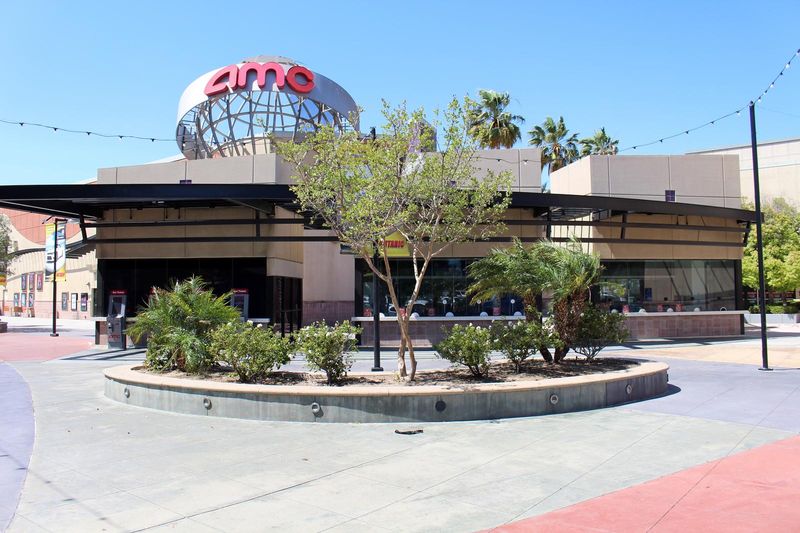
The other numbers belong to the mall itself, and they explain why a single concourse can hold a region’s attention. A centre of Ontario Mills’ scale — more than 200 stores, anchor tenants from Burlington and Dave & Buster’s to a 30-screen cinema, parking fields built for holiday peaks — functions less like a shop than like a small city that assembles every evening and dissolves every night. Cities have crime statistics; so, in effect, do malls, and the operators of the largest ones plan against a baseline in which fights, thefts and alarms are routine and gunfire is the rare tail risk that justifies the entire security budget. Friday night was the tail risk arriving on schedule with the holiday season. The system’s answer — gates down in seconds, a suspect in custody, a scene declared contained, a community told plainly that no one else was being sought — is, on the official record, close to the best version of that answer available. The remaining question is the one no drill can answer: how the shots came to be fired at all.
Who benefits, who loses
The honest answer, two days on, is that nobody benefits from Friday night — but some parties lose less than others, and the distribution of the losses is worth mapping. The mall and its owner lose in the most measurable way: a Friday evening’s trade destroyed, a holiday season now shadowed by a security story, and a brand built on family outings attached, for a while, to the word “shooting” in search results. Tenants lose twice — the night itself, and the foot traffic of the cautious weeks that follow. The city of Ontario loses a measure of the easy confidence with which residents treat their largest shared indoor space. The teenager in custody stands to lose the most of anyone, inside a legal process whose outcomes will follow him far longer than Friday night’s headlines follow anyone else.
Against that ledger, the credits are real but narrow. The Ontario Police Department emerges from the official record with the outcome every department wants and few can guarantee: a suspect in custody, a contained scene, clear public communication and a zero in the casualty column. Store staff across the mall demonstrated, on video the whole country has now seen, that the least glamorous layer of the security system — the rehearsed pull of a gate — works at the speed it is supposed to. And the shoppers of the Inland Empire got the only version of this story that lets a community argue about policy instead of mourning people. That is not a benefit, exactly. It is the absence of the worst thing, which on Friday night was everything.
What happens next
Four tracks now run from Friday night, and they will move at four different speeds. The investigation is the first: Ontario police have said the cause of the shooting is under investigation, and until detectives finish their work — interviews, video review, the reconstruction of a few minutes in a crowded concourse — the public record will stay close to where it stands tonight. Readers should expect the next factual developments to be small, precise and slow, and should treat any account that arrives faster than the investigation with suspicion. The second track is the juvenile case: a detention decision, a prosecutorial review, and then a process that will unfold largely outside public view, as California law intends for minors. The third track is the mall’s: expect a visible security posture at Ontario Mills in the coming days, a management review of Friday night’s response, and hard internal questions about the holiday-season plan, with Black Friday — the centre’s biggest test of the year — less than two weeks away.
The fourth track is the argument, and it is already running. Friday night will be cited by those who want tougher consequences for juveniles involved in gun incidents, by those who want malls to harden their entrances, by those who insist the real story is how close a routine family evening came to disaster, and by those who point to the zero in the casualty column and say the systems worked. The facts, as police have given them, can carry some of that weight but not all of it. What happened in the concourse near Dave & Buster’s and Burlington at 7:07 p.m. on Friday, November 13, 2026, is known. Why it happened is not. Until the investigation answers that, the most honest sentence in this story remains the one the Ontario Police Department led with: shots were fired, a juvenile is in custody, no one else is being sought, there is no threat to the community — and nobody was hurt. For a Friday night that began with thousands of people running, that is not a small ending. It is the whole difference.
Related coverage: the Fairfield Spirit Halloween shooting at Solano Town Center · the FBI’s foiling of a Mall of America attack plot · the Magic City Classic shooting in Birmingham
Sources
Ontario Police Department statements on the November 13, 2026 Ontario Mills shooting (time, location, juvenile suspect in custody, scene contained, no injuries, no continuing threat, resumption of normal operations), as reported by ABC7 Los Angeles, KTLA, CBS Los Angeles and the New York Post, November 13–14, 2026. Shopper video from inside Ontario Mills showing crowds evacuating the concourse and food court and stores closing security gates, as broadcast by ABC7, KTLA and CBS Los Angeles. Background on Ontario Mills (Simon Property Group; opened 1996; store count and anchors) from Simon Property Group property materials. California juvenile-justice process described from the California Welfare and Institutions Code framework governing minors in custody. The motive, the circumstances leading to the shooting and all other unconfirmed details remain under investigation and are not stated in this report.