U.S. · News · Alabama
Gunfire in the vendor rows behind Legion Field’s south end zone killed one person and wounded eight others on Saturday night, turning the largest HBCU football weekend in America into a crime scene hours after Alabama A&M’s 31–28 win in the 85th Magic City Classic.
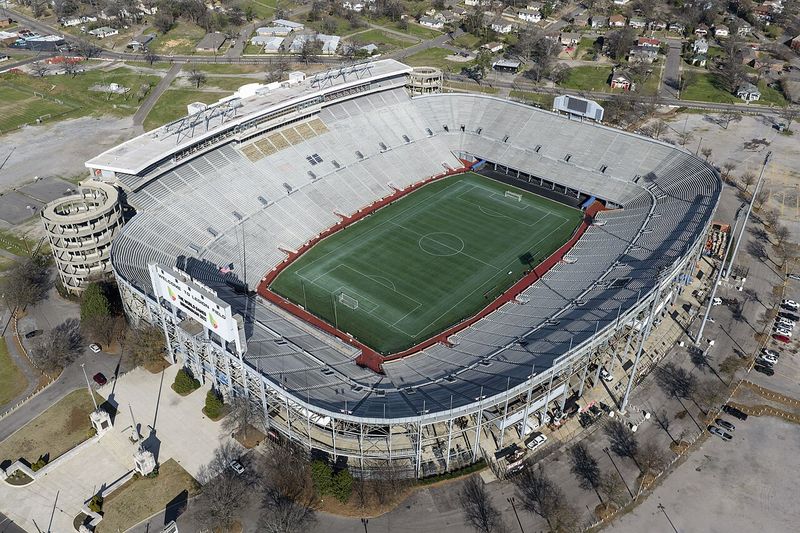
The Magic City Classic shooting began at about 7:50 p.m. on Saturday, October 31, when multiple shots rang out in the 400 block of Graymont Avenue West, on the street behind the south end zone of Legion Field in Birmingham, Alabama, where food and merchandise vendors were still set up after the game. Officers responding to the gunfire found multiple people wounded. By the time Birmingham police gave their first full account, the toll was nine people shot: one killed, one in critical condition and seven in stable condition, according to De’Rell Freeman, an assistant public information officer with the Birmingham Police Department, as reported by CNN and the Associated Press.
The shooting came after the 85th Magic City Classic, the annual football game between Alabama A&M University and Alabama State University — the state’s two largest historically Black universities — which Alabama A&M won 31–28. Nearly 70,000 fans attended the game, the Associated Press reported, but Birmingham Police Chief Michael Pickett said most spectators and families had already left stadium property by the time the shots were fired. Pickett said he was “very grateful that more people weren’t injured,” and he described what happened on Graymont Avenue as senseless violence. The Jefferson County Coroner’s Office confirmed the death, the AP reported.
What police have confirmed
The scene and the timeline
Police place the gunfire at about 7:50 p.m. in the 400 block of Graymont Avenue West, the street that runs behind the south end zone stands of Legion Field, in an area where vendors had set up along the street for the post-game crowds. Officers who responded located multiple gunshot victims and secured the scene so Birmingham Fire and Rescue could reach the wounded. Late Saturday, the Birmingham Police Department suspended all Magic City Classic tailgating, ordered everyone to leave stadium property as soon as possible, and told the public not to come to the Legion Field property at that time — an extraordinary instruction for a weekend when the streets around the stadium are normally the celebration.
The victims
Nine people were shot. One person died, one was in critical condition and the remaining seven were in stable condition, Freeman said. Police have not identified any of the nine — not the person who was killed, and not the eight who survived. Until the coroner and the department release names, every other detail about the victims — their ages, where they are from, whether they were fans of one school or the other, vendors, or passersby — remains officially unknown, and any account that fills in those blanks is going beyond what Birmingham police have confirmed.
The firearms and the person detained
Freeman said officers recovered multiple firearms at the scene: “Multiple firearms were recovered from the scene by officers and turned into our property room.” One person was detained and taken to Birmingham Police Headquarters for questioning. That wording matters, and it is worth being precise about it here, because some coverage — including a USA Today headline announcing an arrest — has run ahead of the department’s own language. Birmingham police have described the person as detained for questioning. They have announced no charges, named no suspect, and given no motive. Whether the detained person fired a weapon, knew the victims, or will face any charge at all is, on the public record so far, unanswered.
Why this matters
Start with what the Classic is, because without that, the location of this shooting is just an address. The Magic City Classic is not simply a football game. It is the largest HBCU football game in the United States, the anchor of a weekend that functions as a homecoming for two universities at once and as one of the biggest annual gatherings in Black college culture — alumni returning from across the country, families spanning generations, marching bands, tailgates that effectively become a temporary city around Legion Field. Organizers and city officials have long estimated that the weekend draws more than 100,000 visitors and generates roughly $25 million in economic impact for Birmingham. When gunfire opens up in the vendor rows of an event like that, the harm is measured in more than the casualty count — though the casualty count, one dead and eight wounded, is harm enough. It lands on an institution that both schools, and the city itself, treat as sacred ground in the calendar.
It also lands a week after a near-identical dateline. Seven days earlier, a shooting near Florida A&M University in Tallahassee wounded 11 people, including six juveniles, during that school’s homecoming weekend. Two of the biggest weekends in HBCU football, on consecutive Saturdays, each ending with a street full of gunshot victims near the stadium. Neither police department has connected the two events in any way, and there is no public evidence of a connection. But the pattern is precisely the kind that forces a national conversation — about security perimeters that end at the stadium gate, about crowds that gather outside them, and about how the safest seat at a college football game in America can be inside a venue holding 70,000 people while the danger concentrates a block beyond the fence. Birmingham’s version of that conversation started Saturday night, in a mayor’s statement written in grief and anger.
A rivalry older than the stadium: the Classic and Legion Field
The rivalry between Alabama A&M, in Huntsville, and Alabama State, in Montgomery, dates back more than 100 years, and the Birmingham game — played at a neutral site roughly midway between the two campuses — grew into the Classic: part football game, part family reunion, part economic engine. Saturday’s edition was the 85th. Alabama A&M’s 31–28 win was decided on the field, in front of a crowd the AP put at nearly 70,000, in a stadium that has hosted the game for generations of both schools’ fans.
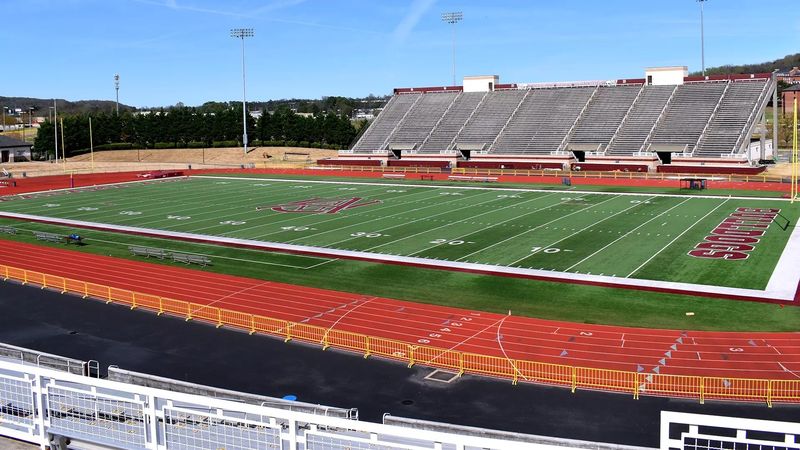
Legion Field itself is one of the storied grounds of Southern football, a stadium woven into the state’s sporting memory long before the Classic became its signature tenant. That history is part of why the geography of Saturday’s shooting cuts so deep locally: the gunfire was not in the stadium, and it was not during the game. It was behind the south end zone, on Graymont Avenue, in the in-between space — after the final whistle, outside the gates, among the vendors and the last of the tailgaters — where the formal security of a major event gives way to an ordinary city street. Chief Pickett’s account stressed that most spectators and families had already gone. The nine people who were shot were among those who had not.
“Hurt, shaken and rightfully angry”: a city responds
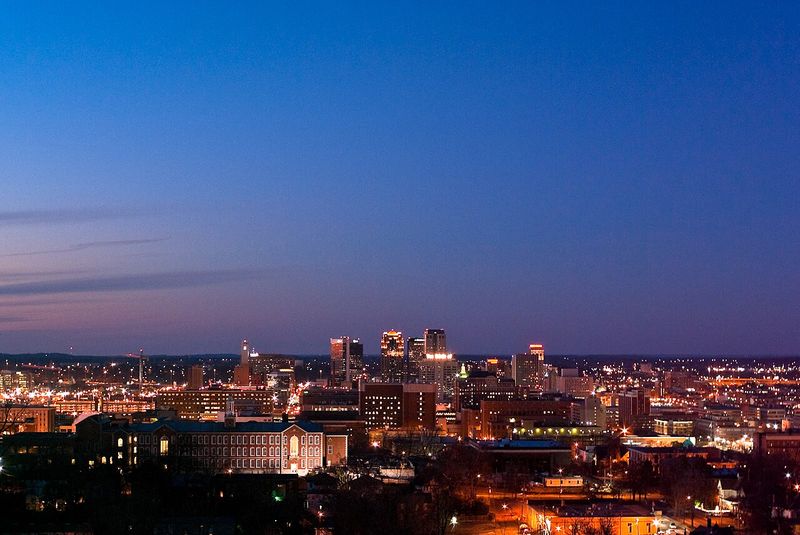
Birmingham Mayor Randall Woodfin answered the shooting with a statement late Saturday that spoke for a city and to it at the same time. The community, he said, is “hurt, shaken and rightfully angry,” and he rejected any possible justification in advance: “no argument, no beef, no misunderstanding” can justify what happened on Graymont Avenue. The Classic, he wrote, is rooted in HBCU tradition and in family — and the city would grieve as a family. Coming from a mayor who has made gun violence the defining public-safety fight of his tenure, the statement did two things at once: it mourned, and it drew the line the police account also draws, between the event Birmingham hosted and the act that ended its weekend.
The two universities are the other institutions whose voices this story needs, and as of publication their public position was silence in the available record: neither Alabama A&M nor Alabama State had issued a statement about the shooting in the reporting from Birmingham police, CNN, the Associated Press or USA Today on which this article is based. That absence should be read carefully. Both schools were, on Sunday, institutions whose students, alumni and fans were somewhere in a crowd of nearly 70,000 the day before, and whose communities will want to know whether anyone connected to either campus was among the nine people shot — a question only the identification of the victims can answer, and one neither university can responsibly address before police release names. When the schools do speak, what they say about future Classics, and about the safety of the weekend around the game, will be a central part of this story’s next chapter.
For the fans and families who were there, the timeline is its own kind of injury. Saturday was, for hours, exactly what the Classic promises: a one-score game, a rivalry finish, a city full of people who plan their year around it. The shooting began at about 7:50 p.m., after the game, in the part of the evening when the crowd becomes a community lingering rather than an audience departing. Birmingham police then had to clear that community out — tailgating suspended, stadium property emptied — which means the weekend did not end with the usual slow dispersal. It ended with an order to leave.
The numbers in context
Nine people shot in one burst of gunfire qualifies, under the definition used by the Gun Violence Archive and by CNN, as a mass shooting: an incident in which four or more people are shot, not counting the shooter. By that measure, CNN reported, there have been at least 393 mass shootings in the United States so far this year. Birmingham’s is one entry in that count, and the count itself is the context: a figure that large means the circumstances that produce a nine-victim shooting — a crowded public event, an argument or a grievance no one has yet explained, firearms close at hand — recur somewhere in the country, on average, more than once a day.
The comparison that does the most explanatory work, though, is the one seven days older. On October 25, during Florida A&M’s homecoming weekend in Tallahassee, shots fired during a fight near the campus wounded 11 people, including six juveniles. One week later in Birmingham: nine shot, one killed. Two HBCU football weekends, two shootings in the streets around the stadium, twenty people shot in total. Nothing in the public record links the two incidents — different cities, different crowds, different investigations — and Signal Post News is not suggesting a link. What the pairing establishes is exposure, not connection: the biggest gatherings in Black college football now carry, twice in eight days, the same post-game headline. And Birmingham’s own archive is not clean, either. ABC 33/40 (WBMA) has recorded shootings near Legion Field during previous Classic weekends, including two separate shootings on October 25, 2024 — the day before that year’s game. For Birmingham’s police and its mayor, Saturday night was not a first. It was a recurrence, at a worse scale, of a problem the Classic weekend has carried before.
What is known, and what is not
The confirmed record, assembled from Birmingham police statements and the reporting of CNN, the Associated Press and USA Today, is this: shots were fired at about 7:50 p.m. on Saturday, October 31, in the 400 block of Graymont Avenue West, behind Legion Field’s south end zone, in an area where vendors were set up. Nine people were shot; one died, with the death confirmed by the Jefferson County Coroner; one survivor was critical and seven were stable. Multiple firearms were recovered and logged into the police property room. One person was detained and taken to police headquarters for questioning. Tailgating was suspended and stadium property cleared. The game itself — Alabama A&M 31, Alabama State 28, in the 85th Classic — had ended, and most fans had left.
Everything that would explain the shooting is still unknown. Police have not announced a motive. They have not said how many people fired weapons — the recovery of multiple firearms is a fact, but it does not by itself establish how many shooters there were, and police have not claimed otherwise. They have not identified the person who was killed, the eight wounded, or the person detained. They have not announced any charge. Any version of Saturday night that supplies a reason for the gunfire, a number of gunmen, or a name — for a victim or for the detained person — is running ahead of the evidence the department has released, including, as noted above, headlines that convert “detained for questioning” into “arrested.” This article will be updated as Birmingham police release confirmed information.
What happens next
The investigation now runs on evidence the public can help supply. Birmingham police have asked anyone with video from around the shooting to submit it anonymously through the department’s online evidence portal — on a night when tens of thousands of people had phones out for a football game, investigators plainly believe the street itself was filmed. The department’s homicide unit can be reached at 205-254-1764, and Crime Stoppers at 205-254-7777. The immediate procedural steps are the coroner’s identification of the person killed, which will begin to answer who the victims were; the outcome of the questioning of the person detained, which will determine whether the case gains a named suspect and charges; and the forensic accounting of the recovered firearms, which is how investigators establish how many weapons were fired and by whom.
Beyond the case itself, Saturday night sets up a harder, slower reckoning that Birmingham has now been forced into more than once. A Classic weekend that ABC 33/40’s archive shows was already shadowed by gunfire in 2024 ended this year with a mayor ordering a grieving city home and a police department suspending the tailgating that is half the event’s culture. The security of the 86th Classic — the perimeter, the streets outside it, the vendor rows on Graymont Avenue — will be reviewed in light of one death and eight wounded; that is not speculation about any single decision, but the unavoidable institutional consequence of what happened, and both universities, the city and the department will face the same question from their own communities: what changes before the next one? The answers will arrive over weeks and months. The investigation will move first.
One person is dead, eight are wounded, one is fighting for their life in critical condition, and the largest celebration in HBCU football ended with an order to clear the grounds. Birmingham’s mayor asked his city to grieve as a family. The facts, as police confirm more of them, will be reported here.
Related reading: One week earlier: the shooting near Florida A&M’s homecoming in Tallahassee that wounded 11 · 9 dead in the Erie mass shooting after a Perry Street standoff · Two charged with murder in the Delaware State homecoming shooting that killed Nasir Cox
Sources
CNN, “1 dead, 8 injured in shooting after college football game in Alabama” (November 1, 2026) — the 7:50 p.m. timeline, the 400 block of Graymont Avenue location, Freeman’s victim count and conditions, the recovered firearms “turned into our property room,” Pickett’s “very grateful” remark, the Florida A&M comparison and the Gun Violence Archive count of at least 393 mass shootings this year — cnn.com; Associated Press, “Mass shooting after Alabama football game leaves 1 dead, 8 wounded” (November 1, 2026) — nearly 70,000 fans at the game, most spectators gone before the shooting, the vendor area on Graymont Avenue, the detained person taken in for questioning, and the Jefferson County Coroner’s confirmation of the death, as carried by KCAU 9 — kcau9.com; USA Today, “Arrest made after Magic City Classic shooting leaves 1 dead, 8 injured” (November 1, 2026) — the detention and questioning, the recovered weapons, and Mayor Woodfin’s statement; this article follows the Birmingham Police Department’s own wording — detained for questioning, no charges announced — where the headline differs — usatoday.com; Birmingham Police Department — statements and news-conference remarks, October 31–November 1, 2026: the suspension of all Magic City Classic tailgating, the order to leave stadium property, the appeal for video through the department’s evidence portal, homicide unit 205-254-1764 and Crime Stoppers 205-254-7777; Mayor Randall Woodfin — statement of October 31, 2026 (“hurt, shaken and rightfully angry”; “no argument, no beef, no misunderstanding”); WBMA/ABC 33/40 — archive reporting on shootings near Legion Field during previous Classic weekends, including two separate shootings on October 25, 2024. Attendance and history of the rivalry (more than 100 years; the largest HBCU football game in the United States): Associated Press and CNN. Weekend visitor and economic-impact figures are long-standing estimates cited by Classic organizers and city officials.