Technology · Chips · China
The Nvidia H200 chips Hong Kong China story has flipped the export-control script: roughly 600,000 of Nvidia’s H200 AI accelerators are stockpiled in Hong Kong awaiting shipment to the mainland, not because Washington is blocking them, but because Beijing is withholding large-scale import approval — even as Chinese tech firms clamour for the hardware and mainland prices have roughly tripled in a year.
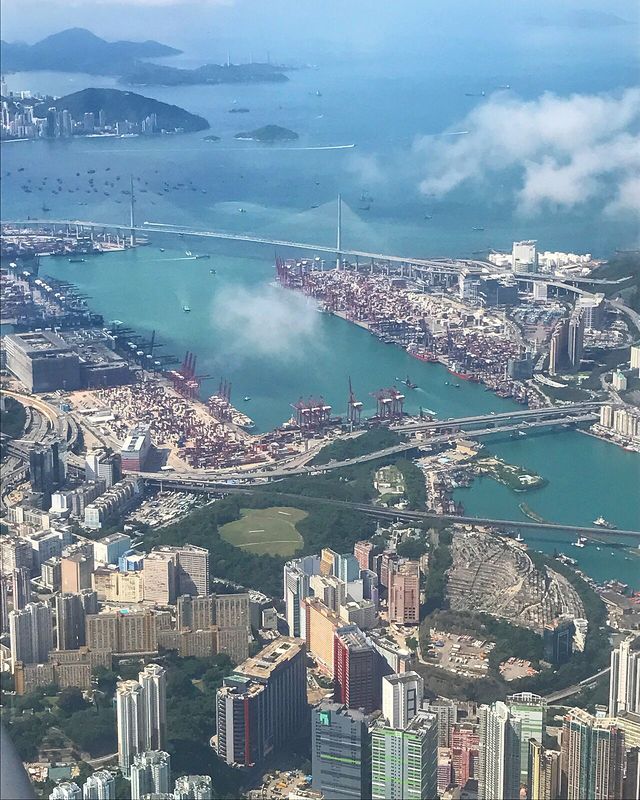
HONG KONG, November 8, 2026 — About 600,000 Nvidia H200 AI chips are sitting in Hong Kong awaiting shipment to mainland China because Beijing is withholding large-scale import approval, Reuters reported on November 5, citing two people familiar with the matter. The stockpile has built up despite intense demand from Chinese technology firms, and some chips have been allowed in in recent months — but the large-scale clearance that would move the inventory across the border has not come. Nvidia has not confirmed the specific arrangement described by Reuters’ sources.
The clearest measure of the demand Beijing is holding back is price. By late October, an eight-card H200 server was being offered on the mainland at more than 6 million yuan — roughly $900,000 — about three times its price a year earlier, according to the Reuters reporting. A tripled price for year-old hardware is what a market looks like when supply is technically available an hour away and legally out of reach: the chips exist, the buyers exist, and the missing ingredient is a stamp.
Background: from Washington’s ban to Beijing’s pause
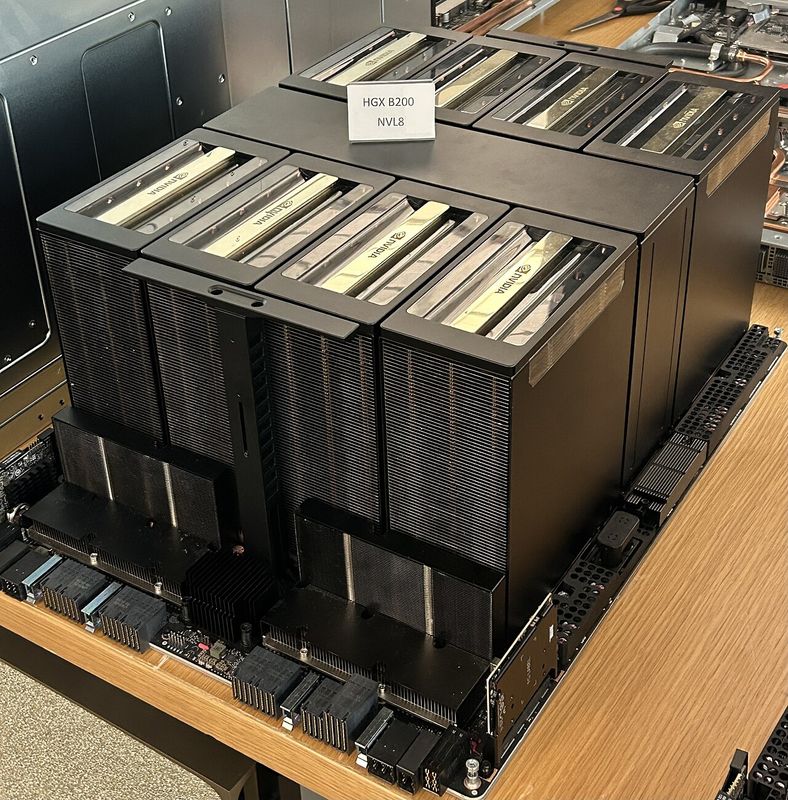
For three years, the choke point in this market sat in Washington. The United States imposed sweeping export controls on advanced AI chips to China from 2022 onward, tightening them in successive rounds and forcing Nvidia to design downgraded China-specific parts while smuggling and grey-market channels grew around the rules — a cat-and-mouse contest Signal Post News has followed through cases such as the wider race to build Nvidia alternatives. The H200 — a Hopper-generation accelerator with high-bandwidth memory, not Nvidia’s newest silicon but still a formidable training chip — sat on the controlled list.
The reversal came last year, when the Trump administration permitted H200 sales to approved Chinese customers. That decision moved the bottleneck. With the American licence no longer the binding constraint, the binding constraint became China’s own import approval — and Beijing, according to Reuters’ sources, is withholding the large-scale version of it. The result is the Hong Kong stockpile: inventory deliberately positioned at the border, close enough to ship quickly if the policy changes, and stuck for as long as it does not.
Why the H200 still matters
The H200 is not Nvidia’s flagship. The company’s newest generations have moved on, and on paper a buyer with free choice would order those instead. But Chinese buyers do not have free choice, and against the alternatives actually available to them the H200 remains formidable: it outperforms domestic Chinese accelerators for large-scale training, and it runs on Nvidia’s CUDA software stack, the ecosystem in which a decade of Chinese AI tooling, libraries and engineering habit is written. Compute can be substituted; an ecosystem is much harder to swap out mid-race.
The scale of the underlying appetite is not in doubt. As Signal Post News reported earlier this autumn, ByteDance, Alibaba and Tencent were reported to have ordered more than 3 million RTX Pro 5500 cards worth over $35 billion — workstation-class hardware pressed into AI service. Firms do not place orders of that shape for a second-best part unless the first-best part is unavailable at any workable price. The H200 stockpile and the RTX Pro orders are the same fact seen from two sides: demand is enormous, and it is being rationed by policy on both sides of the Pacific in turn.
Who gains, who loses, who pushes back
Beijing’s industrial policymakers gain leverage and time. Every month the H200 stays in Hong Kong is a month in which Chinese cloud firms feel the cost of dependence — and a month in which domestic champions such as Huawei get a protected market in which to close the gap, a shift already visible in Nvidia’s shrinking share of China’s AI-chip market. Withholding approval costs the state nothing directly and presses every interested party — Nvidia, the cloud giants, Washington — at once.
Chinese tech firms lose twice: they pay scarcity prices for the hardware that does get in — the 6-million-yuan server — and they lose training time against American rivals who face no such ration. Nvidia loses a market it has already been licensed to serve, with inventory ageing in a warehouse: AI accelerators depreciate with each new generation, so a stockpile held too long becomes a write-down. Critics of Beijing’s approach, including analysts who favour faster domestic AI development, argue the pause taxes China’s own model race to subsidise its chip race. Critics in Washington make the opposite point: that permitting the sales at all hands Beijing training capacity, and that the Hong Kong pile-up proves the demand is strategic rather than commercial.
Why this matters
The embargo now runs in both directions
Since 2022 the AI-chip story has been told as American restriction versus Chinese evasion. The Hong Kong stockpile breaks that frame. The United States spent three years learning how hard it is to keep chips out; Beijing is now demonstrating how much power sits in simply declining to let them in — formally, at scale, while tolerating a trickle. A government that can switch a $35-billion demand pool on and off holds a negotiating instrument that no export-control list matches, and every party to the US-China technology argument now has to price it.
Self-reliance versus compute hunger is a real trade-off, not a slogan
Beijing’s self-reliance push and its AI ambitions pull against each other in a way this story quantifies. The 600,000 chips in Hong Kong represent training capacity Chinese firms want now; the domestic alternatives represent independence they would have later. Approving the imports would concede that the gap is still large enough to matter. Refusing them concedes months of model development to American competitors. There is no cost-free setting of this dial — which is precisely why the decision is being taken slowly, at the top, and in a form (a withheld large-scale approval, with some chips allowed through) that can be adjusted without any public reversal.
Hong Kong is the pressure gauge
Watch the stockpile number, not the statements. If it drains, approval has quietly been given; if it grows, the pause is hardening into policy. The same gauge reads in the mainland price of an eight-card server: at three times last year’s level, the market is screaming scarcity; a fall toward normal pricing would signal that supply — approved or grey — is reaching buyers. Grey channels are the third possibility, and the one both governments publicly oppose: a 600,000-chip inventory an hour from the border, priced at a 200% scarcity premium, is an engraved invitation to smugglers.
What happens next
Three developments will resolve the story. First, any sign of a large-scale import approval — a named Chinese buyer taking delivery of H200 systems at volume would confirm it within days. Second, Nvidia’s own disclosures: the company reports earnings later this month, and analysts will press for the size and treatment of China-bound inventory, which is also the first point at which Nvidia itself may confirm or correct the picture Reuters’ sources describe. Third, the domestic alternative: if a Chinese accelerator reaches deployments at a scale that lets the cloud giants credibly walk away, Beijing’s pause becomes permanent policy rather than a negotiating pause. Until one of those lands, the most valuable warehouse in AI sits in Hong Kong, full of chips everyone wants and no one may move.
What do you think — is Beijing right to hold back the H200s to force self-reliance, or is it taxing its own AI race? Follow Signal Post News for the approval decision and Nvidia’s earnings, and share your thoughts below.
Sources
Sources: Reuters, exclusive report on the Nvidia H200 stockpile in Hong Kong (November 5, 2026), reporting two people familiar with the matter — the stockpile figure, the import-approval position and the mainland server price are attributed to that reporting throughout; Nvidia has not confirmed the specific arrangement. Background on earlier Chinese orders and market share: Signal Post News reporting, as linked in the text. Photos: Wikimedia Commons, as credited in the captions.