$35B for a workstation card / China's giants queue for the strongest Nvidia chip they can still buy
Three million cards, one compliant chip
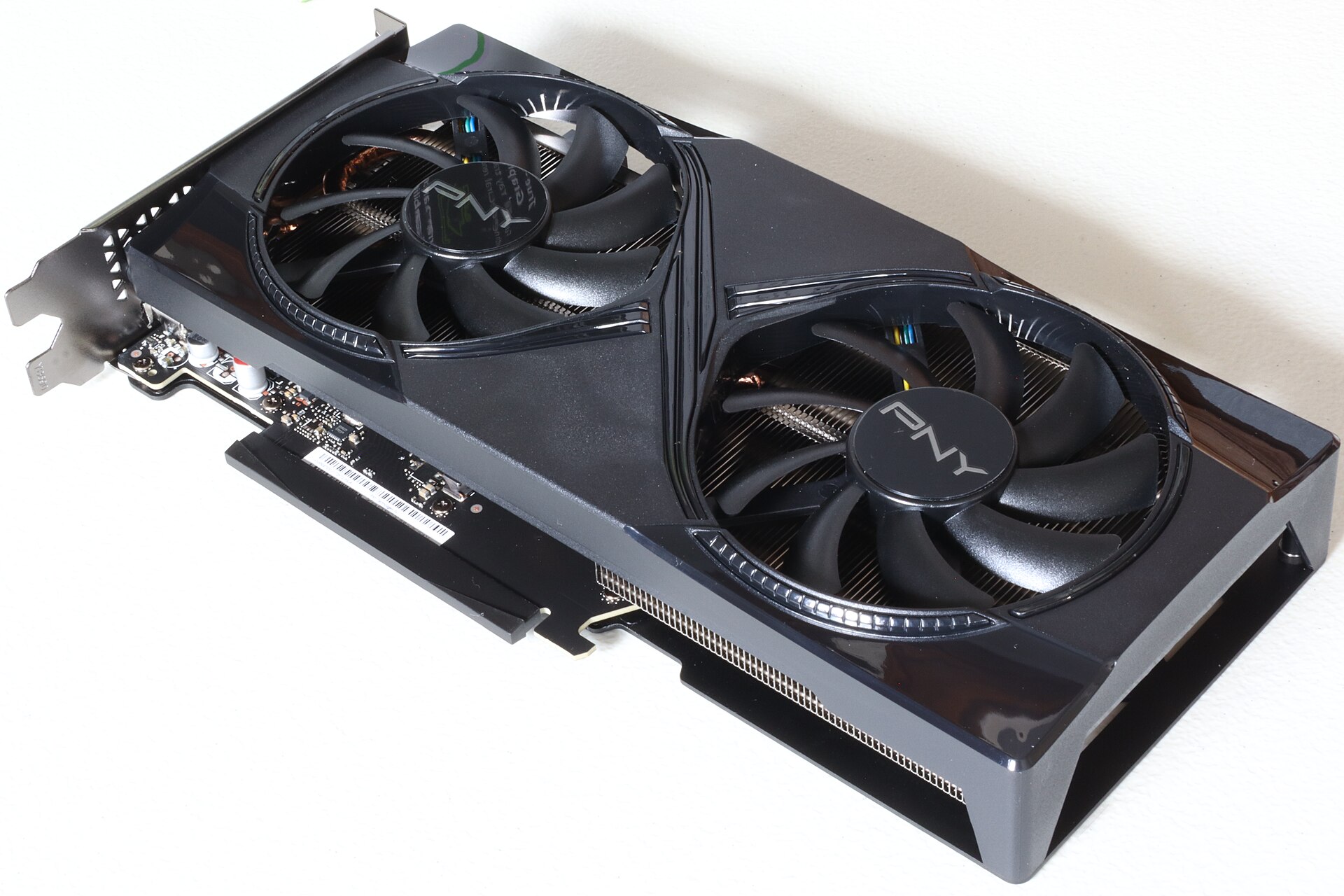
Start with the arithmetic, because the arithmetic is the story. Reuters, citing its sources, reported that ByteDance, Alibaba and Tencent have ordered more than three million RTX PRO 5500 cards between them. At a list price of roughly $11,400 per card, three million units come to about $34.2 billion — and because the reported order volume is above three million, the batch's list value rises above $35 billion. It is demand, moreover, for a product well below the top of Nvidia's range. The same Reuters reporting carries the detail that turns a big order into a market signal: the orders far outstrip what Nvidia says it can build. This is not a purchase that clears. It is a queue — a claim on future production, placed by three of the largest technology companies on earth, for a card each of them would once have considered a consolation prize.
One smaller, checkable piece of the same picture is already on the public record. Shenzhen-listed Tansun Technology disclosed on October 13, 2026, that it had agreed to buy 20,000 RTX PRO 5500 cards from an unnamed seller. At the same $11,400 list price, that one disclosure is worth roughly $228 million — under one percent of the reported queue, but valuable because it is disclosed rather than sourced: a listed company, filing in the open, buying the same card in bulk. It corroborates the direction of the Reuters account, if not its full scale, which rests on Reuters' sources and has not been confirmed by the buyers.
Why inference, not training, is driving the queue
The demand, Reuters' sources say, is mainly for AI inference — running trained models, not training new ones. That distinction explains both the size and the shape of the orders. Training a frontier model is a concentrated problem: it needs the most powerful accelerators, tightly linked, in relatively contained numbers. Inference is the opposite. Every chatbot answer, recommendation, translation and agent task consumes compute at the moment a user asks, across millions of simultaneous users, in data centres spread across a country. Inference demand therefore scales with users rather than with research budgets, and it tolerates — indeed, often prefers — large fleets of somewhat less powerful, cheaper, more available cards over a small fleet of flagship chips. A workstation GPU that would be a poor tool for training a frontier model can be a perfectly rational tool for serving one, especially when multiplied by three million. ByteDance, Alibaba and Tencent are, between them, three of the largest consumer-internet operators in the world. Their inference bills are not a research line item; they are the cost of keeping their products alive.
The rules that made a workstation card strategic
None of this happens without the rulebook. Under current United States export controls, Nvidia's Blackwell B300 — its flagship data-center accelerator — cannot be sold to China at all. The previous generation's Hopper H200 can be sold only case by case, under licence, which in practice means slowly, conditionally and revocably. The RTX PRO 5500 sits outside that regime: it is export-compliant, and it can be sold. It is also, by the standards of the barred hardware, less powerful — a workstation card, built for professional graphics and local AI workstations, not a data-center chip built to be racked in linked thousands. And yet, as Reuters' reporting underlines, it is among the strongest Nvidia products Chinese buyers can still obtain legally and at scale. That sentence contains the whole economics of this story. When the best products are barred and the second tier is rationed by licence, value migrates to whatever sits just below the line — and the market price of 'just below the line' rises until it clears at $11,400 a card, three million deep.
The 6000D is gone, and its price has doubled
The predecessor tells the same story in miniature. Nvidia's earlier China-facing workstation offer, the RTX 6000D, has been discontinued — and one Reuters source said its market price in China has doubled since. A discontinued card does not double in price because it got better. It doubles because the supply of legally obtainable Nvidia compute in China is shrinking while the demand for it compounds, and because every buyer in that market understands that today's compliant product can become tomorrow's discontinued one. The 6000D's aftermarket is, in effect, a futures market in regulatory risk: its price is what Chinese buyers will pay for Nvidia silicon they can hold now, before the rules move again. Read that way, the three-million-card queue is partly the same trade at industrial scale — stock the compliant chip while it is compliant, in volumes large enough to matter if the window closes.
Why this matters: export-control arbitrage, priced at $35 billion
Why this matters is that the $35 billion figure is not really a chip story. It is a measurement — the first clean, priced measurement of how much demand US export controls have displaced rather than destroyed. The controls were designed to deny China the means to train frontier AI models at the leading edge, and on their own terms they may be working: the B300 is barred, the H200 is licensed case by case, and no one is pretending a workstation card trains a frontier model like a Blackwell rack does. But demand for AI compute does not vanish when the flagship is banned; it flows downhill, pools against the control line, and pays extraordinary prices for whatever capacity remains legal. Three million workstation cards is what that pool looks like when it finally gets counted. Critics of the controls will read the queue as leakage by another name: inference at this scale is strategically valuable, serving models is where AI meets hundreds of millions of users, and $35 billion of Nvidia revenue from China is $35 billion recycled into the R&D that keeps Nvidia ahead. Defenders will answer, with equal force, that this is the system working exactly as designed — China is spending frontier-model money on deliberately second-tier hardware, in the least sensitive segment, while the training high ground stays denied. Both readings can be true at once, and the honest analysis holds both: the controls have bent China's AI build-out into a more expensive, less capable shape, and they have not shrunk it.
The winners and losers sort accordingly. Nvidia wins twice — once on the revenue, and once on the demonstration that even its compliance-tier products command queues it cannot fill, a scarcity position no competitor on either side of the Pacific currently matches; we tracked the financial machinery gathering around that scarcity in our coverage of investors financing purchases of Nvidia chips. The three buyers win capacity, but at list prices for second-tier silicon and with delivery risk attached. The clearest long-run loser may be the policy's own leverage: every quarter in which Chinese giants spend tens of billions working around the line is a quarter in which the incentive to escape it entirely grows. Huawei's Ascend line and China's domestic accelerator programme are the standing alternative, and a $35 billion workstation-card queue is, among other things, a $35 billion argument inside every Beijing planning meeting for funding them — the backdrop to Beijing's own widening controls, which we covered in China's export controls on 40 technologies. Compare the moment with the pre-control era, when Chinese clouds bought Nvidia's best data-center products openly and the strategic question was simply price. That era's spending bought capability. This spending buys availability — and the premium between the two is, in effect, the tax the controls now levy on every unit of Chinese AI compute.
What happens next
Three variables decide what this queue becomes. The first is supply: Nvidia says the orders far outstrip what it can build, so allocation — who gets how many cards, and when — becomes a negotiation in which the three giants compete with each other and with every other buyer of the same silicon. The second is the rulebook: a workstation card this strategically popular is an obvious candidate for tighter rules, and any move to restrict it would strand orders, spike the 6000D-style aftermarket further, and hand the domestic-alternative argument its strongest evidence yet. The third is substitution: watch whether the buyers' own deployments quietly shift inference volume onto domestic accelerators over the coming year, which would show up first not in announcements but in exactly the kind of small, disclosed purchases — like Tansun's 20,000 cards — that reveal which silicon is actually being racked. The $35 billion queue is a snapshot of a market mid-arbitrage. Whether it is remembered as the controls' finest pressure valve or as the moment the workaround became the industry will depend on which of those three variables moves first.
Sources: Reuters reporting, October 20, 2026, as republished by Kyle's Investigation (orders exceeding three million RTX PRO 5500 cards; list value above $35 billion at roughly $11,400 per card; B300 barred, H200 licensed case by case; inference demand; RTX 6000D discontinued, its China price doubled per one source). Tansun Technology disclosure, October 13, 2026 (agreement to buy 20,000 RTX PRO 5500 cards from an unnamed seller), via the same Reuters reporting. Order figures rest on Reuters' sources and were not confirmed by the named buyers. Related on Signal Post News: Investors financing Nvidia chip purchases · China's export controls on 40 technologies.