Microsoft Maia 300 AI chip
Forty percent more AI output per megawatt, a 96-chip rack that outruns its predecessor sevenfold, and deployment at multi-gigawatt scale starting next year. Microsoft just told Nvidia the free ride is over — but the numbers deserve a closer look.
Microsoft on Monday unveiled Maia 300, the third generation of its custom AI chip, and said it will begin deploying the silicon at multi-gigawatt scale in 2027 — a declaration that its own chips, not Nvidia's, will become "the primary AI inference system for Microsoft products and services," in the words of Azure chief Scott Guthrie. CEO Satya Nadella called it "our biggest bet yet on our own silicon" in a post on X. The message to the industry is unmistakable: the world's largest software company intends to stop renting the engines of the AI era and start owning them.
Why this matters
The AI boom has an awkward open secret: almost everyone building on top of it is paying rent to one company. Nvidia's GPUs power the overwhelming majority of AI workloads, and that dominance has given one chipmaker extraordinary pricing power over the entire industry — Microsoft, Google, Amazon, Meta, and OpenAI all queue up for its hardware. Maia 300 is Microsoft's most aggressive attempt to break that dependency, and the timing tells you everything about where the money is moving. The company is not trying to replace Nvidia in training the next giant model. It is targeting inference — the day-to-day running of AI models to answer questions, write code, and carry out tasks — which is the fastest-growing and most cost-sensitive part of the business. Every ChatGPT-style query, every Copilot suggestion, every AI agent working through a multistep job costs electricity and chip time. As AI shifts from impressive demos to always-on products used by hundreds of millions of people, inference is where the bills pile up, and whoever controls the most efficient inference hardware controls the margins of the AI economy.
That is why the headline metric Microsoft chose is not raw speed but efficiency: tokens per megawatt. Power supply has become one of the biggest constraints on AI expansion — datacenters cannot get enough electricity, and the waiting list for grid connections stretches years in some markets. A chip that produces 40 percent more AI output per megawatt is not just cheaper to run; it lets Microsoft squeeze more revenue out of every watt of power it can secure. In an industry where the binding constraint is no longer chips but electrons, efficiency is strategy.
What Microsoft actually announced
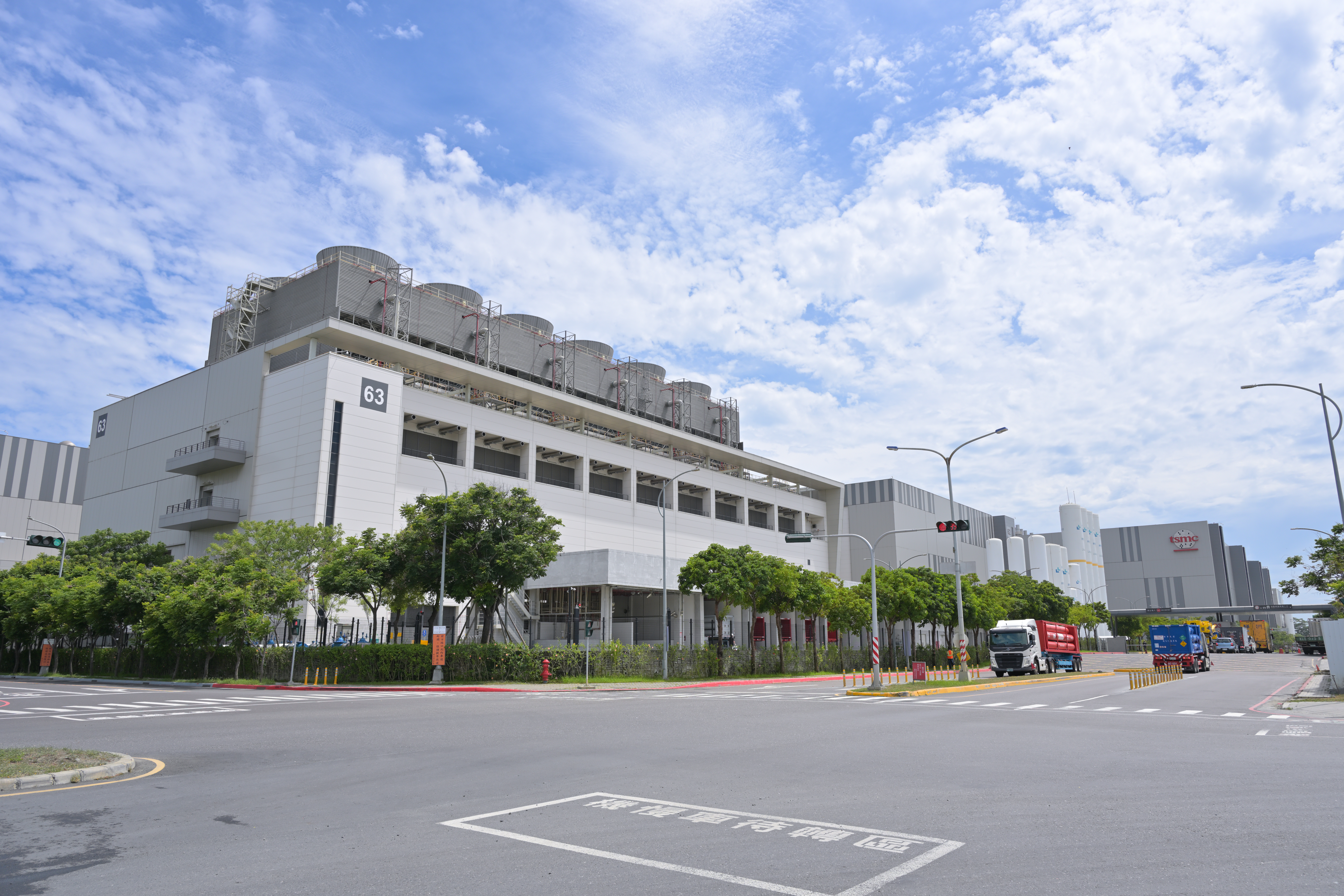
The technical details, laid out in Guthrie's blog post and the company's announcement, mark a genuinely different design philosophy from Nvidia's. Where Nvidia builds one massive computing die surrounded by high-bandwidth memory, Microsoft went the chiplet route: the central compute chiplets — the parts doing the heavy math — are manufactured on TSMC's N2P 2-nanometer process, among the most advanced in the world, while other chiplets handling data movement use cheaper 3-nanometer technology. The logic is economic as much as technical: put the expensive cutting-edge silicon only where it earns its keep. Each chip carries eight stacks of HBM4 high-bandwidth memory with peak bandwidth of 18.0 terabytes per second, the fast memory that feeds data to the compute cores.
The headline claims: Maia 300 should deliver 40 percent more AI output — tokens — per megawatt than leading GPU-based systems, and a full rack of 96 Maia 300 chips should produce up to seven times the AI output of the current generation, Maia 200. The chips are tuned for the workloads growing fastest: AI agents working through sustained multistep tasks, models reasoning over long documents and conversations, and latency-sensitive chat. Production deployment begins in 2027, and Reuters reported Microsoft plans to deploy potentially more than one million Maia 300 units next year to back its internal AI services.
How we got here: from experiment to centerpiece in three years
Maia 300 is the third generation in a program that barely existed a few years ago. The original Maia 100 arrived in late 2023 as a proof of concept. The Maia 200, announced only this January, is already running production workloads across Microsoft's AI products — Microsoft Copilot, GitHub Copilot, and Microsoft Foundry — as well as the company's in-house AI models and, according to CNBC's reporting, OpenAI models served on Azure. Nadella said in his announcement that Maia 200 is already deployed across the US, Europe, and Australia, delivering up to 1.7 times more tokens per watt in Teams and Copilot experiences, and he told analysts on the July earnings call that it delivered 30 percent better performance per dollar than the latest-generation hardware in Microsoft's fleet.
That pace — three generations in roughly three years, with the second already in production — explains the confidence of Monday's announcement. This is not a lab project; it is a shipping product line with measured results. And Microsoft is careful to frame the move as addition, not divorce: Nadella and Nvidia CEO Jensen Huang shared a stage just last week to launch Windows PCs built on Nvidia chips, and Guthrie told the publication Key Context that Microsoft remains a major Nvidia and AMD partner and will be among the first to deploy systems based on Nvidia's next-generation Vera Rubin platform and AMD's Helios. Translation: Microsoft will keep buying the best outside chips for training frontier models while moving the far larger, steadier business of inference onto its own silicon.
The numbers, put in context
Start with the power figure, because it is the most revealing. A Maia 300 rack draws about 167 kilowatts; Nvidia's GB300 rack, with 72 GPUs, draws about 142 kilowatts. Microsoft's rack actually consumes more electricity — yet the company claims it produces far more AI output per megawatt. If the claim holds, that is a striking density story: more work per watt despite a hotter rack. But note what Microsoft did not say: which "leading GPU-based systems" the 40 percent comparison is measured against. Without a named baseline, outside analysts cannot verify the claim, and as one industry publication noted, customers cannot rent or independently test Maia at all — it runs only inside Microsoft's datacenters. Efficiency claims from a vendor about its own un-testable hardware deserve a raised eyebrow, not a salute.
The sevenfold rack-level jump over Maia 200 also needs parsing. Part of it comes from density — 96 chips per rack versus Maia 200's lower count — not just per-chip improvement. A rack producing seven times the tokens is genuinely impressive, but it is a system-level number, and Microsoft has every incentive to choose the comparison that flatters most. Evercore ISI analysts forecast Maia will account for about 10 percent of Microsoft's AI-chip spending by the first quarter of 2027 — a meaningful foothold, but a forecast of spending share, not a deployment commitment or a share of AI requests served.
The market's verdict, for now, is mild enthusiasm: Microsoft shares rose about 1 percent to $540.18 on Monday and are up roughly 11 percent in 2026. Investors have seen this movie before — custom silicon announcements are cheap; scaled deployments are hard. The stock move says the market believes the direction but is waiting for the 2027 proof.
Who wins, who loses, and what the skeptics say
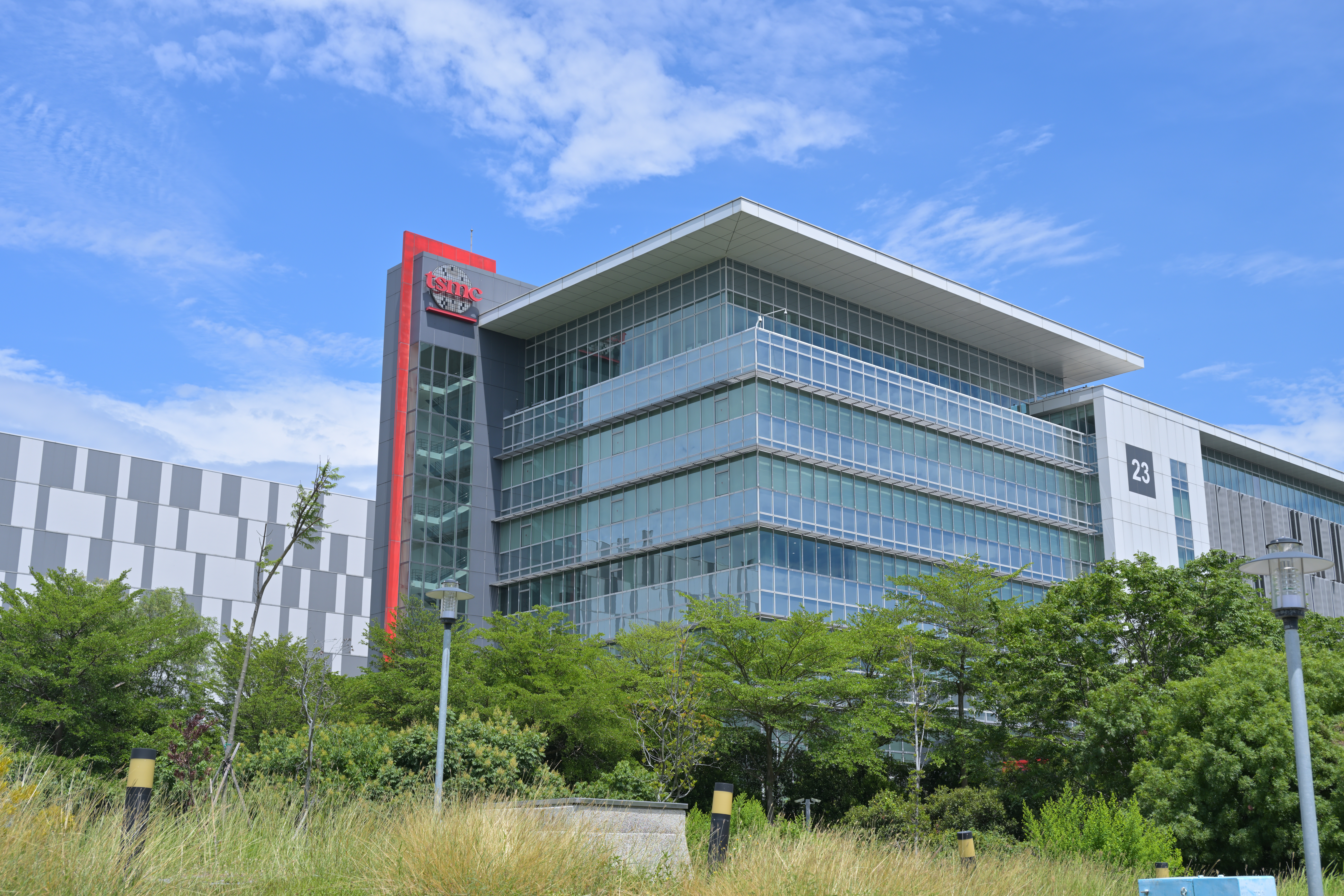
The winners are easy to name. Microsoft itself stands to save billions: every percentage point of inference cost it shaves off flows straight to Azure's margins and lets it price Copilot more aggressively. TSMC wins a marquee customer for its most advanced N2P process, deepening a relationship that already spans Apple, Nvidia, and AMD. And Azure customers could eventually see cheaper AI services, since Microsoft's incentive will be to steer workloads onto the hardware it owns outright.
The losers are relative, not absolute. Nvidia does not lose Microsoft as a customer — the Vera Rubin commitment makes that clear — but it loses pricing power and, more importantly, the aura of indispensability. Every hyperscaler that proves it can serve inference on its own silicon weakens the argument that there is no alternative to Nvidia's stack. AMD is in a similar spot: still a partner, but with one more competitor in the room. The subtler loser may be the merchant chip market's growth story itself, as the biggest buyers vertically integrate.
The skeptics have three objections worth hearing. First, verifiability: no independent testing exists, the comparison baseline is unnamed, and the "40 percent" figure comes from the company selling the chip. Second, the timeline: Maia 300 does not reach production until 2027, a full year in which Nvidia's Rubin and AMD's Helios will also advance — today's lead may not survive contact with next year's competition. Third, the paradox at the heart of the announcement: Microsoft's most important chip partner remains TSMC, a company in one of the world's most geopolitically exposed locations. Microsoft is reducing its dependence on Nvidia by deepening its dependence on Taiwan. That is a trade, not an escape.
The bigger wave: everyone is building their own chips now
Maia 300 is the loudest entry in a stampede. Amazon has Trainium and Inferentia, Google is on its eighth generation of TPUs, Meta is designing its own inference silicon, and OpenAI is working on custom chips of its own. The pattern is unmistakable: the companies that spend the most on AI compute have all concluded that renting generic GPUs forever is a bad deal. The economics flipped when inference became the dominant cost. Training a frontier model is a spectacular one-time expense; serving it to hundreds of millions of users is a permanent, growing one. Custom silicon tuned for exactly the workloads you run — agents, long-context reasoning, chat — beats general-purpose GPUs on cost per token, and cost per token is the unit economics of the entire AI industry.
There is a second, quieter driver: power. Utility executives now describe AI datacenters as the largest new source of electricity demand in decades, and grid interconnection queues stretch for years. When you cannot get more megawatts, the only way to grow is more tokens per megawatt — which is precisely the metric Microsoft chose to headline. The chip wars of the next decade will be fought on efficiency, not just speed, because the grid is the new fab.
What happens next
Three things to watch. First, Microsoft's Ignite conference in San Francisco next month, where the company has promised more Maia 300 details — watch for named benchmarks, customer commitments, and any disclosure of the comparison baseline. Vague claims at launch followed by specifics at Ignite would be the bullish pattern; continued vagueness would be telling.
Second, the 2027 deployment itself. Multi-gigawatt scale is an enormous promise: at roughly 167 kilowatts per rack, a single gigawatt implies on the order of six thousand racks, and "multi-gigawatt" across the Maia family suggests millions of chips. Hitting that scale on schedule, with working software stacks and real Copilot traffic, is the difference between a press release and a platform shift. Watch Microsoft's capital expenditure and Azure AI gross margins for the financial fingerprints.
Third, Nvidia's answer. Jensen Huang does not sit still, and the Vera Rubin platform arriving in Microsoft's own datacenters gives Nvidia a front-row seat to the competition. The most likely endgame is not Microsoft replacing Nvidia but a bifurcated market: Nvidia and AMD owning training and the highest-end general compute, while hyperscalers eat the inference layer with custom silicon. In that world, the AI chip market gets bigger for everyone — but Nvidia's margins, the envy of the industry, face their first real structural pressure. Nadella's "biggest bet yet" is really a bet that the future of AI is not who builds the smartest model, but who serves it cheapest. On that bet, Monday was the opening move, not the checkmate.
Related coverage
Sources
- GeekWire — Microsoft makes 'biggest bet yet' on its own silicon, unveils new AI chip to reduce reliance on Nvidia (October 12, 2026)
- Reuters — Microsoft plans huge deployment of its own AI chips, with an eye on saving costs (October 12, 2026)
- Barron's — Microsoft Unveils Maia 300 AI Chips. What It Means for the Stock. (October 12, 2026)
- tech-ish — Microsoft is moving Copilot onto its own Maia chips, with multi-gigawatt deployments from 2027 (October 12, 2026)