greg lui nvidia chip smuggling
LOS ANGELES — The Greg Lui Nvidia chip smuggling case puts a $300 million figure on the widening contest over who can obtain the most capable American computing hardware. Federal prosecutors allege that Greg Lui, 38, also known as Yiu Kong Lui, used his San Gabriel technology company, Earthmade Computer, to move export-controlled servers through Malaysia and Singapore before they were re-exported to customers in China.
Lui was arrested Thursday, October 1, on a three-count federal indictment, according to the U.S. Attorney's Office for the Central District of California. The charges allege conspiracy to violate the Export Control Reform Act and Export Administration Regulations, outbound smuggling, and conspiracy to commit money laundering. An indictment is an accusation, not a conviction, and Lui is presumed innocent unless prosecutors prove the case beyond a reasonable doubt.
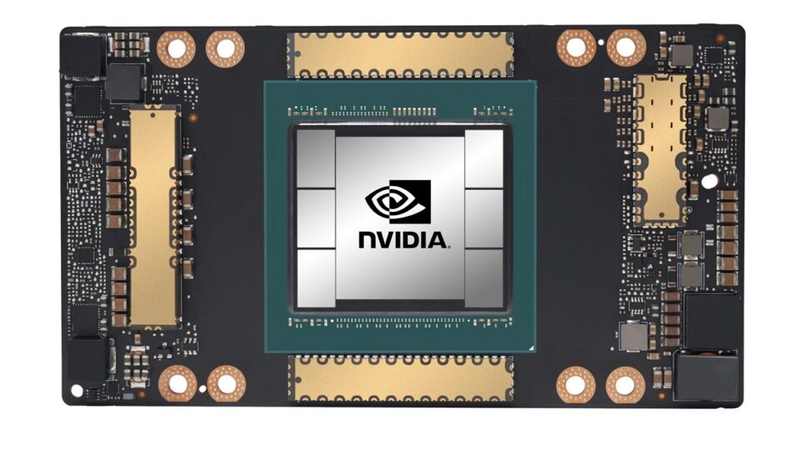
The alleged conduct ran from about October 2023 through at least August 12, 2026. Prosecutors say Earthmade acquired high-end computer servers containing U.S.-made graphics processors and sent them first to countries where no U.S. export license was required, while the real destination was China. Court documents cited by Reuters name Nvidia A100 and H100 accelerators as well as RTX 4090 and RTX 5090 graphics cards.
Why this matters
This case matters because export controls are only as strong as the chain of custody after a product leaves the United States. Washington can require licenses for direct shipments to China, but a server does not carry its own geopolitical destination label. If an intermediary in a permitted market changes the consignee, falsifies the paperwork or breaks a larger order into apparently ordinary transactions, the enforcement problem moves from customs screening into financial intelligence, corporate records and physical inspections.
The scale alleged here makes that vulnerability concrete. More than $300 million in servers is not a suitcase operation or a handful of gaming cards. It describes a commercial supply chain with manufacturers, resellers, freight forwarders, banks, overseas companies and end customers. The government says more than $176 million flowed to Lui from two Malaysian transshipment companies. If proven, that payment trail could be as important as the hardware itself because it gives prosecutors a way to connect purchases, shipments and alleged knowledge of the ultimate destination.
The indictment also arrives as advanced processors have become instruments of national-security policy. Nvidia's data-center GPUs can accelerate the training and deployment of large computing models, scientific simulations and other intensive workloads. The same capabilities can support civilian research, industrial automation and cloud services, or military and intelligence applications. Export rules are designed around that dual-use character: the issue is not that every chip performs a prohibited task, but that concentrated computing power can be redirected toward uses Washington is trying to constrain.
How the alleged Earthmade Computer route worked
Prosecutors describe a transshipment model rather than a direct sale. Earthmade allegedly bought servers in the United States and shipped them to Malaysia and Singapore. Those destinations were lawful without the China-specific license at issue, according to the government's account. The alleged violation occurred when the equipment was then rerouted to China and the true end user or destination was concealed.
The government says the concealment went beyond inaccurate invoices. Lui and alleged co-conspirators are accused of using false paperwork, arranging convoluted transshipment and staging dummy servers to mislead inspectors. That last allegation is especially significant. If prosecutors can establish that substitute equipment was deliberately presented for inspection, it may help them argue that any false destination was not a clerical mistake but part of an intentional effort to defeat controls.
One shipment described by prosecutors involved 92 servers flown from San Francisco to Kuala Lumpur and allegedly consigned onward to a Chinese customer in Hong Kong. Another involved 27 H100 servers worth about $7.6 million. Those examples supply what a complex export case needs: specific units, routes, values and counterparties that can be tested against airway bills, purchase orders, banking records and communications.

The $176 million payment trail
The alleged payments are a second map of the case. Prosecutors say two Malaysian transshipment companies sent more than $176 million to Lui. Measured against the more than $300 million value assigned to the servers, those transfers equal well over half of the alleged hardware total. The figures are not interchangeable—the indictment's server valuation and the money received answer different questions—but their proximity suggests the government will try to show a sustained commercial relationship rather than disconnected purchases.
That is where the money-laundering conspiracy count matters. Export cases often turn on what a seller knew about end use and destination. Financial records can reveal repeated counterparties, timing aligned with shipments, amounts matched to invoices and efforts to disguise the source or purpose of funds. The defense, in turn, can challenge whether the payments were tied to restricted goods, whether records were misleading, and whether Lui knew of any onward transfer.
The $300 million Nvidia chips China allegation is large in absolute terms, yet smaller than the billions of dollars alleged in another major 2026 prosecution. In March, federal authorities charged a co-founder of Super Micro Computer with diverting billions of dollars in Nvidia chips to China. He pleaded not guilty. The comparison shows how enforcement has moved from isolated chip seizures toward cases built around corporate-scale procurement and distribution systems. It does not establish guilt in either matter.
What A100, H100 and RTX processors can do
The named products span two markets. Nvidia's A100 and H100 are data-center accelerators designed for large parallel workloads. They became central to the global buildout of machine-learning infrastructure because thousands can be connected into clusters. RTX 4090 and RTX 5090 cards are marketed more broadly for graphics and high-performance desktop computing, but their parallel processing capability can also be assembled for demanding computational work.
That mix helps explain why controls focus on performance thresholds, configurations and destinations rather than a simple consumer-versus-military label. A single card is not the same as a rack of coordinated accelerators. A server with high-bandwidth interconnects, memory and networking is more immediately useful for large workloads than an unassembled component. The indictment's emphasis on complete servers therefore speaks to usable computing capacity, not merely the resale value of loose chips.
For readers following the broader market, Signal Post News has examined Nvidia and OpenAI's $100 billion infrastructure plan, Tencent's reported $7 billion Oracle compute lease and AMD's Groq inference-chip deal. Together they show why access to advanced compute—through ownership, cloud rental or specialized alternatives—has become a strategic commodity.
How U.S. chip export controls reached this point
Washington's China-focused semiconductor controls evolved from restrictions on particular end users into broader limits on advanced computing chips, manufacturing equipment and support. The policy aims to slow access to computing systems that U.S. officials believe can strengthen military modernization and surveillance. Manufacturers have repeatedly adjusted products and compliance processes as the rules changed, while buyers searched for lawful substitutes, remote computing access and third-country supply.
That creates a structural challenge. Tightening a direct export rule can increase the value of routing through places with deep logistics networks and legitimate technology trade. Malaysia and Singapore are not accused in the indictment of wrongdoing as countries, and ordinary commerce through their ports remains lawful. The enforcement task is to distinguish normal regional distribution from a shipment whose stated destination is allegedly a temporary stop.
The government must therefore persuade companies outside China to scrutinize more than the first buyer. That can mean verifying beneficial ownership, intended end users, financing sources, customer locations and unusual shipping instructions. Each added check increases compliance costs for legitimate trade. But weak checks leave the transshipment gap that the Earthmade Computer allegations are designed to illustrate.
Who benefits, who loses and what critics say
U.S. enforcement gains a test of the transshipment theory
If prosecutors prove the allegations, the government gains a highly visible example of how export and financial statutes can be combined. The case would tell distributors that a sale cannot be treated as finished when the first consignee is in a permitted country. It would also reinforce a deterrence model in which large payment flows, customs records and inspections are analyzed together.
First Assistant U.S. Attorney Bill Essayli framed the case in national-security terms: “Protecting America's national security means keeping our advanced Super Intelligence technology from being used to strengthen our adversaries' military capabilities... This defendant allegedly used false paperwork and shipments through third countries to smuggle more than $300 million in export-controlled computer servers to China. We will aggressively prosecute those who put our national security at risk for profit.”
Assistant Attorney General for National Security John A. Eisenberg said, “These chips are the product of American ingenuity, and The National Security Division will continue to enforce our export-control laws to protect that advantage.” Those statements explain the government's theory of harm; the evidence supporting the charges will still have to be tested in court.
Nvidia emphasizes compliance and cooperation
Nvidia benefits from drawing a bright line between authorized sales and alleged diversion. The company told Reuters: “This case shows yet again that smuggling is a losing proposition — legally, economically and technically... Our work with law enforcement has led to prosecutions, and we will continue to engage with law enforcement.”
That position supports Nvidia's compliance story at a moment when demand for its products is spread across a complicated reseller and cloud ecosystem. It does not mean manufacturers can see every ultimate destination. The practical question is how far upstream responsibility should extend when bad actors allegedly use third countries, false documents and dummy equipment. A rule that assumes perfect visibility would be difficult to administer; a rule that accepts the first invoice at face value would be easy to evade.
Transshipment intermediaries face more scrutiny
The immediate losers are intermediaries that rely on opaque ownership, incomplete end-user information or unusual routing. Banks, freight forwarders and distributors may respond to the case by demanding more documentation for advanced servers, especially when payments and cargo routes do not align. That could make an illegal network harder to operate.
Legitimate customers may also lose time and flexibility. A Malaysian data-center operator or Singapore reseller can have genuine reasons to buy U.S. hardware. More intensive checks can slow delivery, raise legal costs and make suppliers reluctant to serve markets viewed as transshipment risks. The policy criticism is not that enforcement is unnecessary; it is that broad friction can punish compliant firms while determined smugglers search for the next route.

What prosecutors must prove
The indictment gives prosecutors a narrative, not a verdict. At trial, the government would need admissible evidence tying Lui to the alleged agreement, the restricted status of the goods, the true destination, the false statements or concealment, and the financial transactions charged. The defense can test every link: who prepared documents, who controlled overseas companies, what Earthmade was told, whether shipments matched the government's description and whether Lui possessed the required criminal intent.
Lui faces three federal counts and, if convicted, potentially decades in prison. The precise sentence would depend on the counts of conviction, statutory limits, sentencing guidelines and the judge; the indictment itself does not determine punishment. Reuters reported that Lui could not be reached for comment, while Earthmade did not immediately respond to a request for comment.
His initial appearance and arraignment were expected Friday, October 2, in federal court in downtown Los Angeles. Prosecutors sought detention without bail, describing him as a serious flight risk. No verified outcome of that hearing was available for this report, so his custody status and plea at that proceeding should not be inferred.
What happens next
The detention fight comes before the export-control trial
The first contested question is likely to be whether Lui remains detained while the case proceeds. Judges weigh risk of flight and danger using evidence and proposed release conditions, not the headline value of an indictment alone. Prosecutors' request will put his ties, resources, travel access and the seriousness of the charges under scrutiny. The defense may propose conditions intended to assure appearance. Until the court rules, the government's position is a request rather than an outcome.
After arraignment, the case would move into evidence exchange and pretrial motions. Complex export prosecutions can involve enormous volumes of invoices, messages, server serial numbers, shipping data and bank records across jurisdictions. Disputes may concern search procedures, document authentication, expert testimony about export classifications and whether overseas records can be introduced.
The broader enforcement wave
The Lui prosecution is the latest in a wave of federal cases designed to show that China-focused chip controls are enforceable after the goods leave a domestic warehouse. The March 2026 Super Micro case, which involves allegations measured in billions rather than hundreds of millions, raised the ceiling. This case may be more instructive operationally because the indictment describes recurring routes, intermediary companies and alleged inspection deception.
Expect authorities to press three fronts. First, they will examine third-country consignees receiving unusually large quantities of advanced servers. Second, they will follow payments that do not match the apparent buyer or destination. Third, they will push manufacturers and distributors to improve end-user checks. The goal will be to raise the cost of diversion without shutting lawful Asian technology trade out of U.S. supply chains.
Export controls will follow access, not only boxes
The policy question is already moving beyond physical shipment. Chinese companies can seek computing power through overseas cloud contracts, joint ventures or remote access without importing a server. The reported Tencent-Oracle arrangement illustrates that distinction: hardware may remain outside China while computing services cross a network. Regulators must decide when access to controlled capability should be treated like transfer of controlled equipment.
That evolution will determine whether the present enforcement model is durable. If rules govern only boxes crossing a border, sophisticated buyers may rent the output instead. If rules extend too broadly to cloud access, they may be difficult to verify and could divide global networks. The Earthmade allegations occupy the older, more concrete side of that problem: prosecutors say actual servers moved through actual ports under false pretenses. The next generation of cases may turn on where computation occurs and who controls it.
For now, the essential distinction remains legal and factual. Federal prosecutors have charged Lui with running a large smuggling and money-laundering conspiracy; they have not proved it. The case's significance will come from whether the government can convert its map of shipments, payments and alleged deception into evidence that survives adversarial testing—and whether the compliance changes that follow close this route without merely shifting it elsewhere.