War · World · Korean Peninsula
North Korea ballistic missiles were back over the sea off the east coast on Thursday for the first time in 17 days — around 10 short-range rounds fired from near Wonsan in a single salvo, according to South Korea’s Joint Chiefs of Staff — landing in the middle of a border dispute over a landmine blast, an unanswered South Korean offer of military talks, and a public threat from Kim Jong Un’s sister to put more strike weapons along the frontier.
Track it live: Live Global Trackers — Wars
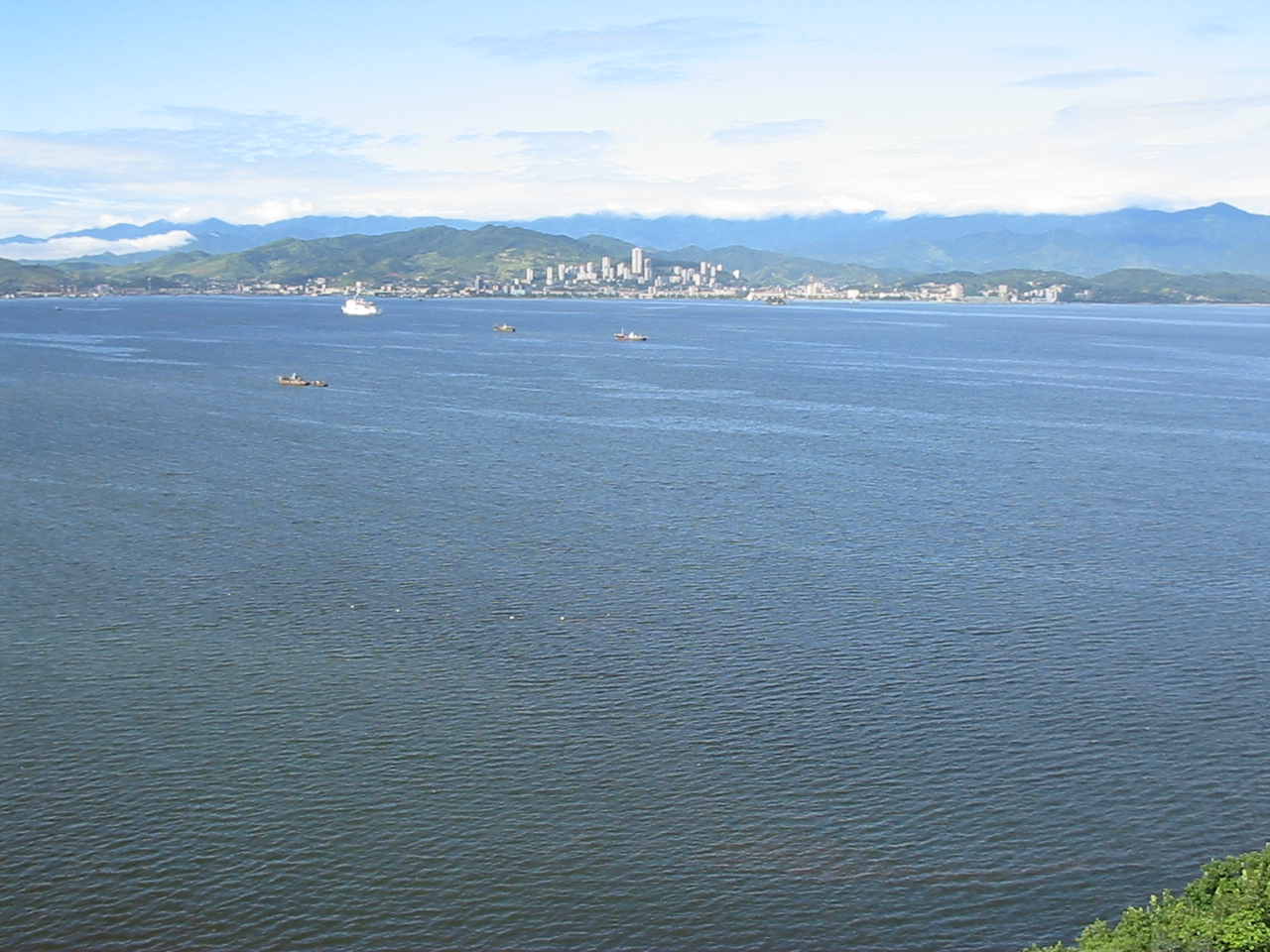
North Korea fired around 10 short-range ballistic missiles from an area around Wonsan, on its east coast, toward the sea off that coast at around 12:30 p.m. local time on Thursday, October 29 (0330 GMT), according to South Korea’s Joint Chiefs of Staff, in an updated report carried by Reuters. The launches were Pyongyang’s first ballistic missile firings in 17 days, Reuters noted, and they arrived at a moment when relations across the Demilitarized Zone were already strained by a landmine blast in September that wounded three South Korean soldiers and by a South Korean proposal for military talks that Pyongyang has not answered. No casualties or damage were reported in connection with Thursday’s launches.
What happened
The sequence, as the three allied governments described it on Thursday, began shortly after midday on the Korean east coast. South Korea’s Joint Chiefs of Staff said the missiles were launched from an area around Wonsan — a port city on North Korea’s east coast that has long been used for weapons tests — and flew toward the sea off that coast, Reuters reported. The Joint Chiefs put the number at around 10 short-range ballistic missiles in their updated assessment.
The early counts were not uniform, and readers should hold them that way. Some initial reports described about a dozen projectiles, or more than 10, before the Joint Chiefs’ updated figure of around 10 became the working number; South Korean and United States intelligence were still analysing the launches and the exact count on Thursday, according to the reporting. Signal Post News is presenting the figure as “around 10” for that reason, and is not stating a flight distance: the early distance figures circulating on Thursday were single-sourced and unverified.
Japan tracked at least part of the salvo from its own sensors. Japan’s Defence Ministry said the object it tracked fell outside Japan’s Exclusive Economic Zone, according to Yonhap News Agency’s reporting of the ministry’s statement. Japan’s Coast Guard separately said that a possible ballistic missile had already fallen into the sea and urged vessels in the area to stay alert; no damage to vessels had been confirmed in the early checks, the reports said.
South Korea’s military said it had strengthened surveillance and vigilance in preparation for additional launches and was closely sharing information with the United States and Japan, according to the Joint Chiefs’ statement reported by Reuters. That trilateral data-sharing is now the standard first response to a North Korean launch: detection in Seoul, Tokyo and Washington is pooled in near real time, which is why the three capitals’ accounts of Thursday’s salvo aligned on the essentials within hours.
Why this matters
A salvo of around 10 missiles is a different event from the single test rounds that make up most of North Korea’s launch calendar, and the difference is the point worth understanding. A single launch tests a missile. A near-simultaneous salvo tests the defence: air-defence radars, interceptor magazines and command systems are built to track and engage a limited number of incoming rounds at once, and firing many rounds together is how a military explores whether it can saturate that shield. Whether Thursday’s launches were intended as that kind of saturation rehearsal is not something any of the three governments said on Thursday — but the format itself is why a 10-round salvo draws a level of allied attention that a one-round test does not.
The second question a salvo raises is volume versus signalling. North Korea has conducted missile tests on more than 10 occasions this year, according to Reuters’ count, and most of those occasions involved small numbers of rounds. Choosing to fire around 10 at once is a louder statement than the same missiles fired one at a time across a month — it demonstrates stockpile depth and crew proficiency at the same time as it demonstrates the missile. Analysts cited in Associated Press reporting read the timing in political terms: the launches followed Kim Jong Un’s recent visit to China, and analysts said Pyongyang may be pressing for bigger concessions if diplomacy with the United States resumes. That is an interpretation offered by analysts, not an established motive, and North Korea had issued no claim about Thursday’s launches in the reporting available when this article was published.
How we got here
The immediate backdrop is the border, not the missile fields. On September 21, a landmine blast near the Military Demarcation Line wounded three South Korean soldiers. Seoul accused Pyongyang of planting mines south of the line; North Korea denied it. The dispute has run ever since without a joint investigation or an agreed account of what happened — the argument at the heart of Seoul’s demand that Pyongyang answer for the DMZ mines.
On October 19, Kim Yo-jong, the powerful sister of Kim Jong Un, threatened to deploy more tactical strike weapons along the border — the statement dissected in our coverage of the Kim Yo-jong border firepower warnings. Four days later, on October 23, South Korea’s defence ministry tried the other door: it proposed military talks with North Korea to clarify the course of the Military Demarcation Line, restore communication lines and prevent accidental clashes. Pyongyang had not responded to that proposal before Thursday’s launch, according to the reporting.
The missile calendar frames the rest. Reuters noted that North Korea last fired ballistic missiles on October 12, which makes Thursday’s salvo the first ballistic launch in 17 days. In the weeks between, Pyongyang’s testing has continued in other categories: a submarine-launched cruise missile test and claimed hypersonic weapons tests have both featured in recent weeks’ reporting. Thursday’s launch, in other words, was not a resumption of testing after a pause in the programme as a whole — it was the ballistic line of that programme becoming active again, at salvo scale, six days after Seoul’s talks offer went on the table and ten days after Kim Yo-jong’s border-weapons threat.
What the numbers actually imply
Three numbers carry this story, and each needs its qualifier. The first is around 10: the Joint Chiefs’ updated count of the missiles fired in a single salvo on Thursday, with some early reports putting the figure at about a dozen or more than 10 and the final tally still under analysis by South Korean and US intelligence. Treat it as a working count, not a settled one.
The second is more than 10: the number of occasions on which North Korea has conducted missile tests this year, according to Reuters. A launch tempo in double figures before the end of October describes a programme in routine, high-tempo operation rather than one being unveiled for a single crisis — which cuts both ways analytically. It supports the reading that Thursday was one more step in a standing test cycle, and it equally supports the reading that Pyongyang can generate a 10-round salvo on an ordinary Thursday when it wants the region’s attention.
The third is 17 days: the gap since the last ballistic launch on October 12, per Reuters. Seventeen days is short enough that the salvo cannot be described as ending a long ballistic silence, and long enough that the ballistic programme had visibly paused while cruise and claimed hypersonic testing continued. What the numbers do not contain is any confirmed figure for how far Thursday’s missiles flew; Signal Post News is not publishing one, because the early figures were single-sourced and unverified.
Who gains, who loses, what critics say
Start with the gains as each camp describes them. For Pyongyang, on the analysts’ reading carried by AP, a salvo that draws coordinated statements from Seoul, Tokyo and Washington reinforces the leverage North Korea brings to any future negotiation — a demonstrated ability to fire in volume, timed after Kim Jong Un’s China visit and while US diplomacy remains a possibility analysts say Pyongyang may be pricing upward. For the three allied governments, the launch was also a live demonstration of the system built to answer it: shared tracking, aligned public accounts within hours, and no vessel damage or casualties to manage.
The losses are argued just as openly. Critics of Seoul’s approach say an unanswered talks proposal followed within a week by a 10-missile salvo makes the offer look weak, and that accident-prevention talks have no value if the other side treats silence as its answer. Defenders of the proposal answer that the offer costs nothing, remains on the table, and addresses the separate and real danger exposed by September’s mine blast — a border incident escalating because the two militaries cannot talk. Critics of the allied response, for their part, note that surveillance statements and data-sharing, however polished, have not slowed a test programme now past 10 occasions this year; supporters of the current approach counter that deterrence is measured in attacks that do not happen, not in tests a closed state conducts into its own coastal waters.
North Korea’s own stated positions in this cycle are narrower than the speculation around them: it has denied planting the mines south of the line that Seoul accuses it of laying, and its most senior recent public voice on the border, Kim Yo-jong, used hers to threaten more tactical strike weapons rather than to discuss talks. Nothing Pyongyang has said on the record explains Thursday’s salvo, and this article does not fill that silence with a motive.
What happens next
Four things will show whether Thursday was an exclamation mark or the start of a sequence. First, further launches: South Korea’s military said it had raised surveillance and vigilance for exactly that possibility, and salvo tests have historically sometimes come in clusters across several days. Second, a North Korean account: Pyongyang’s state media often, though not always, claims and frames a major test a day or more later, and any such claim would be the first direct statement of what the North says it fired and why. Third, the talks offer: Seoul’s October 23 proposal for military talks on the demarcation line, communication channels and accident prevention is still formally unanswered, and a launch week is precisely when an answer — or a continued silence that functions as one — carries the most meaning. Fourth, the allied response beyond statements: whether the United States, South Korea and Japan answer with exercises, deployments or a diplomatic move of their own, or hold to the surveillance-and-sharing posture they described on Thursday.
Until one of those moves lands, the established facts of October 29 are these: around 10 short-range ballistic missiles, fired from near Wonsan at about 12:30 p.m. local time toward the sea off North Korea’s east coast; a tracked object fallen outside Japan’s Exclusive Economic Zone; no casualties and no damage reported; and three allied militaries watching, in their own words, for what comes next.
Sources
- Reuters, October 29, 2026 — South Korea’s Joint Chiefs of Staff statement and updated report of around 10 short-range ballistic missiles fired from the Wonsan area; North Korea’s previous ballistic launch on October 12 and more than 10 missile-test occasions this year.
- Associated Press, October 29, 2026 (as carried by Connected to India) — 10 missiles fired as border tensions rose; the September mine-blast dispute, the unanswered October 23 talks proposal and analysts’ reading of the launches after Kim Jong Un’s China visit.
- Yonhap News Agency, October 29, 2026, reporting Japan’s Defence Ministry and Japan Coast Guard statements — the tracked object fell outside Japan’s Exclusive Economic Zone; a possible ballistic missile had already fallen into the sea, vessels were urged to stay alert, and no vessel damage was confirmed in early checks.