Track it live: Live Global Trackers — Wars
South Korea on Friday again proposed military talks with North Korea, in a renewed attempt to cool tensions along the most heavily fortified border on earth before a misunderstanding turns into a firefight. Deputy Defence Minister Kim Hong-cheol set out the offer on October 23, according to Reuters and AFP: Seoul wants the two militaries to sit down and confirm the exact location of the land Military Demarcation Line (MDL) inside the Demilitarized Zone, restore the military communication lines that once connected the two commands, and agree on practical steps to prevent accidental clashes along the border.
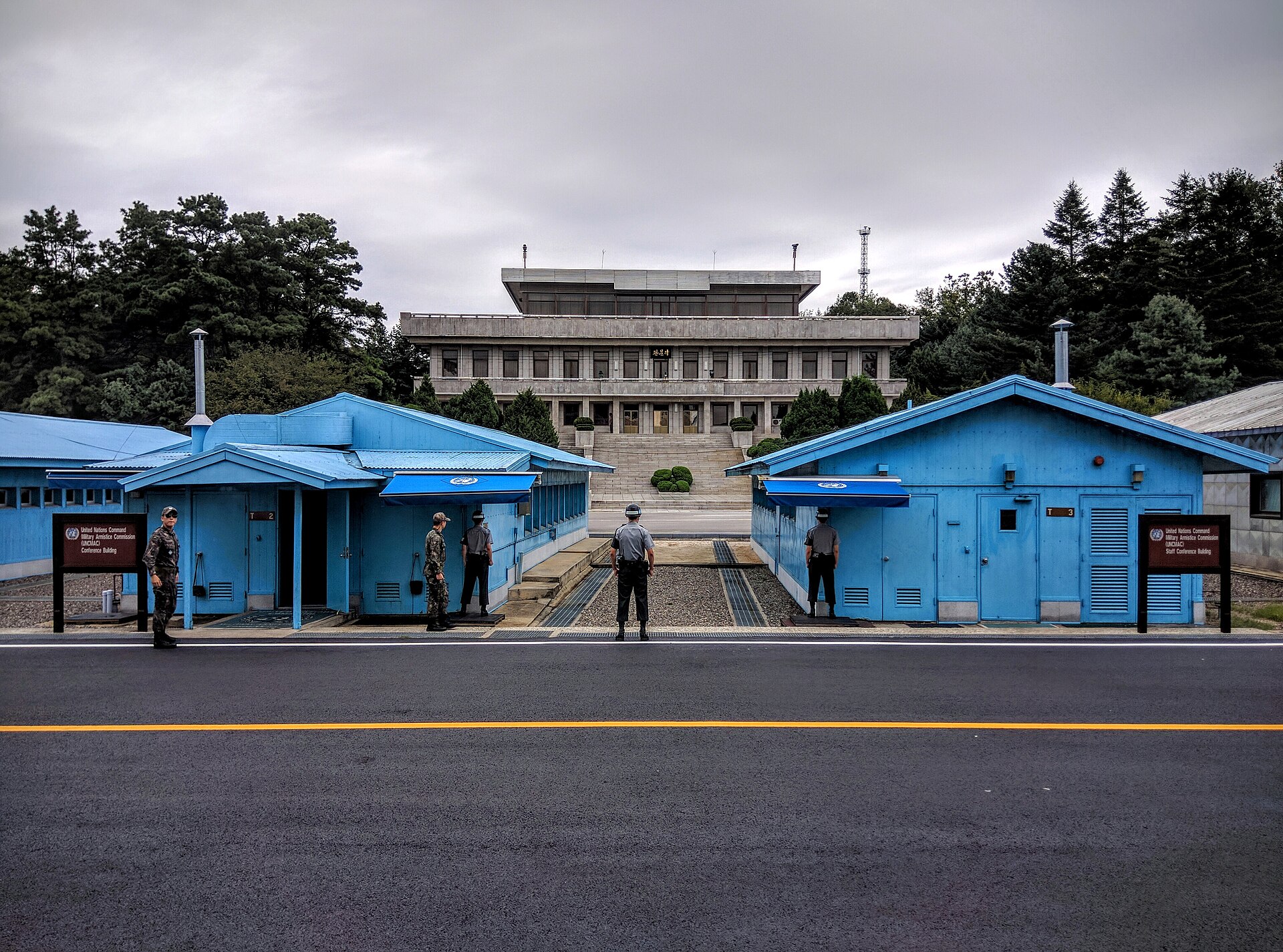
South Korea also signalled flexibility on format. Seoul said it is open to three-way talks involving the United Nations Command — the US-led body that oversees the 1953 armistice — conducted through Panmunjom, the truce village where inter-Korean military meetings have traditionally been held, the reports said.
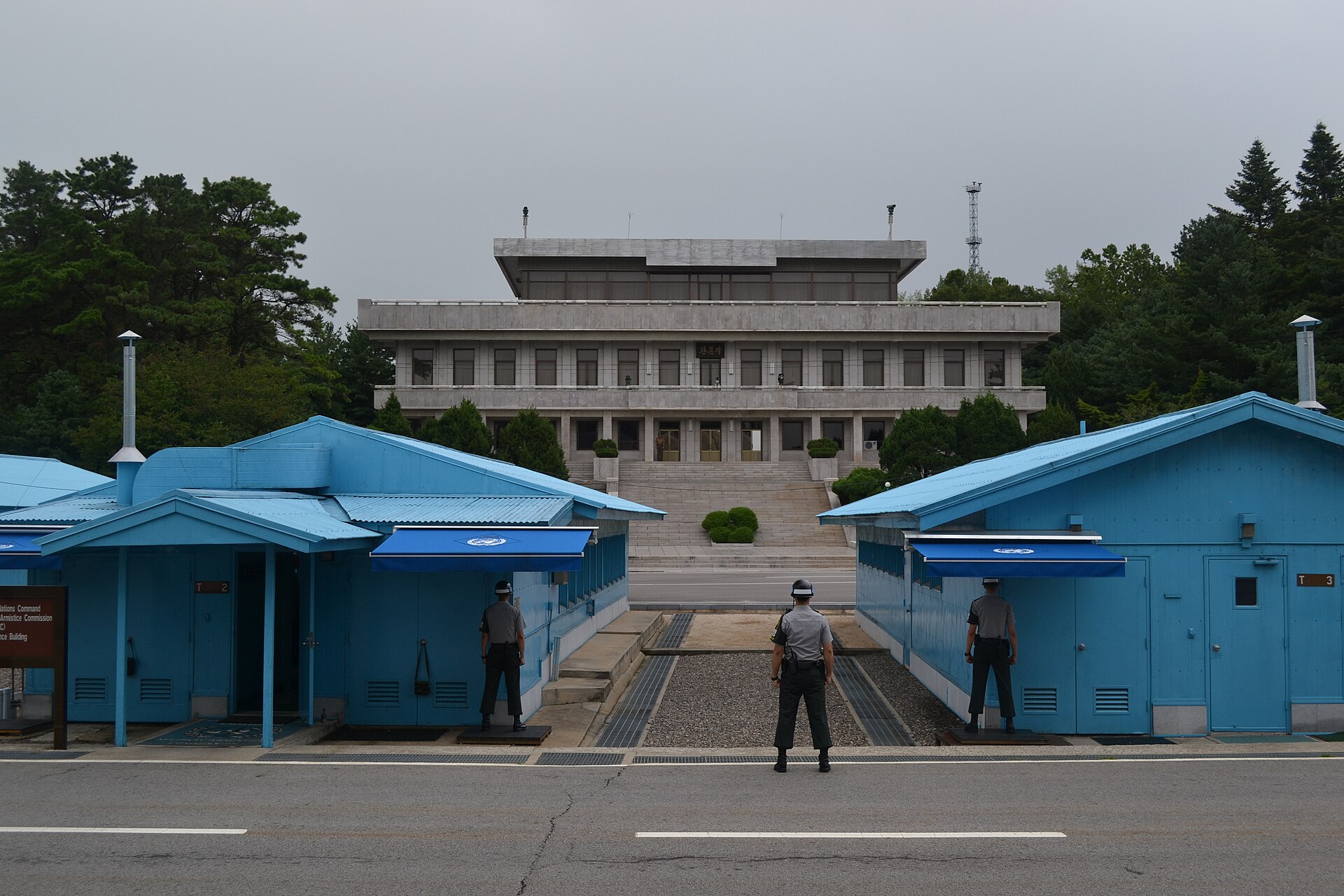
The proposal is not happening in a vacuum. It follows a landmine explosion inside the DMZ in September that seriously injured two South Korean soldiers. Seoul says the mines were buried south of the MDL — on its side of the line — a charge Pyongyang has denied. And it comes barely days after Kim Yo Jong, the North Korean leader's powerful sister, visited the front line and threatened retaliation, in a week when the border's loudspeaker war also flared back into view. South Korea's offer, in other words, lands in the middle of the sharpest border friction of the year — which is precisely Seoul's point: the machinery for preventing a local incident from escalating barely exists anymore.
What Seoul is actually asking for
The three elements of Kim Hong-cheol's proposal are deliberately narrow and technical, and that is by design. First, confirm the MDL's exact land location. The line was drawn in 1953, and while it is marked on maps both sides hold, the physical markers along its roughly 250-kilometre length have deteriorated over seven decades, leaving stretches where the two armies genuinely dispute where the line runs — the same ambiguity at the heart of the September mine dispute, where the argument is quite literally about which side of the line the mines were buried on.
Second, restore military communication lines. Working hotlines between the two commands were once the peninsula's basic safety valve: a way to warn the other side about exercises, defuse a confrontation in real time, or establish within minutes whether gunfire was an accident or an attack. Those channels have been cut or left unanswered as relations have frozen, leaving each side to interpret the other's moves in the worst possible light.
Third, agree measures to prevent accidental clashes — the practical, unglamorous rules of border behaviour: notification of patrols and engineering work near the line, agreed distances, agreed signals. None of this requires either side to concede anything on the questions that divide them most deeply, from nuclear weapons to the legal status of the Korean War itself. That modesty is the offer's logic: Seoul is not proposing a peace process. It is proposing that two armed camps sharing a border stop relying on luck.
Why this matters
The Korean peninsula is the world's standing example of how wars restart by accident. The 1953 armistice ended the fighting but never produced a peace treaty, so the two Koreas remain technically at war, with large armies facing each other across a 4-kilometre-wide buffer strip that is, paradoxically, mined and patrolled on both sides. In that environment, the difference between a contained incident and a crisis is usually not intent — it is information. A mine blast, a patrol crossing an unmarked stretch of line, artillery fire answered in kind: each side's first moves are made in minutes, based on what it believes the other side just did.
September's landmine blast showed how thin the margin has become. Two soldiers were seriously injured by mines that Seoul says were planted on its side of the line — an accusation that, if Pyongyang had accepted it, would amount to an admission of a cross-border operation. North Korea denied it. With no working military channel, there was no mechanism even to exchange evidence, let alone agree on what happened. Seoul's demand that Pyongyang apologise for the DMZ mines, and the North's flat rejection of the charge, have been running in parallel ever since — two governments arguing about a strip of ground whose boundary they cannot jointly survey. Friday's proposal is, in effect, an attempt to fix the underlying problem rather than relitigate the blast: if both sides confirm where the line is, the next explosion at least starts from agreed facts.
Background: a border where the line itself is disputed
The Military Demarcation Line was drawn as part of the July 1953 armistice that halted the Korean War, cutting across the peninsula roughly along the final battle lines. The Demilitarized Zone was built around it — a buffer meant to keep the armies apart. In practice, the border has produced a recurring cycle of incidents: infiltrations, exchanges of fire, mine blasts and propaganda operations, each arriving without warning channels to contain it. Inter-Korean military talks, when they have happened, have usually followed exactly this pattern — a dangerous incident concentrates minds, the two sides meet at Panmunjom, agree on limited confidence-building steps, and the arrangements hold until the next political freeze dissolves them.
The current freeze is deep. The September mine blast — which North Korea dismissed amid the armistice row — seriously injured two South Korean soldiers and triggered Seoul's formal demand for an apology and its account of mines buried south of the MDL. Pyongyang denied responsibility. Then, in the days before Friday's proposal, Kim Yo Jong's front-line visit put the North's most combative voice at the border itself, threatening retaliation and raising the loudspeaker issue that has become the friction point both sides can escalate or de-escalate at will. Against that backdrop, a proposal for working-level military talks is as much a test as an initiative: Seoul is asking whether any channel at all still functions.
Both sides: an open hand and a closed door
Seoul's stated case is procedural, not political. South Korean officials frame the proposal around accident prevention: confirm the line, reopen the phones, agree the rules, and the border becomes measurably safer for soldiers on both sides regardless of the wider relationship. The willingness to bring in the UN Command — and to meet in a three-way format at Panmunjom — is a concession to the North's long-standing sensitivity about the armistice machinery: the UNC, not South Korea, is the armistice's signatory on the allied side, and routing talks through it gives Pyongyang a format it has accepted before.
Pyongyang's position, so far, is silence layered over denial. North Korea left a similar South Korean proposal in November 2025 unanswered entirely. It has denied the mine charge. And its most visible border messaging this week has come from Kim Yo Jong, whose front-line appearance and retaliation threats point in the opposite direction from the negotiating table. The North has historically treated military talks as leverage to be granted or withheld in step with its wider strategy, not as a safety utility — and it has spent recent years formally redefining the South as a hostile separate state rather than a partner in any shared management of the peninsula. Readers should weigh Friday's offer against that record: an identical proposal has already sat unanswered for the better part of a year.
What the numbers actually say
Strip away the diplomacy and the geometry is stark. The MDL runs for roughly 250 kilometres; the DMZ around it is about 4 kilometres wide; and the physical markers that were supposed to make the line unambiguous date from 1953 — more than 70 years of weather, vegetation and neglect acting on a boundary that was surveyed in wartime. Two soldiers seriously injured in a single September blast is the human version of that arithmetic. And the communications ledger is simpler still: a similar talks proposal made in November 2025 received, in roughly eleven months, no North Korean answer at all. Zero replies is itself the data point Seoul is now trying to change.
What happens next
Three paths follow from here. In the first, Pyongyang answers — most plausibly through the UN Command channel Seoul has pointedly left open — and working-level officers meet at Panmunjom to argue over maps and markers. Even a sterile meeting would matter: it would re-establish the principle that the two militaries can talk, and give both sides a number to call in the next incident. In the second, the North stays silent, as it did in November 2025, and the proposal joins the file of unanswered offers while border friction continues to be managed by statement and counter-statement — the loudest recent example being the Kim Yo Jong border warnings dissected in our earlier coverage. In the third, an incident outruns the diplomacy: another blast, another crossing, another exchange of fire, at which point the talks Seoul is proposing now would become the talks both sides suddenly need under far worse conditions.
Which path emerges will be visible quickly. North Korea typically signals through state media or through the UNC channel whether an offer is even acknowledged. Until then, Friday's proposal stands as Seoul's formal position: the line should be confirmed, the phones should work, and the border should not be one accident away from a war neither side says it wants.