North Korea South Korea border tensions: North Korea South Korea border tensions rose on Wednesday as Kim Yo Jong said new firepower units had taken firing positions along the frontier and announced that anti-South loudspeaker broadcasts will resume along the whole border within October.
World / Asia — Pyongyang is turning a border construction project into a permanent, armed frontier, and Seoul’s warning shots have become part of the daily routine
Track it live: Live war and conflict tracker
What happened on Wednesday
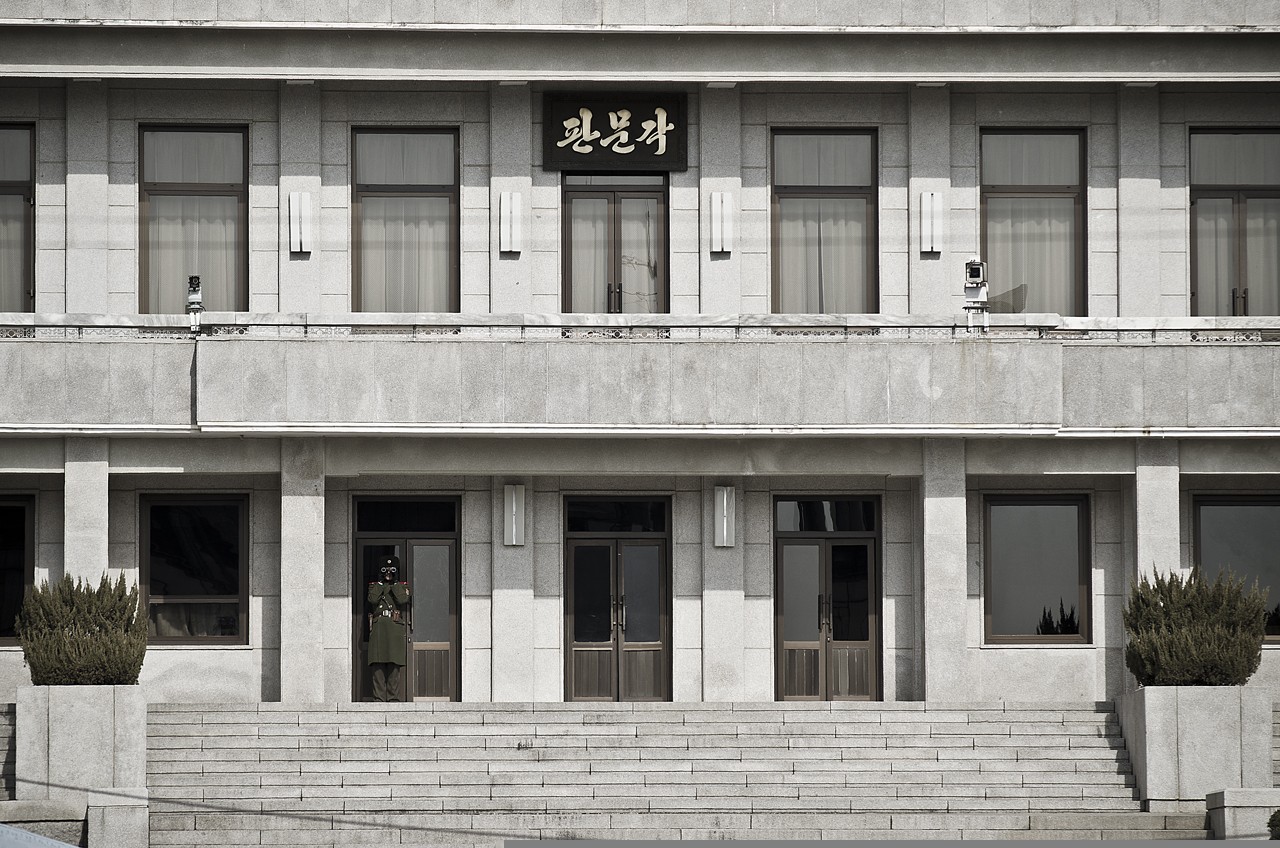
The day produced two separate escalations from Pyongyang, delivered hours apart. First, the Korean Central News Agency (KCNA) reported that Kim Yo Jong had inspected the border fortification works alongside Korean People’s Army Marshal Pak Jong Chon, one of her brother’s top military officials. “Our military leadership underlined the need to make those rogues aware that our new firepower units have taken their firing positions,” Kim told soldiers during the visit, according to KCNA reporting carried by both Reuters and the Associated Press. She reminded troops of Kim Jong Un’s order to make the border with the “enemy … eternally impregnable,” and called the fortification effort a “sacred and great undertaking” supporting the leader’s policy of permanently severing ties with South Korea.
One detail in KCNA’s own reporting shifted during the day, and it is worth recording exactly: the agency first reported the border visit as having taken place on Tuesday, but Kim later corrected the timing to early Wednesday in her separate statement. Pak, for his part, used the inspection to reject Seoul’s account of the border work outright. South Korean claims that North Korean soldiers have been crossing the Military Demarcation Line were a “deliberate, premeditated and absurd” attempt to shift blame, he said, threatening an “overwhelming response” to provocations and insisting that “our army knows where our borderline is better than any others.” KCNA’s summary of the military’s instructions to the troops on the ground was blunt: take “prompt and resolute action” if South Korean forces threaten their safety, and turn the border into an “impregnable fortress.”
Then came the second statement. Kim said North Korea’s “tactical hunting teams are taking new positions, and within October, the loudspeakers for psychological warfare against the ROK will be in operation along the whole border,” using the initials of South Korea’s formal name, the Republic of Korea. She claimed South Korean forces had again made warning broadcasts and fired warning shots at no fewer than two locations on Wednesday — a claim Seoul did not confirm in the reporting available Wednesday — and warned that if Southern warning fire causes “actual harm to our territorial security and our service persons’ safety,” North Korean border guards “will show no mercy for the armed gangsters bereft of reason.” The loudspeaker announcement converts a threat into a timetable: on Monday, Kim had said Pyongyang was considering deploying additional tactical weapons and restarting the broadcasts. By Wednesday, the broadcasts had a start date — sometime in the remaining days of October.
Seoul’s answer
South Korea’s response came on several levels. The day before Kim’s visit, Seoul had pledged to punish “resolutely” any further provocation if North Korea acted on its threats to strengthen its military posture along the border, Reuters reported. On Wednesday, the chairman of South Korea’s Joint Chiefs of Staff, Jin Yong-Sung, called Kim Yo Jong’s threats “intolerable” and ordered the military to “sternly respond” to potential provocations by the North, the Associated Press reported. South Korea’s defence ministry had already, on October 20, expressed grave concern over Pyongyang’s criticism of what it called legitimate operations under the Armistice Agreement, and said it would retaliate decisively if North Korea used those measures as a pretext for further provocations.
Underneath the exchange of statements sits an unresolved incident that both sides are really arguing about. On September 21, land mine blasts inside the Demilitarized Zone wounded three South Korean soldiers — two of them seriously — during a reconnaissance mission. After a joint inspection with the U.S.-led United Nations Command, Seoul formally blamed mines planted by North Korea, urged Pyongyang to apologize and clear its remaining mines, and reported that North Korean soldiers had crossed the military demarcation line some 50 times this year during fortification work, drawing warning shots and warning broadcasts in response — a sequence this site covered in its reporting on Seoul’s move to force a North Korea DMZ mines apology and the earlier UN Command findings in the DMZ mine blast armistice ruling. North Korea denied responsibility for the explosions and rejects the crossing claims entirely: in Pyongyang’s account, its soldiers are working inside their own territory, and it is the South’s warning fire that is the provocation. Kim put numbers on that account on Monday: 2,870 rounds of South Korean loudspeaker warnings and 201 warning shots between August 1 and October 17, by her tally. Seoul has not published its own count.

Why this matters
It would be easy to file Wednesday’s statements under rhetoric — the Korean border has absorbed decades of threats that never became fire. That reading misses what is actually changing. The danger on this border in 2026 is not a planned invasion from either side; neither capital is signalling one. It is that the physical facts on the ground are being rebuilt in a way that multiplies the number of small, armed encounters between young soldiers who now operate under standing orders to respond “resolutely,” “decisively” and “without mercy.” Pyongyang has spent two and a half years converting the world’s most heavily armed frontier into something more permanent — mines, barbed wire, anti-tank barriers and new firing positions — in service of Kim Jong Un’s doctrine that the two Koreas are separate, hostile states, forever. Construction on that scale requires thousands of workers at the line itself, and thousands of workers at the line produce crossings, disputes over where the line runs, mines drifting or planted across it, warning broadcasts and warning shots. Each side’s account of Wednesday is, in its own frame, defensive: Pyongyang says it is fortifying its own territory; Seoul says it is enforcing the armistice line against incursions. Both can be describing the same patrol accurately and still be one misunderstood movement away from an exchange of fire that neither leadership ordered.
The loudspeaker decision matters for a different reason: it is the visible death of the last working tension-reduction measure between the two Koreas. Loudspeaker broadcasts are among the oldest psychological-warfare tools on the peninsula, and switching them off has repeatedly been the cheapest concession either side could offer. South Korea’s president, Lee Jae Myung, halted the South’s broadcasts after taking office last year specifically to improve ties, and the North later stopped its own — one of his administration’s most-touted achievements in easing tensions. Pyongyang is now unilaterally reversing that, border-wide, on a stated timetable, and framing it not as a bargaining chip but as “the most legitimate measure and an appropriate countermeasure.” A concession that is withdrawn as a matter of doctrine is much harder to trade back than one suspended in a negotiation.
Kim Yo Jong’s personal role is the third signal. She is widely viewed as the second most powerful official in Pyongyang, and she did not send a spokesman to the border — she went herself, with the army’s marshal beside her, and corrected the state news agency’s own dateline in her follow-up statement. When the leader’s sister inspects fortifications and announces deployments, the message to the South’s general staff is that the posture she describes carries her brother’s authority. Seoul answered at the matching level: not a ministry spokesman alone, but the chairman of its Joint Chiefs of Staff, using the word “intolerable” and issuing a standing order to respond sternly.
What the numbers say
The figures attached to this dispute, each attributed to the side that published it, sketch the tempo better than the adjectives do. South Korea’s military says Pyongyang has sent as many as 7,000 workers to the border this year to install mines and fences, with about 50 crossings of the demarcation line during the work. Kim Yo Jong’s counter-ledger counts 2,870 South Korean warning broadcasts and 201 warning shots in the ten and a half weeks from August 1 to October 17 — roughly 27 warning broadcasts and two warning shots a day, if her tally is accurate, which Seoul has neither confirmed nor disputed with figures of its own. The fortification programme itself dates to April 2024, when Pyongyang began rebuilding a border that was already, on any measure, extraordinary: a Demilitarized Zone roughly 250 kilometres long and 4 kilometres wide, separating two states that remain technically at war because the Korean War ended in a 1953 armistice, not a peace treaty. The human cost so far in this cycle is the September 21 mine blasts: three South Korean soldiers wounded, two seriously. Every number in that paragraph predates Wednesday’s announcement that new North Korean firepower units are now sitting in firing positions along the same line — a claim made by Pyongyang, which neither Seoul nor Washington had publicly confirmed or denied in Wednesday’s reporting.
Two accounts of the same border
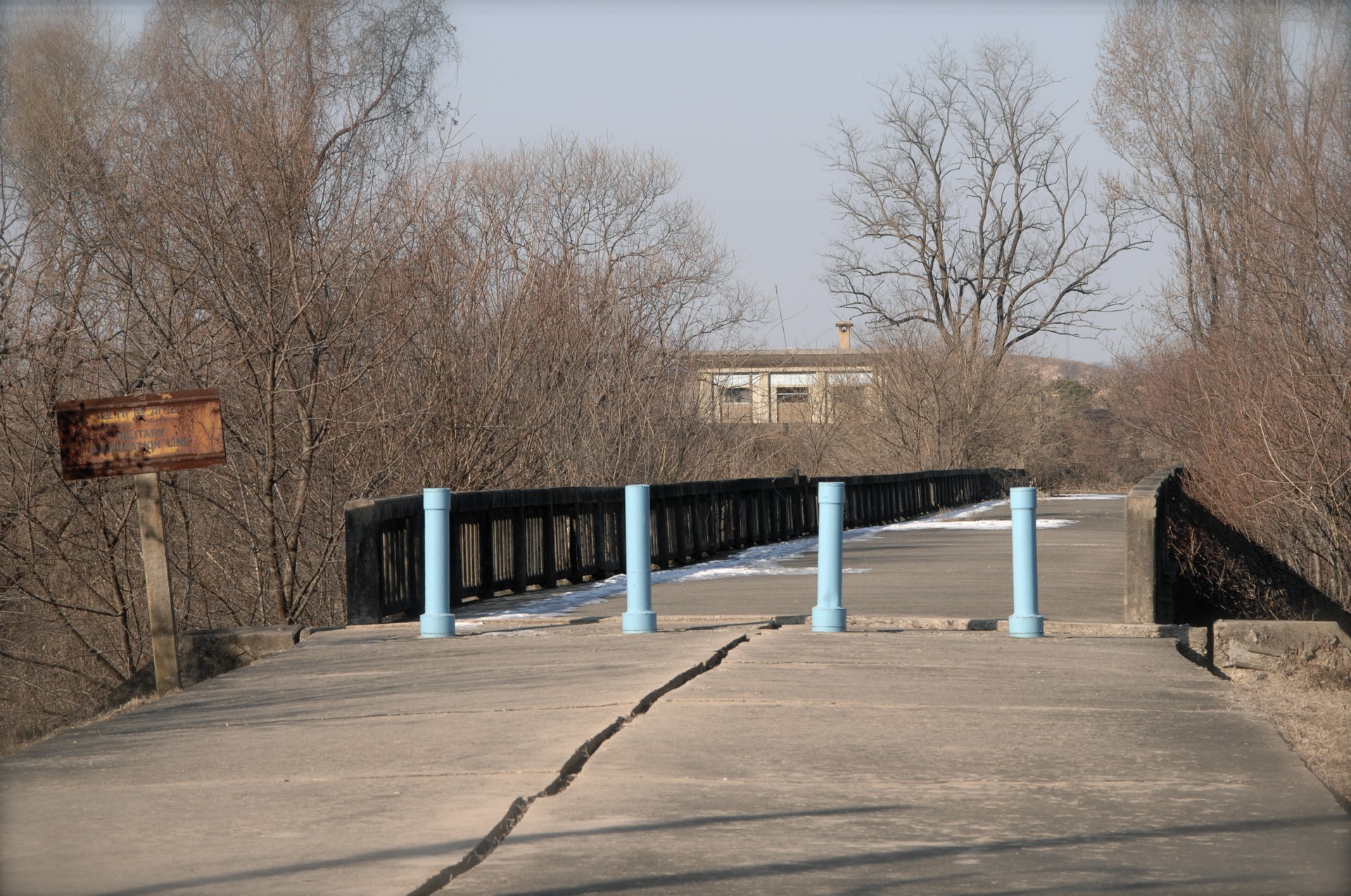
Nothing about Wednesday’s core facts is agreed except the fortification work itself. North Korea’s account: its army “knows where our borderline is better than any others”; its soldiers are building on their own territory; South Korean warnings and shots are harassment of that work, tallied in the thousands; and the September mines are not Pyongyang’s doing or responsibility. South Korea’s account: the joint probe with the UN Command established that North Korean mines caused the September 21 blasts; Northern soldiers have crossed the demarcation line about 50 times this year; and warning broadcasts and shots are the armistice’s legitimate, graduated way of pushing them back without killing anyone. The loudspeakers, in Seoul’s framing, would be the North reviving a psychological-warfare campaign that both sides had agreed in practice to suspend. Readers should hold both ledgers at arm’s length: warning-shot counts have been published by one side only, the mine findings rest on an investigation Pyongyang rejects and did not join, and the claimed deployment of new firepower units has, so far, exactly one source — the government that benefits from the South believing it.
What happens next
The calendar now does the escalating. Kim’s statement puts the loudspeakers back on “within October,” which means sometime in the next ten days, along the whole border at once. Seoul has not said whether it will answer in kind by restarting its own broadcasts — the step that turned the 2015 border crisis, which began with a mine blast wounding two South Korean soldiers, into loudspeaker duels and an artillery exchange before a joint agreement pulled both sides back. The parallel with 2015 is uncomfortable and precise: mines, wounded Southern soldiers, loudspeakers, ultimatums. What is different this time is the doctrine underneath: in 2015 both sides still treated the border as a shared problem to be managed; in 2026 Pyongyang describes it as a permanent wall between two hostile states, and has put the leader’s sister on camera at the fence line to say so. South Korea’s annual Hoguk field exercise, held with U.S. Forces Korea, adds one more layer of armed activity to the same weeks. The most likely near-term outcome is noise, not fire — broadcasts, counter-statements, more warning shots logged in ledgers like Kim’s. But the margin in that prediction is the behaviour of border units on both sides who have now been told, in writing and on the record, that restraint is conditional. That is a thinner margin than the peninsula has had in years, thinner even than during the missile exchanges this site covered in North Korea’s recent ballistic missile launches — because missiles are fired by orders from the top, and border incidents are started by whoever is standing at the line.
Sources
Reuters, “North Korea tells border troops to take ‘resolute action’ if South threatens their safety,” October 21, 2026 (KCNA: Kim Yo Jong and Marshal Pak Jong Chon inspected border fortifications; new firepower units “taken their firing positions”; Seoul’s Tuesday pledge; up to 7,000 workers and about 50 demarcation-line crossings per Seoul; September mine blast seriously wounding two soldiers). Associated Press, “North Korean leader’s sister inspects border fortifications as tensions rise with the South,” October 21, 2026 (Kim’s “sacred and great undertaking” and “eternally impregnable” lines; three South Korean soldiers injured in last month’s mine blasts; the September 21 UN Command inspection and Seoul’s apology demand; Marshal Pak Jong Chon’s “deliberate, premeditated and absurd” rejection of the crossing claims and “our army knows where our borderline is better than any others”; KCNA’s Tuesday dateline for the visit, corrected by Kim to early Wednesday; Joint Chiefs of Staff Chairman Jin Yong-Sung’s “intolerable” verdict and stern-response order; President Lee Jae Myung’s halt to the South’s broadcasts last year). Associated Press, “North Korea says it will restart border propaganda broadcasts as tensions rise with the South,” October 21, 2026 (“tactical hunting teams are taking new positions”; loudspeakers to be “in operation along the whole border” within October; the “show no mercy for the armed gangsters bereft of reason” warning; Kim’s claim — not confirmed by Seoul — of South Korean warning broadcasts and warning shots at no fewer than two locations on Wednesday). Reuters, “North Korea’s Kim Yo Jong says loudspeaker broadcasts toward Seoul being considered, KCNA reports,” October 19, 2026 (Kim’s Monday statement: additional tactical weapons and a loudspeaker restart under consideration; her tally of 2,870 South Korean warning broadcasts and 201 warning shots from August 1 to October 17; “the situation of the southern border is very unstable”). Seoul Economic Daily, October 21, 2026 (Yonhap/KCNA-based reporting on the loudspeaker statement, including the “most legitimate measure and an appropriate countermeasure” framing).