North Korea DMZ mines apology
War / Korea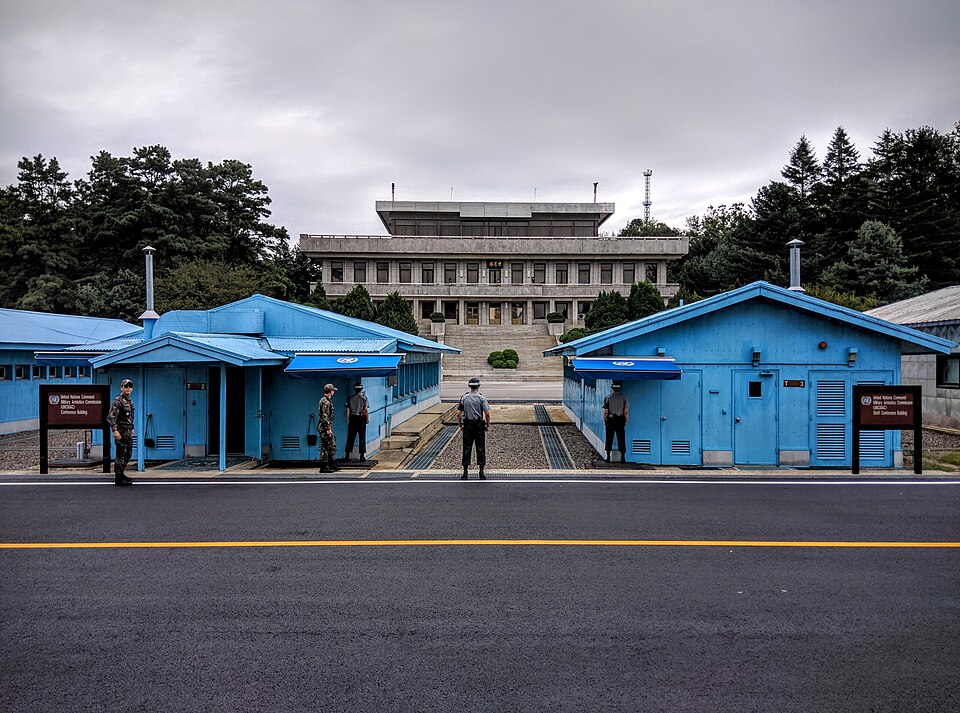
SEOUL — The immediate dispute concerns a patch of ground measured in meters. Its consequences reach across the architecture that has kept the Korean Peninsula from returning to full-scale war for 73 years. Three South Korean soldiers were wounded during a September 21 reconnaissance mission inside the four-kilometer-wide Demilitarized Zone. Two suffered critical ankle injuries and a third was slightly hurt.
On October 5, South Korea's Joint Chiefs of Staff and the U.S.-led United Nations Command announced the final findings of their joint investigation. They said resin-bodied North Korean antipersonnel mines had been placed 3 to 10 centimeters underground, with the blast sites and one unexploded mine site roughly 10 meters — 33 feet — south of the Military Demarcation Line. GPS measurements, explosive residue and the pattern in which the mines were laid formed the core of Seoul's case.
North Korea offers a categorical counterclaim. Kim Yo Jong, the sister of North Korean leader Kim Jong Un and a senior ruling-party official, called the accusation a fabrication and “groundless.” She warned that retaliation would follow if the South took action. No independent inspection accepted by both Koreas has been announced, so the public record remains an institutional finding by the South Korean and UN commands against a denial by Pyongyang.
Why an apology matters — and why forcing one is difficult
Seoul is not treating the incident as an ordinary clearance operation. Defense Ministry spokesperson Chung Bin-na said the government was “not ruling out any options” as it considered how to force an apology. Foreign Minister Cho Hyun told a parliamentary audit that his ministry was reviewing diplomatic steps, including measures used through the United Nations in the past, and would coordinate with the National Security Council.
An apology would do more than acknowledge the injuries. It could affirm the practical meaning of the line, accept responsibility for weapons placed on the other side of it and create a basis for compensation or new safety arrangements. South Korea would also gain a deterrent message: border violations carry political costs even when they are small in geographic scale.
But coercive diplomacy contains a contradiction. An apology has value because it appears voluntary; the more visibly it is forced, the easier it is for Pyongyang to dismiss it as propaganda or humiliation. North Korea may calculate that denial protects its deterrent reputation and avoids creating a precedent under which Seoul can demand concessions after every disputed incident. Critics of Seoul's approach therefore ask whether the pursuit of a symbolic statement could produce more danger than practical security.
The forensic case and Pyongyang's denial
South Korean and UN Command investigators said the physical evidence pointed away from accidental movement. According to their account, both blast locations and the unexploded mine were south of the MDL. The devices were buried in rows at a depth of 3 to 10 centimeters and spaced in a pattern associated with deliberate North Korean emplacement. The command estimated they had been underground for about 12 months.
National Forensic Service tests on the soldiers' equipment detected TNT, thermosetting resin and a brown foreign substance. Investigators said fragments matched a North Korean plastic antipersonnel mine previously recovered from the Imjin River. Their conclusion was that the devices had not drifted across the line during flooding, a possibility that often complicates claims about old mines in a landscape shaped by heavy rain, erosion and decades of military activity.
Pyongyang has not published a competing technical report. Its position is that the accusation itself is fabricated. From the North Korean perspective, accepting a South Korean–UN Command investigation would mean allowing institutions it regards as hostile to define the facts and assign blame. That does not disprove the forensic evidence, but it explains why evidence persuasive to Seoul is unlikely by itself to produce an admission from Pyongyang.
South Korea destroyed the minefield at about 12:51 p.m. on October 5 and released footage of the detonation. Defense Minister Kang Shin-chul described the clearance as unprecedented and decisive, saying all responsibility lay with North Korea. The operation reduced the immediate physical hazard. It did not resolve the attribution dispute or establish a shared process for future incidents.
A 73-year armistice, a 2015 precedent and a more fortified border
The Korean War ended in 1953 with an armistice, not a peace treaty. The MDL and the two-kilometer buffer on each side became a system for managing unresolved war. That system depends on visible markers, common procedures and restraint by heavily armed forces operating near one another. A device measured 10 meters across the line is therefore not “only” 10 meters; it tests whether the demarcation can still perform its central function.
The 2015 DMZ mine incident is the closest modern precedent. North Korean mines seriously wounded two South Korean soldiers. Seoul responded by sending a letter to the president of the UN Security Council, while tensions rose through propaganda broadcasts and military alerts before talks produced a North Korean expression of regret. The lesson is mixed: pressure can produce language that lowers tension, but only after the two sides approach an escalation threshold.
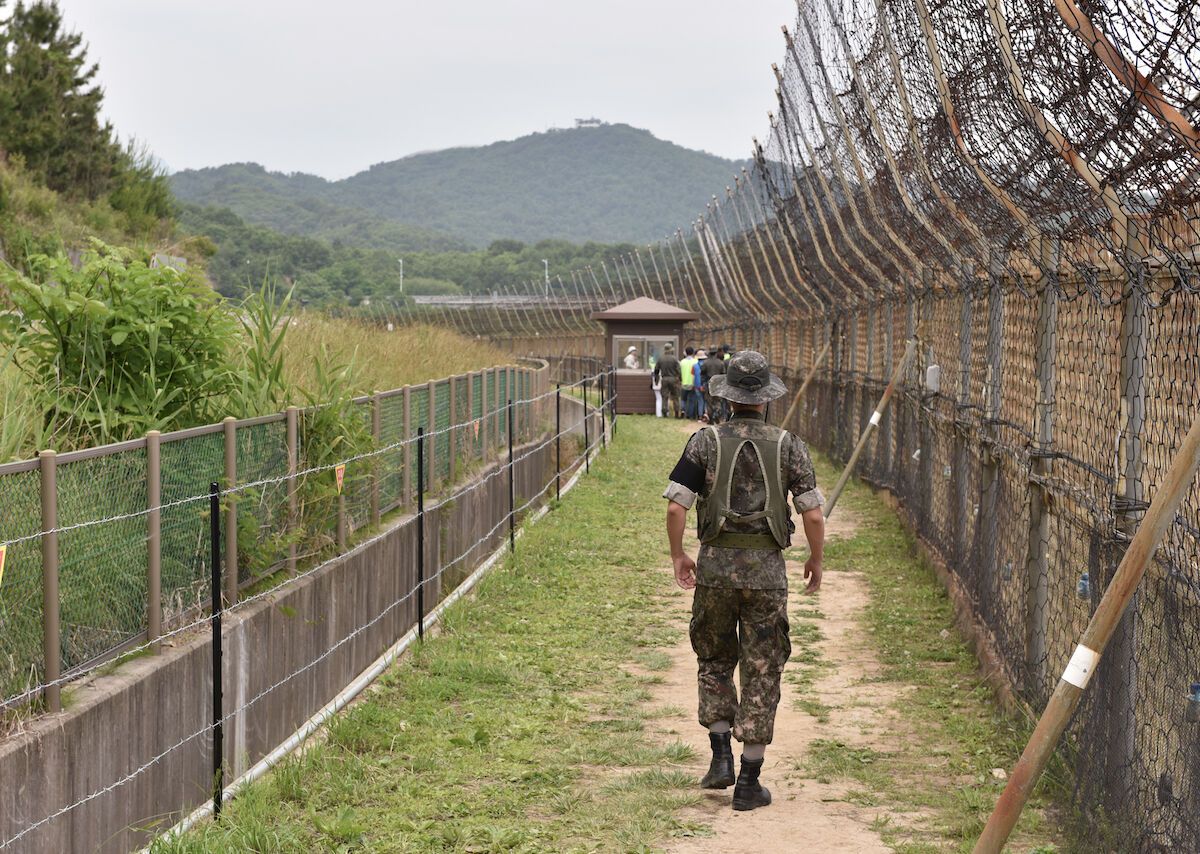
The 2026 environment is more crowded and more brittle. North Korea has reinforced the frontier since April 2024. South Korean authorities say as many as 7,000 North Korean workers have been deployed this year to install mines and fences, and roughly 50 border-crossing incidents have occurred. Some crossings may reflect workers becoming disoriented or stepping over an imperfectly marked line rather than deliberate incursions. The volume itself raises the chance that a local mistake becomes a national crisis.
That is why the difference between 2015 and 2026 matters. The earlier incident unfolded around a known patrol route and eventually produced talks. The present case arrives amid sustained construction, repeated crossings and disagreement about how the boundary is represented on the ground. Seoul can cite a stronger forensic record; it also faces a denser field of potential triggers.
What the numbers say — and what they cannot prove
Three to 10 centimeters is shallow enough for pressure activation while still suggesting placement rather than a loose device resting on the surface. Ten meters south of the line is small on a map but significant under an armistice built around exact separation. About 12 months underground places the estimated emplacement during the period of intensified North Korean fortification. Together, those figures support the investigators' sequence.
Yet numbers do not answer every strategic question. The reported 7,000 workers and approximately 50 crossings indicate the scale and friction of North Korea's border effort, not who ordered a specific mine team to cross a specific point. Physical matching can identify a mine type and residue; command intent usually requires records, communications or testimony that are not public.
The strongest neutral reading is therefore narrow. Seoul and the UN Command say they have a coherent forensic case that North Korean mines were deliberately laid south of the MDL. Pyongyang denies the allegation and rejects the investigating bodies' authority. The evidence disclosed publicly supports attribution more strongly than it reveals motive.
The overlooked issue: both sides may not be using the same line
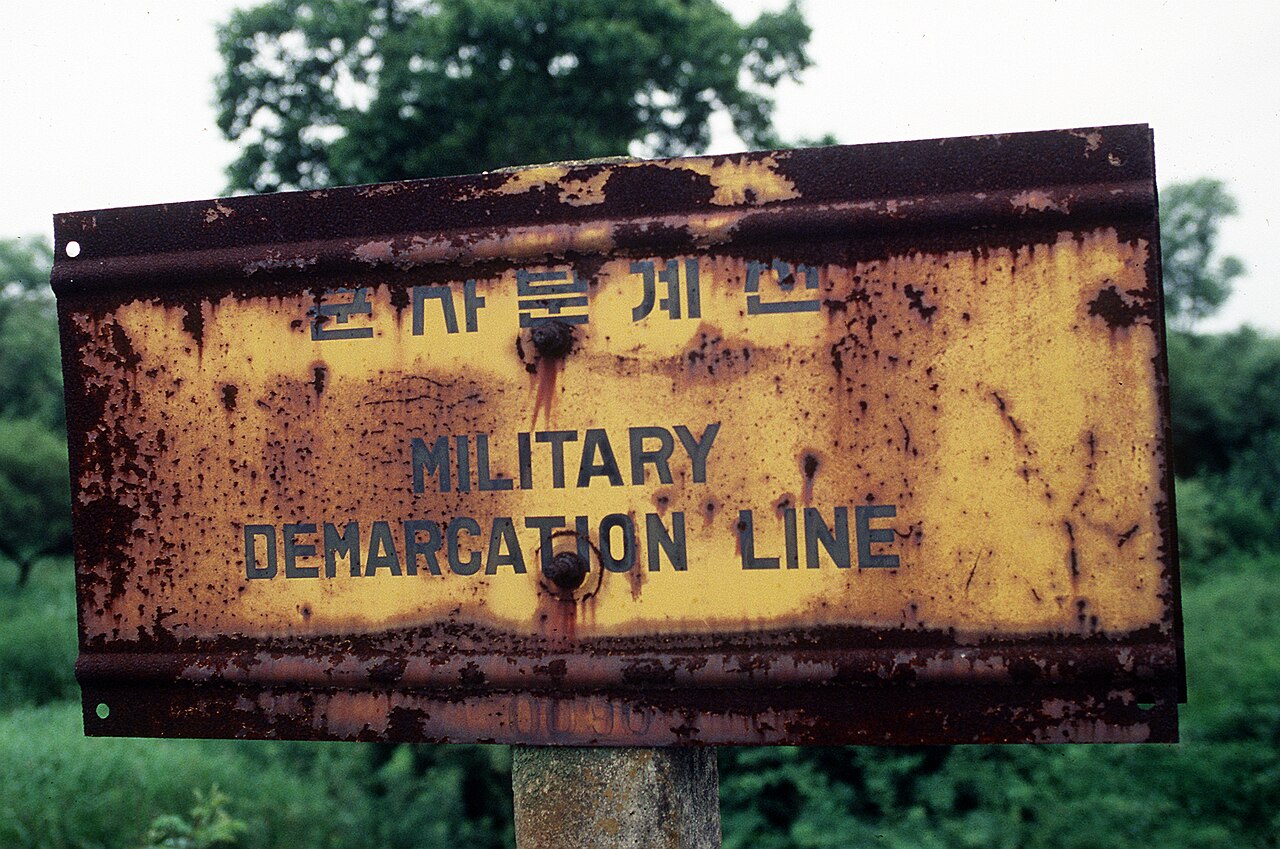
South Korea has asked North Korea to discuss apparent misalignment between surviving 1953 markers and modern maps. Some markers have disappeared or no longer line up cleanly with current coordinates, and Seoul says it cannot establish which reference Pyongyang's forces use. That ambiguity is not an excuse for placing mines across the line. It is a separate operational risk that can turn a preventable mapping error into a deadly violation.
A technical MDL channel could be more consequential than an apology. Joint surveying, restored marker visibility, shared coordinates and notification procedures for construction teams would reduce the chance of another crossing. For Seoul, proposing such talks demonstrates that accountability and risk reduction can proceed together. For Pyongyang, accepting could imply that an ambiguity exists without requiring it to accept responsibility for this minefield.
Skeptics on both sides may resist. South Korean critics could see talks without an apology as rewarding denial. North Korea may view shared mapping as surveillance or a concession to the UN Command. But the choice is not simply apology or silence; it is whether to pair political pressure with a mechanism that lowers the probability of the next blast.
Who benefits, who loses
The South Korean government benefits if its case wins broad international support: that strengthens the armistice framework, validates the joint investigation and reassures troops that injuries will not be treated as routine. The UN Command benefits from renewed recognition of its monitoring role. Families and soldiers gain most from concrete safety measures, not rhetoric.
Pyongyang may see advantage in refusing the demand. A firm denial preserves freedom of action, avoids a precedent and portrays Seoul's campaign as coercive. Kim Yo Jong's retaliation warning also raises the prospective cost of South Korean measures before they are chosen. The downside is reputational: if partners accept Seoul's evidence, continued denial can deepen North Korea's diplomatic isolation.
Both governments lose if the dispute becomes an open-ended contest of resolve. South Korea would face the risk of retaliation without certainty of an apology; North Korea would face stronger monitoring, mine-clearance activity and diplomatic pressure. Border troops on both sides would operate under tighter rules of engagement, where an accidental step or warning shot could be interpreted as intentional escalation.
What happens next: four scenarios
1. Diplomatic pressure produces calibrated regret
Seoul could pursue a UN letter, allied statement or other diplomatic measure modeled partly on 2015. Pyongyang might respond with language short of legal responsibility — regret for the injuries rather than admission that it planted the mines. That would let both sides claim they preserved their core position while creating room for de-escalation.
2. No apology, but technical talks resume
The most practical outcome would separate attribution from prevention. Military representatives could discuss MDL coordinates, damaged markers and advance notice for fortification work. Success would be measured by fewer crossings and clearer deconfliction, not by public contrition.
3. Symbolic or limited retaliation
If Seoul imposes measures that Pyongyang treats as hostile, North Korea could answer with propaganda broadcasts, border activity, weapons demonstrations or another controlled provocation. Each step would invite a South Korean response. The escalation ladder becomes dangerous when both sides believe the other will stop first.
4. A prolonged stalemate
Seoul may keep the apology demand alive while expanding clearance and patrol precautions; Pyongyang may continue denying responsibility. This is the least dramatic scenario and perhaps the most likely. It avoids immediate concession, but leaves the underlying boundary and communication problems unresolved.
The essential test is not whether one side wins the narrative this week. It is whether the two militaries can prevent another buried device, uncertain coordinate or routine patrol from creating casualties and a rapid cycle of retaliation. Accountability matters. So does a channel capable of stopping the next incident before it demands another apology.