World · Americas · Analysis
Primary keyword: Nicaragua leaves Central American Parliament
MANAGUA — Nicaragua leaves Central American Parliament membership behind with immediate effect, turning a procedural treaty notice into a blunt political message. The announcement came one day after the Organization of American States demanded restored civil liberties, the release of political prisoners and conditions for inclusive elections. The sequence matters: Managua is not simply changing seats in a regional chamber. It is narrowing the number of institutions able to challenge it from inside a shared diplomatic system.
The move is easy to dismiss as symbolic because Parlacen does not command armies, impose sanctions or write binding domestic law. That would miss the point. Regional institutions derive influence from repeated contact, shared rules and the reputational cost of breaking them. By leaving, Nicaragua gives up representation but also removes one more venue where its neighbors can question its government face to face.
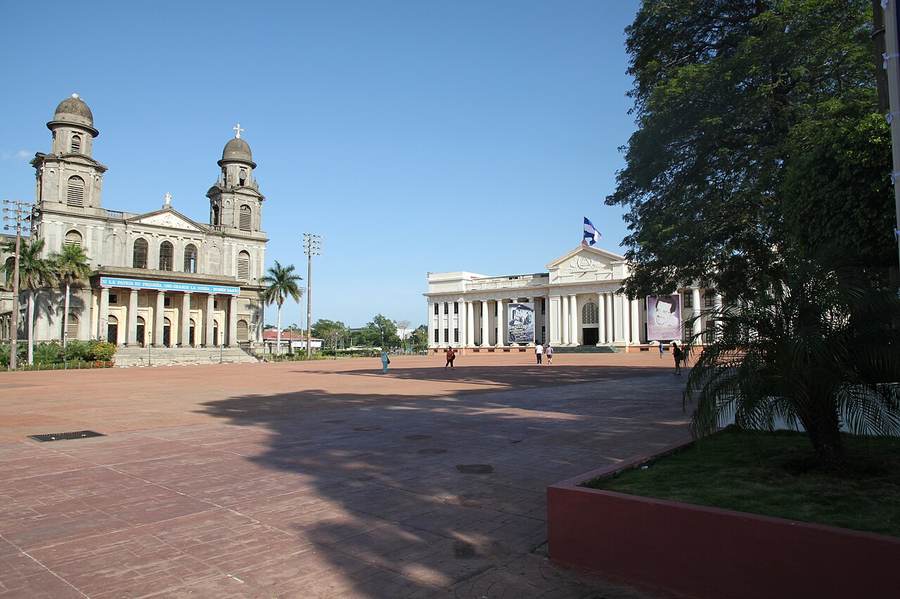
Photo: Cancillería Ecuador via Wikimedia Commons (CC BY-SA 2.0).
The announcement: an immediate treaty exit
Nicaragua's foreign ministry statement, Saturday, said the government had decided to denounce the Parlacen treaty 1987 “in the full exercise of its sovereignty” and that the decision would take effect immediately. The notice was sent to Parlacen's board and to Guatemala's foreign ministry, because Guatemala is the treaty's depositary and is responsible for notifying the other parties.
The founding treaty was signed in Guatemala on October 2, 1987, as Central America sought a political architecture capable of supporting peace and cooperation after years of conflict. Parlacen began operating in 1991. At the time of Managua's announcement, the six Central American Parliament members were Guatemala, El Salvador, Honduras, Nicaragua, Panama and the Dominican Republic.
Managua's note emphasized sovereign choice. It did not offer a detailed institutional case for why the parliament had ceased to serve Nicaragua's interests. That makes the timing the strongest evidence of political intent: the notice followed Friday's OAS vote, and no Central American country voted against the resolution criticizing Nicaragua.
Why this matters: departure is a form of insulation
The significance of the Nicaragua Parlacen withdrawal is not that a supranational legislature suddenly loses the power to force reform. It is that Managua has again answered institutional criticism by reducing the institution's reach. Withdrawal converts an argument over compliance into an argument over jurisdiction: instead of debating whether Nicaragua meets a regional standard, the government says the forum itself has no place in judging it.
That tactic can bring a short-term political advantage. It allows the government to frame outside criticism as an intrusion and to present departure as a sovereign act. It also reduces routine contact between Nicaraguan representatives and regional counterparts. Yet it produces a long-term cost: every abandoned forum shrinks the channels available for negotiation when a crisis, migration surge, trade dispute or humanitarian emergency demands cooperation.
This is why Nicaragua international isolation is no longer a slogan. It is becoming an institutional condition. A state can withdraw from organizations without withdrawing from geography. Nicaragua still shares borders, supply chains, labor markets, migration routes and security risks with its neighbors. The practical problems remain even as the diplomatic rooms for managing them disappear.
How Nicaragua reached this point
The arc begins with the Nicaragua human rights crisis that erupted in April 2018. Police suppression of social protests left more than 350 people dead and about 2,000 injured, according to Reuters, while thousands were detained or fled the country. The government's relationship with international monitors and regional institutions deteriorated as domestic political space narrowed.
Nicaragua completed its departure from the OAS in 2023 after accusing the organization of serving United States interventionism. In March 2025 it left the Central American Court of Justice. That was followed by notice of withdrawal from the UN Human Rights Council after a UN report urged stronger international action over abuses, and by the May 2025 exit from UNESCO after the agency awarded its world press freedom prize to the exiled Nicaraguan newspaper La Prensa.
Taken together, the Nicaragua UNESCO UNHRC withdrawal sequence reveals a recurring pattern: criticism arrives through an institution, and the government responds by rejecting the institution's authority. Each exit differs legally, but the political logic is consistent.
Then came the July 2026 declaration associated with the phrase Nicaragua no more elections. Ortega said the country would no longer hold elections involving opponents he characterized as coup plotters. UN High Commissioner for Human Rights Volker Türk responded that political participation must remain open across viewpoints and urged authorities to release at least 46 people arbitrarily detained for political reasons.
Friday's OAS resolution consolidated those concerns. Foreign ministers approved it by consensus, calling for public freedoms to be restored, political detainees to be freed, forced disappearances to be addressed and conditions created for free, fair and inclusive elections. The resolution also called for credible international observation and institutional independence.
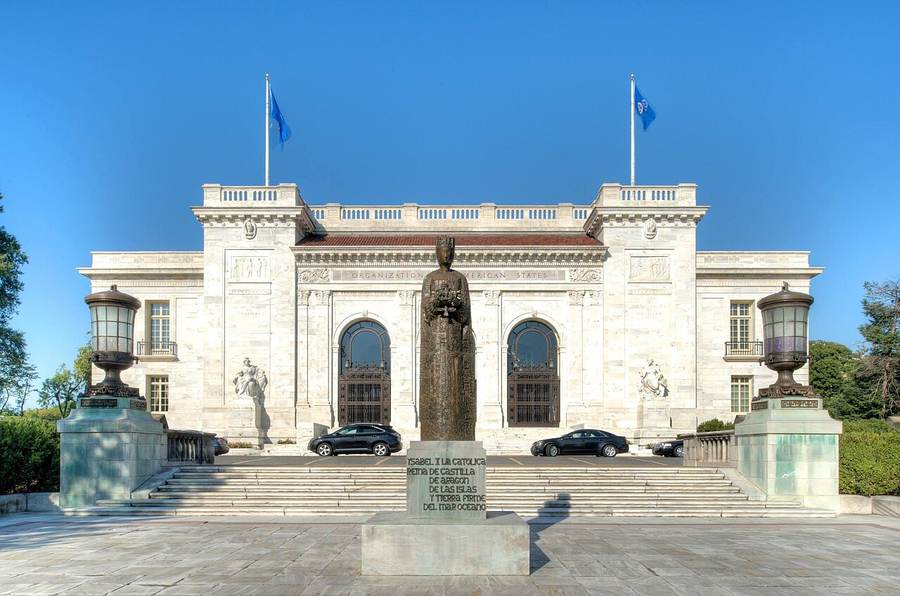
The numbers in context
| Measure | What it shows |
|---|---|
| 350+ deaths | Reuters' toll from the repression that followed the April 2018 protests; it marks the scale of the rupture that still frames today's diplomacy. |
| 2,000 injured | The same crisis was not a brief political quarrel but a sustained national trauma with thousands more detained or driven into exile. |
| At least 46 arbitrarily detained | The number the UN rights chief urged Nicaragua to release in July 2026, illustrating why political prisoners remain central to regional demands. |
| Six member states | Guatemala, El Salvador, Honduras, Nicaragua, Panama and the Dominican Republic formed Parlacen's membership before Nicaragua's announced withdrawal. |
| October 2, 1987 | The founding treaty was signed in Guatemala; the parliament began operating in 1991 as part of the region's post-conflict integration architecture. |
These figures belong to different categories and should not be collapsed into one headline total. The 2018 casualty and displacement estimates describe the opening phase of the political crisis; the 46 figure is a later snapshot of people reported arbitrarily detained for political reasons. Together they show why the institutional dispute cannot be separated from the rights record that produced it.
Who benefits, who loses and what critics say
Daniel Ortega Rosario Murillo now lead a system that can present another withdrawal as resistance to outside pressure. Domestically, that may help consolidate a narrative of sovereignty and deny critics a regional platform. The government also avoids the spectacle of participating in a parliament whose member governments just declined to shield Managua from an OAS consensus.
The immediate losers are Nicaraguan citizens who had even a limited route to regional representation, along with exiled civic groups that used international bodies to keep rights cases visible. Parlacen itself loses one of the states tied to its founding history. Neighboring governments lose a routine channel of parliamentary diplomacy at the moment migration, security and economic coordination are becoming more—not less—important.
Critics argue that Managua is dismantling external oversight rather than answering the substance of the allegations. Friday's Nicaragua OAS resolution political prisoners debate sharpened that charge because the resolution covered more than elections: it demanded restoration of freedoms of expression, association, religion and peaceful assembly, and it called for the return of legal status and property to organizations that had been dissolved.
Supporters of the government will answer that treaty participation is voluntary and that Nicaragua is entitled to reject institutions it regards as politicized. Legally, sovereignty is central to withdrawal. Politically, however, exercising that right does not erase the costs or answer why the exits cluster around adverse findings.
SICA and the future of Central American integration
Parlacen is one organ in a broader regional framework, not the whole of it. The larger question is whether SICA Central American integration can remain functional when one government progressively detaches from the institutions meant to support dialogue. Technical cooperation on trade, customs, migration, public health and disaster response may continue even when political bodies fracture. But a widening gap between technical coordination and democratic commitments makes the system harder to defend.
Three broad scenarios follow. First, Nicaragua could keep practical ties with SICA while abandoning bodies that scrutinize governance. That would create a narrower, transactional form of integration. Second, other governments could treat the exit as leverage, coordinating diplomatic pressure while keeping operational channels open. Third, continued rupture could normalize selective participation, encouraging every government to remain only in institutions that never challenge it.
The third scenario is the most damaging. Regional systems rarely collapse in a single vote; they hollow out as states stop accepting common rules. If Parlacen cannot retain a founding member after a consensus diplomatic rebuke, its defenders will need to show that the institution offers more than ceremony.
Sanctions pressure: more leverage, fewer off-ramps
Washington and European governments now face a familiar dilemma. Targeted sanctions can raise the personal cost for officials associated with repression, but sanctions alone rarely create the trust needed for a negotiated opening. As formal institutions disappear, the number of credible intermediaries falls.
The United States could tighten financial or visa measures; European governments could coordinate travel restrictions and asset freezes; both could condition parts of diplomatic engagement on prisoner releases or electoral guarantees. But every escalation should be paired with a defined off-ramp. Pressure without a negotiating channel can harden the very isolation it is designed to reverse.
The challenge resembles other moments of diplomatic hardening across the region, from Washington's difficult contacts with Venezuela to the security debate around Cuba. The durable question is not simply how to punish a government, but how to preserve a route back to accountable politics.
The Taiwan–China angle
Nicaragua's departure also carries an irony. In August 2023, Parlacen voted to remove Taiwan as a permanent observer and replace it with China. Reuters reported that Nicaragua put forward the proposal, which passed 73–32 with nine abstentions. Beijing benefited from a chamber that Managua now says it is leaving.
That history does not prove China directed the current withdrawal, and there is no public evidence that it did. It does show that Nicaragua previously used Parlacen as a venue to advance a major foreign-policy realignment. The institution was useful when it could amplify Managua's partnership with Beijing; it became expendable when regional criticism grew more costly.
For China, the practical calculation may be to preserve bilateral influence without taking ownership of Managua's break with regional bodies. For Taiwan, the episode underlines how quickly observer status and diplomatic recognition can become bargaining instruments. For Central America, it is another reminder that external powers increasingly intersect with a regional system already under strain.
What happens next
The first question is procedural: whether Parlacen and Guatemala, as treaty depositary, accept Managua's claim that withdrawal is immediate or identify notice requirements that delay its legal effect. The second is representational: what becomes of Nicaragua's sitting deputies, staff and institutional obligations. The third is diplomatic: whether neighboring states respond collectively or allow the issue to move into separate bilateral channels.
Watch for four signals. One is any formal answer from Parlacen's board. Another is whether SICA leaders schedule a political consultation. A third is whether the United States or European Union attaches new sanctions to specific prisoner, election or civil-liberties demands. The fourth is whether Managua follows this exit by scaling back technical cooperation elsewhere.
There is also a test for the OAS. Its resolution created unusually broad regional alignment, but consensus matters only if it produces sustained diplomacy. The organization will need to balance pressure, documentation and practical proposals for releases, civic reopening and credible electoral guarantees.
Conclusion: sovereignty can close a door, not solve the crisis
Nicaragua is entitled to invoke sovereignty. But sovereignty answers who has the power to leave; it does not answer whether leaving improves the lives, rights or security of Nicaraguans. Nor does it eliminate the cross-border consequences of political repression, exile and institutional distrust.
The government has traded one more forum for greater control over the terms of debate. That may reduce immediate scrutiny. It also leaves fewer places to negotiate when pressure rises. The real measure of this decision will not be whether Managua can complete the paperwork. It will be whether Central America can keep cooperation alive while insisting that regional membership means more than attendance.
Sources and reporting notes
- Reuters: Nicaragua announces withdrawal from Central American Parliament
- Reuters en Español: Nicaragua anuncia su retiro de Parlacen
- Lado.mx: official notice, treaty depositary and OAS demands
- Uninvited Press: OAS resolution on political prisoners and civil liberties
- Reuters: Parlacen replaces Taiwan with China as permanent observer, August 2023
- Reuters: UN rights chief condemns Nicaragua election restrictions, July 2026
- Nicaragua's foreign ministry statement, Saturday, October 3, 2026.