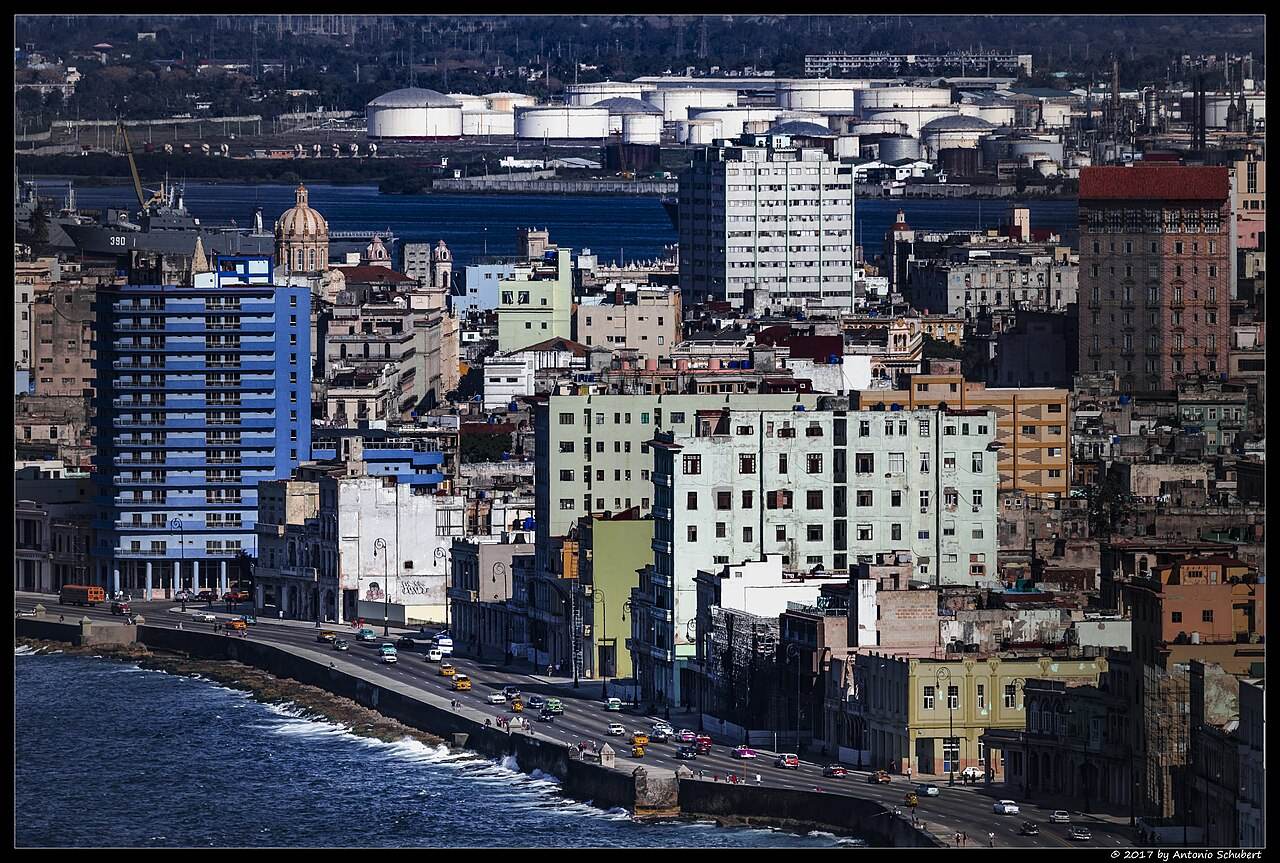
The U.S. Army Reserve has asked its commanders whether military police, medics and other support units could be made available as soon as late December to back potential military action aimed at Cuba, according to CBS News, which reviewed the internal Army message. The memo sought feedback by Friday, September 25, on whether the formations would be “possibly needed in 90-120 days.” If the Army Reserve Cuba action plan described by U.S. officials is real, it is the most concrete evidence yet that the Trump administration's confrontation with Havana is being planned against a military clock — not merely a sanctions calendar.
That conclusion must be bounded by what is actually known. The message itself did not name Cuba, no mobilization order has been reported, and no units are known to have moved overseas. The Cuba connection rests on anonymous officials who spoke to CBS News. A readiness inquiry can support coercive diplomacy or prudent contingency planning without becoming an operation, but a dated request for specific ground-support formations is more consequential than rhetoric alone.
What the memo says — and what it pointedly does not
The Army Reserve message asked subordinate commands to identify the possible availability of six kinds of formations: military police; medical personnel and a medical brigade; a forward surgical detachment equipped for trauma care; a combat sustainment support battalion responsible for transportation, maintenance, fuel and supplies; an engineer battalion; and an expeditionary sustainment command. Commanders were asked to provide feedback by Friday.
The list is concrete, but the mission is not. The missive does not mention Cuba, provide a troop total, identify a destination or describe what operation those units might support. There is no indication that any formation has been selected, mobilized or deployed overseas. Those omissions prevent the document from proving a decision to use force.
U.S. Southern Command, which oversees the Caribbean and would sit at the center of any US Southern Command Cuba planning, declined to confirm or deny the report. “Due to operational security concerns, we do not disclose details or comment on US operational movements or potential deployment timelines,” it told CBS, adding that it “continuously coordinates with the Joint Force to assess a range of potential requirements.”
That answer is neither confirmation nor exoneration. Everything tying the survey to Cuba comes from officials speaking anonymously to CBS; the document itself names no country. Readers should hold that distinction throughout this analysis.
Why this matters
Until now, the confrontation has been measured mainly in sanctions, speeches and pressure on oil supplies. A readiness survey changes the unit of analysis from political intent to transport, surgery, engineering and sustainment. It does not prove a war is coming, but it converts the Trump Cuba invasion threat from a verbal warning into a question about whether particular formations could be available on a particular schedule.
The timing matters. A 90-day window beginning September 25 reaches late December, beyond the November midterms but inside a period when months of pressure from the Cuba fuel blockade crisis could give Washington maximum leverage. The administration would then confront a country weakened by scarce fuel, blackouts and shrinking tourism revenue, conditions examined in Signal Post News's earlier report on Cuba's deepening power crisis.
The leak may itself be part of the pressure campaign. Asking across the reserve system all but guarantees that people beyond a tight planning cell will see the request. Havana, Moscow and Beijing must now price in the possibility of American action this winter even if Washington ultimately intends only to frighten Cuba into concessions.
Readiness inquiries and logistics surveys are also the bureaucratic exhaust of genuine planning. Governments develop contingencies continuously, but this inquiry stands apart because it reportedly attaches a 90-to-120-day availability window to specific support units. Domestically, the story arrives as senators are already fighting over presidential war powers in Iran. Congress may soon be asked to bless, constrain or investigate two confrontations at once, a parallel sharpened by Trump's pressure campaign at the U.N. General Assembly.
Read the unit list — it tells you what kind of operation this would be
Air strikes and leadership-targeting raids require pilots, tankers, intelligence and surveillance aircraft, electronic warfare and strike packages. None of those capabilities appears in the reported survey. Military police secure populations, roads and infrastructure. Engineers clear routes, repair bridges and build operating bases. A medical brigade with a forward surgical detachment treats battlefield trauma close to a fight.
Sustainment formations move fuel, food, spare parts and ammunition so a force can operate for weeks rather than hours. An expeditionary sustainment command coordinates that flow across a theater. Taken together, the units look less like a self-contained air raid and more like the logistical skeleton for boots on the ground — an invasion, an occupation or a large “humanitarian intervention” that requires control of territory.
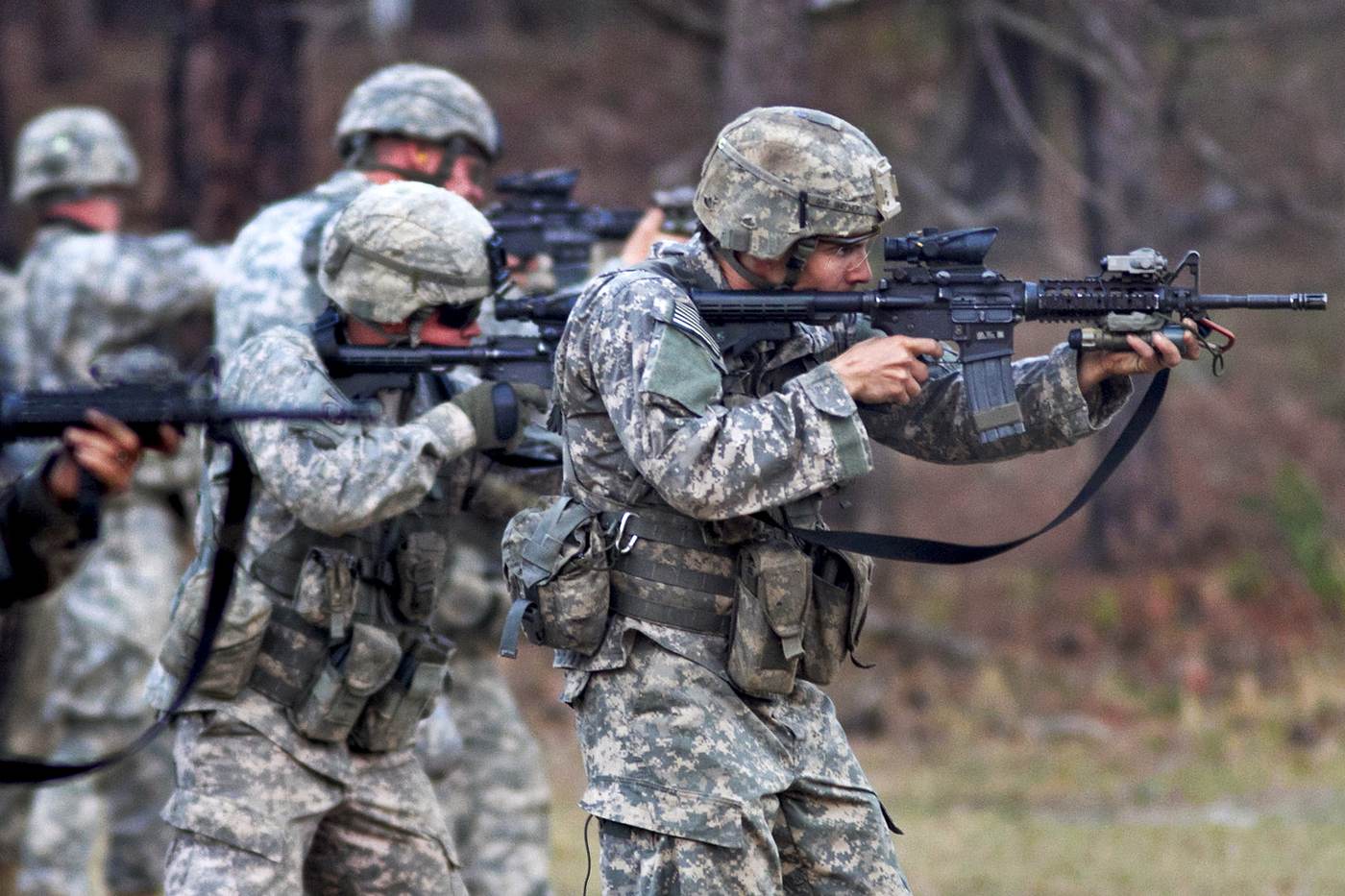
William LeoGrande, professor and dean emeritus at American University's School of Public Affairs, put the inference plainly: “This sounds like planning for an invasion and occupation of Cuba, rather than a leadership decapitation or limited air strikes.” He said the 90-to-120-day timeframe “suggests something more imminent than normal contingency planning.”
LeoGrande also warned that an invasion would be “a risky proposition” because “the Cuban armed forces are well-trained, disciplined, and loyal to the regime.” That warning is essential. A weakened economy does not necessarily mean a state lacks the organization or will to resist an external attack.
How Washington got here: the Donroe Doctrine and the strangling of Cuba
Since Trump's second term began, the administration has pursued an openly assertive Western Hemisphere posture that officials call the Donroe Doctrine. Days ago, Trump and Secretary of State Marco Rubio staged a “Shield of the Americas” event on the sidelines of the U.N. General Assembly, presenting the hemisphere as a security domain in which Washington would set harder limits on rivals and hostile governments.
Ahead of the General Assembly, Washington imposed heavy sanctions on Cuban entities and officials, including military research-and-development enterprises connected to the nickel industry. The phrase Cuba sanctions GAESA 2026 now describes more than a financial squeeze. Spanish hotel group Iberostar withdrew from managing about a dozen hotels it had operated with the military-linked conglomerate GAESA, which is under U.S. sanctions, narrowing one of the island's few major sources of hard currency.
The U.S. fuel blockade has pushed Cuba toward what may be its worst economic crisis in decades. Prime Minister Manuel Marrero answered with nearly 200 free-market reforms, an implicit acknowledgment that the existing system could no longer absorb the shock. Chronic outages, transport disruption and shortages have made the Cuba military action 2026 debate inseparable from a humanitarian emergency that American policy has helped deepen.
Trump's own language has moved well beyond sanctions. In March, during the early stages of the war with Iran, he told reporters in the Oval Office he would have “the honor of taking Cuba”: “Taking Cuba in some form, yeah. Taking Cuba. I mean, whether I free it, take it — I think I could do anything I want with it, if you want to know the truth.”
This week at UNGA, he said his administration wanted “fundamental change” on the island, predicted that the Havana government “will fall” and declared that “freedom will be coming to Cuba,” prompting the Cuban delegation to walk out. President Miguel Díaz-Canel has vowed to resist any attack and accused Washington of “aggression” and “economic warfare” for blocking oil imports. The clash has made Miguel Diaz-Canel US aggression a central line in Havana's response to Washington.
Two experts, two readings of the same memo
LeoGrande sees the unit mix as invasion logistics. Sebastian A. Arcos, director of the Institute for Cuban Studies at Florida International University, offered a different interpretation: “Judging by the type of personnel they are requesting, it looks like an exercise for a potential humanitarian intervention.” He added that it “could be a serious exercise, or just a way to ratchet pressure on the Cuban regime.”
The two readings are not mutually exclusive. A force can be described publicly as humanitarian while retaining the capability to secure ports, roads, public buildings and supply corridors. Past interventions show how a relief mission can expand when planners conclude that distributing aid requires control over territory. That history makes the distinction between Cuba invasion or humanitarian intervention politically decisive but operationally less clean.
Neither expert has seen evidence beyond the reporting described by CBS. The available facts permit at least three explanations: prudent contingency work for a worsening crisis, deliberate coercive signaling, or genuine preparation for combat. The evidence does not yet settle which one is driving the survey, and honest analysis should not collapse uncertainty into certainty.
What the 90-day clock really implies
Counting 90 to 120 days from September 25 lands between late December 2026 and late January 2027. That would place potential availability after the November midterms, during a holiday period when Congress is often out of session and organized political resistance can be slower to form. It does not prove the administration selected that window for political reasons, but it defines the calendar against which lawmakers and allies will now interpret every subsequent move.
Normal contingency planning is continuous, often broad and usually undated. Attaching a readiness window to named unit types is what makes the reported US troops Cuba readiness 90 days request anomalous. Reserve formations need notification, personnel checks, medical screening, equipment preparation and transportation lead time. Three to four months is not an arbitrary horizon if planners want units ready for a ground operation.
The asymmetry favors Washington. A survey is cheap, reversible and deniable. It can be cancelled without a public retreat, yet it is also exactly the preliminary step required before mobilization. Silence about troop numbers and destinations is normal at this stage: planners first learn what is available, then match formations to missions and build a force-flow schedule.
What happens next: three scenarios
Scenario 1 — Coercive signaling
This is the most likely near-term outcome. The survey may have been designed, or at least tolerated, to leak. Havana is meant to read it alongside the fuel blockade and conclude that continued resistance could bring a cost beyond sanctions. Under this scenario, expect louder warnings, additional financial restrictions and back-channel demands rather than immediate mobilization orders.
Scenario 2 — “Humanitarian intervention” framing
If the blockade deepens Cuba's humanitarian crisis through the winter, Washington could present troops as rescuers rather than invaders. Arcos's interpretation would gain weight if officials begin speaking publicly about Cuban suffering as a reason for military access, protected distribution corridors or port control. Watch whether humanitarian language becomes a casus belli rather than a case for easing pressure.
Scenario 3 — An actual operation
The final possibility runs from limited attacks on military infrastructure to LeoGrande's full scenario of invasion and occupation. The most important tripwires would be a formal SOUTHCOM force-flow request, reserve mobilization orders, air and sealift preparation, a congressional war-powers fight resembling the Iran debate, and visible reactions from Moscow and Beijing.
The stakes are larger than the memo. Cuba's armed forces remain organized and loyal, the population is exhausted by crisis, and any American operation would reorder politics across the hemisphere. Even a bluff carries danger: if Havana refuses to yield after Washington has made military readiness part of the threat, the administration could find itself with fewer face-saving options than it had before the survey surfaced.
Sources
- CBS News reporting via the New York Post
- Internewscast
- OpsLens, carrying analyst quotes via the Daily Caller News Foundation
This report distinguishes the contents of the Army message from officials' anonymous account of its purpose. The message reportedly did not name Cuba, and no deployment has been announced.