Politics · New Zealand · Elections
The New Zealand election result 2026 produced the closest election-night finish in the MMP era: Labour won the most party votes by a margin of just 3,650, National won the most seats, and the governing bloc’s provisional majority is a single seat — with roughly one vote in seven still to be counted and the official result not due until November 27.
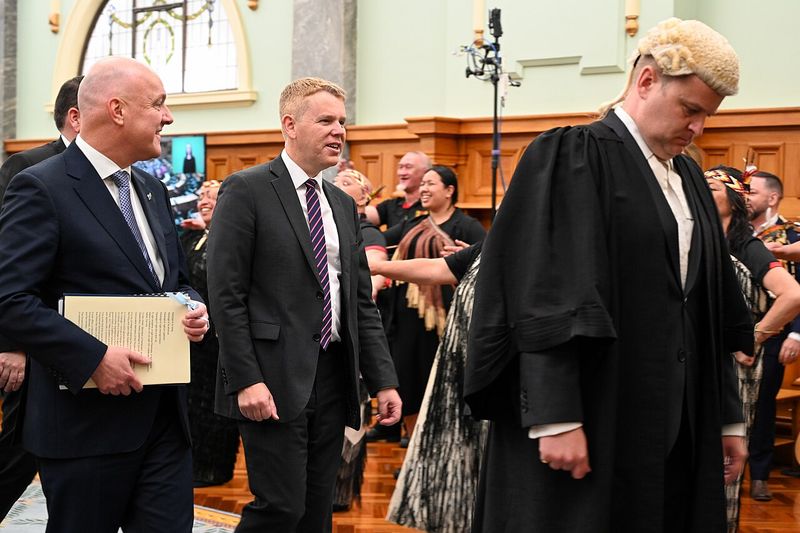
WELLINGTON, November 8, 2026 — New Zealand woke on Sunday without a government it could name. The Electoral Commission’s preliminary count from Saturday’s general election gives Labour 710,330 party votes (29.36%) against National’s 706,680 (29.21%) — a margin of 3,650 votes in a count of nearly 2.42 million. Yet National, not Labour, is the largest party in the provisional Parliament, with 42 seats to Labour’s 36, and the incumbent three-party bloc of National, ACT and New Zealand First stands at 67 seats in a 131-seat House — exactly one more than the 66 needed to govern. About 399,365 special votes, including some 96,947 cast overseas or by dictation, are still to be counted before the official result on November 27.
Prime Minister Christopher Luxon, who now leads a caretaker government, told supporters in Auckland that National had “a pathway to forming the next government” but that the result was too close to call. Labour leader Chris Hipkins, whose party won the popular vote while losing the seat count, said the shape of the government would stay uncertain for a while. Both men are right, and that is the story: under New Zealand’s mixed-member proportional system, this election has produced two different winners on two different measures, and the tiebreaker is a pile of uncounted ballots larger than the population of most New Zealand cities.
The count: how 3,650 votes and 131 seats happened
The preliminary allocation, on 100% of voting places reporting, reads as follows. National’s 42 seats come entirely from electorates — it won so many local races that its party vote entitled it to no list seats at all, and six of its electorate wins sit above its proportional share, creating overhang seats. Labour took 36 seats (21 electorates, 15 list), the Greens 16 (13.30% of the party vote), ACT 13 (10.92%), New Zealand First 12 (9.78%), the Opportunity Party 7 (5.96%) in its first entry to Parliament, and Te Pāti Māori 5 — all from Māori electorates, on just 0.57% of the nationwide party vote, adding further overhang. The result is a 131-seat Parliament, well above the standard 120, and a majority threshold of 66.
Against that arithmetic, the blocs line up with almost nothing to spare. National (42), ACT (13) and New Zealand First (12) total 67. Labour (36), the Greens (16) and Te Pāti Māori (5) total 57; adding the centrist Opportunity Party’s 7 seats takes the alternative bloc only to 64 — short of 66, and short even if every special vote breaks its way on current proportions. The special votes matter, then, not because they can hand Labour a majority outright, but because they can strip the incumbent bloc of its one-seat cushion and throw the negotiation open — at which point Opportunity, a party that did not exist in Parliament a week ago, becomes the hinge on which the government turns.
Background: a two-party collapse under MMP
The deeper result is the one neither major party wants to headline. Labour and National together took 58.57% of the party vote — the weakest combined showing for the two big parties under MMP — and for the first time both finished below 30% simultaneously. Turnout fell to about 74.6% of enrolled voters, down from 78.2% in 2023, in a campaign dominated by a sluggish economy, housing costs and healthcare. As Signal Post News reported in the campaign’s final week, an early-voting surge pointed to an engaged but unsettled electorate; election night showed where that unsettlement landed — everywhere except the two parties that have governed New Zealand for a century.
Special votes have form in New Zealand elections. Cast by voters away from their home electorate, overseas, or by dictation, they have historically leaned left, and in past cycles they have moved seats between blocs in the three weeks between the preliminary and official counts. This year’s pool — roughly 399,365 ballots, about 14% of the total vote — is far larger than the margin in almost every close electorate race in the country. The Electoral Commission will check the rolls, recount ordinary votes and count the specials before publishing the official result in the NZ Gazette on Friday, November 27, with the detailed seat allocation (the E9 return) expected by December 14.
Who gains, who loses, who decides
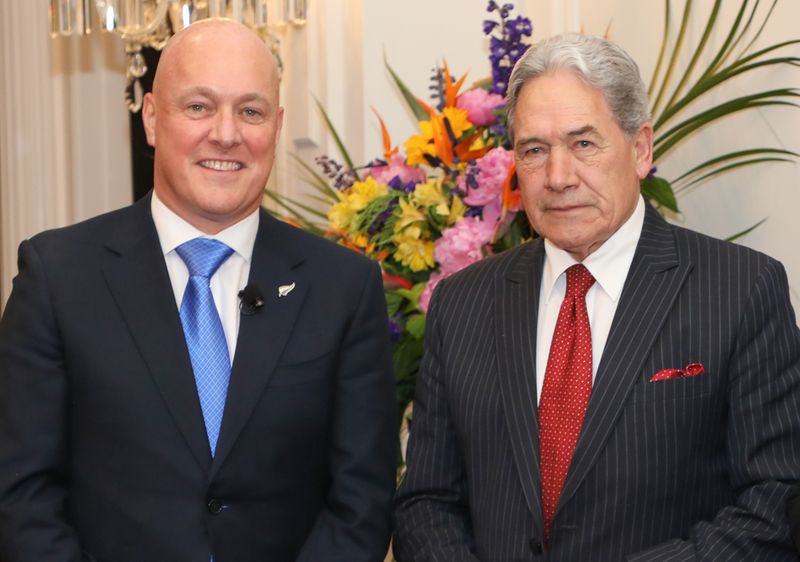
The incumbent bloc holds the only visible path to 66, and with it the advantage of incumbency: Luxon governs as caretaker, controls the timetable’s optics, and negotiates first. Its weakness is arithmetic, not politics — a swing of two seats on the specials turns 67 into 65 and the “pathway” into a dead end.
Labour won the argument about who is most popular and lost the one about who governs. Winning the party vote gives Hipkins legitimacy to negotiate and to claim a mandate if the specials move seats; it does not give him a majority on any current combination, which is why his election-night language was about uncertainty rather than victory.
The minor parties are the night’s unambiguous winners. The Greens’ 16 seats are a stronghold result; New Zealand First’s 12 restore Winston Peters to the centre of the board; and Opportunity’s 7 seats, won at 5.96% in its first campaign, make it the only party both blocs may need. Luxon has previously ruled out working with Opportunity — a commitment that becomes expensive if the specials cost him his cushion.
The critics split two ways. Electoral reformers note that a system producing a 131-seat overhang Parliament, in which the party with fewer votes wins more seats, is MMP working as designed — proportionality measured across the whole House, not party by party. Its detractors answer that an outcome in which 3,650 votes and a three-week count decide the government is legitimacy on a knife-edge, whatever the design.
Why this matters
The specials are not a footnote; they are the election
With 14% of ballots uncounted and a one-seat margin, New Zealand effectively held two elections: the one on November 7, and the one that concludes on November 27. Between now and then, every close electorate result is provisional, every coalition statement is conditional, and a caretaker government runs a country whose next three years are unwritten. For markets and for New Zealand’s partners, the policy consequence is a three-week freeze at minimum — and, if the specials flip the majority, the start of negotiations that could run well past the official count.
A 58.57% two-party vote rewrites the bargaining table
Comparative context makes the shift plain. In 2023 the two big parties still commanded a clear majority of votes between them; in 2026 they fell to 58.57% combined, both under 30%, while five other parties cleared the threshold or won electorates. Governments in Wellington will now be assembled from at least three parties as the norm, with first-time entrants like Opportunity holding veto-sized blocs of seats. That is a structural change in how New Zealand is governed, delivered by an electorate whose turnout fell even as its willingness to scatter its vote rose.
The overhang is a feature with a price
The 131-seat Parliament — 11 seats larger than the standard House — exists because National and Te Pāti Māori won more electorates than their party votes “paid for.” The overhang keeps local representation intact, which is its purpose, but it also raised the majority bar to 66 and enlarged the very margin the specials must move. Whether the post-election review treats that as a quirk or a flaw will be one of the term’s quieter arguments.
What happens next
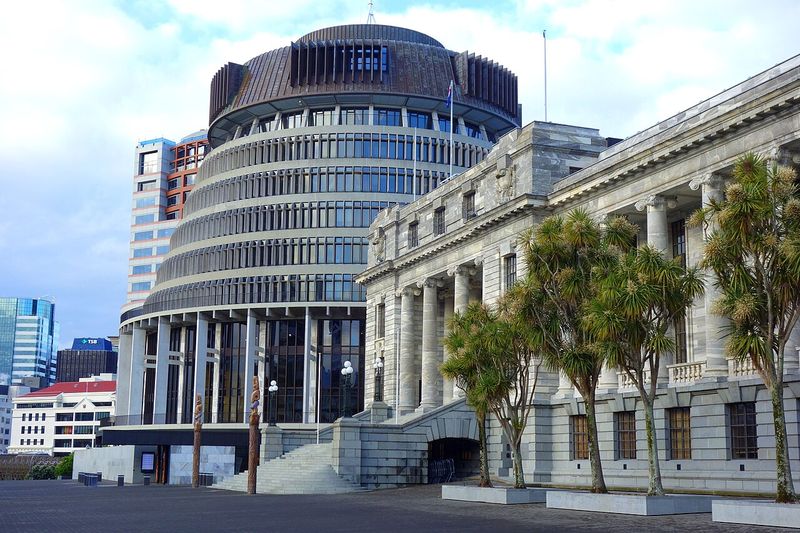
The Electoral Commission’s official count runs for the next three weeks: rolls are checked, ordinary votes recounted, and the 399,365 special votes — including the 96,947 overseas and dictation ballots — are verified and added. The official result is due on Friday, November 27. Three things to watch. First, the direction of the specials: if they follow their historical left lean, expect National’s bloc to shrink toward, or below, 66. Second, the close electorates, where margins smaller than the local special-vote pool can flip seats and with them the overhang. Third, the choreography after November 27: Luxon negotiates from incumbency, Hipkins from a party-vote win, and Opportunity — courted or shunned — decides whether one bloc can govern at all. A final government may not be formed until December, in a Parliament that, as this week’s diplomacy elsewhere also shows, is being asked to settle its future on very fine margins.
What do you think — should the party that wins the most votes govern, or the bloc that wins the most seats? Follow Signal Post News for the official count on November 27, and share your thoughts below.
Sources
Sources: New Zealand Electoral Commission, 2026 General Election preliminary results (party votes, projected seats and the official-count timetable, accessed November 8, 2026); Reuters, “New Zealand vote leaves National, Labour nearly deadlocked” (November 7, 2026); and reporting by The Guardian on the election-night deadlock and the caretaker-government period. Photos: Wikimedia Commons, as credited in the captions.