World · Politics · Asia-Pacific Elections
Almost a million New Zealanders have already voted with days still to go before election day — and the polls still cannot say whether Christopher Luxon's government survives, or whether Chris Hipkins returns to power at the head of a coalition that does not yet exist.
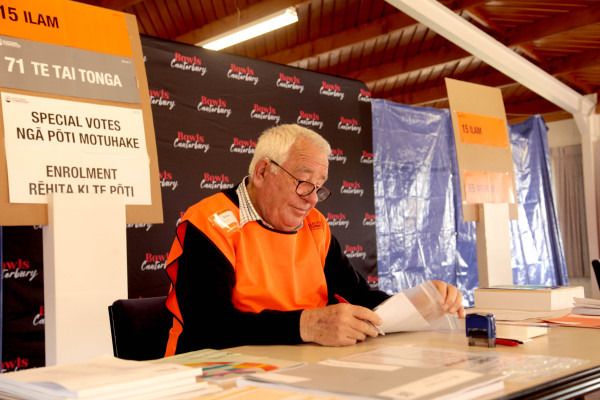
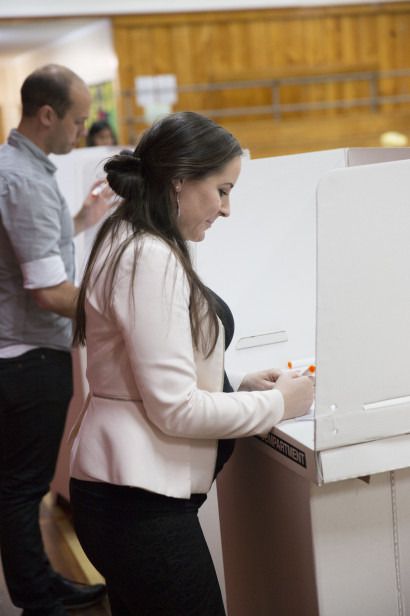
WELLINGTON, New Zealand — The New Zealand election 2026 has produced its first big number, and it is not from a poll. Nearly a million ballots were cast in the first week of advance voting for the general election, the Electoral Commission said on Monday, November 2 — 913,762 votes between October 26 and November 1, a 28 percent jump on the same period in the 2023 election. Roughly one enrolled voter in four has already had a say, five days before election day on Saturday, November 7, in a race that every recent poll describes the same way: close, unsettled and wide open.
The busiest day so far was Saturday, when more than 190,000 votes were issued — a single-day figure that underlined how thoroughly early voting has become the normal way New Zealanders take part. Chief Electoral Officer Karl Le Quesne struck a measured tone as the first-week figures landed. "Voting has got off to a good start, and there are still six more days to vote," he said. Around 600 voting places are open daily through this final week, rising to more than 2,300 on election day itself, when polls will be open from 9 a.m. to 7 p.m. Advance voting closes on Friday, November 6.
The pace was set from the opening days. In the first three days of advance voting, 309,876 votes were cast, up from 235,515 in the same period in 2023. Officials stress what the surge does not show: advance votes are counted on election day, not before, so the numbers measure engagement, not advantage. They do not tell anyone who is winning — and in this election that matters more than usual, because the polling evidence points in two directions at once.
The first week in numbers
| First-week measure | Figure |
|---|---|
| Advance votes cast, October 26 – November 1 | 913,762 |
| Change on the same period in 2023 | +28% |
| First three days of advance voting | 309,876 (2023: 235,515) |
| Busiest day — votes issued on Saturday | More than 190,000 |
| Voting places open daily this week | Around 600 |
| Voting places on election day, November 7 | More than 2,300 |
| People enrolled | About 3.8 million (provisional rate 93.6%) |
Electoral Commission figures reported by Reuters on November 2, 2026. Advance voting ends Friday, November 6; official results will be declared on November 27.
A race the polls cannot settle
Start with the poll that cheered the opposition. The RNZ–Reid Research poll, published on October 28 from a survey of 1,000 eligible voters conducted October 20–26, put Labour ahead on 30.6 percent, with National on 24.8 percent, the Greens on 14.5 percent, ACT on 10.1 percent, New Zealand First on 9.9 percent and the Opportunity Party on 7.2 percent — its highest in the series. Its seat projection had Labour's 37 seats combining with 18 for the Greens and 9 for Opportunity to reach 64 — a governing majority — against 54 for the incumbent bloc of National (30), ACT (12) and New Zealand First (12). Labour leader Chris Hipkins also led as preferred prime minister, 23.3 percent to Christopher Luxon's 17.1 percent.
The poll published a day earlier pointed the other way. The 1News–Verian poll of October 27 put National ahead, 29 percent to Labour's 27 percent, and projected the governing bloc reaching exactly 61 seats, against 56 for Labour, the Greens and the Māori parties combined, with Opportunity's 8 seats holding a possible balance of power. Its preferred prime minister numbers reversed the other poll's order: Luxon 24 percent, Hipkins 18 percent. The PolitPro trend estimate of November 1 split the difference: Labour 28.4 percent, National 27.5 percent, the Greens 14.5 percent, New Zealand First 10.5 percent, ACT 10.2 percent and Opportunity 6.1 percent.
Three surveys, three versions of the race
| Party | RNZ–Reid Research (Oct 28) | 1News–Verian (Oct 27) | PolitPro trend (Nov 1) |
|---|---|---|---|
| Labour | 30.6% | 27% | 28.4% |
| National | 24.8% | 29% | 27.5% |
| Greens | 14.5% | — | 14.5% |
| ACT | 10.1% | — | 10.2% |
| New Zealand First | 9.9% | — | 10.5% |
| Opportunity Party | 7.2% | — | 6.1% |
Party-vote support as published; dashes mark parties given seat projections rather than a party-vote share in the 1News–Verian summary figures. Polls are snapshots with margins of error, not forecasts — a caution that applies just as much to the final polls before the United States midterm elections.
Read together, the surveys agree on the structure of the contest even where they disagree on its leader. Neither major party comes close to governing alone, and a party that has never held a seat — Opportunity — is suddenly part of every serious seat projection. Whoever "wins" on November 7, the government will be assembled afterwards, in negotiation.
Why this matters
The first reason is arithmetic. Under New Zealand's proportional system, election night rarely ends the argument; it starts one. If the RNZ–Reid Research numbers are closest to the truth, Hipkins can assemble 64 seats — but only with both the Greens and Opportunity inside the arrangement. If the Verian numbers are closest, Luxon's existing coalition survives with exactly 61 seats and no margin for a single defection. And the polls allow a third possibility: no bloc reaches 61 without Opportunity, a party Luxon has ruled out working with, which has promised to negotiate first with whichever party wins the most seats. Every one of those scenarios is decided at the margins — and the margins are being voted on right now, a week early.
The second reason is institutional. This is the first general election held under enrolment rules that closed the roll 13 days before election day, ending the practice of enrolling during the advance voting period itself. A heavy early turnout under tighter rules is therefore a test of the system as well as of the parties: so far, it suggests voters have adapted to the new deadline in large numbers. Whether those who missed the deadline would have voted is a question the aggregate numbers cannot answer — which is why the argument about the rules, examined below, will outlast the count.
The third reason is timing. New Zealand is voting in the same week that the United States holds its midterm elections, and in both democracies the pre-election story is the same: voters are voting early, in record numbers, and the result is not knowable in advance. Participation is front-loaded — and campaigns built around a final-week surge are competing for a shrinking pool of voters who have not already cast a ballot.
The surge arrived under new — and contested — rules
The context for the record pace is a rules change that remains genuinely controversial. Under reforms passed last year, enrolment closed 13 days before the election, abolishing same-day enrolment, and prisoners were barred from voting while in jail. Critics — including figures in Labour and the Green Party — argue that an earlier cut-off risks deterring exactly the voters least likely to be enrolled well ahead of time, and some have called it voter suppression. That charge is contested, not established: supporters of the change, and the Electoral Commission in administering it, point to high public awareness of the new requirement and to about 3.8 million people on the roll.
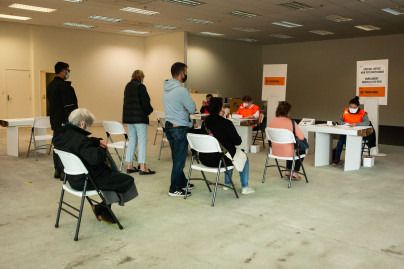
The enrolment figures cut both ways. The provisional enrolment rate stands at 93.6 percent — high by international standards — but below the final rates at the last two elections: 94.7 percent in 2023 and 94.1 percent in 2020. The commission notes the comparison is not yet like-for-like, because the final rate is confirmed only after voting ends. Critics read the gap as the measurable cost of the earlier deadline; defenders read the provisional figure as proof the system coped. Both readings go beyond what one provisional statistic can prove: the surge is real, the rate is slightly lower than recent finals, and the argument between those facts will be settled with better data after November 27.
Who benefits from the new rules is, on current evidence, unknowable — claims in either direction are campaign argument, not analysis. High early turnout is traditionally claimed by challengers as appetite for change and by incumbents as confidence in stability; New Zealand's advance voters have delivered governments of both colours. What can be said is that nearly a million ballots cast before the final week changes strategy for everyone: advertising and debates now land on an electorate a quarter of which has already decided.
How New Zealand chooses a government
For readers outside the country, the mechanics explain the uncertainty. New Zealand has used mixed-member proportional representation — MMP — since 1996. Voters cast two votes: a party vote, which determines each party's share of the 120 seats in Parliament, and an electorate vote for their local member. A party generally needs 5 percent of the party vote to enter Parliament through the list, and 61 seats is the majority line. Coalitions are not an accident of the system; they are its normal product — and neither major party is within reach of governing alone in any current poll.
The principals have each held the top job. Christopher Luxon, the National Party leader, has been prime minister since 2023, governing in coalition with ACT, led by David Seymour, and New Zealand First, led by Winston Peters — an arrangement assembled after roughly three weeks of negotiations following the 2023 election. Chris Hipkins, the Labour leader, is a former prime minister campaigning to return at the head of a very different combination. When Luxon called the election for November 7 back in January, he set up the contest that has since tightened into the deadlock the polls now describe.
What voters say the election is about
Ask New Zealanders what worries them and the hierarchy is stark. In the September 2026 Ipsos Issues Monitor, inflation and the cost of living topped public concerns at 63 percent, followed by healthcare and hospitals at 44 percent and the economy at 34 percent. The backdrop explains the ranking: unemployment above 5 percent, house prices well below their 2021 peak, and two years of soft growth before a 1.1 percent rise in the third quarter. This is an election being fought over household budgets and hospital waiting lists.
The two campaigns answer that agenda in opposite directions. Labour's centrepiece is a capital gains tax, earmarked to fund three free GP visits a year — a direct offer on health and household costs, in exchange for a new tax on investment gains. National's offer is the mirror image: growth, infrastructure, tougher penalties and no new taxes. Luxon has campaigned hard on the composition of any alternative government, warning that Hipkins would need deals with the Greens, Te Pāti Māori and Opportunity, and claiming it would bring "nine new taxes". Labour's framing is narrower — one new tax, traded for a visible health benefit; National's counts the whole left bloc's platform against its leader. Both are arguments about the same coalition arithmetic, conducted in the language of tax.
Hovering over both is the election's novelty: the Opportunity Party, polling above the 5 percent threshold for the first time, at between 6.1 and 7.2 percent. Opportunity has promised to negotiate first with whichever party wins the most seats — making it the potential hinge of the result — while Luxon has ruled out working with it, a stance that constrains his own options if his bloc stalls short of 61 without it. In a campaign of familiar faces, the party with no seats may end up choosing between them.
Early voting is now how New Zealand votes
None of this is an aberration; it is a structural shift. Advance voting set its record in the COVID-affected election of 2020, when 68 percent of all votes were cast early — a pandemic figure that permanently reset expectations of when an election happens. Special votes made up 21 percent of the total in 2023. Officials now plan for a two-week election with a final Saturday attached, and voters fit the ballot around work, weather and weekends. The 28 percent jump on 2023 is best read in that light — not a shock, but a trend reasserting itself.
New Zealand is not alone in it this week. In the United States, a record 51 million early votes have been cast ahead of the November 3 midterm elections — a parallel we examined in our reporting on America's record early-voting surge before the midterms. The drivers differ, but the shared shape is unmistakable: in both democracies, "election day" is becoming the last day of a season rather than the event itself. And analysts in both countries offer the same warning. Early turnout measures how many people have voted. It is silent — by design, and in New Zealand's case by law until election day — on how they voted.
What happens next
The timetable from here is fixed, and short. The final campaign week runs through Friday, November 6, when advance voting closes. Election day is Saturday, November 7, with more than 2,300 voting places open from 9 a.m. to 7 p.m., and preliminary results expected on election night as the count — including that mountain of advance ballots — is processed. Official results will be declared on November 27. New Zealand is voting days after another democracy settled a presidency in a runoff, as we reported when Bulgaria's Iliana Iotova won her presidential runoff — but unlike a two-candidate runoff, New Zealand's election night is unlikely to name a government.
What follows, on every current polling scenario, is negotiation. The 2023 talks took about three weeks to produce the Luxon coalition, and a more even split promises no faster outcome: if the RNZ–Reid Research shape holds, Hipkins must bind the Greens and Opportunity into one arrangement; if the Verian shape holds, Luxon must hold his three-party bloc together at exactly 61 seats or reconsider doors he has publicly closed; if the PolitPro trend is nearest the mark, Opportunity's promise to talk first to the largest party becomes the campaign's most consequential sentence. Until those talks conclude, the only honest headline is the one the Electoral Commission has already written: nearly a million New Zealanders have voted, the race is genuinely undecided, and six days remain. Which bloc do you think assembles 61 seats? Tell us in the comments, like this story if it helped you read the race, and follow Signal Post News for election-night results and the coalition talks that follow.
Sources
Reuters, November 2, 2026 — the Electoral Commission's first-week advance voting figures (913,762 ballots, October 26 – November 1, up 28 percent on 2023), Chief Electoral Officer Karl Le Quesne's remarks, voting-place numbers and the enrolment changes debate. Electoral Commission (elections.nz) — advance voting timetable, voting places and enrolment figures. RNZ — RNZ–Reid Research poll reporting (published October 28; 1,000 eligible voters, October 20–26), with 1News–Verian (October 27), PolitPro trend (November 1) and Ipsos Issues Monitor (September 2026) figures as reported. Reuters, January 20, 2026 — Prime Minister Christopher Luxon calling the general election for November 7. Related Signal Post News coverage: the record United States midterm early vote, the final US midterm polls and Bulgaria's presidential runoff, linked in the text above.