NATO chief Rutte Iran comments
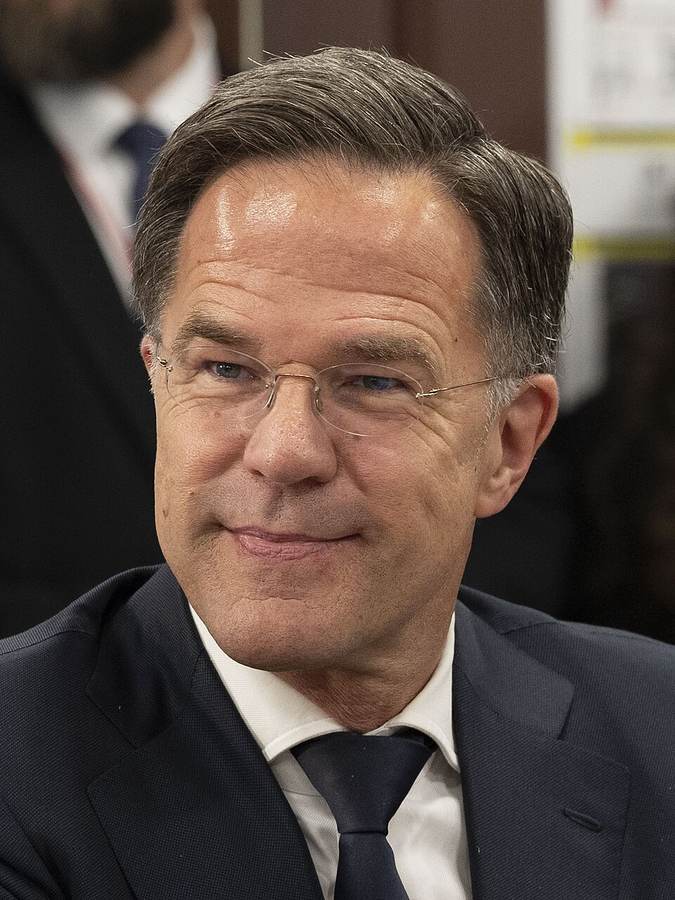
NATO chief Rutte Iran comments — NATO Secretary General Mark Rutte has declared it was “absolutely essential” for the United States to take on Iran, arguing that only America was “capable of taking out the nuclear capability of Iran.” It is the bluntest public endorsement yet from the alliance’s top civilian of a war NATO has formally refused to join — delivered on September 30, 2026, in an interview at the Euronews Defence & Space Summit in Brussels, and reported worldwide the following day.
Rutte described Iran’s nuclear program as a potential near-term threat “not only for Israel and the Middle East” but for Europe as well. He conceded that Europe could not have done what Washington did — “We couldn’t. We will have the capabilities in 10 years — we can, and we should” — and said Europeans should stop outsourcing their own neighborhood’s security: “It should be us taking care of the Houthis and the Red Sea,” not the Americans, adding that Europeans must “take care of their backyard themselves.” He also conceded the campaign had its “downsides.” And in a caveat that matters as much as the endorsement, he stressed the view was his own assessment — not necessarily the official position of the alliance.
Why this matters
Three things make these remarks land harder than the usual Brussels communiqué-speak. First, they are a legitimizing stamp. The American campaign against Iran — the June 2025 strikes and the renewed war since late February 2026 — has been politically contested in Europe, where governments have agonized over energy prices, Hormuz shipping, and escalation. When NATO’s secretary general calls that campaign “absolutely essential,” he moves it from controversial American war to alliance-blessed necessity in a single sentence. That is exactly the kind of rhetorical cover European governments that quietly support the campaign, but cannot say so at home, have been waiting for.
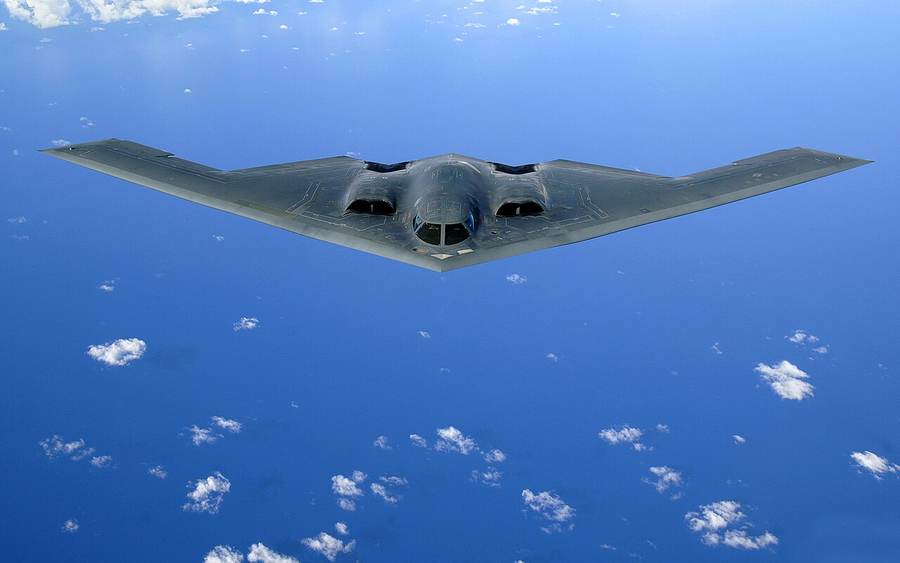
Second, the remarks are a confession of strategic dependence dressed as a plan. Rutte did not merely praise Washington; he admitted that the alliance he leads cannot replicate what B-2 sorties and a Tomahawk salvo achieved on June 22, 2025. The deep-strike chain — stealth bombers, bunker-penetrating munitions, aerial-refueling tanker fleets, the satellite-intelligence apparatus to find a buried enrichment hall — exists in exactly one NATO capital. “We couldn’t” is the most honest sentence a NATO secretary general has uttered about the transatlantic bargain in years.
Third, “take care of their backyard” is domestic politics by other means. Rutte is a former Dutch prime minister who knows how European defense budgets are really decided: in parliaments, against schools and hospitals. The 10-year timeline is not a military estimate; it is a political permission slip — a way to tell voters that rearmament is not an American invoice but a European coming-of-age story. Whether parliaments buy it will decide whether the decade ends with capabilities or with another summit speech.
The road to Brussels: from the 12-day war to a second American campaign
To understand why Rutte chose these words now, rewind fifteen months. On June 13, 2025, Israel launched its war on Iran, striking military and nuclear facilities in a 12-day campaign that decapitated much of the Islamic Republic’s command structure — including Ayatollah Ali Khamenei himself. Nine days later, on June 22, 2025, the United States entered the war directly: B-2 stealth bombers and Tomahawk cruise missiles struck Iran’s nuclear facilities at Fordow, Natanz, and Isfahan. President Donald Trump declared the sites “completely and totally obliterated.”
But obliteration, it turned out, was a claim rather than a condition. The head of the International Atomic Energy Agency, Rafael Grossi, has continued to warn about more than 400 kilograms of uranium enriched to 60 percent whose whereabouts the agency cannot verify, with Iranian authorities refusing inspectors full access to the damaged facilities. Sixty percent is a short technical step from weapons-grade; a stockpile that size, enriched further, would be enough for multiple nuclear weapons by most public estimates. Iranian President Masoud Pezeshkian has said Tehran is ready to dilute the enriched uranium — while insisting Iran will not abandon its nuclear knowledge. It is the classic Iranian two-step: concession on material, defiance on capability.
By late February 2026, diplomacy had failed and the shooting resumed: a renewed US-Iran war, with the Strait of Hormuz — the artery for around a fifth of global oil consumption — repeatedly disrupted and American personnel taking fire. Rutte delivered his Iran remarks in the same week he was warning Moscow over its escalating pressure on NATO’s eastern flank — a reminder that the secretary general is managing two confrontations at once.
Rutte’s own record on the war is consistent, and worth recalling. In March 2026 he told Reuters he praised US and Israeli military action against Iran — while insisting the alliance itself would not get involved. This week’s remarks are the same doctrine with the volume turned up: moral and political endorsement from the secretary general’s personal podium, institutional distance for the alliance. It is a straddle, and Rutte knows it — hence the caveat.
Who benefits, who loses — and what the critics say
Start with the winners. The Trump administration gets what it has always wanted from Brussels: a European statesman validating the Iran campaign in the language of necessity rather than choice. Israel, which started the war in June 2025, gets retroactive vindication from the alliance’s top civilian — the “essential” label now covers the 12-day campaign too. Europe’s rearmament camp gets its best recruiting poster: the secretary general himself admitting the continent cannot defend its own interests without American deep-strike power. And the American defense industry gets a decade-long shopping list, courtesy of Rutte’s 10-year marker.
The losers are easier to miss but real. Iran first: Pezeshkian’s offer to dilute the stockpile now competes with a narrative in which war was “essential” — why negotiate with a program the West’s top defense official says had to be bombed? European taxpayers second: the 10-year capability promise is a bill nobody has priced, and “take care of their backyard” is the polite prelude to asking parliaments to pay it. And the European anti-war left third, which loses linguistic ground every time a war of choice is rebranded a war of necessity.
Rutte has been pressing the same burden-sharing logic on Russia’s doorstep, backing Donald Trump’s line that NATO should shoot down intruding Russian jets.
Now the critics — and they deserve a fair hearing, because “absolutely essential” is doing heavy political work. Some outlets and commentators frame the campaign as a war of aggression and Rutte’s blessing as proof of NATO’s belligerence. That framing overreaches the transcript: Rutte ordered nothing, authorized nothing, and explicitly labeled his view personal rather than the alliance’s. He even conceded the war’s “downsides.” The honest version of the criticism is narrower and stronger: that a sitting secretary general’s “personal assessment” is never merely personal — the office amplifies the man — and that blessing one member’s war, however carefully caveated, erodes the “no NATO involvement” firewall Rutte himself built in March 2026. There is also the legal-moral question his critics press: whether “essential” confuses the strategic desirability of degrading Iran’s program with the justification for a preventive war — a distinction the laws of armed conflict take seriously even when summits do not.
Balance requires the other ledger too. Rutte’s defenders — and there will be many in Washington, Jerusalem, and Europe’s defense ministries — will argue the transcript supports him: a regime that buried enrichment halls under mountains, enriched to 60 percent, kept 400 kilograms from inspectors, and armed the Houthis’ Red Sea campaign does not get the benefit of the doubt, and the June 2025 strikes demonstrably set the program back. On that reading, “absolutely essential” is not warmongering but realism — the admission that diplomacy had fifteen months and produced a larger stockpile.
The numbers: a decade of catching up
Put figures to Rutte’s confession and the scale of the gap becomes concrete. Ten years is the timeline he named for Europe to acquire what America used in June 2025: stealth long-range bombers, bunker-penetrating munitions, the aerial-refueling tanker fleets and satellite-intelligence chains that make an intercontinental strike possible. No European air force currently fields that combination; building it means new deep-strike programs, munitions stockpiles, and tanker fleets — the most expensive items in any air force’s catalog, procured on timelines that routinely slip by years. The higher defense-spending commitments allies have adopted will be tested against exactly this shopping list.
Then the uranium arithmetic. Four hundred kilograms at 60 percent enrichment: because most of the separative work is already done at that level, the remaining step to weapons-grade 90 percent is, in the industry’s grim phrase, a matter of weeks to months once the centrifuges spin — assuming the material and machines survived the bombing, which is precisely what the IAEA cannot verify. Grossi’s inability to account for the stockpile is the technical foundation of Rutte’s “near-term threat” claim, and it is the number to watch: every kilogram unaccounted is leverage for Tehran and anxiety for everyone else.
And the Red Sea ledger. Rutte’s “take care of the Houthis” line points at the other theater where Europe has been a passenger: the Houthi campaign against commercial shipping, which has forced vessels onto longer routes, raised insurance and freight costs, and repeatedly drawn American and British firepower while European navies largely contributed escorts. For Rutte, the Houthis are the proof of concept for his backyard doctrine: a threat to European trade, in Europe’s maritime neighborhood, that Europe cannot currently suppress alone.
What happens next: three scenarios
Scenario one — the rearmament decade (most likely): European capitals convert Rutte’s 10-year marker into procurement plans; the higher defense-spending commitments get spent on deep-strike, air-defense, and naval power; by the mid-2030s Europe can plausibly handle a Red Sea-style crisis without calling Washington. The risk: procurement timelines slip, governments change, and 2036 arrives with another speech.
Scenario two — escalation outruns the timeline: the renewed US-Iran war, grinding since late February 2026, widens faster than Europe rearms. A Hormuz closure or a successful Iranian strike on American bases drags in European navies and air forces ad hoc — the “no NATO involvement” firewall burns down in practice while surviving on paper. Rutte’s remarks then read less as strategy than as foreshadowing.
Scenario three — the diplomatic off-ramp: Pezeshkian’s dilution offer and the back-channel diplomacy around the Strait of Hormuz produce a verifiable freeze — inspectors back in, stockpile diluted or removed, Red Sea attacks paused. Rutte’s “essential” then becomes retrospective leverage: the war that made the deal possible, in the telling of its supporters — or the war that made the deal necessary, in the telling of its critics.
The columnist’s judgment: the most important sentence Rutte uttered in Brussels was not “absolutely essential.” It was the caveat — that this was his assessment, not the alliance’s. In that single disclaimer lives the whole truth of European security in 2026: on the hardest question of the decade, the man who speaks for the alliance could only speak for himself.
Sources
- Athens News: NATO Chief Calls US Iran Nuclear Strikes 'Absolutely Essential' — Rutte's remarks at the Euronews Defence & Space Summit, the personal-assessment caveat, and background on the June 2025 war and the IAEA stockpile warning.
- Hatha Alyoum: Nato chief calls US war on Iran 'absolutely essential' — the “downsides” concession and the “take care of their backyard” quotes.
- Reuters, March 2, 2026: Rutte praises US-Israeli military action against Iran, says alliance won't get involved — Rutte's earlier position for comparison.
This article is based on reporting of NATO Secretary General Mark Rutte's September 30, 2026 interview at the Euronews Defence & Space Summit in Brussels, as covered by Athens News, Hatha Alyoum, the Express, ASEAN Now, and the Times of India on October 1, 2026, with background drawn from Reuters' March 2026 reporting and the outlets cited above. Direct quotations are as reported by those outlets. Rutte stressed his remarks were his own assessment, not necessarily the alliance's official position; characterizations of the US-Iran conflict as a “war of aggression” reflect critics' framing, not established legal findings. Signal Post News distinguishes reported facts from analysis where the record is disputed.