China Russia veto Iran sanctions
China Russia veto Iran sanctionsUN sanctions panel of experts IranUN veto initiative debateIran 60 percent enriched uraniumUN General Assembly Iran veto October 2026Iran sanctions monitoring gapSun Lei China UN Iran vetoUS Iran war February 2026Khalilur Rahman General Assembly presidentJCPOA withdrawal Iran nuclear dealUN Security Council veto reform
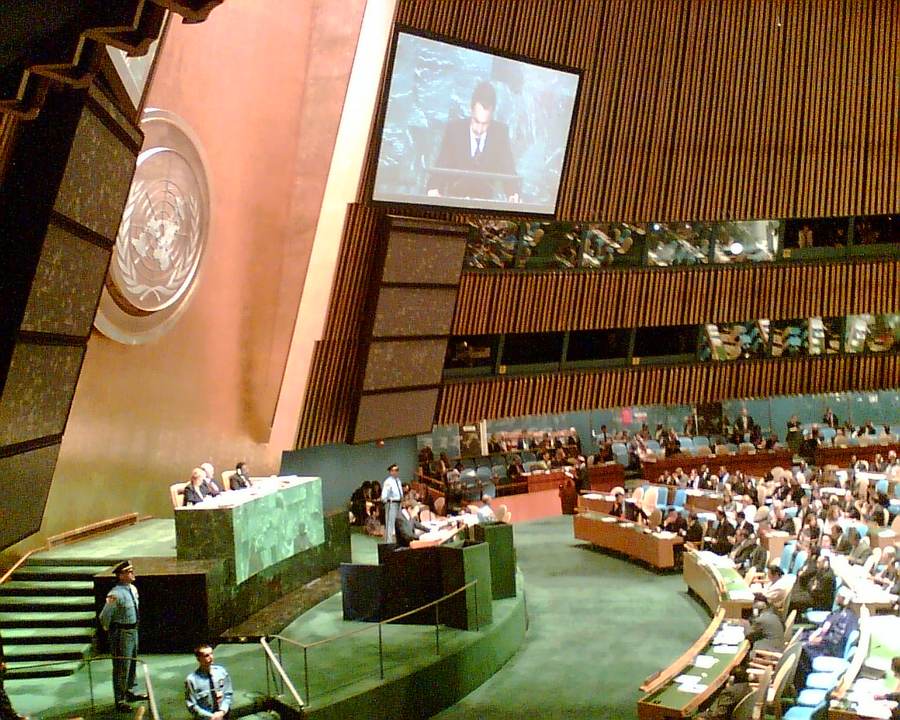
NEW YORK — The China Russia veto Iran sanctions showdown moved to the General Assembly on Thursday, when the United Nations' full membership convened under a rarely used 2022 rule to examine the two vetoes that killed the independent panel monitoring sanctions on Iran's nuclear program. Eleven council members had voted to renew the Panel of Experts; China and Russia blocked it. Now, in the middle of an active war, the world's window into a 400-kilogram stockpile of uranium enriched to 60 percent is closing — and no one has a plan to reopen it.
Thursday's session was not a vote. Under the veto initiative, the Assembly must gather within ten working days of any Security Council veto to put it under a spotlight. The subject this time: a United States-backed resolution to renew the mandate of the Panel of Experts — the small, independent team that produced the evidence-based reporting on whether UN sanctions on Iran's nuclear facilities were actually being obeyed.
The debate's theater was familiar. Its substance was not. What died on September 17 was not a resolution's wording but the machinery that made the sanctions real — and Thursday's exchange made clear that neither side has a credible answer for what replaces it.
What happened in the General Assembly
Assembly president Khalilur Rahman opened the 81st session's debate with a warning about the limits of the very mechanism being exercised. The veto initiative, he said, "cannot substitute for effective Security Council action" — each invocation "highlights both the value of this mechanism and the circumstances that make it necessary." The Assembly and the Council, he added, "serve humanity best when they operate in balance."
His plea set the tone he wanted: "Let us, therefore, use this debate not to exacerbate tensions or assign blame, but to clarify positions, identify common ground for constructive solutions and chart a credible path forward to support dialogue and diplomacy" — with the goal, ultimately, of restoring trust in the organization and its ability to deliver. A summary of the discussion will be sent back to the Security Council.
China's deputy permanent representative, Sun Lei, was blunt about why Beijing blocked the renewal: his delegation voted against the draft to "uphold a correct sense of right and wrong." The impasse, he argued, originates with Washington — its unilateral withdrawal from the 2015 Iran nuclear deal (the JCPOA), its "maximum pressure" campaign, and, he said, "two rounds of strikes against Iran in the midst of negotiations."
The European Union's Hedda Samson, deputy head of the bloc's UN delegation, took the opposite view of what the veto accomplished: "No UN Member State should prevent the UN Security Council from functioning properly and being fully operational." The need for the panel, she argued, is even greater today than when it was created.
Britain's statement went furthest on the substance at stake. Despite the vetoes, London said, UN sanctions on Iranian proliferation "remain fully in force" and binding on every member state. But the numbers Britain cited were the day's real headline: Iran holds more than 400 kilograms of uranium enriched to 60 percent — making it, the UK said, the only non-nuclear-weapons state enriching to this level — and the International Atomic Energy Agency is unable to verify the size, composition, or even the whereabouts of that stockpile. Tehran has denied inspectors access to key facilities.
Why this matters
A veto is politics. A dead panel is physics. Sanctions do not enforce themselves: they require investigators who track evasion networks, document illicit oil shipments, and trace procurement channels for prohibited technology. That was the Panel of Experts' job — and it was the job American deputy ambassador Jennifer Locetta described after the September 17 vote: "Without an independent panel of experts, this council loses its principal source of impartial, evidence-based reporting on sanctions violations, creating a monitoring gap that only benefits the Iranian regime and those who profit from evading those measures."
The deeper significance is the timing. Per UN News, the US–Israeli war with Iran is now about seven months old. Sanctions regimes have historically mattered most precisely during active conflicts, when the incentives to evade them peak and the consequences of undetected diversion are most dangerous. Reimposing sanctions while abolishing the instrument that watches them — the E3's snapback of UN measures came barely a year ago — is a paper regime. The paper still exists; the eyes are gone.
The 400-kilogram blind spot
Consider what "unable to verify the size, composition or whereabouts" means in practice. Uranium enriched to 60 percent is, in technical terms, one enrichment step away from the 90 percent threshold of weapons-grade material. A stockpile above 400 kilograms at that level represents a strategic quantity — and the world now knows less about where it sits than it did a year ago, because the inspectors are locked out of key facilities and the panel that tracked sanctions evasion no longer exists.
This is the asymmetry the veto creates: the sanctions stay on the books, satisfying the political demand to look tough, while the verification collapses, satisfying nobody who actually worries about proliferation. It is the worst of both worlds — confrontation without information.
How we got here
The road to Thursday's debate is eleven years long. In 2015, Iran and the major powers signed the JCPOA, trading sanctions relief for strict limits on Tehran's nuclear program. In 2018, President Trump withdrew the United States from the deal unilaterally and launched the "maximum pressure" campaign of sanctions Beijing now blames for the entire impasse.
The European turn came roughly a year ago, when France, Britain and Germany — the E3 — moved to reimpose UN sanctions through the deal's snapback mechanism, accusing Tehran of violating the 2015 pact. Iran denies seeking nuclear weapons. Then, in February 2026, the United States and Israel went to war with Iran — a conflict now in its seventh month, punctuated, in China's telling, by "two rounds of strikes against Iran in the midst of negotiations."
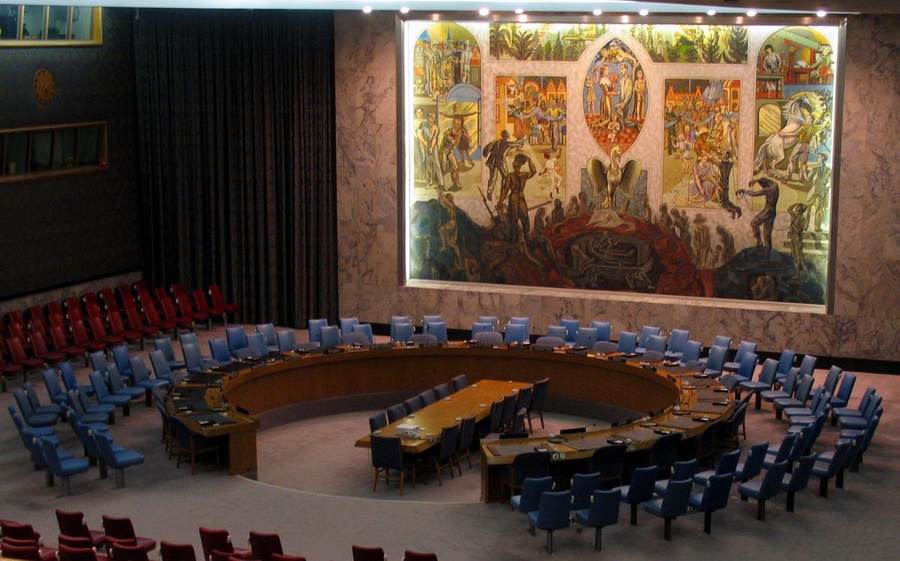
Against that backdrop, the September 17 vote was almost anticlimactic in its predictability: eleven council members voted to renew the panel; Pakistan and Somalia abstained; China and Russia vetoed. The panel will no longer operate. In truth, the Council had already been working without one for a year, because appointing experts requires consensus and consensus was never reached — Thursday's debate ratified a death that had already occurred.
A familiar playbook
There is a precedent, and it is instructive. In 2024, Russia vetoed the renewal of the panel monitoring North Korea sanctions — the same maneuver, the same result: sanctions on the books, no independent eyes watching. The pattern suggests opacity is not a side effect of these vetoes but their purpose. A monitoring panel's reports are public; its evidence constrains what all sides can claim. Killing the panel kills the shared factual baseline, and in a conflict where every party is already fighting over the narrative, that is a strategic asset in itself.
Who benefits, who loses, what the critics say
The winners: opacity
The immediate beneficiaries are straightforward. Iran gains the most: with the panel gone, the evasion networks that move its oil and the procurement channels that feed its program face no independent UN scrutiny. Tehran's Parliament Speaker Ghalibaf publicly praised the vetoes — a rare moment of candor about who values the monitoring gap. China and Russia gain diplomatic leverage and the satisfaction, in Sun Lei's framing, of having upheld "a correct sense of right and wrong" against what Beijing portrays as American coercion layered on mid-negotiation strikes.
The losers: visibility
The losers are the states that rely on multilateral verification: the United States, the E3, Israel. Their argument, voiced by Locetta, is that a monitoring gap "only benefits the Iranian regime and those who profit from evading those measures." Samson's warning — that no member state should prevent the Council from functioning — is the institutional version of the same complaint: a veto that abolishes oversight abolishes the Council's own capacity.
The reformers' long game
Beyond the immediate parties sits a larger camp: the many states that see repeated veto use — from Gaza ceasefire resolutions to sanctions panels — as evidence that the Council's design no longer matches its mission. Last year's Assembly president, Annalena Baerbock, called repeated veto use a "poster child" for global gridlock. The reform impulse is real and widely shared; it is also, for now, stalled. Thursday's debate will produce a summary for the Council, as the initiative requires. Whether the Council reads it is another matter — and both sides know it.
The honest accounting is that both framings contain truth. Beijing is right that the panel's death did not begin with the veto: a year of failed consensus appointments had already left the Council without functioning experts, and American policy from the 2018 JCPOA withdrawal onward built the crisis this veto punctuated. Washington and London are right that whatever the history, the result is a verification vacuum around a 400-kilogram stockpile at 60 percent during an active war — a situation no one's interests, including China's, are served by in the long run. Uncertainty is honest here: nobody outside Tehran's program can say with confidence where every kilogram sits.
The numbers behind the veto
The arithmetic of September 17 tells its own story. Eleven council members voted to renew the panel. Two — Pakistan and Somalia — abstained. Two permanent members, China and Russia, vetoed. Under Council rules, a single veto is enough; the eleven votes in favor were politically significant and legally irrelevant.
The nuclear arithmetic is starker. Iran's stockpile of uranium enriched to 60 percent exceeds 400 kilograms, according to Britain — and Iran is the only non-nuclear-weapons state enriching to that level. The distance from 60 percent to 90 percent, weapons-grade, is one technical step, not a technological leap. The IAEA cannot verify the size, composition, or whereabouts of the stockpile, and Tehran has denied its inspectors access to key facilities.
The institutional arithmetic is the bleakest of all. The Council had already operated a full year without a functioning panel because expert appointments require consensus. The veto initiative under which Thursday's debate convened dates to 2022 and requires the Assembly to meet within ten working days of a veto — a rule invoked now during the Assembly's 81st session. And the veto that killed the North Korea panel in 2024 shows the pattern is accelerating, not fading.
What happens next
Four scenarios are worth watching. They are projections, not predictions — but each follows from the facts on the record.
1. The IAEA becomes the sole monitor — and it is not enough
With the panel gone, the International Atomic Energy Agency is the last international body with any inspection mandate in Iran. But its inspectors are denied access to key facilities and cannot verify the stockpile's size, composition, or whereabouts. Verification without access is estimation. Expect Tehran's cooperation to become the central bargaining chip of any future negotiation — and expect it to be priced accordingly.
2. Enforcement goes unilateral
Snapback sanctions remain "fully in force," as London insists. But without UN monitors, enforcement will migrate to national action: American and European seizures, designations, and interdictions carried out without the shared evidentiary baseline the panel provided. That makes enforcement faster and more aggressive — and more contested, since every seizure will be litigated in the court of competing narratives rather than a published UN report.
3. A reconstituted panel — someday, maybe
Nothing legally prevents the Council from creating a new monitoring body. Everything politically does: the same consensus requirement that left the Council panel-less for a year, and the same two vetoes waiting at the end of any draft. A future deal on reconstitution is possible only as part of a broader US–China–Russia bargain, likely tied to the war's endgame. Watch the ceasefire talks, not the Council chamber, for the first signal.
4. Reform pressure builds — slowly
Rahman will send Thursday's debate summary to the Council, as the initiative requires. The veto-reform camp will cite it as further evidence; the permanent members will file it. The structural reality is that the states most motivated to limit the veto are the ones without one. Until that changes, the initiative's real function is what Rahman described: not substituting for Council action, but forcing the veto into the light — making opacity a matter of public record rather than quiet procedure.
The bottom line is the one Britain accidentally stated: the sanctions remain, and the monitoring is gone. A sanctions regime that cannot see is not a strategy. It is a posture. And postures, in wartime, have a way of collapsing into the very surprises they were meant to prevent.
Sources and reporting notes
- UN News, October 1, 2026 — the General Assembly debate under the veto initiative, the September 17 veto vote, and remarks by Assembly president Khalilur Rahman, China's Sun Lei and the EU's Hedda Samson.
- UK government statement at the UN General Assembly, October 1, 2026 — sanctions remain fully in force; the 400kg-plus, 60-percent uranium stockpile; IAEA verification limits and denied inspector access.
- Reuters, September 17, 2026 — the veto itself: eleven votes in favor, abstentions by Pakistan and Somalia, and the end of the panel's mandate.
Reporting cutoff: October 1, 2026 at 7:55 p.m. PDT. Facts in the preceding sections are drawn from the sources above; the "What happens next" scenarios are analysis, clearly labeled as projections. Iran's Parliament Speaker praised the vetoes, as reported by inshorts. Iran denies seeking nuclear weapons.