What happened
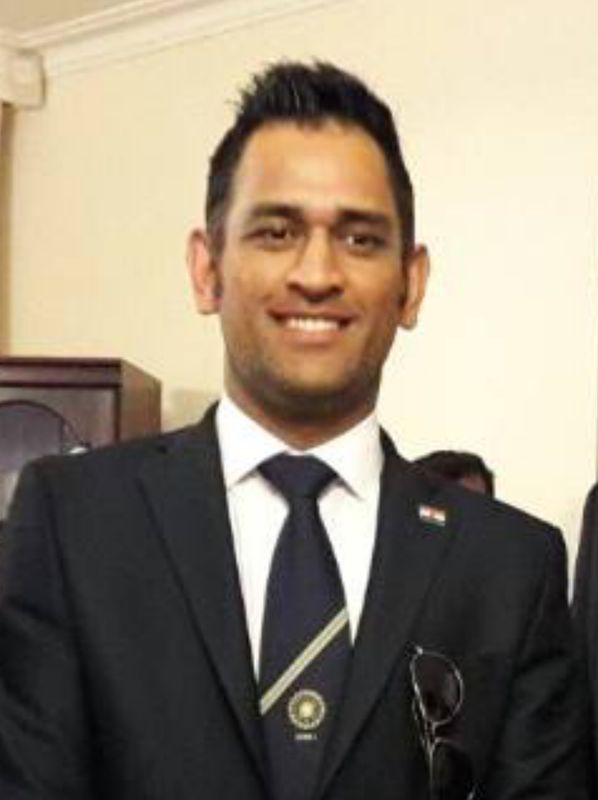
Chennai Super Kings announced on Tuesday, November 17, 2026, that Mahendra Singh Dhoni has retired as an IPL player and will take up the role of CSK Team Mentor from the IPL 2027 season. The timing was pointed. Tuesday was the retention and release deadline for IPL 2027, and the announcement landed roughly three hours before it — meaning the most consequential retention decision of the cycle was not a retention at all, but a retirement, folded into the paperwork of the deadline day. The IPL 2027 auction is scheduled for December 16 in Goa, and CSK will now build toward it without the option that has hung over every squad decision the franchise has made for nearly two decades: Dhoni, in yellow, one more year.
CSK owner Rupa Gurunath said Dhoni had expressed doubts about continuing a few months earlier and had asked the franchise to release him during the retention discussions. That detail matters, because it establishes the direction of travel: this was not a franchise easing out an ageing icon, but a player who raised the ending himself and then negotiated its shape. Knee and fitness issues had limited Dhoni in recent seasons, and the calf injury that ruled him out of IPL 2026 entirely removed the last practical route back. CSK finished eighth in IPL 2026 without him — a season that functioned, in retrospect, as an unplanned rehearsal for the announcement that has now been formalised.
The absence of a farewell appearance is the fact supporters will feel most sharply. Dhoni’s last IPL match was on May 25, 2025, against Gujarat Titans in Ahmedabad — a fixture nobody at the time knew was a goodbye. There was no final lap of Chepauk, no last walk down the tunnel in front of the home crowd that turned his name into a chant and his nickname, Thala — leader — into a civic identity. The career simply stopped, the way his international career stopped years earlier: quietly, and then all at once in public.
Why this matters: an ending with a mentor’s chair, not a farewell match
Most great IPL careers end in one of two ways: a farewell season, marketed as such, or a release that reads as rejection. Dhoni’s ending is a third thing, and it is the more interesting for it. By converting retirement into a mentorship that begins with the very next season, CSK has kept the person while surrendering the player — and kept him in a role that formalises what he had already become. In his final playing seasons, Dhoni’s value was never only the runs at number seven or eight; it was the field settings, the bowling changes, the calm transmitted to younger players in the last overs of a chase. The mentor role names that value and pays it forward, rather than pretending it can be replaced at auction.
There is a harder edge to the arrangement, too. A farewell match would have been an ending the franchise could sell once. A mentor is a continuing asset: present in the dugout, present in the broadcast frame, present in the story CSK tells sponsors and supporters about continuity. The announcement on deadline day — three hours before lists closed — also spared everyone the annual winter ritual of speculation about whether Dhoni would play again. That ritual had become a story in itself each retention cycle; it is now closed, on the franchise’s terms and the player’s, in a single statement.
And for Dhoni himself, the structure preserves the one thing his career was always built on: control of the narrative. He chose the timing, he asked for the release, and he stays inside the only IPL home he has ever had — not as a mascot wheeled out for anniversaries, but in a defined cricket role, starting with the season that begins the rebuild.
The career in numbers
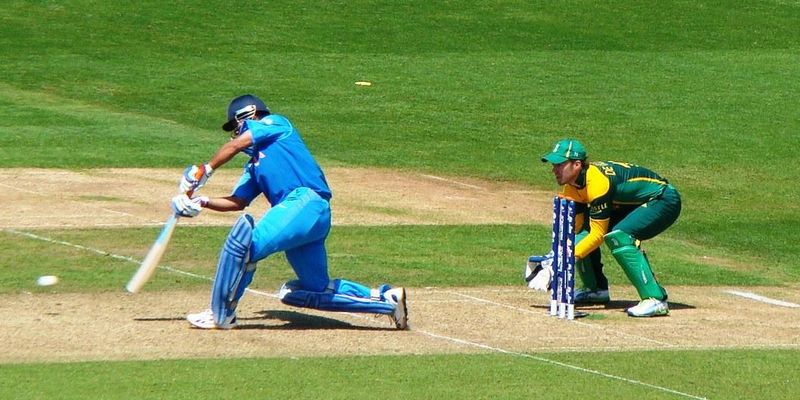
The statistical record is compact enough to state in a paragraph and large enough to anchor an era. Dhoni played 278 IPL matches and scored 5,439 runs at an average of 38.30 and a strike rate of 137.45, with 24 half-centuries. He captained Chennai Super Kings to five IPL titles. He retires as CSK’s second-highest run-scorer. And the arc begins where the IPL itself begins: Dhoni was the first player CSK signed, in 2008, for USD 1.5 million — the purchase that told the new league what it was going to be about.
Read those numbers as a wicketkeeper-batter who batted mostly in the middle and late order, and they change character. An average of 38.30 is a top-order number; Dhoni produced it largely from positions where averages go to die, in the overs where the required rate, not the scorebook, sets the terms. The strike rate of 137.45 across 278 matches is not a cameo figure either — it is sustained across nearly two decades of changing bowling attacks, fielding standards and tournament formats. The 24 half-centuries understate his finishing record by design: the innings that built his legend were often the unbeaten 30s and 40s that closed games, which no milestone column records.
Five titles, and the captaincy standard
Five IPL titles as captain is the line that will be measured against every successor, at CSK and elsewhere. Captaincy in the IPL is a peculiar trade — part tactics, part auction-table construction, part dressing-room politics conducted in public — and the historical pattern of the league is churn: franchises cycle captains the way they cycle overseas players. Against that pattern, Dhoni’s record stands as the counter-example: one franchise, one captain, five championships, and a playing career that began with the league itself in 2008 and outlasted almost every contemporary who started alongside him. Whatever a future CSK captain achieves will be reported in Dhoni’s shadow, and the franchise knows it — which is precisely why the mentor’s chair exists.
CSK’s succession problem
Captaincy: replacing the irreplaceable, in public
The on-field succession is the straightforward part, and it is still hard. CSK must now appoint a captain whose every decision — a bowling change in the 19th over, a review taken or declined — will be compared in real time with what Dhoni would have done, while Dhoni himself sits in the dugout as mentor. That proximity cuts both ways. It gives the new captain access to the finest tactical mind the franchise has ever employed; it also risks a dressing room with two centres of authority, and a crowd that will chant for the mentor when the captain errs. Managing that geometry — mentor as resource, not as shadow government — will be the defining internal task of CSK’s 2027 season, and the franchise’s decision to define the role now, months before the season, suggests it understands the risk.
Branding and commercial weight: the face that cannot be auctioned
The commercial succession is harder still. For nearly two decades, CSK’s brand and Dhoni’s face have been the same asset. The yellow jersey’s meaning in the Indian market was never only a team; it was a person, and the person drove the sponsorship value, the broadcast cutaways and the away-game ticket demand that followed him around the country. No signing at the December 16 auction in Goa can replace that, because it is not a cricket asset that can be bought — it is accumulated identity. The mentor role is CSK’s bridge across that gap: Dhoni remains the face on the poster and in the dugout while the playing brand is rebuilt around whoever comes next. Whether sponsors price the mentor’s presence at anything like the player’s is an open question, but it is a better question than the one a clean retirement would have left.
The uncapped-rule retention, and the economics of the end
The financial coda of the playing career is worth stating precisely, because it explains how the ending became possible. Dhoni had been retained for Rs 4 crore ahead of the IPL 2025 mega auction under the uncapped-player rule — a provision that allowed a player of his stature to be held at a fraction of a headline star’s price, and that made the annual “one more year” decision cheap for the franchise to keep making. At Rs 4 crore, retaining Dhoni was never really a budget question; it was a fitness question and a will question, and in the end it was answered by the player.
Set against that final figure is the career total: Mint has reported Dhoni’s cumulative IPL contract value at Rs 200.72 crore, a figure carried by Outlook Money. The distance between the two numbers is the story of the league’s economics in one career — from the USD 1.5 million signature that opened the IPL in 2008, through the mega-auction years when his retention anchored CSK’s purse strategy, to an uncapped-rule footnote that let the most valuable player in the league’s history finish on one of its smallest contracts. The mentor role now begins a different ledger, one the franchise has not priced in public.
What happens next
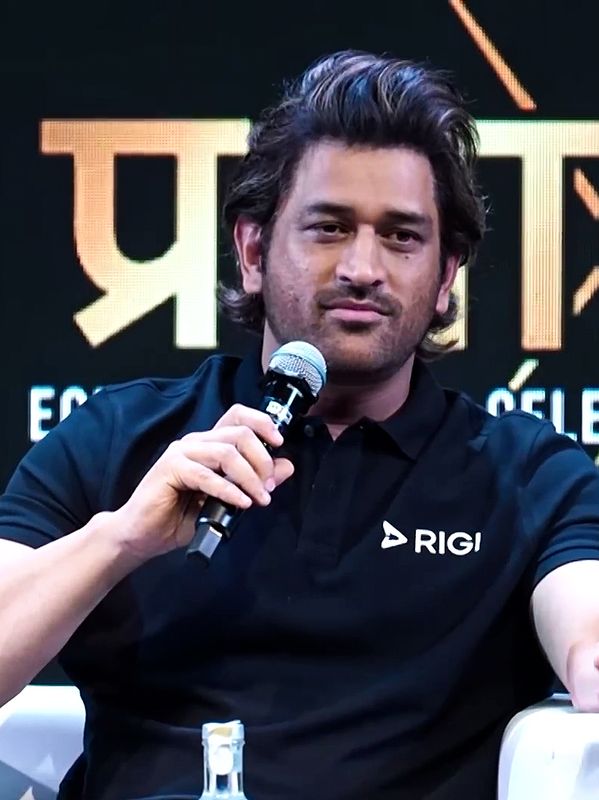
The calendar now takes over. The IPL 2027 auction on December 16 in Goa is the first hard deadline of the post-Dhoni era, and CSK’s list behaviour there will be read as the rebuild’s opening statement: how aggressively the franchise spends on a wicketkeeper-batter, whether it buys experience or youth around the core that finished eighth in 2026, and how much of the purse strategy still assumes the stability Dhoni used to provide for free. An eighth-place finish without him was the warning; the auction is where the response begins.
The mentor precedent will be watched beyond Chennai. Franchise cricket has created many roles for retired greats — coach, director of cricket, ambassador — but a playing retirement announced on retention day, with the mentorship attached to the same statement and the same franchise, is a cleaner template than most. If it works, expect it to be copied: the league’s founding generation is reaching the end of its playing years, and every franchise with an icon approaching the exit now has a worked example of how to keep the icon and free the squad slot at the same time. Signal Post News’ cricket coverage will follow the transition through the auction and the season — as it has followed the parallel farewell questions around Virat Kohli’s final World Cup and India’s changing of the guard in series such as the ODI series win in New Zealand.
What is established, on the record of November 17 and 18, is this: the most durable playing career in IPL history is over, ended by its owner’s own request and a calf that would not heal; the man who was CSK’s first signing in 2008 stays at CSK as mentor from 2027; and the franchise he defined now has an auction in Goa, a captaincy to settle and a brand to rebuild — with its greatest asset still in the building, in a different chair.
Read next: Virat Kohli’s 2027 World Cup farewell · India clinch the ODI series in New Zealand · Ronaldo Jr’s Portugal Under-17 debut, a week after his father retired
Sources
Sources: Chennai Super Kings official announcement (Nov. 17, 2026 — retirement as an IPL player, CSK Team Mentor role from IPL 2027, Rupa Gurunath comments on the release request during retention discussions); The Hindu BusinessLine (Nov. 17, 2026); Outlook Money (Nov. 18, 2026 — cumulative IPL contract value of Rs 200.72 crore as reported by Mint); CricTracker (Nov. 17–18, 2026); SportsTak (Nov. 17, 2026). Career statistics as stated in the announcement coverage: 278 IPL matches, 5,439 runs, average 38.30, strike rate 137.45, 24 half-centuries, five IPL titles as CSK captain.