Sport · Cricket
The India New Zealand ODI series ended the way few expected at Bay Oval: India bowled out for 209, then defending it with a collapse-inducing squeeze that bowled the hosts out for 187 — a 22-run win, a 3-1 series, and India’s first ODI series win in New Zealand since 2019.

TAURANGA, November 15, 2026 — The India New Zealand ODI series was decided by a total that should not have been enough. India defended a modest 209 at Bay Oval in Tauranga on Sunday, beating New Zealand by 22 runs to seal the five-match series 3-1 and record their first ODI series win in New Zealand since 2019, Reuters reported. New Zealand, chasing 210, cruised to 64 for one and appeared to be strolling toward a consolation win that would have levelled the series narrative; instead they lost five wickets for 55 runs in a dramatic mid-innings collapse and were bowled out for 187 in 48.1 overs. Arshdeep Singh took 3-30 and was named player of the match in match reports, with Mohammed Siraj and Axar Patel claiming two wickets each.
The result completes a tour on which India have now won both white-ball series: the ODI rubber follows a 3-2 T20 series win earlier in the tour, and it was achieved under stand-in captain Shreyas Iyer, whose side absorbed a 244-run defeat in the fourth ODI and responded, four days later, by defending the lowest total of the series. For New Zealand, the defeat ends a run of 11 consecutive home series wins, according to series reporting — a streak that had made home conditions close to a guarantee, broken not by a batting onslaught but by a scoreboard that never quite got away from the bowlers.
How 209 became enough: the 64-1 to 119-6 collapse
The turning point was not a single delivery but a squeeze. New Zealand’s chase began with the composure of a side that knew the target: 64 for one, the required rate under control, the Bay Oval crowd settling in for a routine finish. What followed was the kind of collapse that low chases specialise in — five wickets for 55 runs, the innings tilting from 64-1 to 119-6 as India’s seamers and Axar Patel’s spin turned a modest total into a moving wall. Each new batter arrived needing to rebuild and score at the same time, the two tasks that sit worst together in a run chase, and each departure raised the price of the next mistake.
Arshdeep’s 3-30 was the statistical spine of the defence, but the shape of the win was collective: Siraj’s two wickets kept the new ball honest, Axar’s two kept the middle overs airless, and the fielding held the standard that a 209 defence demands — there is no slack in a total like that, no over that can be donated, no misfield that does not show up in the final margin. New Zealand were eventually dismissed for 187 in 48.1 overs, 23 runs short of the win and 22 short of India’s total once the arithmetic of the last wicket settled — close enough to know the chase was theirs to lose at 64-1, far enough to know exactly when they lost it.
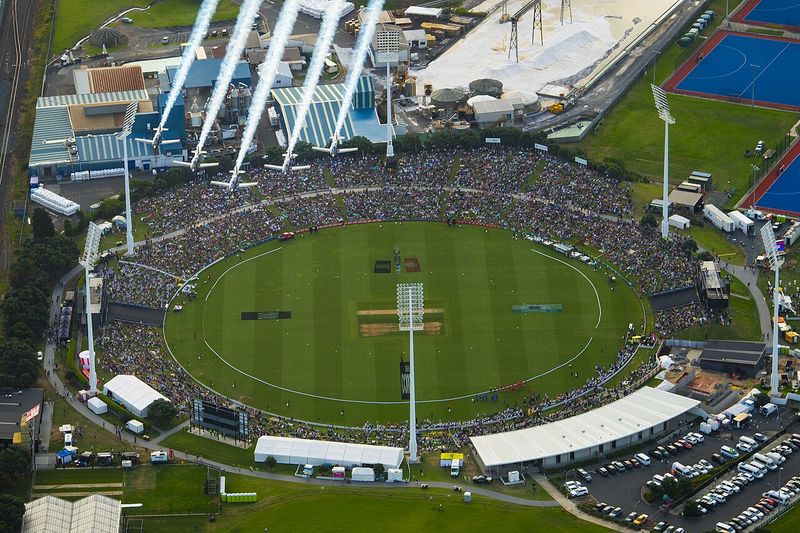
India’s 209: Axar and Kishan hold a thin innings together
India’s innings never found a top gear. Bowled out for 209 in 42.1 overs — nearly eight overs unused, the surest sign of an innings that kept interrupting itself — they were held together by twin 46s from Axar Patel and Ishan Kishan, contributions that look modest on a scorecard and were, in context, the difference between a defence and a formality. Iyer made 22 and Naman Dhir 22, starts that did not become the anchor innings the total needed, and the innings was rescued from genuine inadequacy only at its very end: Siraj and Arshdeep, the same pair who would lead the defence, added a late flurry of 14 runs apiece, 26 of them in the final two overs, pushing the total from the neighbourhood of 180 — a chase New Zealand would have fancied at a canter — to 209, a chase with just enough weight to punish one collapse.
That tail-end contribution deserves its place in the story of this match, because it is where the match was quietly won. Twenty-six runs in two overs, from bowlers, at the death of an innings that had stalled, is precisely the margin by which chases like New Zealand’s fail: at 64-1 the hosts needed 146 more; had the target been 184, the same collapse to 119-6 still leaves a gettable finish. At 210, the collapse was terminal. Low-scoring ODIs are routinely described as throwbacks; this one was better understood as an audit, of temperament on both sides, and only one side passed it.
Why this matters
Analysis. A first ODI series win in New Zealand since the 2018-19 tour — seven years, by the calendar the series reports use — is the headline fact, and it carries weight beyond the trophy. New Zealand at home have been one of one-day cricket’s hardest assignments: 11 consecutive home series wins is not a streak, it is an era, and it survived visiting sides with far deeper batting orders than the one India defended 209 with on Sunday. Winning the series with a stand-in captain, after losing the fourth match by 244 runs — a defeat of historic proportions in its own right — describes a squad with a floor as well as a ceiling: the capacity to be routed on Thursday and ruthless on Sunday is the trait that separates touring sides that win series from touring sides that win matches.
The composition of the win matters as much as its existence. India’s defence was led by Arshdeep, Siraj and Axar — a left-arm seamer, a right-arm seamer and a spinning all-rounder who also top-scored — which is to say it was a win built on the parts of India’s white-ball machine most often discussed as supporting cast. Add the T20 series win, 3-2, earlier in the tour, and India leave the white-ball leg having beaten New Zealand at both formats in their own conditions, with momentum — and selection arguments of the pleasant kind — flowing directly into the two-Test series that begins on November 19. For New Zealand, the questions run the other way: a batting order that folded from 64-1 chasing 210 at home has four days to explain itself before the format changes and the scrutiny deepens.

The series, in context
The five-match series traced an arc that Sunday’s finish completed. India won the first two ODIs to seize control; the third was rained off, the weather doing what New Zealand’s bowlers could not; the hosts then produced the series’ loudest statement, winning the fourth match by 244 runs to keep the rubber alive and raise the possibility — briefly, loudly — of a 2-2 escape. The decider at Bay Oval was therefore a genuine series final rather than a coronation, and it produced the series’ most instructive cricket: the side that had been bowled out cheaply and beaten by 244 defended 209 against the side that had beaten them, in that side’s home conditions, in front of that side’s crowd. Series are remembered by their finishes, and this one finished with the better team over five matches winning the match that required the most of them.
What happens next
The tour turns red-ball now: a two-Test series begins on November 19, and India carry into it the confidence of a side that has won everything winnable on the tour so far, plus a set of live selection questions — the form of Axar with bat and ball, the depth of the seam group behind the first-choice attack, and the standing of a stand-in captain who has now won a series his employers will remember. New Zealand’s task is the harder one: to treat the Bay Oval collapse as an aberration rather than a diagnosis, four days before a Test series in which a batting order that loses five for 55 does not get a second innings to apologise with — it gets two, and will need both.
Related coverage: India Beat New Zealand by Four Wickets as Tilak Varma's 51 Not Out Seals a Comeback From 112-6 in Christchurch · India Pakistan Asian Games Cricket Final 2026: India Retain Gold by 19 Runs
Sources
Reuters — reporting of November 15, 2026: India defended 209 to beat New Zealand by 22 runs at Bay Oval, Tauranga, sealing the five-match ODI series 3-1; New Zealand reached 64-1 before losing five wickets for 55 runs and were bowled out for 187 in 48.1 overs; Arshdeep Singh 3-30, with two wickets each for Mohammed Siraj and Axar Patel; India’s first ODI series win in New Zealand since 2019. Sportskeeda, DY365 and S Bharat — independent match reports of November 15, 2026, carrying the same scorecard: India 209 all out in 42.1 overs (Axar Patel 46, Ishan Kishan 46, Shreyas Iyer 22, Naman Dhir 22; 26 runs in the final two overs); Arshdeep Singh named player of the match; the series shape (India won the first two ODIs, the third was rained off, New Zealand won the fourth by 244 runs); the end of New Zealand’s run of 11 consecutive home series wins; India’s preceding 3-2 T20 series win and the two-Test series beginning November 19. Photographs: Storm machine (CC BY-SA 4.0), CC0 contributor, and NZDF (CC BY 4.0), all via Wikimedia Commons — file photos.