Published October 2, 2026
Pretorius 188 T20 record
Pretorius 188 T20 recordhighest individual score T20 cricketChris Gayle 175 record brokenTitans vs Knights CSA T20 ChallengePretorius 188 not out BloemfonteinT20 double century recordyoungest to score 150 TestsSouth Africa batting sensationCSA T20 Challenge highest total
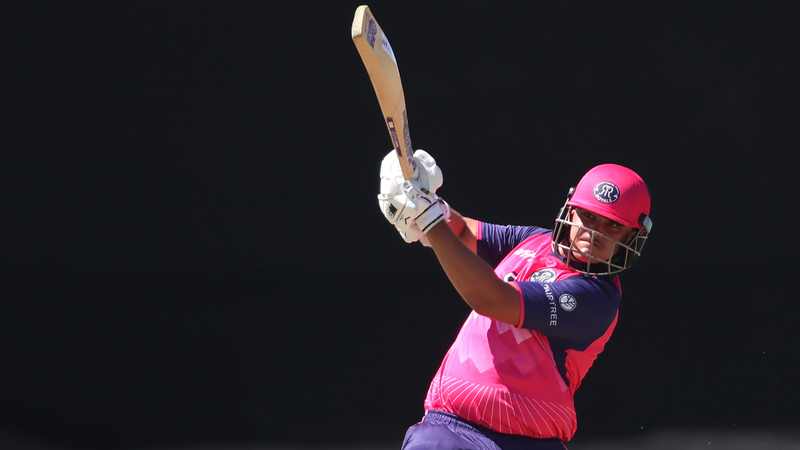
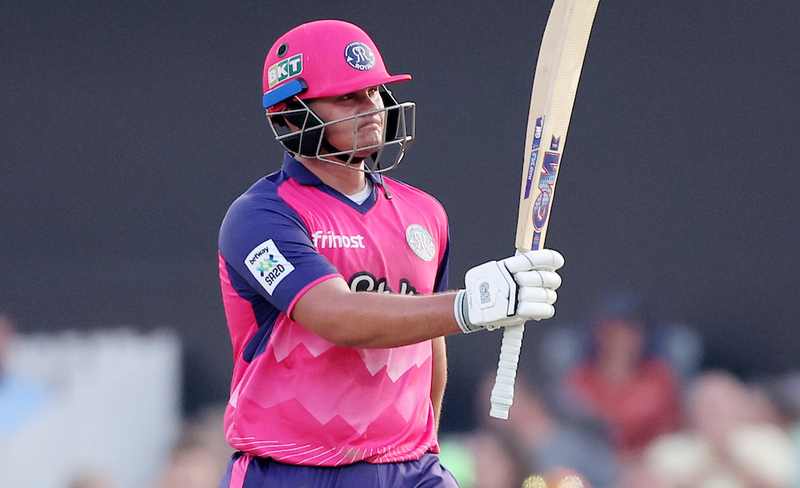
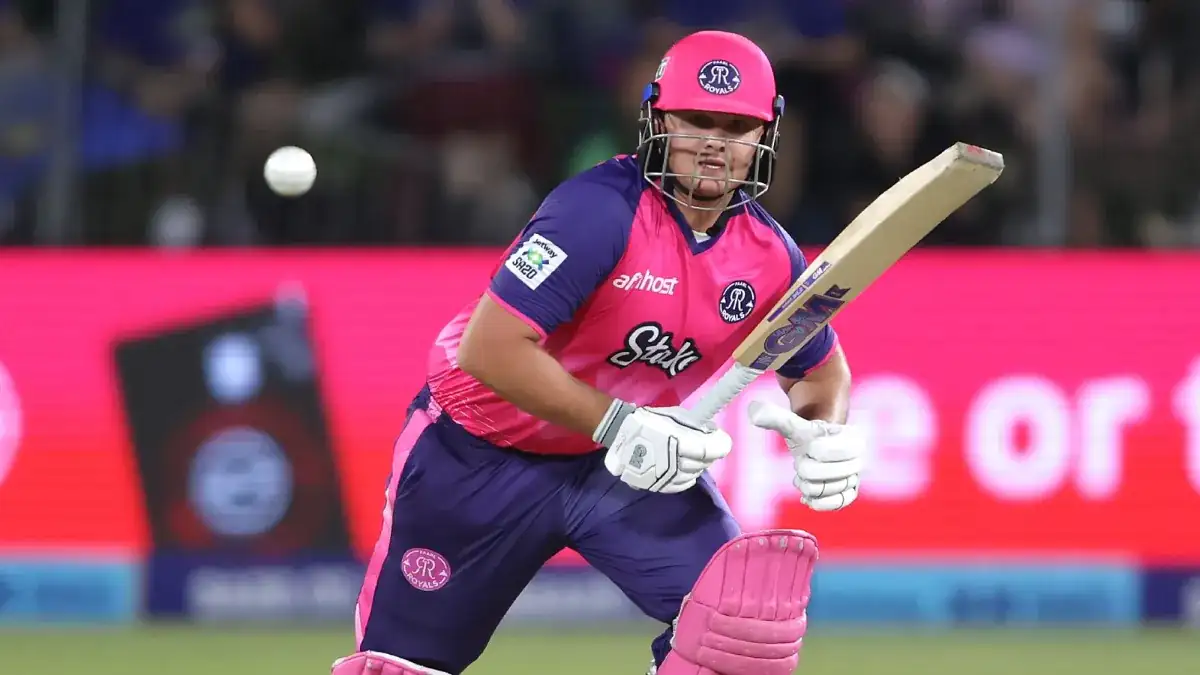
BLOEMFONTEIN, South Africa — Lhuan-dre Pretorius walked out at the Mangaung Oval on Friday, October 2, 2026, as a gifted 20-year-old in exceptional form. He walked off unbeaten on 188 from 79 balls, the owner of the highest individual score in men's T20 cricket and the man who had finally carried one of Chris Gayle's seemingly permanent numbers out of reach.
The left-hander struck 15 fours and 13 sixes for the Titans against the Knights, scoring 138 of his 188 runs in boundaries and finishing with a strike rate of 237.97. The Titans made 267 for three, then dismissed the Knights for 143 in 17.2 overs to win by 124 runs. Those are the match facts. The larger story is that a record built in the IPL's loudest theatre in 2013 has fallen in South Africa's domestic competition to a player whose ceiling is still being measured.
Pretorius also passed Dewald Brevis's 162, the previous CSA T20 Challenge individual high. The team total was the competition's second highest, short only of the Titans' 271 for three against the same opponents in 2022. A record night, in other words, came with a useful reminder: the Titans have been capable of turning this fixture into a batting laboratory before.
How the record fell: 79 balls of controlled carnage
There is a temptation to reduce innings like this to a highlight reel of airborne shots. The more revealing detail is that Pretorius lasted 79 balls. In a 120-ball innings, one batter occupied nearly two-thirds of the available deliveries and still sustained a rate of almost 2.38 runs per ball. That is not simply hitting power; it is control over strike, tempo and risk for an unusually long T20 occupation.
The strike-rate curve: 24, 40, 58
He reached 50 from 24 balls, 100 from 40 and 150 from 58. The sequence explains the innings better than the final total alone. His first fifty came at 208.33, his next fifty took only 16 deliveries, and the third arrived in 18. From ball 25 through ball 58, he added 100 in 34 balls. The acceleration was not a late panic; it came while the innings still had enough structure for bowlers to change plans.
The final 38 runs took 21 balls. That relative slowing matters, too. It shows why the first T20 double hundred remains elusive: once a batter moves beyond 150, fatigue, strike access and defensive fields all converge. Pretorius did not merely sprint into record territory. He had to stay there while the opposition used every remaining option.
Twelve runs short of immortality
Pretorius ended 12 short of the first double century in T20 cricket. He also equalled the record for most balls faced in a T20 innings, 79, alongside Aaron Finch and Marcus Stoinis. That combination is telling. A double hundred will probably require both extreme scoring speed and an innings long enough to consume roughly two-thirds of the team's deliveries.
There was no failure in finishing on 188. Yet the unfinished 12 will cling to this innings because records redraw ambition. Before Friday, 175 looked like the summit. After Friday, 200 looks less like fantasy and more like a scheduling problem: can an opener face enough balls, keep the strike and preserve the physical clarity to finish?
Why this matters: the record that was supposed to be unbreakable
The end of the Gayle era's last monument
Gayle's 175 not out for Royal Challengers Bengaluru against Pune Warriors India in 2013 became shorthand for T20 excess. It was not just the highest score; it was a cultural marker from the moment when franchise cricket learned how dramatically one batter could distort a 20-over contest. For 13 years, hitters became stronger, data became sharper and leagues multiplied, yet the number held.
That endurance gave the mark an aura that most T20 records never acquire. Bowling figures can turn on conditions; team totals rise as rule changes and surfaces evolve. A score of 175 by one player felt different because it demanded speed, longevity and circumstances aligned in the same innings. Pretorius did not chip past it. He added 13 runs and remained unbeaten.
What a domestic record says about the global game
The location matters. This did not happen in an IPL final or an international showcase. It happened in the CSA T20 Challenge in Bloemfontein. That may temper comparisons of opposition quality, but it also demonstrates how thoroughly elite T20 methods have spread beyond the richest leagues. Batters arrive with power games, matchup plans and enough franchise experience to attack a domestic contest with global sophistication.
For South African cricket, the timing is valuable. A home competition needs performances that feel consequential beyond its own table. The highest individual score T20 cricket has seen gives the tournament a moment that cannot be dismissed as merely local, even if the standard-of-opposition argument remains part of any fair assessment.
Thirteen years of waiting: the night Gayle set the mark
The innings that defined an era
Gayle's 175 not out came from 66 balls for Royal Challengers Bengaluru against Pune Warriors India at the M. Chinnaswamy Stadium in the 2013 IPL. Its strike rate was 265.15, higher than Pretorius's 237.97. That distinction should not be polished away: Gayle's innings was faster, against IPL-standard bowling, and remains one of the most violent sustained assaults the format has produced.
Pretorius owns the larger total. Gayle retains the superior rate. The comparison reveals two different kinds of domination. Gayle compressed destruction into 66 balls; Pretorius extended it across 79. The new record is about volume and longevity as much as speed.
Why nobody caught him
Aaron Finch reached 172 for Australia against Zimbabwe in 2018 but stopped three short. Brevis made 162 in this same South African competition, a total that advertised the country's pipeline without reaching Gayle. Hamza Khan's unbeaten 164 and Karanbir Singh's 164 also entered the all-time list. Each exposed how rare it is for one batter to command enough of a T20 innings to threaten 175.
Many explosive hundreds end because the team runs out of balls, the batter loses strike or the risk required to maintain the pace eventually wins. Pretorius found the unusual overlap: opener's access, elite conversion and a match state that allowed him to keep pressing.
Who is Lhuan-dre Pretorius: the rise
From Paarl Royals to the national side
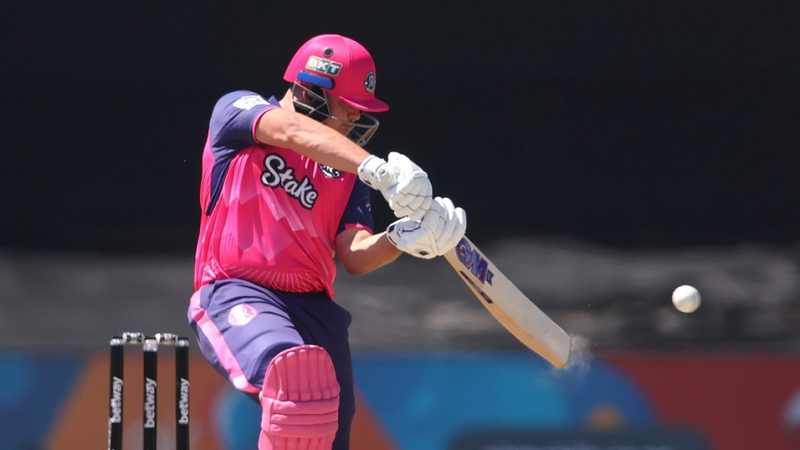
Pretorius's rise has not depended on one evening. His work with Paarl Royals in the SA20 placed him in the franchise spotlight, while his record entering Friday stood at 91 T20 matches with a career strike rate of 150.44. He has already played 22 internationals across formats: 17 T20 internationals, three one-day internationals and two Tests.
Those numbers describe a young player with unusual exposure, not an unknown who materialized in a domestic scorecard. They also complicate the auction conversation. Teams will not be buying only the memory of 188; they will be judging a left-handed opener who has produced across a substantial T20 sample and already entered South Africa's multi-format plans.
The youngest to 150 in Tests
According to ESPNcricinfo, Pretorius is the youngest player to score 150 in men's Tests. That achievement belongs to a different rhythm and a different set of questions, but it strengthens the central case for taking Friday seriously. The most valuable young batters are not merely specialists in one tempo. They can read conditions, build innings and then choose when to break them open.
There will be pressure to package him as a T20 phenomenon now. South Africa should resist making the record a cage. His Test milestone is evidence that the player's value may be broader than the format in which his name entered the global record book.
The form line: 94 and 101
The 188 followed scores of 94 and 101 for South Africa against Zimbabwe and Namibia in the September 2026 tri-series. Three innings do not guarantee a career trajectory, but the sequence changes how the record should be interpreted. It looks less like a freak collision of pitch and bowling, and more like the peak of an extended run of timing and decision-making.
That form also creates a selection problem of the welcome kind. A side can manage a prospect cautiously when the promise is theoretical. It becomes harder when the player is converting starts into match-shaping scores across consecutive games.
The numbers, in context
Boundary math: 138 of 188
Fifteen fours supplied 60 runs and 13 sixes another 78. Together, those 28 scoring shots produced 138 runs — 72.8% of the total. The remaining 50 came from the other 51 balls. That balance is more sophisticated than a simple boundary count suggests. Pretorius could absorb non-boundary deliveries without allowing the innings to stall because the next release shot was so damaging.
Twenty-eight boundary shots from 79 balls means more than one in every three deliveries reached or cleared the rope. Yet 51 balls did not. Record innings are built as much on surviving those 51 moments — dots, singles, twos and imperfect contacts — as on the shots replayed afterward.
The all-time table: Pretorius, Gayle, Finch
Pretorius now leads at 188 not out. Gayle is next at 175 not out, followed by Finch's 172, then Hamza Khan's unbeaten 164 and Karanbir Singh's 164. Brevis's 162 remains relevant because it was the previous CSA T20 Challenge benchmark and came from the same modern South African batting system.
Raw totals alone do not settle which innings was best. Gayle's 175 came at 265.15 from 66 balls; Pretorius scored at 237.97 from 79. Gayle faced stronger, IPL-level opposition and scored faster. Pretorius carried an innings longer and finished 13 runs higher. The record book can identify the largest score. Judgment about quality still requires context.
Team records: 267/3 and the 124-run rout
The Titans' 267 for three was the second-highest total in CSA T20 Challenge history, behind their own 271 for three against the Knights in 2022. The Knights were bowled out for 143 in 17.2 overs. Cloete made 39 from 25 balls, Ferreira took three for 16, and Boast finished with one for 46.
A 124-run victory prevents the individual achievement from becoming empty spectacle. Pretorius created a score the Titans' attack could defend with enormous margin. For more South Asian cricket context, see our report on the India and Pakistan Asian Games semifinal route and our analysis of Virat Kohli's 2027 World Cup horizon.
Winners and losers — and the honest caveats
The domestic-bowling caveat, honestly stated
The Knights' attack in a domestic CSA T20 Challenge match is not equivalent to an IPL lineup assembled from international stars. Gayle's 175 came on the sport's richest franchise stage. Anyone comparing the innings should say that plainly rather than pretending every registered T20 offers the same test.
But the caveat does not erase the record. Official competitions are not retroactively weighted by reputation, and Pretorius still had to face 79 legal deliveries, manage his body, respond to fields and avoid the dismissal that ends almost every comparable attempt. Context affects evaluation; it does not change 188.
Record inflation and the modern T20
Critics will point to bigger bats, flatter pitches, shorter boundaries and deeper tactical knowledge. They are right that modern T20 conditions can inflate totals. Batters train specifically for power, analysts map matchups, and teams accept risks that would have been considered reckless a generation ago.
Yet inflation cannot explain why Gayle's mark lasted 13 years through that entire evolution. If conditions alone made 175 inevitable, it would have fallen repeatedly. The long wait suggests the remaining barrier was not equipment or intent, but the rare ability to sustain near-maximal scoring without losing either wicket or access to the strike.
Who wins, who loses
The Titans win twice: in the table and in the prestige attached to developing the record-holder. Pretorius wins attention from selectors and franchise decision-makers. South African cricket gains a young headline talent whose appeal crosses formats. Brevis loses a domestic record, but the subplot may benefit him too; internal competition between two young power batters can sharpen the national pipeline.
The Knights absorb the wrong side of history for a second time after the Titans' 271 in 2022. Auction teams that had Pretorius priced as an emerging player may lose bargaining leverage. And the chasing pack — Finch, Gayle and the names around 164 — now finds the target moved closer to a number once considered implausible.
What happens next: auctions, selections, and the 200 that still stands
SA20 and IPL auction boards just got a new name
Pretorius was already known through Paarl Royals and international cricket. A world record changes the order of the conversation. SA20 teams will examine retention and matchup value; IPL scouts will ask whether his power transfers against deeper attacks, how he handles high pace and spin through the middle overs, and whether his wicketkeeping or fielding expands roster flexibility.
No single innings guarantees a contract, role or price. Auction markets can overreact to the freshest performance. Still, 188 is the sort of evidence that forces every room to reopen the file. The intelligent buyers will pair Friday's ceiling with the 91-match sample and the international form line, not treat the score as a substitute for them.
South Africa's T20 future
For South Africa, the immediate question is role clarity. Pretorius's best route appears to be at the top, where he can face enough deliveries to turn a fast fifty into something decisive. That creates competition, but it also offers tactical freedom: a left-handed opener with a 150.44 career T20 strike rate can alter how opponents deploy new-ball pace and early spin.
The larger opportunity is to protect the multi-format player while using the T20 weapon. His status as the youngest man to score 150 in Tests argues against reducing him to an auction asset. South Africa's gain will be greatest if the same judgment that carried him through 79 balls in Bloemfontein survives the schedule and expectations now coming at him.
Scenarios: the chase for 200
The first T20 double hundred probably comes through one of three routes. An opener bats almost the full innings on a high-scoring ground; a power hitter reaches 100 early enough to preserve 40 or more balls for the second hundred; or a lopsided matchup allows one player to keep the strike while his partners feed him. Pretorius's innings combined much of the first two and still stopped at 188.
The arithmetic is unforgiving. At his Friday strike rate, 200 would require roughly 85 balls — six more than the format's innings record. To reach 200 within 79 balls requires a strike rate of 253.16, closer to Gayle's pace, sustained across Pretorius's duration. That is the frontier: Gayle's speed married to Pretorius's volume.
Records do not predict careers. They do, however, change what a sport thinks is possible. On October 2, 2026, in Bloemfontein, a 20-year-old moved the line from 175 to 188. The next pursuit begins there.
Sources
- Devdiscourse / ANI — match facts, recent form, the previous Brevis record, the Titans' 2022 team mark and Pretorius's T20 career record.
- CricketAddictor — the 12-run gap to a double hundred, the 79-ball record and all-time scoring list.
- BBC Sport, ESPNcricinfo and The Indian Express also confirmed the record and match details; ESPNcricinfo supplied the multi-format career context.