Virat Kohli 2027 World Cup
The countdown now has a name and a date. Virat Kohli told broadcaster JioStar on Saturday that the 2027 ODI World Cup will be his last tournament for India — the final chapter of an international career that began in 2008 and rewrote the record book of one-day cricket. “For me, it's the last World Cup I'm going to play for India,” Kohli said. “That is my motivation... And of course, the goal is absolutely to win the World Cup and whatever it takes, I'm absolutely ready.” The 37-year-old, who holds the world record of 54 ODI centuries and has scored 14,941 ODI runs — second only to Sachin Tendulkar's 18,426 — has already retired from T20 internationals in June 2024 and Tests in May 2025. The 2027 edition, hosted jointly by South Africa, Zimbabwe and Namibia in October and November, will be his fifth ODI World Cup.
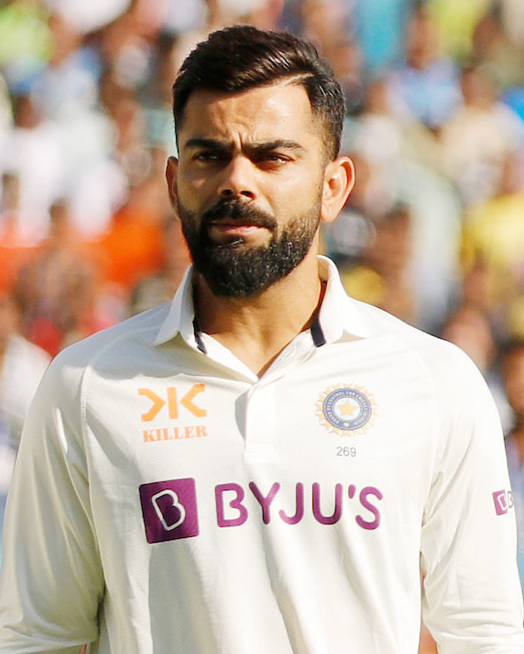
The announcement that ends the guessing game
Kohli has been managing his exits in stages, and cricket's most dissected career move just got its final sentence. Speaking ahead of India's three-match ODI series against the West Indies — which begins Sunday in Thiruvananthapuram — Kohli was asked about the road to 2027 and answered with unusual directness. The tournament, he said, is the last he will play for India, full stop. His international career ends when it ends.
He also described what the modern 50-over World Cup demands: ten matches played at the intensity of T20 cricket — “2.5 T20 games in one day” — sustained across a long tournament, this time in foreign conditions. “It takes a lot out of you,” he said. It was a veteran's framing of the challenge: honest about the physical toll, confident about the appetite for it.
The timing of the statement is no accident. India's home season opener doubles as the first stop on a 13-month runway to the World Cup, and the series has already been cast as 2027 preparation. By declaring his intentions now, Kohli has turned every remaining ODI — starting in Thiruvananthapuram — into a chapter of a farewell tour with a fixed final page.
Why this matters
This is not merely a scheduling announcement. It is the most significant retirement declaration in Indian cricket since Mahendra Singh Dhoni walked away in 2020, and it rearranges the sport's emotional and commercial furniture for the next year.
First, it gives Indian cricket something it has rarely had: a planned, orderly ending for its biggest star. Indian farewells are usually ragged affairs — form dips, selection meetings, whispered leaks, a sudden Instagram post. Kohli has chosen the opposite route. He has named the date, the tournament and the objective thirteen months in advance, and in doing so he has bought himself something priceless: agency. The selectors cannot “rest” him into retirement now. The question of his place becomes a public contract, signed by the man himself.
Second, the declaration converts the entire 2026–27 ODI calendar into an event. Every home series, every hundred, every lean patch will now be narrated against the ticking clock. Broadcasters will sell the farewell; sponsors will price it; stadiums will fill for it. When Tendulkar toured India in his final season in 2013, grounds overflowed for what were essentially exhibition matches. Kohli's farewell has higher stakes — a World Cup at the end of it — which makes the commercial gravity even stronger.
Third, and most consequentially, it sets the terms of India's generational transition. The squad is already halfway through its handover: a new ODI captain in Shubman Gill, a crop of twenty-somethings anchoring the middle order, and now two thirty-something giants — Kohli and Rohit Sharma — playing only ODIs, with only the World Cup in their sights. Declaring the endpoint removes a layer of ambiguity that has dogged this team for two years. Everyone now knows the shape of the next thirteen months. The only question left is whether the shape holds.
From Mumbai 2011 to Ahmedabad 2023: the arc of a career
The debut that became destiny
Kohli arrived at his first World Cup in 2011 as the squad's youngest member, a 22-year-old with one reputation — brash — and one skill set nobody questioned. In the final at the Wankhede Stadium, with India chasing 275 against Sri Lanka and the top order wobbling, he made 35 in a decisive partnership with Gautam Gambhir before Dhoni's famous six sealed the trophy. When the celebrations began, it was Kohli who helped carry Tendulkar around the ground on his shoulders — the young cub literally bearing the weight of the old king. The image, fifteen years on, reads like a prophecy: the torch was being passed in plain sight.
The middle years and the heartbreaks
The 2015 edition in Australia produced the first Indian World Cup century against Pakistan — 107 at Adelaide in the tournament opener — and a quarterfinal exit to the hosts. But 2019 is the scar that never quite faded. At Old Trafford, in a rain-interrupted semifinal against New Zealand, Kohli was dismissed for 1, trapped by Trent Boult in the first over of a chase India would lose by 18 runs. He was the world's best ODI batsman that summer and the tournament's great absentee when it mattered most. It remains the single biggest “what if” of his World Cup story.
Then came 2023, the tournament of his life and its cruelest ending. Kohli scored 765 runs — the most any batter has ever made in a single World Cup edition — with three centuries, including his record-breaking 50th ODI hundred in the semifinal against New Zealand at the Wankhede, passing Tendulkar's 49. He was the Player of the Tournament. Four days later, at a stunned Narendra Modi Stadium in Ahmedabad, Australia dismantled India in the final and Kohli's greatest campaign ended in silence. He has said he wants the trophy; read against Ahmedabad, that is not a platitude. It is unfinished business.
The slow goodbye
What makes the 2027 announcement feel final is that the exits have been stacking up. Kohli retired from T20 internationals within hours of winning the T20 World Cup in Barbados in June 2024 — going out, fittingly, as the player of the final. He walked away from Tests in May 2025, closing a 123-match red-ball career that had carried Indian Test cricket through its most aggressive era. The Champions Trophy triumph in March 2025 — his 100 not out against Pakistan in Dubai remains the innings of that tournament — now reads as a bonus chapter. ODIs were the last format standing. Now they, too, have an expiry date.
The numbers behind the legend
Strip away the sentiment and the figures are absurd in the most literal sense. Kohli's 54 ODI centuries are the most by any player in history — Tendulkar's 49, once considered untouchable, fell in November 2023. His 14,941 runs leave him second on the all-time ODI list behind Tendulkar's 18,426; no other active player is within touching distance. His average, hovering near 58, is the highest among batters with more than 10,000 ODI runs — a statistic that captures not just volume but the ruthless efficiency of his chasing: 27 of those hundreds have come in successful run chases, a record that defines an era of Indian cricket built around his ability to hunt down any total.
Put the 2027 tournament in historical context and it grows larger still. This will be Kohli's fifth ODI World Cup, placing him in a club whose membership is vanishingly small — Tendulkar played six from 1992 to 2011, Ricky Ponting five from 1996 to 2011. Sixteen years will separate his first World Cup appearance from his last. For a batter whose game was built on intensity — the cover drive held a fraction longer, the sprinted single, the staredown — lasting sixteen years at the top of the 50-over format is itself the record that matters most.
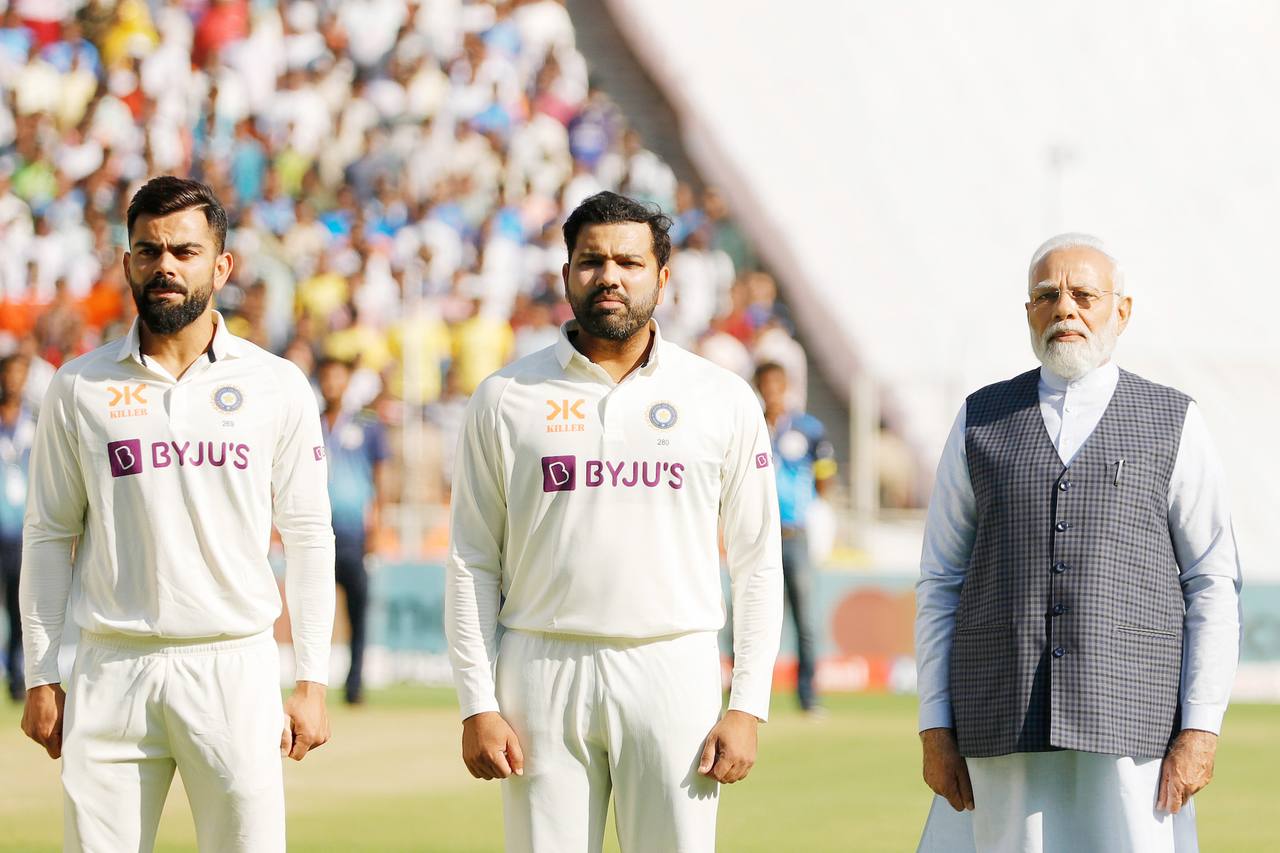
The Gill era begins in Thiruvananthapuram
The West Indies series that starts Sunday is officially 2027 preparation, and it opens under a new order: Shubman Gill is India's ODI captain, with the two former captains — Kohli and Rohit — serving as senior statesmen in his squad. That is a delicate chemistry to manage. Gill, 27, must lead a side whose two most decorated players predate his own debut by the better part of a decade, while simultaneously building the team that will outlive them.
The dynamic cuts both ways. Kohli's public declaration of his endpoint is, paradoxically, a gift to Gill: it removes the shadow of an indefinite Kohli era and lets the captain plan succession openly. A thirteen-month countdown is something a dressing room can organise around. But it also raises the stakes of every selection call. If Kohli's form dips in the spring of 2027, does the captain carry his predecessor to the World Cup on sentiment? Gill will face that question in the full glare of a billion-person audience, and how he answers it will define his captaincy more than any bilateral series result.
The West Indies series itself is the first audition. Three matches, a home crowd, modest opposition — the perfect low-stakes laboratory for Gill to stamp his authority and for Kohli to begin the long build toward October 2027. Watch the batting order, the field placements and who takes the final over's decisions: the transition is already underway.
Two giants, one last lap — and the dissenters
Kohli will not be making this journey alone. Rohit Sharma, 39, has also narrowed his international career to ODIs alone and was named alongside Kohli in the West Indies squad. Where Kohli has named his endpoint, Rohit has refused to. “The thought will never cross my mind that the business I had is finished,” he said. “As long as you're playing, there is always something to look forward to. And I'm looking forward to the World Cup.” Two legends, two philosophies of farewell: one a scheduled departure, the other an open-ended final act.
Who benefits from the long goodbye? The broadcasters and the board, certainly — a farewell World Cup is a commercial bonanza. Gill benefits, as argued above, from the clarity. And Indian cricket's vast middle class of fans benefits emotionally: they get to say goodbye properly, something Dhoni's generation never offered.
The critics, though, have a case worth hearing. Thirteen months is a long time to carry two players selected partly on legacy, and India's ODI middle order is the most congested talent pipeline in world cricket. Every series that features both veterans is a series that does not blood their replacements in high-pressure roles. The counter-argument — that World Cups are won by experience, and that Kohli's 2023 campaign is the best evidence available — is strong, but it is not airtight. The harsh version of the critique: if India wanted a clean rebuild, the time was the morning after the 2023 final. Instead, the team chose sentiment with a deadline. Now the deadline is public, and the sentiment must justify itself, series by series, all the way to South Africa.
What a 2027 farewell demands
Kohli will be 38 when the tournament begins in October 2027 — an age at which almost no modern great has carried a batting lineup through a World Cup. The scenarios from here branch quickly.
The dream script writes itself: a fit, hungry Kohli opens the tournament in South African conditions — bouncy tracks that have historically tested him — and produces one final masterclass, the trophy lifted in Johannesburg or Cape Town completing the arc from Mumbai 2011. The 2023 precedent says it is possible: he was 35 then and produced the greatest individual World Cup campaign ever played.
The realistic script is narrower. Modern ODI cricket is a young man's volume game — ten high-intensity matches in five weeks, as Kohli himself noted. His role will likely evolve: fewer bilateral ODIs through 2027, managed workloads, and a batting position optimised for impact rather than endurance. India will need a contingency middle order that has actually played together, not one assembled in an emergency.
The nightmare script is the one nobody says aloud: a poor run of form in early 2027, a selection debate conducted on live television, and a farewell that curdles into controversy. Kohli's genius for self-belief has always been his armour; at 38, armour gets heavy. The surest protection against that script is the one he has already chosen — naming the date himself, so that the ending belongs to him regardless of how the middle goes.
The final word
Great athletes rarely get to choose their last scene. Tendulkar got his, at the Wankhede in 2013, with a speech that stopped a nation. Dhoni did not — his final innings ended in a run-out at Old Trafford, witnessed by almost no one. Kohli has now done what the great planners of the game do: he has seized the narrative before it could seize him. Thirteen months, one trophy, zero ambiguity. When he walks out in South Africa in October 2027, every ball will carry the weight of a career. That is exactly how he would want it — and exactly why a billion people will be watching.
India's transition is already visible in the latest international sports analysis, while Brisbane's AFL Grand Final comeback offers another study in championship pressure and legacy.