World · Mongolia · Politics
Ukhnaa Khurelsukh says he will hand over the presidency so that "the truth can be established" — a day after the opposition accused the country's leadership of graft and threatened impeachment over a coal railway to the Chinese border.
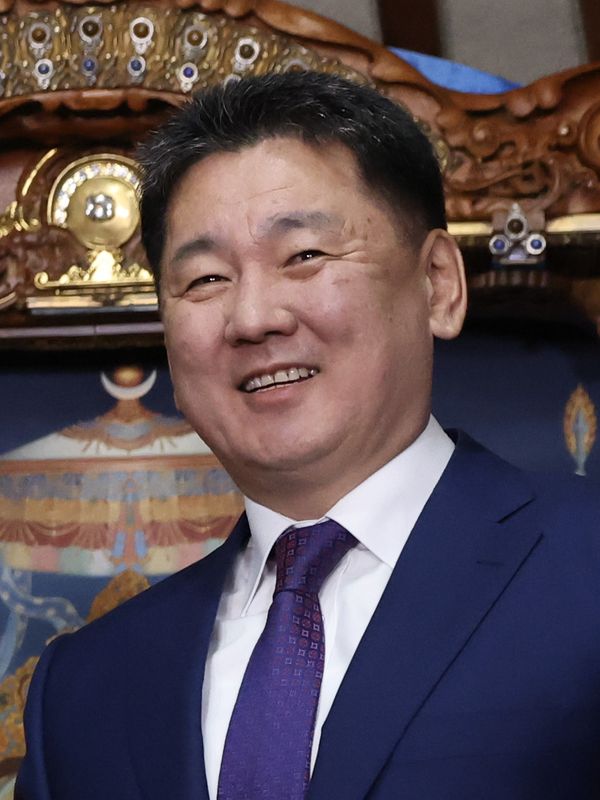
ULAANBAATAR, Mongolia — Mongolia's president, Ukhnaa Khurelsukh, announced on Tuesday that he will resign, a day after the opposition Democratic Party accused him and other senior leaders of corruption and demanded that he step down or face impeachment in parliament, Reuters reported, citing the official Montsame news agency. Khurelsukh, who has been president since 2021, denied the allegations, describing them as an attempt to "defame and insult" the president — but said he would cooperate with investigators and leave office so the truth can come out.
"The Democratic Party has said that I should step down from my duties so that the truth can be established. I agree with this. I will therefore hand over my duties as President of Mongolia. I will be investigated and will have my honour restored," Khurelsukh said, according to Montsame. At a press conference he called the claims false accusations and defamation involving extremely serious crimes, and insisted: "I am someone who has never stolen from the people or the state during my time as president."
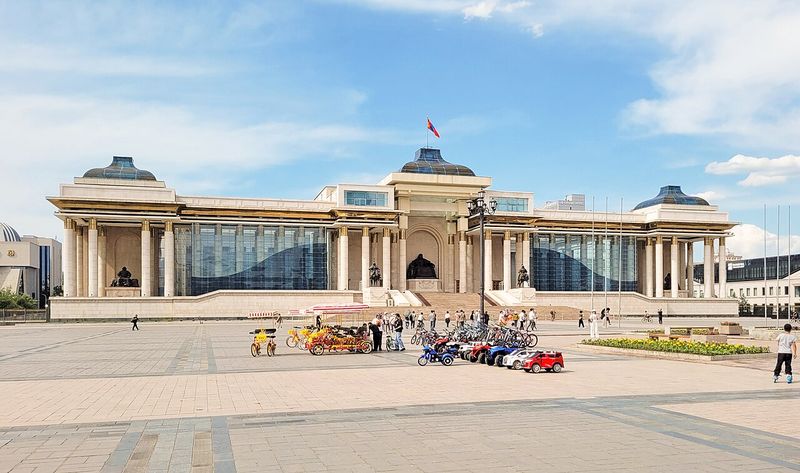
The announcement does not end his presidency by itself. Under Mongolian law, a presidential resignation must be approved by the 126-member State Great Khural, the country's unicameral parliament. If lawmakers accept it, the parliament's speaker, Sandag Byambatsogt of Khurelsukh's own ruling Mongolian People's Party (MPP), is expected to assume presidential duties on an interim basis, and a new presidential election must be organised within four months.
The railway allegation at the centre of the crisis
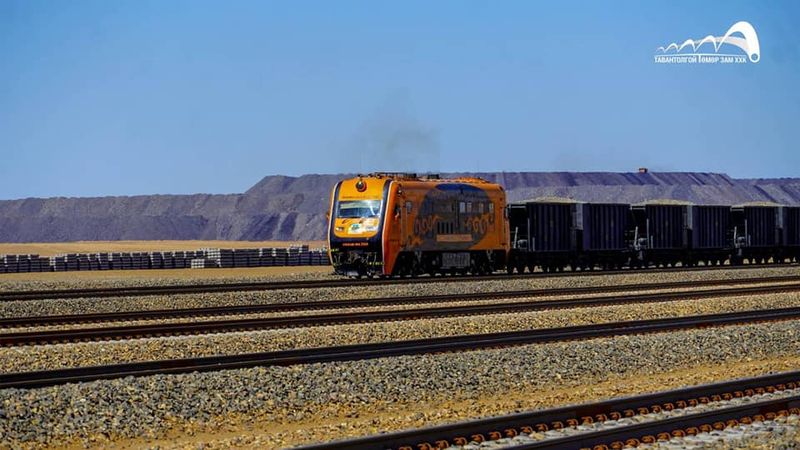
The opposition's case, as it has emerged in Mongolian reporting, runs through the single most valuable piece of infrastructure in the country: the railway built to haul coal from the giant Tavantolgoi deposit in the Gobi Desert to Gashuunsukhait, on the border with China. Capital Markets, a Mongolian financial outlet that has followed the story in detail, reports that former Ulaanbaatar mayor Nyambaatar Kh. alleged that Bodi International received USD 110 million in state funds during construction of the Tavantolgoi–Gashuunsukhait railway, of which USD 25 million allegedly went to the president. Those allegations remain unproven, and Khurelsukh has denied them outright.
On Monday, the Democratic Party escalated from allegation to ultimatum. In a statement declaring that "this country has become deeply corrupt," the opposition accused leaders of the ruling MPP of graft and cronyism, called on senior officials linked to the claims — Khurelsukh among them — to resign and face investigation, demanded disclosure of all offtake contracts connected to the project, and, according to Capital Markets, gathered the signatures of 42 members of parliament behind a proposed temporary oversight committee. Faced with resignation or an impeachment fight, the president chose resignation — on his own stated terms: not as an admission, but as the fastest route, in his telling, to clearing his name.
Why this matters
Start with what Mongolia is: a democracy of some 3.5 million people, landlocked between Russia and China, whose economy runs on minerals — coal, copper and gold dug out of the Gobi and sold overwhelmingly south, into China. In a country like that, the commanding heights are not abstract. A railway contract, a coal offtake deal or a border-crossing concession is worth a measurable share of national income, and whoever controls the paperwork controls the rents. That is why Mongolian politics keeps returning, decade after decade, to the same question — who got paid when the state handed out the mining economy — and why an allegation attached to the Tavantolgoi line lands with a force it would not carry in a more diversified economy.
Tavantolgoi is among the largest untapped coal deposits on earth, and the line built to serve it was designed to carry 30 to 50 million tonnes of coal and other freight a year once fully ramped up. A USD 110 million state-funds allegation against that backdrop is not, by global standards, an enormous sum. Politically, it is enormous — because it confirms, for a public already primed by months of anti-corruption protest, the suspicion that the mining state is run for the people who sign its contracts. Capital Markets notes that Mongolia could now be heading toward its first voluntary presidential resignation: presidents have been voted out and have served out terms, but none has simply handed the office back mid-term. The precedent matters as much as the man. If a president can be forced out by an allegation he has not been convicted of — or even formally charged over — then every future Mongolian president governs one leaked contract away from the same exit.
There is a second, quieter reason this lands beyond Ulaanbaatar. The resignation was announced in the same week that the presidents of the United States, China and Russia are gathering in Shenzhen for the APEC summit and an unprecedented trilateral meeting — the geopolitical theatre in which Mongolia, wedged between two of those three powers, has spent thirty years practising its "third neighbour" diplomacy of cultivating Washington, Tokyo, Seoul and Brussels as ballast against Moscow and Beijing. A Mongolia consumed by a corruption crisis and an interim presidency is a Mongolia with less bandwidth for that balancing act, at exactly the moment the region's great powers are redrawing their own.
A year of turmoil, not a single bad week
Khurelsukh did not fall out of a clear sky. Mongolia has endured months of political instability, including open infighting inside the ruling MPP. In March, lawmakers appointed the country's third prime minister in less than 12 months, following weeks of anti-corruption protests — demonstrations driven heavily by young Mongolians in Ulaanbaatar who have made graft, rather than any single policy, the organising grievance of their politics. The presidency and the premiership have been pulling at each other inside the same party while the opposition Democratic Party, written off after heavy defeats, has rediscovered the one weapon a weak opposition always has: a scandal it can name.
Khurelsukh himself has walked this exact path before — in the opposite direction. In January 2021, as prime minister, he resigned after two days of protests over his government's handling of the COVID-19 pandemic, blaming the then-president for stoking the unrest. Five months later he won the presidency outright, taking 67.7 percent of the vote. Resignation, in his hands, has previously been a reset button: leave under pressure, return with a bigger mandate. The difference this time is constitutional. Since amendments that took effect in 2020, a Mongolian president serves a single six-year term. Khurelsukh's term, begun in 2021, was due to end with an election expected in June 2027 — he could not have run again in any case. There is no comeback election waiting at the end of this resignation; there is only the investigation he says will restore his honour, and a party that must now find a candidate for a presidency it did not expect to contest until next year.
Who gains, who loses
The Democratic Party gains the most, fastest. It demanded a resignation on Monday and got one on Tuesday — a demonstration of leverage out of all proportion to its parliamentary weight, and a template it will reach for again. The MPP loses twice over: it loses a president drawn from its own ranks, and it keeps the interim — Speaker Byambatsogt is an MPP man, so the party owns the transition and whatever the oversight committee digs up next. The protesters gain a scalp and a question: whether a resignation without a completed investigation satisfies a movement built on the demand for accountability, or merely teaches it that pressure works and should be applied again, louder.
The losers include anyone holding Mongolian risk. A snap presidential election within four months, a parliamentary fight over whether to accept the resignation at all, an oversight committee demanding the offtake contracts be published, and a former president under investigation are, together, a recipe for a frozen investment climate in the one sector — mining — that pays for everything else. And Bodi International, the conglomerate whose name runs through the allegations, now faces the disclosure fight the opposition has explicitly demanded: if the contracts come out, the argument stops being about one alleged payment and becomes an audit of how the Tavantolgoi railway was financed and who was paid along the way.
What happens next
The formal path, as Capital Markets lays it out from parliament's rules, is measured in working days. A formal resignation request goes first to the Standing Committee on State Structure, which has five working days to review it; a vote of the full State Great Khural follows within another five working days, and approval requires a majority of all 126 members — not merely of those present. Unlike impeachment, a voluntary resignation needs no ruling from the Constitutional Court. If the vote passes, Article 37.2 of the constitution puts Speaker Byambatsogt in the president's chair until a successor is inaugurated, and the clock starts on an election within four months — pulling a contest expected in June 2027 forward into the first months of next year.
Three things will decide whether this becomes an orderly transition or a rolling crisis. First, the vote itself: the MPP holds the parliament, and a party that wanted to protect its president could refuse the resignation and dare the opposition to impeach — watch whether the committee review moves at the speed of a party that wants him gone or one buying time. Second, the investigation Khurelsukh says he welcomes: whether investigators move on the railway contracts, and whether the 42-signature oversight committee gets its disclosure of the offtake deals, will determine if the story ends with his honour restored, as he predicts, or with charges. Third, the succession race: an election inside four months, in winter, with the ruling party split and the opposition smelling blood, is the kind of contest that produces surprises — and in Mongolia's system, where the president is head of state while the prime minister runs the government, a president from the opposing camp would lock in the institutional tug-of-war that has defined this year.
For now, the fact pattern is narrow and should stay that way in any honest telling: an allegation, unproven and denied; an ultimatum from an opposition that declared the country "deeply corrupt"; and a president who decided that the quickest way to defend his name was to surrender his office and submit to investigation. Whether history records that as accountability working or as politics by allegation depends entirely on what the investigators — and then the voters — do next.
Sources
Reuters, "Mongolian president announces resignation over alleged corruption," November 17, 2026 (via the official Montsame news agency) — the announcement, the president's quoted statements, the Democratic Party's graft and cronyism accusations against MPP leaders, and the requirement of approval by the 126-member State Great Khural. Deutsche Welle and the Associated Press, November 17, 2026 — independent confirmation of the announcement and of the railway-project accusation as the trigger. Capital Markets (Mongolia), "President of Mongolia Pledges to Resign Amid Corruption Claims — What's Next?," November 17, 2026 — the Nyambaatar Kh. allegations concerning Bodi International and the Tavantolgoi–Gashuunsukhait railway (USD 110 million in state funds, USD 25 million allegedly to the president; unproven and denied), the 42-MP oversight-committee signatures, the Article 98 procedure and Article 37.2 succession rule, and the four-month election clock. International Railway Journal, September 2022 — the Tavantolgoi–Gashuunsukhait line's opening, Bodi's construction role and the line's 30–50 million tonne annual design capacity. Related Signal Post News coverage: Mongolia's border health controls during the Russia plague scare and China confirms the Xi–Trump–Putin meeting at APEC in Shenzhen.