War / Mali / Sahel
The Tuareg-led FLA says it is preserving its forces after a new air campaign. Bamako calls its operation a drive to dismantle armed groups. A reported return of pro-government fighters would be a political victory, but not an end to northern Mali's war.
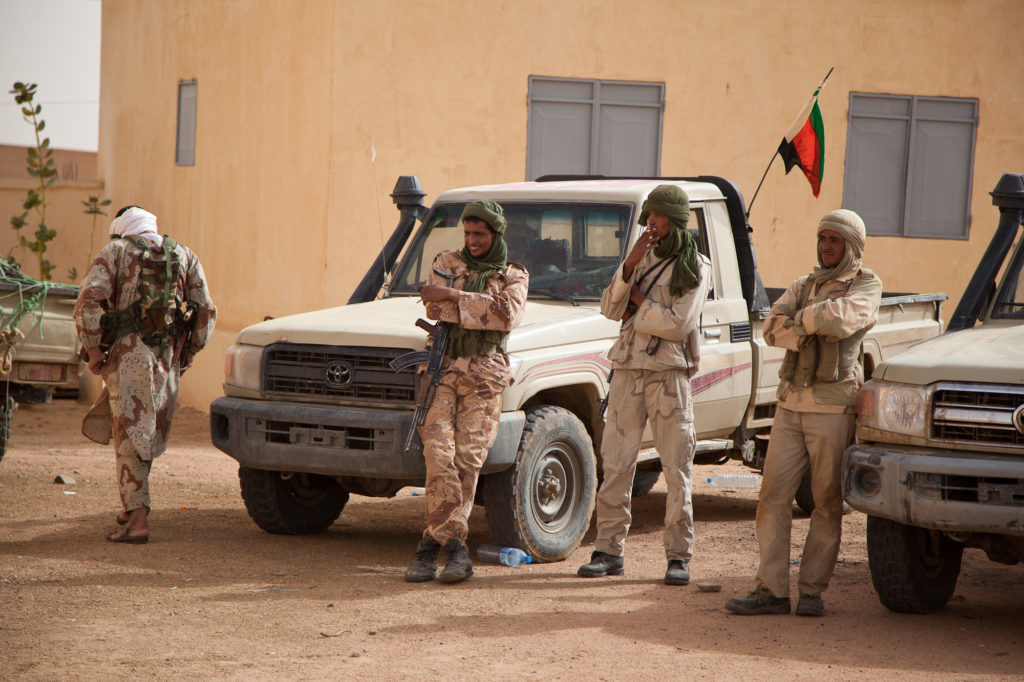
The Mali Kidal withdrawal announced Tuesday may change who occupies the desert town, but it does not settle who controls northern Mali. The Azawad Liberation Front, or FLA, said it was carrying out a controlled exit after Malian military airstrikes backed by Russian fighters. The separatist coalition described the move as temporary and said it was designed to protect personnel and equipment, not a battlefield defeat following direct ground combat.
Mali's armed forces offered a sharply different frame. Earlier Tuesday, the military announced a large air-and-ground operation in the Kidal region to pursue armed groups, break supply networks and restore what it called lasting security. A security source told Reuters that pro-government fighters, including Russian personnel, entered Kidal later in the afternoon. Whether regular Malian units immediately took full control of the town was not independently clear at publication time.
What happened in Kidal on Tuesday
FLA says the exit is a temporary operational measure
The FLA said the movement had ordered a planned withdrawal under pressure from aerial strikes. Its statement emphasized force preservation and said no direct battle had yet taken place between its fighters and the advancing enemy. That language matters: the coalition is trying to deny Bamako the narrative of a decisive rout while leaving itself room to disperse, regroup or return.
A controlled withdrawal can be orderly without being voluntary. Persistent surveillance and air power can make a fixed position costly even before ground forces close in. Leaving the town reduces exposure to aircraft and drones, but it also gives up checkpoints, administrative access and the political symbolism that comes with visibly holding Kidal.
Mali says its air-and-ground operation will restore security
Bamako said its forces were conducting a large-scale operation to neutralize armed organizations and destroy their logistical networks. For the military government, Kidal is not simply another town on a map. It is a test of the state's claim that partnership with Russia can restore sovereignty where earlier governments and foreign deployments failed.
The reported afternoon entry by pro-government and Russian fighters is credible enough to shape immediate reporting, but key facts remain unverified: the size and composition of the force, the positions still held by the FLA around Kidal, and whether Malian soldiers have established durable control inside the town. Control of an airport, government building or main road does not by itself prove control of the wider region.
Why Kidal matters far beyond the town itself
Kidal sits at the heart of a vast, sparsely governed northern zone where political identity, trade routes and armed mobility overlap. For Tuareg separatists, the city has long carried the symbolism of Azawad, the homeland claimed by successive rebellions. For the Malian state, leaving Kidal outside central control is a visible limit on national sovereignty. Each change of hands therefore produces a political effect much larger than the settlement's population would suggest.
Control Risks analyst Beverly Ochieng told Reuters that a successful recapture would be a symbolic boost for the junta and its Russian backers, but “not decisive” in the wider campaign. That distinction is essential. Holding a town is not the same as disabling networks able to move through desert routes, attack distant bases or cooperate tactically while retaining separate goals.
Africa Corps gets a chance to reclaim the security-guarantor role
The advance offers Russia's Africa Corps an opportunity to restore an image damaged by the reverses that followed the April offensive. A flag-raising moment in Kidal would help Bamako argue that its security partnership still produces results. Yet a durable claim requires more than an entry: the force must hold roads, protect supply lines and prevent a pattern in which insurgents yield under air pressure and return after troops disperse.
How Mali reached another fight for Kidal
From the 2023 government recapture to the April 2026 offensive
Malian troops and Wagner personnel recaptured Kidal in November 2023 after the withdrawal of the United Nations peacekeeping mission. The victory became a centerpiece of the junta's claim that it could reunify the country without French forces or a UN security umbrella.
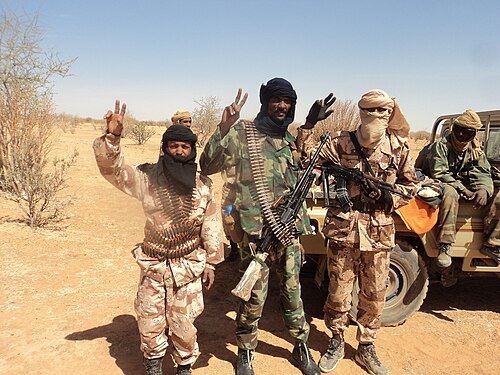
That claim was badly tested in April 2026. The FLA and al Qaeda affiliate Jama'at Nusrat al-Islam wal-Muslimin, known as JNIM, launched coordinated attacks across the country and seized Kidal. The offensive also killed Defence Minister Sadio Camara, deepening the shock for a government that had placed military authority at the center of its legitimacy. The groups are not interchangeable: the FLA is rooted in Tuareg separatist politics, while JNIM pursues an Islamist insurgency. Tactical convergence against Bamako does not erase their different objectives.
The six months since have demonstrated the fragility of fixed territorial gains. Armed groups can exploit long supply lines and local networks, while the state can concentrate aircraft and partners for a return. Kidal has become both a prize and a recurring measure of whether either side can turn a military move into lasting governance.
Coups, the French and UN exits, and Wagner's replacement
Coups in 2020 and 2021 brought military officers to power and accelerated a rupture with Mali's former Western security partners. French forces left after relations collapsed. The UN mission also withdrew, ending a deployment that had helped buffer northern front lines even as it faced persistent criticism and deadly attacks.
Bamako then leaned heavily on Russia's Wagner Group. Moscow later shifted personnel into Africa Corps, a structure more directly tied to the Russian state. The branding changed, but the core bargain remained: military support and regime security in exchange for strategic influence. Supporters say the partnership respects Mali's sovereignty and confronts armed groups more aggressively. Critics argue it has not solved the insurgency and has brought serious allegations of abuses against civilians.
Tin Zaouatine exposed the limits of the new partnership
Fighting around Tin Zaouatine on the Algerian border previously showed how exposed combined Malian and Russian columns could become in remote terrain. The episode became a warning against reading urban entries as proof of region-wide control. Northern armed groups may lose a position and still retain mobility, intelligence networks and the ability to choose when to fight.
Who gains, who loses and what critics will watch
Bamako and Moscow gain a symbol—if they can hold it
The junta gains the immediate political advantage. Re-entering Kidal lets the government present the offensive as a reversal of April's humiliation. Africa Corps gains a visible mission around which to rebuild the argument that Russian backing is indispensable. Communities aligned with the central state may also see a return as protection from separatist rule.
But those gains remain contingent. If the FLA withdrew with its forces intact, the coalition may trade buildings for freedom of movement. If JNIM cells remain active on approaches to the city, resupply can become expensive and dangerous. A garrison that depends on repeated airstrikes and guarded convoys may control the center without controlling the surrounding space.
The FLA loses visibility but may avoid the battle Bamako wanted
The FLA's political loss is immediate: leaving Kidal weakens its claim to administer the symbolic capital of the separatist north. Its military calculation may be different. Preserving fighters and vehicles can be rational when the opponent has air superiority. The test will be whether the coalition maintains cohesion and public support after surrendering such important ground.
Civilians face the greatest uncertainty. Airstrikes, searches and shifting checkpoints increase the risks of displacement, mistaken targeting and reprisals. Rights groups have previously accused Malian forces and Russian personnel of unlawful killings, torture and other abuses; the government and its partners reject broad characterizations that equate their counterinsurgency campaign with criminal conduct. Independent access and credible investigations will be crucial if new allegations emerge.
What the numbers imply
The most consequential number is six months: the time between the April seizure of Kidal and the October withdrawal. It shows that neither the separatist-jihadist offensive nor the government's response has yet produced settled control. Gains measured in months are meaningful, but they are not the same as a stable security order.
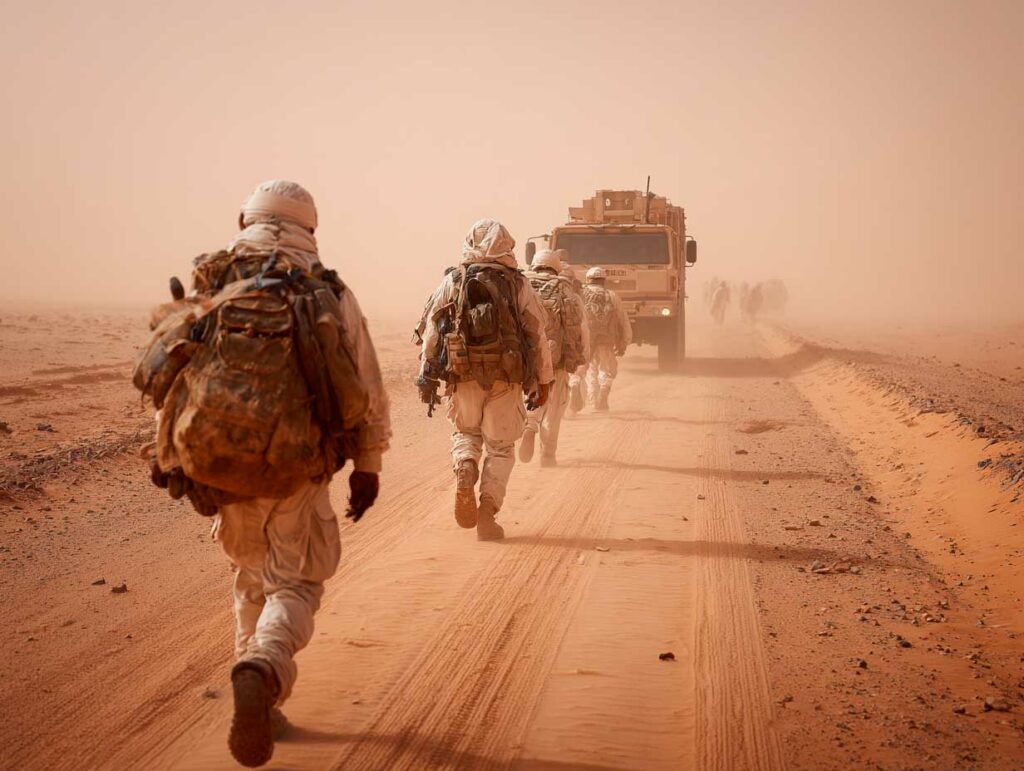
Reporting in April put the Russian deployment at roughly 2,500 personnel spread across about 20 bases. Those estimates cannot be independently confirmed in real time, but they point to the central operational problem: a force of that scale can stiffen key garrisons and support concentrated operations, yet Mali's distances make permanent coverage difficult. Every base, airstrip and convoy route consumes personnel.
Air power shifts the immediate balance because it can strike exposed vehicles and positions across large distances. It is less effective at answering the political questions underneath the conflict: local trust, disputes over autonomy, access to state services and the conduct of security forces. The numbers therefore describe capacity, not inevitability.
What happens next: four scenarios to watch
1. A rapid Malian reoccupation
Regular troops could move into government sites, reopen the airport and announce restored administration. This would create the clearest immediate win for Bamako. Watch for verified images of Malian units—not only allied fighters—at identifiable locations and for evidence that civilian authorities return.
2. A shallow occupation under continuing pressure
Pro-government forces may hold central Kidal while roads and the surrounding desert remain contested. Attacks on convoys, mines and night raids would indicate that the FLA or JNIM has shifted from visible defense to harassment. This is the scenario most likely to turn a symbolic victory into a long logistical contest.
3. The FLA regroups outside the city
The coalition could preserve manpower, relocate equipment and seek leverage through later attacks or negotiations. Its use of “temporary” signals that it wants supporters to view the move as maneuver rather than capitulation. Evidence of an orderly chain of command after the withdrawal would strengthen that claim.
4. Tensions between separatist and jihadist agendas grow
The April offensive demonstrated that groups with different goals can benefit from striking the same state forces. A retreat can strain that alignment. The FLA has a territorial-nationalist project; JNIM has a transnational Islamist agenda. How each responds to the loss of Kidal may reveal whether tactical cooperation persists.
The safest conclusion is narrow. Tuesday's development appears to be a significant change in Kidal's immediate balance of power. It is not yet proof that the Malian state has secured the town, defeated the FLA or reversed the wider insurgency.