World · China · ASEAN
The Li Qiang ASEAN summit Manila appearance was timed to the hour. On Monday, with Donald Trump due in the Philippine capital on Tuesday, China’s premier told Southeast Asian leaders that five years of deepening ties had been “truly extraordinary” — more than $1 trillion in annual trade, more than $500 billion in two-way investment — and pledged Beijing to multilateralism and free trade. The warmth was real. So was its limit: the leaders’ summit had ended the day before without the South China Sea code of conduct the host had hoped to finish this year.
MANILA, November 16, 2026 — Every summit has a speech that tells you what the week is actually about, and in Manila it belonged to the man who will not be here for its ending. Chinese Premier Li Qiang used his opening remarks at the ASEAN summit on Monday to hail what he called the “truly extraordinary” achievements of China and Southeast Asia over the past five years, according to Reuters reporting from Manila by Mikhail Flores and Karen Lema. At a moment of growing unilateralism, protectionism and recurring geopolitical conflict, Li said, China–ASEAN economic relations had only strengthened. “The past five years have been truly extraordinary, and the achievements we scored have not come easily,” he said, citing annual trade with the bloc last year of more than $1 trillion and cumulative two-way investment of more than $500 billion. “We remain firmly committed to safeguarding multilateralism and promoting free trade and endeavour to make the pie bigger.”
The audience did not need the subtext explained. China is ASEAN’s biggest trading partner and a key source of investment, and the bloc’s economies — a combined GDP of more than $3.9 trillion — are, as Reuters put it, keen to expand ties with the United States amid the trade and diplomatic uncertainty of the Trump administration. Li was speaking to the half of that sentence Beijing can control, twenty-four hours before the other half lands at the airport. Trump is due in Manila on Tuesday, at the tail end of the summit, for talks with ASEAN leaders and his first meeting of the Quad — and after him, later in the week, comes Shenzhen, where he is scheduled to sit down with Xi Jinping and Vladimir Putin. Li’s speech was China’s opening bid in a week that Washington gets to close.
What Li said — in the open and behind closed doors
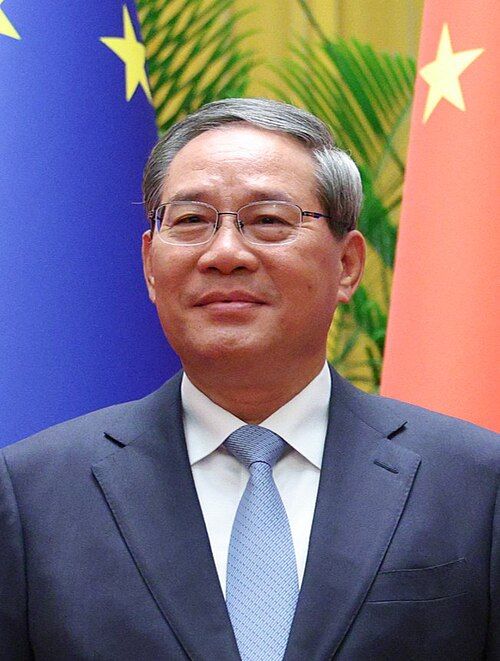
Li’s public remarks, delivered in the opening session, were built from three materials: a record, a diagnosis and a promise. The record was the trade and investment figures. The diagnosis was the world around the figures — unilateralism rising, protectionism spreading, geopolitical conflict recurring — a description that named no country and pointed at exactly one. The promise was the remedy: multilateralism safeguarded, free trade promoted, the pie made bigger. It is a formulation Beijing has used for a decade, but its meaning depends on its contrast, and in Manila the contrast was scheduled to arrive by plane the following day, carrying a trade policy built on tariffs and bilateral leverage.
Behind closed doors, the register changed. The official Xinhua readout of the meeting, carried by Reuters, said Li told leaders that in today’s turbulent world “it is all the more important for China and ASEAN to stand united, ward off interference, and work together.” The two versions of the speech are worth reading as a pair. The public text offers ASEAN a market. The private text asks ASEAN for alignment — unity, and the warding off of “interference,” a word that in Beijing’s usage refers to outside powers in Southeast Asia’s affairs, which is to say, principally, the United States. What Li offered in the open was economics. What he requested in the closed session was geometry: a region that treats China as its centre and American involvement as weather to be kept out.
Neither text mentioned the South China Sea code of conduct. That omission, too, was part of the message — and it is where this story’s second half lives.
The numbers Beijing brought to Manila
The figures Li cited deserve to be read slowly, because they are the load-bearing wall of China’s entire Southeast Asia strategy. Annual China–ASEAN trade of more than $1 trillion makes the bloc, collectively, one of the largest trading relationships on earth — larger than China’s trade with most individual great powers, and structured so that ASEAN sits inside Chinese supply chains as supplier, assembler and customer at once. Cumulative two-way investment above $500 billion means the relationship is not a flow that can be switched off by a tariff schedule; it is factories, ports, industrial parks and debt, accumulated over decades and expensive for either side to unwind.
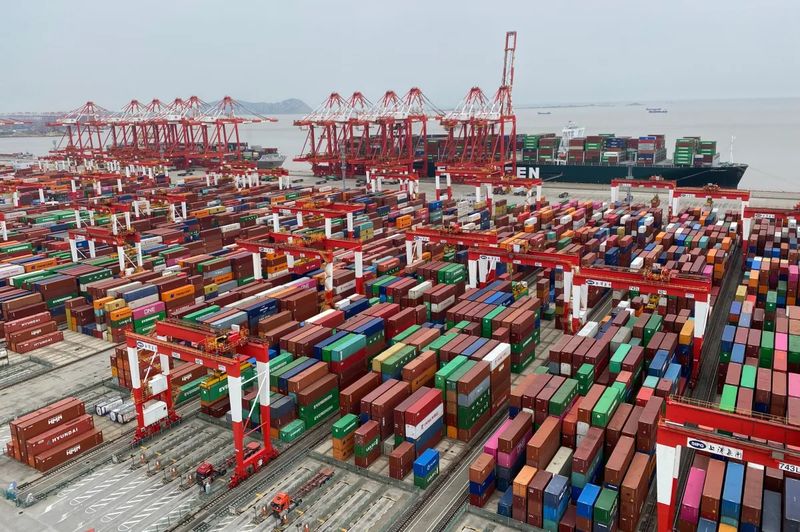
Set against the bloc itself, the numbers explain ASEAN’s behaviour better than any communique. The eleven member economies together produce more than $3.9 trillion in GDP. China is the largest single external trader with that economy; the United States is its indispensable security partner and a vast export market in its own right. A bloc in that position does not choose between its banker and its insurer. It hedges — taking Li’s trade figures seriously on Monday and Trump’s security guarantees seriously on Tuesday, and meaning both. Beijing’s Manila pitch was not designed to end the hedge. It was designed to raise the price of tilting it.
Why this matters
The contest for Southeast Asia is the central, slow-moving competition of Asian geopolitics, and it is usually conducted in communiques nobody reads. This week it is being conducted in person, in the same city, on consecutive days, by the two men whose governments are competing — or rather, by one of them in person and the other by proxy, since it was Li, not Xi, who carried China’s message to Manila while Xi waits in Shenzhen for the trilateral. That division of labour is itself informative. China sent its premier, the head of government responsible for the economy, to make an economic argument to an economic bloc. The United States is sending its president, and with him the Quad — a security format. Each capital is leading with the instrument it believes the region values most, and each is, in its own way, conceding the other’s strength.
The free-trade framing matters beyond the room. When the world’s largest trading state describes itself as the defender of multilateralism against protectionism, and the description is plausible enough to be reported straight by the world’s wires, something structural has shifted in the region’s politics. ASEAN governments chafing under American tariff threats did not need Li to tell them where the pressure was coming from. His achievement on Monday was narrower and real: he made sure that when Trump makes his own pitch on Tuesday, every leader in the room will be measuring it against a trillion-dollar alternative that has already been described to them as extraordinary.
The limit of the courtship: the unfinished code
And then there is the fact that sits underneath the week like a stone in a shoe. The ASEAN leaders’ summit ended on Sunday without completing the protracted South China Sea code of conduct with Beijing — the agreement the Philippines, as this year’s chair, had hoped to wrap up in 2026. The code has been under negotiation, in one form or another, for more than two decades. It is meant to govern behaviour in the waters where China’s sweeping maritime claims overlap those of the Philippines, Vietnam, Malaysia and Brunei, and where Chinese and Philippine vessels have confronted each other, repeatedly and sometimes violently, in recent years.
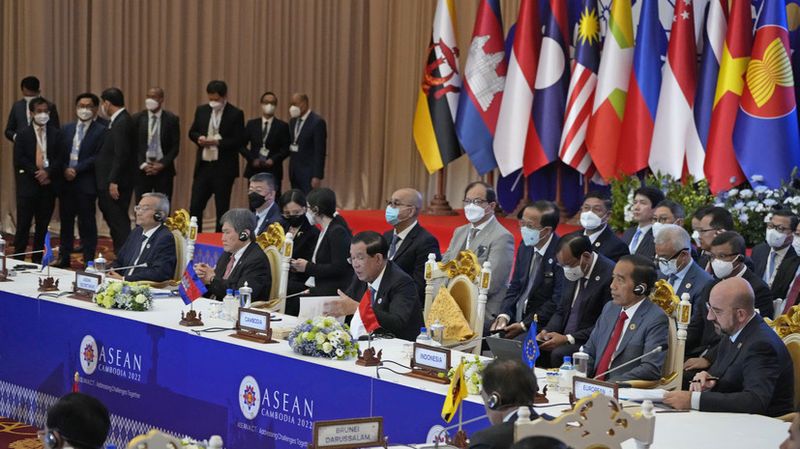
The stall is the limit of Li’s courtship, stated in procedural form. ASEAN will take China’s trade, repeat China’s free-trade language and pose for China’s cameras. It will not, even under a friendly chair and a week of careful wooing, sign away the one document that would regularise China’s presence in disputed waters on terms the region has not agreed. Trade integration and maritime trust are running on separate tracks, at separate speeds, and Monday’s speech — for all its trillion-dollar warmth — did not move the second track at all. Beijing knows this. The closed-door language about standing united and warding off interference is what a government says when the public offer has been accepted and the private request has not.
Four readings of one speech
From Beijing, the week is a demonstration of reliability. China showed up early, spoke the language of openness, brought the biggest numbers in the room and asked only for unity against turbulence it attributes to others. If the Shenzhen trilateral then produces even the appearance of great-power management, China will have played host, suitor and statesman in a single week.
From ASEAN capitals, the speech was useful precisely because it was not decisive. A strong Chinese bid strengthens every member’s hand with Washington on Tuesday; a strong American bid will strengthen their hands with Beijing next month. The bloc’s doctrine has a name — centrality — and weeks like this are what it is for: both suitors come to ASEAN’s city, on ASEAN’s schedule, and neither is allowed to forget it.
From Washington, the Manila sequence is a problem of attendance and arithmetic. Trump’s Quad meeting on Tuesday will be the format’s first in two years; his predecessor, Joe Biden, attended six. The Quad — the United States, Japan, Australia and India — is widely considered a counterweight to China’s influence, though its members insist it is not directed against any one country. Reviving it after a two-year gap, in the same week its members’ host has been courted with trillion-dollar figures, is a statement that the counterweight still exists. Whether it can match the trade numbers is a question the Quad, a security format with no trade pillar, is structurally unable to answer.
From the critics — and Manila has heard them all week, in the streets as much as the summit halls — both pitches ring hollow. Anti-Trump protests are expected on the president’s arrival, after four days of demonstrations by leftist groups, students and workers demanding an end to the war in the Middle East and the scrapping of the US-led Pax Silica initiative. The protesters’ argument, in essence, is that ASEAN is being courted as a prize rather than respected as a party. The unfinished code of conduct is their best evidence against Beijing; the Quad’s two-year absence is their best evidence against Washington. It is not a weak case.
The summit around the speech
Li’s Monday sat inside a crowded summit calendar. The bloc held talks the same day with the leaders of Australia, South Korea, the United Nations and Japan. Japanese Prime Minister Sanae Takaichi, in a post on X, said the international community faces historic changes and that she would promote a free and open Indo-Pacific in Manila, with ASEAN central to it — Tokyo’s version of the same courtship, conducted in the vocabulary of rules rather than trade volumes. The wider summit, meanwhile, resolved to continue excluding Myanmar’s leaders while leaving the door open to a return if “sustained and concrete progress” on the ASEAN peace plan, agreed after the coup five years ago, can be demonstrated — a formulation that keeps the bloc’s pressure and its exit ramp in the same sentence.
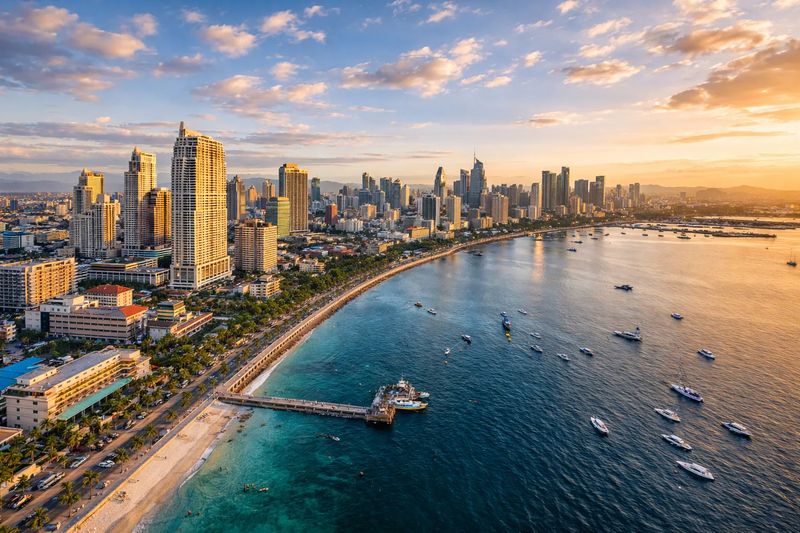
Even the summit’s courtesies carried the week’s theme of a region managing frictions it cannot solve. Indonesian President Prabowo Subianto apologised to Singapore and Malaysia over the sustained transboundary haze from forest and peatland fires that have raged for months — an environmental dispute handled, in the ASEAN manner, with an apology accepted in public and a mechanism urged in private. It was a reminder that the bloc Li addressed is not a bloc at all in the alliance sense: it is eleven governments practising the management of disagreement, which is exactly why both Beijing and Washington must court it rather than instruct it.
What happens next
Tuesday belongs to Trump. The president arrives at the tail end of the summit for meetings with ASEAN leaders and the first Quad gathering in two years, with protests expected to greet him and the memory of Li’s trillion-dollar Monday still fresh in every delegation’s briefing book. What Washington offers on trade — the ground on which Li has just spent a day building — will decide whether the week is remembered as a contest or a coronation.
Then the centre of gravity shifts north. The APEC forum in Shenzhen follows, crowned by the scheduled trilateral between Trump, Xi Jinping and Vladimir Putin — a meeting whose existence reframes everything said in Manila. Li Qiang’s pitch was, among other things, an argument that China is the region’s reliable economic centre, delivered days before his own president sits down with the American and Russian presidents as an equal manager of the world’s affairs. ASEAN’s leaders will watch that photograph carefully. Being courted by two powers is leverage. Being discussed by three is something else — and the distance between Manila’s week of wooing and Shenzhen’s table of three is the distance Southeast Asia’s entire diplomatic doctrine exists to defend.
Related reading: ASEAN Summit Opens in Manila With an Energy Crisis, a Sea Dispute and Trump Still to Come · White House Confirms First-Ever Trump–Xi–Putin Meeting in Shenzhen on November 19 · ASEAN Envoy Meets Myanmar Minister in Naypyitaw as Civil War Aid Push Meets a Closed Door on Aung San Suu Kyi
Sources
Reuters, Manila, November 16, 2026 (Mikhail Flores and Karen Lema) — Li Qiang’s opening remarks (“truly extraordinary”; trade above $1 trillion last year; cumulative two-way investment above $500 billion; the commitment to multilateralism and free trade); the Xinhua readout of the closed-door meeting (“stand united, ward off interference, and work together”); China as ASEAN’s biggest trading partner; the bloc’s combined GDP above $3.9 trillion; Trump’s Tuesday arrival, the first Quad meeting in two years and Biden’s six; the leaders’ summit ending Sunday without the South China Sea code of conduct; the Myanmar exclusion with its “sustained and concrete progress” condition; the expected anti-Trump protests and the Pax Silica demonstrations; Takaichi’s X post; and Prabowo’s haze apology. Xinhua, official readout via Reuters — the closed-door language. BusinessWorld, November 16, 2026 — the same Reuters wire and Manila summit context. Photographs are file photos credited in their captions; no photograph of Li Qiang’s Monday session was available at publication.