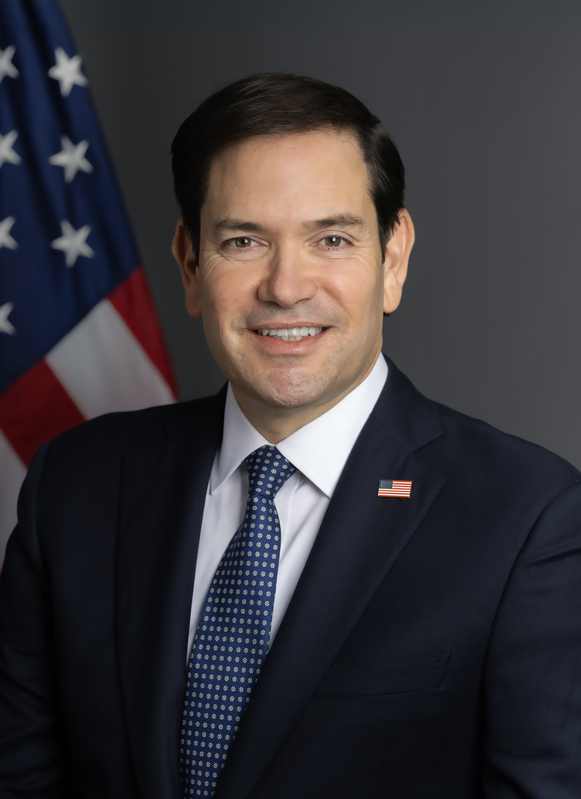
Rubio Says Ukraine War Is at a Dangerous Stalemate
Ukraine dangerous stalemate: Secretary of State Marco Rubio said on Thursday that Russia’s war in Ukraine is at a “dangerous stalemate” and that the United States will keep working toward a settlement to end the conflict — while warning that continued escalation could drag NATO itself into the war.
What Rubio said
Speaking to reporters during a visit to Lisbon, Portugal, Rubio framed the war — now in its fourth year, Europe’s bloodiest since World War II — as stuck in a place that is getting more dangerous, not less. “We’d love to see a negotiated settlement to this war that is permanent, enduring, and fair. And that’s what we’re committed to continuing to do,” he said.
The sharpest part of his message was a warning about where escalation leads. “That escalation could wind up being a sabotage campaign in neighboring countries that are members of NATO,” Rubio said, adding that other developments “could quickly turn what is a war between two countries into a much broader and far more dangerous regional conflict.”
He paired the warning with a deadline of sorts for diplomacy itself: “This war needs to end in a negotiated settlement. The sooner, the better. The United States stands ready to facilitate that. We have tried. We will continue to try. But we’re also not going to invest in pointless processes if we can’t make progress.”
The timing is not accidental. Ukrainian negotiators are set to visit the United States for talks on Friday and Saturday, as the Trump administration tries to revive negotiations it has pursued in recent weeks.
Why this matters
“Stalemate” is a word American officials have mostly avoided. For the secretary of state to attach “dangerous” to it — and to publicly sketch a pathway by which the war metastasizes into NATO territory — is a deliberate escalation of rhetoric aimed at two audiences: Moscow, which is being told the costs of grinding on are rising; and Kyiv’s European backers, who are being told the alternative to a settlement is not a frozen conflict but a spreading one.
It also reframes what “stalemate” means in 2026. The front lines have barely moved for months, but the war has not stood still: mutual drone attacks by Russia and Ukraine this year have spread across the economy, hitting energy facilities and refineries, ports and vessels carrying oil and grain, e-commerce warehouses and — most recently — data centers. The battlefield is static; the war is not.
And the “pointless processes” line is doing quiet work. It signals that Washington’s patience for talks-about-talks is finite — pressure on Kyiv to deal, and on Moscow to take the coming weekend’s negotiations seriously.
How we got here
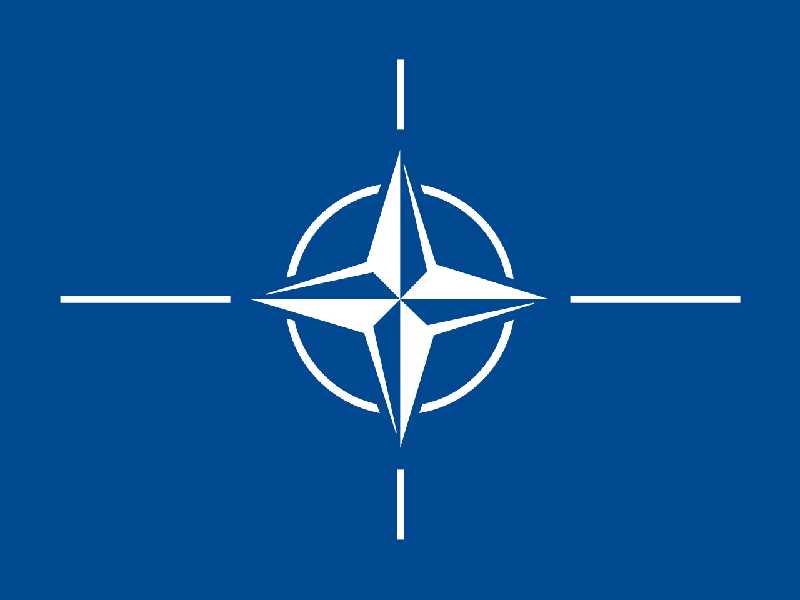
The stalled front
After four years of fighting, neither side has been able to convert battlefield effort into strategic breakthrough. Russia has absorbed enormous casualties for incremental gains in the east; Ukraine’s defenses have held but its manpower and air-defense stocks are under constant strain. The map, month after month, looks nearly the same — which is precisely Rubio’s point.
The spreading economic war
With the front frozen, both sides took the war into the deep rear. Ukraine’s long-range drone campaign has hit Russian refineries and energy infrastructure; Russia has pounded Ukrainian ports, grain vessels and warehouses. This week’s Ukrainian-claimed strike on the Yandex data center in Sasovo, Russia — which Yandex confirmed and NetBlocks says caused significant network disruption — marked the first major attack on a Russian data hub, and it is exactly the kind of target Rubio had in mind when he spoke of escalation.
The revived talks
The Trump administration has spent recent weeks trying to restart negotiations, and this weekend’s visit by Ukrainian negotiators to the US is the next test. Previous rounds produced prisoner exchanges and headline pledges but no ceasefire. Rubio’s remarks set the stakes for this round: progress toward something “permanent, enduring, and fair,” or an American verdict that the process is pointless.
The NATO warning, decoded
Rubio did not name countries, but the geography of his warning is clear enough: Poland, the Baltic states, Romania — NATO’s eastern flank, where Russian sabotage, arson plots and airspace violations have already been reported in recent years. A “sabotage campaign” in those countries would test Article 5’s collective-defense guarantee in its grayest zone: attacks deniable enough to argue about, serious enough to demand a response.
That is why the word “dangerous” matters more than “stalemate.” A stable stalemate is tolerable; a stalemate in which both sides keep widening the target set is a machine for accidents — a drone that drifts across a border, a refinery fire blamed on the wrong side, a covert operation that surfaces. Rubio is telling the alliance to price that in.
Who wins, who loses, what critics say
Kyiv gets public American urgency behind a settlement — but also a warning that US patience is not infinite, which cuts both ways in negotiations.
Moscow hears that Washington sees the trajectory clearly and is naming the NATO tripwire out loud — a deterrent signal, though one critics note lacks any new stated consequence.
European allies get validation of their darkest worry — that the war spreads before it ends — and implicit pressure to spend and prepare accordingly.
Critics of the administration will ask what “permanent, enduring, and fair” means in practice, and whether warning about pointless processes is a prelude to pressuring Ukraine into territorial concessions. Supporters will call it overdue realism: naming the stalemate is the first step to ending it.
What the numbers actually say
Four years. Europe’s bloodiest conflict since World War II, with no end in sight and front lines that have barely shifted in months.
At least 30 dead this week. A Russian strike on buses in the frontline city of Kramatorsk killed at least 30 people — a reminder that “stalemate” does not mean quiet.
Two days. Ukrainian negotiators are in the US on Friday and Saturday — the immediate test of whether Rubio’s push produces anything beyond process.
One widening target set. From energy to ports to grain ships to warehouses to data centers, the economic war keeps finding new categories of targets — the trend Rubio says could carry it across NATO borders.
What happens next
Watch the weekend talks. If Ukrainian negotiators leave Washington with a framework — even a partial one on energy infrastructure or prisoner exchanges — Rubio’s “dangerous stalemate” becomes the rhetorical setup for a deal. If they leave with nothing, watch for the “pointless processes” verdict and what Washington does then.
Watch the skies. Another deep strike on economic targets by either side this week would undercut the talks before they start — and prove Rubio’s escalation warning in real time.
Watch NATO’s east. Any sabotage incident, airspace violation or “accidental” drone crossing in the coming weeks will be read through Rubio’s Lisbon warning. The tripwire has now been named in public.