Krasnozavodsk chemical plant explosion
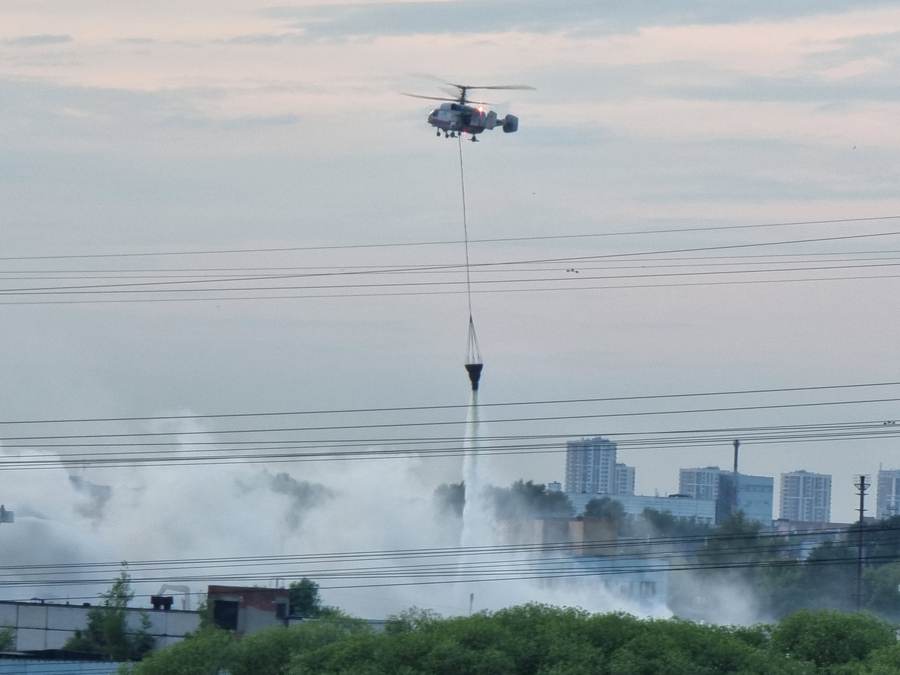
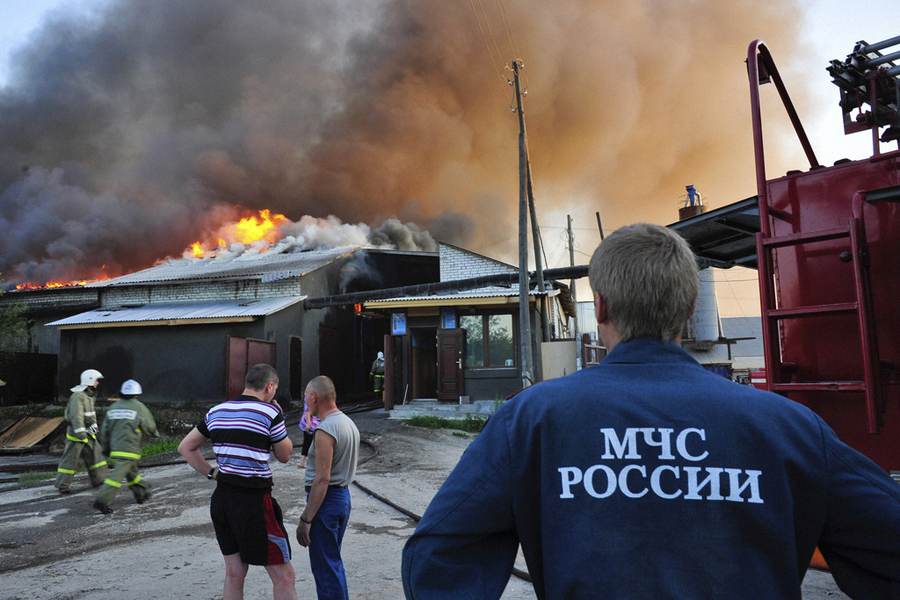
KRASNOZAVODSK, Russia — The Krasnozavodsk chemical plant explosion sent a succession of blasts and fire through an explosives-producing complex northeast of Moscow on October 1, according to Russian news reports and monitoring channels. Workshop No. 4 was reported to have collapsed. Seven people were reported killed, but that toll had not been confirmed by Russian authorities as reporting continued into October 2.
Telegram channels Shot, Mash and 112 reported that more than 40 workers were evacuated, with Mash citing residents who described three powerful explosions. The channel 112, which has links to Russian law enforcement, said Emergency Situations Ministry crews were at the scene and that the road to the plant had been blocked. Moscow regional authorities had not issued a public account at the time of publication.
The attribution line is crucial. Witnesses cited in the reporting said they heard no drone sound before the explosions. No aerial attack was reported in the area. Preliminary accounts pointed to a technical cause. There is zero evidence that Ukraine struck the plant this time. Those facts do not establish what failed inside the workshop, but they sharply limit what can responsibly be claimed before investigators report.
What is reported — and what remains unconfirmed
The phrase “Krasnozavodsk blast seven reported killed” captures the gravity of the first accounts but not their evidentiary status. Seven is the reported toll; zero deaths had been officially confirmed at publication. Likewise, the reported collapse of Workshop No. 4 and the evacuation of more than 40 workers come from media and Telegram-channel accounts rather than a detailed statement from the regional government or plant management.
That distinction matters in the first hours after a blast at an explosives site. Initial casualty figures can rise, fall or be reclassified as rescuers reach unstable structures and hospitals reconcile admissions. The road closure and presence of emergency crews indicate a substantial incident, but neither proves the casualty count. Signal Post News will treat the toll as provisional unless Russian authorities, the plant or named medical officials confirm it.
A Russian ammunition plant blast with strategic consequences
The Krasnozavodsk facility sits in Russia's special-chemicals sector, producing ammunition, pyrotechnics and explosives. Ukrainian military and information agencies have publicly linked the plant to thermobaric warheads for Shahed- and Geran-family attack drones, as well as inputs used for artillery shells, multiple-launch rocket systems and ballistic missiles. Those are wartime claims from one belligerent and should not be mistaken for an independent production audit.
The shorthand “Shahed warhead factory Russia” understates the site's reported breadth. If Workshop No. 4 handled a critical stage in explosives mixing, filling, assembly or testing, its loss could constrain several product lines. If it was a segregated or replaceable unit, output could be rerouted. Public reporting does not yet identify the workshop's precise function, so any estimate of lost throughput would be premature.
Krasnozavodsk also hosts a research and testing center associated with Russia's rocket and space industry. That concentration of chemical production, munitions work and testing capacity makes the town strategically significant — and raises the cost of any prolonged shutdown even when the initiating event is an industrial accident rather than combat.
Why this matters: fragility inside a mobilized war economy
War economies are often described through totals: factories opened, shifts added, shells delivered and drones launched. The October 1 incident exposes the less visible side of that system. High-output weapons production depends on a small number of workshops that handle dangerous compounds under pressure to sustain tempo. A single technical failure can disable a node without an adversary firing a shot.
That is the deeper significance if the preliminary technical explanation holds. A disruption at a facility connected by Ukrainian agencies to Geran drone thermobaric warheads would show that the Shahed supply chain can be degraded by its own industrial risk. The lesson is not that the entire chain has failed; it is that surge production can create vulnerabilities in safety, maintenance, staffing and quality control that become operational constraints.
For Ukraine, any genuine reduction in Russian warhead output would be advantageous regardless of cause. For Russia, the losses are immediate and human before they are strategic: workers and their families bear the cost, the town faces disruption, and the arms industry may have to shift production or accept delays. For the wider public, the incident brings the hazards of weapons manufacturing into a community built around the facilities that sustain it.

Geran drone thermobaric warheads and the 100-plus-drone tempo
The timing gives a possible production disruption added weight. In the same October 1–2 news cycle, Russia launched another overnight barrage of more than 100 drones, according to Ukrainian reporting summarized by monitoring outlets. Such waves are not exceptional anymore; they are part of a campaign in which volume is itself a weapon, forcing air defenses to spend interceptors, dispersing attention and increasing the chance that at least some drones reach their targets.
At that tempo, thermobaric warhead production in Russia is not an abstract industrial statistic. It is one link between a factory floor and nightly air-raid alerts. Our report on the October 2 overnight drone strikes on Kyiv, Izmail and other targets details a 108-drone wave and Ukraine's reported interceptions. A separate analysis of 2,200 Russian drones launched in one week shows the scale of the production challenge behind the campaign.
One workshop's loss does not translate neatly into a one-for-one reduction in launches. Russia may hold warhead inventories, use alternate suppliers or move work to other lines. But if the damaged unit supplied a bottleneck process, even a short outage could lower throughput or raise costs across a system designed for sustained mass. The meaningful indicators will be repair time, worker redeployment, procurement changes and any later shift in the mix or frequency of drone attacks.
July 2025: a claimed Ukrainian strike, not a template for this blast
Ukraine's General Staff said it struck the same plant on July 7, 2025. Reuters reported the claim and said it could not independently verify it. That episode is relevant background because it shows why the facility appears on Ukrainian target lists, but it is not evidence about the October 2026 explosions.
Reporting on Ukraine strikes Shahed factories has made any fire at a Russian defense plant susceptible to instant attribution online. Here, the known facts point in another direction: witnesses reported no drone sound, no aerial attack was reported nearby, and preliminary accounts cited a technical cause. Until evidence changes, conflating the two events would turn context into conjecture.
Ukraine's current campaign against Russian military and energy infrastructure is real and publicly acknowledged in other cases. President Volodymyr Zelenskyy described strikes on the Samara refinery and Black Sea targets in a statement covered in our analysis of Ukraine's October deep-strike campaign. Krasnozavodsk, on the evidence available now, should not be added to that list.
The numbers: seven reported, zero confirmed, 40-plus evacuated
The most responsible reading keeps the categories separate. First, casualties: seven people were reported killed, while the official confirmed count remained zero. Second, exposure: more than 40 workers were reportedly evacuated, showing that the affected workforce extended well beyond the reported fatalities. Third, the physical event: residents described three explosions and reports said one workshop collapsed. Fourth, strategic scale: the plant is associated with supply chains supporting a campaign capable of sending more than 100 drones in a night.
Those figures do not prove how much production was lost. A workshop may be a bottleneck, one of several parallel lines, or a support building. What the numbers do establish is the gap between an incident's immediate human toll and its possible military effect. The former demands confirmation; the latter requires knowledge of process flow, inventories and substitution capacity that is not yet public.
Russian arms industry accidents and the safety question
Explosives plants carry intrinsic risk, and wartime demand can magnify it. Longer shifts, accelerated maintenance, rapid hiring and pressure to meet quotas can all increase exposure to failure, though there is not yet evidence that any one of those factors caused the Moscow region explosion in October 2026. A technical finding would need to identify whether ignition began in machinery, stored material, an electrical system, process controls or another source.
Skeptics of the early account will note the absence of an official regional statement and the strategic nature of the facility. Skeptics of sabotage claims will point to the witness reports, the lack of an aerial-attack alert and the preliminary technical explanation. Both instincts argue for the same discipline: wait for physical evidence and named investigators rather than filling the information gap with a preferred wartime narrative.
What happens next
The first scenario is a documented technical accident. If investigators identify an internal failure, the consequence reaches beyond one building: it would raise questions about safety culture across an arms industry operating at wartime speed. A credible response would require more than replacing equipment; it would involve inspections, revised procedures and potentially slower output while comparable plants are checked.
The second scenario is a prolonged production interruption. If Workshop No. 4 performed a specialized task with few substitutes, repairs could affect the supply of warheads or other munitions. Inventories may cushion the effect, so changes at the front or in drone-launch rates might lag the blast. If the workshop was noncritical or output shifts quickly, the strategic effect could be small even though the local damage is severe.
The third question is narrative. Russian authorities may acknowledge the accident and emphasize emergency response, or disclose little to avoid revealing industrial vulnerabilities. Downplaying the event could contain public attention but leave workers and residents without answers. A fuller account could support a safety overhaul while also confirming details about a sensitive defense site.
For now, the conclusion is narrower than the speculation around it. A major explosion hit a strategically important chemical plant; a workshop was reported destroyed; seven deaths were reported but not confirmed; and more than 40 workers were said to have been evacuated. The preliminary evidence points to a technical cause, not an attack. Whether the blast becomes a lasting constraint on Russia's Shahed supply chain depends on what Workshop No. 4 did, how quickly it can be replaced and whether the investigation reveals a wider industrial problem.
Sources and reporting notes
- Meduza reporting via Europe Says: explosions, evacuation and preliminary cause accounts
- The Moscow Times reporting via Europe Says: Workshop No. 4 and the reported casualty toll
- Reuters, July 2025: Ukraine's earlier strike claim, which Reuters could not independently verify
- Particle News / Exilenova+ monitoring: the October 1–2 overnight drone barrage
- Kanal13 video report: early footage and claims surrounding the plant explosion
Reporting note: The reported death toll and plant damage were not confirmed by Russian authorities at publication. Claims about the plant's military production role come from Ukrainian official sources and are identified as such. Signal Post News found no evidence of a Ukrainian strike in this incident.