Overnight strikes on October 1-2 killed one person in Kyiv, closed two Dnipro bridges, and targeted Izmail's port and a Black Sea cargo ship — as Ukraine's drone campaign kept pounding Russia's refinery belt.
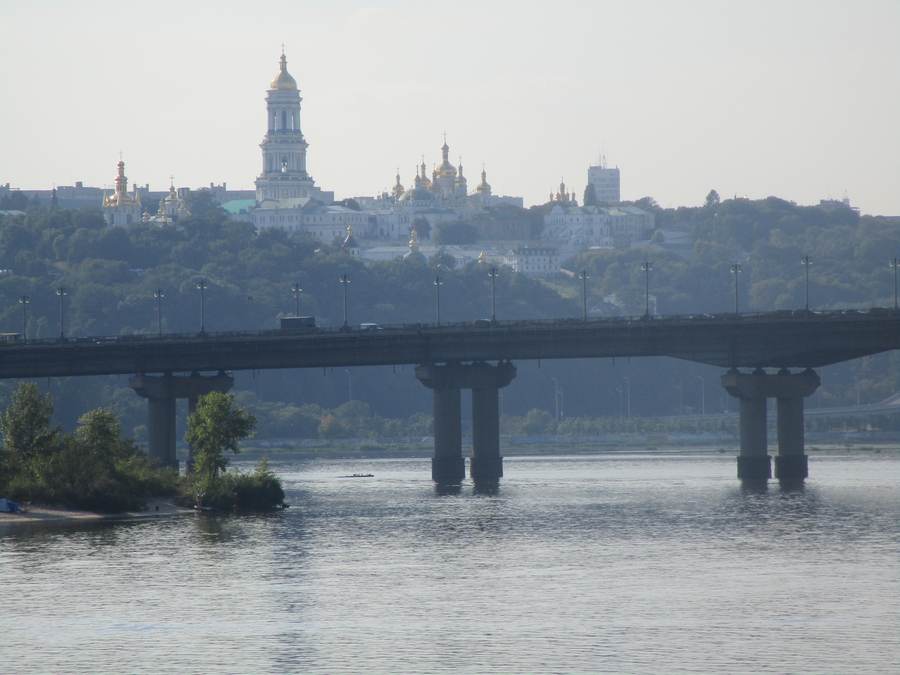
Russia Ukraine drone strikes October 2026: Russia attacked Ukraine overnight with 108 strike UAVs from 18:00 on October 1 — including 47 jet-powered Shaheds, alongside Gerbera and Parodiya decoy drones launched from Bryansk, Primorsko-Akhtarsk, occupied Donetsk and Crimea — and Ukraine's Air Force reported 88 shot down or suppressed by 08:00 on October 2, with hits recorded at 11 locations and debris falling at 5. The weapons that penetrated the defenses struck a 25-story residential building in Kyiv's Darnytskyi district, killing one person and injuring two, and hit the capital's Southern Bridge for the second time in 24 hours. Mayor Vitali Klitschko said Friday the Southern Bridge was fully closed in both directions, the Paton Bridge was closed, and the Metro Bridge faced partial restrictions. Across the border, Ukrainian drones struck industrial infrastructure in Russia's Volgograd region overnight, setting fire to an apartment building and hospitalizing one person, Governor Andrey Bocharov said on Telegram. These are the verified facts, drawn from Reuters, Ukrinform, Ukraine's Air Force, and city authorities on both sides. What they mean — for Kyiv's bridges, Ukraine's export lifeline, and Russia's refinery war — is the real story of the night.
Why this matters: Kyiv's bridges, Izmail's port and Volgograd's refineries are now the front line
The night of October 1-2 didn't redraw any map. No territory changed hands. But it confirmed, in the starkest terms yet, where this war is actually being fought: not along trenches that have barely moved in months, but in the sky above cities, bridges, ports and refineries.
Kyiv's bridges: closed crossings, open questions
Two of Kyiv's Dnipro bridges closed at once — in a city of roughly three million people where those crossings are the difference between a functioning metropolis and a divided one. Commuters, metro passengers, ambulances and supply trucks all funnel across a handful of spans. Close the Southern Bridge and the Paton Bridge and the civilian cost is immediate and diffuse: longer journeys, gridlocked detours, a metro system missing its river crossings. Bridges are logistics — but they are also daily life, and striking them taxes both. And the Southern Bridge was hit twice in 24 hours: what was a "symbolic one-off" on Thursday morning is a pattern by Friday morning, and patterns force defenders to plan for repetition.
Izmail and the Black Sea: Ukraine's export lifeline under fire
Russia's Defense Ministry said its drones hit an industrial complex at the port of Izmail on the Danube and a cargo ship in the Black Sea — claiming, in both cases, that the targets served military logistics. Neither claim has been independently verified, and that caveat matters. But even the claim itself is a weapon: tell the world's insurers and shipowners that vessels bound for Ukrainian ports may be hit, and the war-risk premium does the blockading for you. Izmail has been Ukraine's pressure valve for grain exports since Russia's Black Sea blockade began; threatening the valve and the ships that use it squeezes the country's economic lifeline without sinking a single extra hull.
Volgograd: the other half of the ledger
Ukrainian drones reached into Russia's industrial heartland and set an apartment building ablaze, one person hospitalized. The refinery city is the other half of this war's ledger: Vladimir Putin himself has said Ukrainian strikes on oil refineries have cost Russia 1% of gross domestic product, with drivers queuing for fuel. When a head of state publicly prices his own damage, pay attention — 1% of Russia's GDP is tens of billions of dollars, and it lands directly in the lives of ordinary drivers and the soldiers who need fuel.
Background: Russia strikes Kyiv as the aerial war replaces the stalled ground war
This night did not come from nowhere. Thursday's strikes had already been a bad day for Kyiv: Russian drones smashed into a school while 160 children and staff sheltered below, and two drones struck the Pivdennyi — Southern — Bridge near a support structure, the first time Russian weapons had hit a major Kyiv bridge since the full-scale invasion began in 2022. Our reporting tracked the first Southern Bridge strike and the school attack separately. Friday's wave was escalation layered directly on top of Thursday's: the Southern Bridge hit again, this time hard enough to close it completely.
The pattern is bigger than two nights. With front lines largely static, both sides have poured their innovation into long-range strike campaigns. Russia has intensified attacks on Ukraine's energy grid as winter approaches — Ukrainian officials described the recent barrage as the start of a deliberate cold-weather campaign — and has increasingly deployed faster, jet-powered drones since late August, weapons Ukrainian officials say are harder for existing interceptors to kill.
Diplomacy, meanwhile, has gone the other way. In September, Donald Trump floated the idea of an "energy truce" — a pause in strikes on energy infrastructure. Russia did not agree; as we reported, Putin effectively ruled out halting long-range strikes. The strikes have intensified since. That is the context for October 2: not a breakdown in talks, but the absence of any talks to break down.
Who gains, who loses — and what Moscow's claims don't prove
Start with what Russia gains. Proof of reach: 108 drones in a night, with nearly half of them jet-powered, forces Ukraine to defend an ever-widening target set — bridges alongside power stations, ports, government buildings and residential districts — with a finite stock of interceptors. Moscow also gains a narrative: its Defense Ministry framed every claimed target as military — the Dnipro bridge as a troop-and-supply route to Donbas, the Nalyvaikivka substation as power for the military-industrial complex, the Izmail facility as a military-cargo hub, the Black Sea ship as a carrier of military equipment. That framing matters because Russia officially denies targeting civilians. But the military-use claims are unverified by any independent source, and the physical record of the night — a 25-story apartment tower hit, one civilian dead — sits awkwardly beside them. Balanced reporting requires saying both things at once: Moscow claims military targets; the documented casualties are civilian; independent verification of the ministry's claims does not exist.
Ukraine's gains are on the other side of the ledger. The Volgograd strike compounds a refinery campaign that is visibly biting: Putin's 1%-of-GDP admission, fuel queues, a Lukoil refinery with roughly 15 million tonnes of annual capacity repeatedly knocked offline. Kyiv seldom claims these strikes officially, but the effects are priced into Russian domestic life.
The losers are, overwhelmingly, civilians — in both countries. One dead and two injured in Darnytskyi; one hospitalized in Volgograd; millions of Kyiv commuters rerouted; and, if the Black Sea shipping threats hold, food-importing countries that depend on Ukrainian grain. Critics of both campaigns make the same point from opposite directions: that striking cities, ports and refineries punishes populations faster than it changes battlefield outcomes. Defenders answer that this is precisely how attritional wars end — by making the cost of continuing unbearable. Both claims deserve to be heard; neither is settled by one night's strikes.
A final note on sourcing, in the interest of honesty: Ukraine's intercept figures come from Ukraine's Air Force, and Russia's — including its claim of 646 Ukrainian drones intercepted across several regions — come from Russia's Defense Ministry. Neither can be independently verified by journalists on the ground, and both militaries have incentives to inflate. Treat every number in this article as the claim of its source, not as settled fact.
The numbers: Ukraine air defense intercept rate holds at 81% as the waves grow
Ukraine's Air Force reported 88 of 108 drones shot down or suppressed — about 81%. That is a high interception share by any standard of air defense. It is also nearly identical to the previous night's wave (87 of 107, also about 81%). Consistency at that level is impressive — and it is exactly the wrong thing to be impressed by, because the arithmetic underneath is moving against the defender.
First, the absolute numbers are growing: 108 drones in a night, of which 47 were jet-powered. Faster drones compress warning time and complicate interception geometry; Ukrainian officials have flagged the jet-powered Shahed trend since late August. Second, 11 impact locations were recorded and debris fell at 5 more — what got through hit the intended target set, including a bridge category Russia had never successfully struck in Kyiv before Thursday. Third, the cost asymmetry is brutal: each wave of cheap drones forces the defender to spend expensive interceptors, or hold them back and accept more leaks. There is no version of this arithmetic in which the defender wins by standing still.
Put it against history: in the winter of 2022-23, Russian waves ran to dozens of missiles and drones; nights of 100+ drones are now routine. The interception rate has held — a genuine achievement of Ukrainian air defense — but the waves keep getting bigger and faster. An 81% shield against 108 drones still leaves roughly 20 weapons. On this night, one of them hit a residential tower.
Volgograd drone attack and the refinery war: 1% of Russia's GDP
The Volgograd strike deserves its own accounting, because it belongs to the campaign that may end up mattering most. Governor Andrey Bocharov said Ukrainian drones targeted industrial infrastructure in the region overnight; a fire broke out in an apartment building, one person was hospitalized, and the fire was contained. He did not name the industrial facilities. But the context is the Lukoil Volgograd refinery — one of Russia's largest, with about 14.8 to 15 million tonnes of annual refining capacity, roughly 5% of the country's total — which Ukrainian forces have repeatedly struck this year, at one point halting processing entirely.
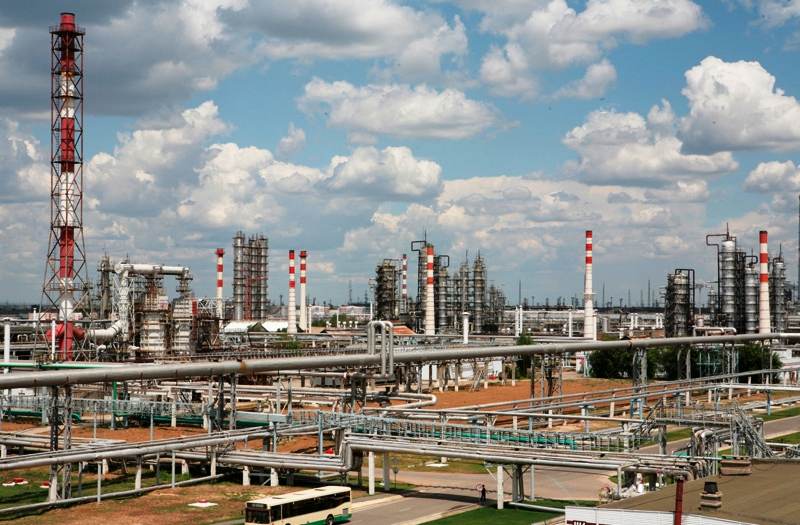
Putin's public math is the headline: Ukrainian refinery strikes have cost Russia 1% of GDP, he said, as Russians queued to fill their tanks. A leader admitting that scale of damage is rare, and it reframes the refinery campaign from nuisance to macroeconomic weapon. The Kyiv Independent reported that Zelensky said on October 1 that Ukrainian forces had also struck an oil facility in Samara Oblast — a claim the outlet said it could not independently verify, and neither can we, but it fits the pattern of a widening deep-strike campaign against Russian fuel infrastructure.
The global spillover is diesel. Russia is one of the world's largest oil producers and a major exporter of refined products; sustained refinery outages tighten diesel and gasoline markets well beyond Russia's borders. Every refinery fire in Volgograd is, in a small way, a price signal at pumps and freight terminals worldwide.
What happens next: a winter of strikes on Ukraine's grid and Russia's refineries
Scenario one: the energy war deepens. Russia doubles down on Ukraine's grid and ports as temperatures fall; Ukraine answers on refineries and fuel depots. The result is a winter measured in blackouts on one side and fuel queues on the other — a contest of which society's infrastructure breaks first. This is the trajectory the last two nights point to, and it is the cruelest scenario for civilians.
Scenario two: the Black Sea corridor militarizes. If Russia's claimed cargo-ship strike is followed by more, insurers will price Ukrainian ports as a war zone regardless of verification. Grain exports shift further toward the Danube, rail and road — slower, costlier, and themselves targetable, as the Izmail strike shows. Food-importing nations pay the difference.
Scenario three: bridges join the routine target set. The Southern Bridge was a "red line" until Thursday; it was hit twice in 24 hours. If strikes on Kyiv's crossings continue, the city must defend every Dnipro span with scarce interceptors, and commuter life is reshaped around closures and inspections. Moscow gains pressure without needing to bring a bridge down.
None of these scenarios requires a breakthrough on the ground. That is the point the night of October 1-2 makes: the war's decisive theater is increasingly the air above infrastructure, and both sides are betting they can impose costs faster than they absorb them. The casualties — one dead in Darnytskyi, one hospitalized in Volgograd, millions rerouted — are the down payment on that bet.
Related coverage
- Kyiv Southern Bridge Drone Strike: Russia Hits Bridge in First Since 2022
- Russian Drone Strikes Kyiv School During School Day as 160 Shelter Below
- Putin Rejects a Long-Range Strikes Ceasefire With Ukraine at Valdai
Sources
- Reuters, Oct 2, 2026 — "Russian air strikes kill one, restrict traffic across Dnipro River in Kyiv" (reporting by Jekaterīna Golubkova; editing by Thomas Derpinghaus and Michael Perry) — syndicated full text of the Reuters report
- Ukrinform / Air Force of the Armed Forces of Ukraine — "ADF neutralizes 88 of 108 Russian drones used to attack Ukraine overnight" — Ukrinform via EuropeSays
- Reuters, Oct 2, 2026 — "Ukraine attacks industrial facilities in Russia's Volgograd with drones, governor says" — Reuters via Devdiscourse
- Kyiv Independent — "Ukrainian forces reportedly strike oil facilities in Russia's Volgograd, Samara regions" — Kyiv Independent via EuropeSays
- Statements by Kyiv Mayor Vitali Klitschko, the Kyiv City Prosecutor's Office and city emergency services, Russia's Defense Ministry, and Volgograd Governor Andrey Bocharov (all via Telegram), as reported by Reuters and Ukrinform.
War Desk analysis · Published October 2, 2026