Katie Zacharia White House press secretary
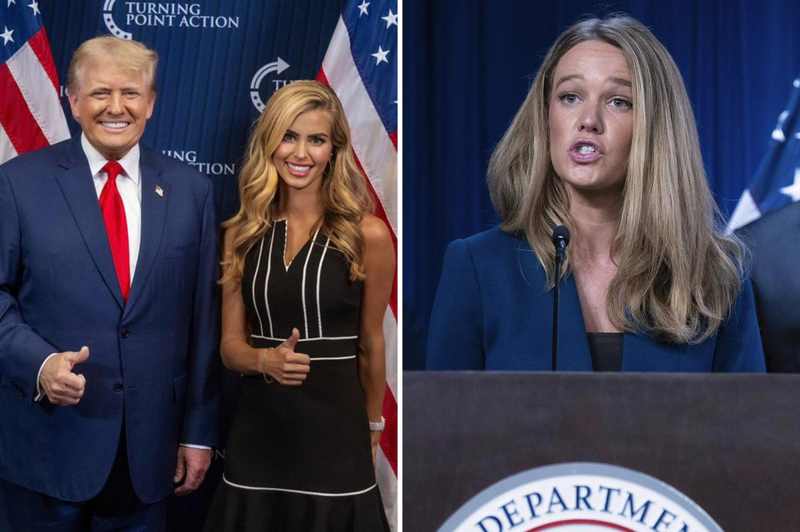
President Donald Trump announced on Truth Social on Friday that conservative commentator and attorney Katie Zacharia will become the new White House press secretary. The Katie Zacharia White House press secretary appointment makes her the Karoline Leavitt replacement after Leavitt left at the end of August to spend more time with her family following the birth of her second child in May. The high-profile position had remained open for more than six weeks.
Trump called it his “Great Honor” to make the appointment and described Zacharia as having an “unblemished record of support.” He praised her as “a loyal and brilliant supporter, right from the beginning” and “a devoted fan and member of MAGA,” adding that he expected her to deliver results and work well with the media, the public and his administration.
Zacharia responded on X by thanking Trump for the “distinguished privilege.” She called service at the country’s 250-year mark “the honor of a lifetime” and said she looked forward to working with the White House press corps and reporters across the United States. The exchange established the appointment’s two immediate themes: Trump prizes proven allegiance, while Zacharia is signaling that she intends to engage the reporters whose questions she will face.
Why this matters
The podium has lacked a permanent occupant since Leavitt’s departure, an unusual void in a White House built around constant communication. A press secretary does more than run briefings. The office decides which disputes get answered, which achievements get amplified and how the administration explains fast-changing policy before opponents define it first.
The timing leaves little margin for a learning period. The announcement comes 25 days before the November 3 midterm elections, with rising fuel costs and weak approval ratings sharpening the political stakes. Trump has acknowledged that his administration needs to promote its record more effectively and, according to published reports, called allies for views on Zacharia before choosing her. The new press secretary 2026 selection therefore looks less like routine staffing and more like a late-campaign reset.
The White House also confronts a press corps that Trump and his supporters frequently describe as hostile, while many journalists argue that aggressive questioning is essential when executive power is expanding. Zacharia’s task is to make the administration’s case to a restive public without turning every briefing into a loyalty test. That tension—not any single viral exchange—will define whether the appointment works.
Who is Katie Zacharia?
Katie Zacharia age, Los Angeles roots and Pepperdine law
Zacharia was born Katie Black in Los Angeles on March 23, 1984, making her 42 at the time of the appointment. She earned a bachelor’s degree in political science from Pepperdine University in 2007 and a law degree there in 2011. During college, she led the campus College Republicans chapter, interned at the Republican National Committee in 2006 and worked in the White House Office of Political Affairs during George W. Bush’s administration.
The Katie Zacharia Pepperdine law chapter of her career included service as a judicial extern in the U.S. District Court for the Southern District of Texas. She later spent three years in China, including outside counsel work connected to the World Bank, and served as president of the Christian Legal Society. That background gives her a broader legal and international résumé than the cable-news label alone suggests.
Katie Zacharia Fix California and conservative advocacy
Zacharia served as general counsel for Fix California, the conservative organization founded by Ric Grenell, and joined the advisory board of White Rose Resistance. Those roles place her within a network of California conservatives that has emphasized election policy, institutional criticism and organizing in a strongly Democratic state.
She also became a frequent commentator on Fox News, Newsmax and CNN. Supporters see the television work as preparation for hostile questioning: she understands the compressed language of live interviews and knows how Trump’s coalition hears a message. Skeptics counter that commentary rewards advocacy and speed, while the briefing room demands command of policy detail across national security, economics and law.
Katie Zacharia DHS spokesperson and Trump Media adviser
From February through April 2026, Zacharia served under Homeland Security Secretary Kristi Noem as assistant secretary for public affairs. She left after Markwayne Mullin took over DHS, citing the toll that commuting between California and Washington placed on her family. Reporting has described her as close to Noem and adviser Corey Lewandowski, relationships that give the appointment a factional dimension inside Trump’s orbit.
Her subsequent role as senior communications adviser to Trump Media & Technology Group put her inside Truth Social, the platform where Trump announced her promotion. She was an adviser when the company decided to charge users $100,000 a month for early access to presidential posts, a price she defended publicly as consistent with industry practice. Critics view that episode as evidence of blurred boundaries between public communication and paid access; supporters say it shows she can defend a controversial decision without retreating.
Katie Zacharia husband Tyler and their family
Zacharia has been married to Tyler Zacharia since 2011. They have four children—three sons and a daughter. Tyler is a Hollywood producer whose credits include The Irishman, David, Young Washington and Brink of War with Angel Studios. Family logistics are not incidental to this appointment: they helped explain her departure from DHS and mirror Leavitt’s stated reason for leaving the White House.
How we got here
Leavitt departed at the end of August after the birth of her second child in May, saying she wanted to spend more time with her family. Trump publicly respected the decision and left open the possibility that she would remain an outside adviser. But the administration did not immediately name a successor, and the vacancy stretched beyond a month as consequential domestic and foreign-policy stories accumulated.
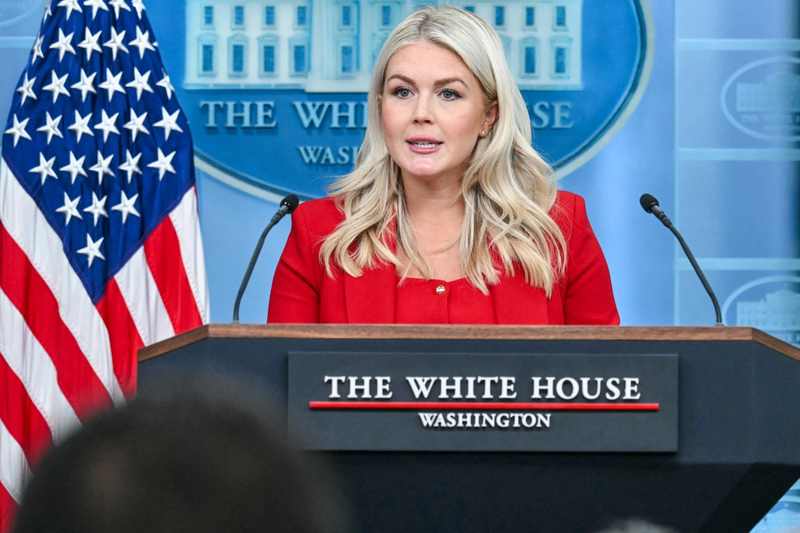
The drawn-out search became a public vetting exercise. Reports that Trump was calling friends for opinions suggest he wanted both personal assurance and a candidate who could improve promotion of the administration’s agenda. Choosing someone from Trump Media rather than a conventional West Wing deputy sends a clear signal: familiarity with the president’s voice outweighed a longer briefing-room apprenticeship.
Who benefits, who loses, what critics say
Trump benefits from installing a communicator who already knows his preferred platform, rhythms and audience. Zacharia benefits from moving from defender of the movement to one of the most visible jobs in government. Noem and Lewandowski’s allies may also read the pick as evidence that their network retains influence after Zacharia’s short DHS tenure.
The institutional communications staff may lose room to shape a less partisan presentation. Some observers frame the choice as a win for the Noem-Lewandowski faction and a complication for chief of staff Susie Wiles’s camp, but the appointment alone does not prove an internal defeat. Personnel choices in this White House often reflect overlapping loyalties rather than a clean victory for one bloc.
Supporters say Zacharia is a disciplined loyalist who understands Trump’s voice, knows television and has already represented a Cabinet department. They argue that conventional résumés have not guaranteed successful press secretaries and that direct trust with the president is essential for speaking credibly on his behalf.
Skeptics point to a résumé weighted toward commentary, political advocacy and a roughly three-month DHS communications stint rather than daily West Wing briefings. They also question whether her defense of Truth Social’s $100,000 monthly early-access plan shows too much comfort with monetizing proximity to presidential speech. The fairest test will be practical: whether she answers factual questions, corrects errors promptly and separates campaign argument from official information.
What the numbers say
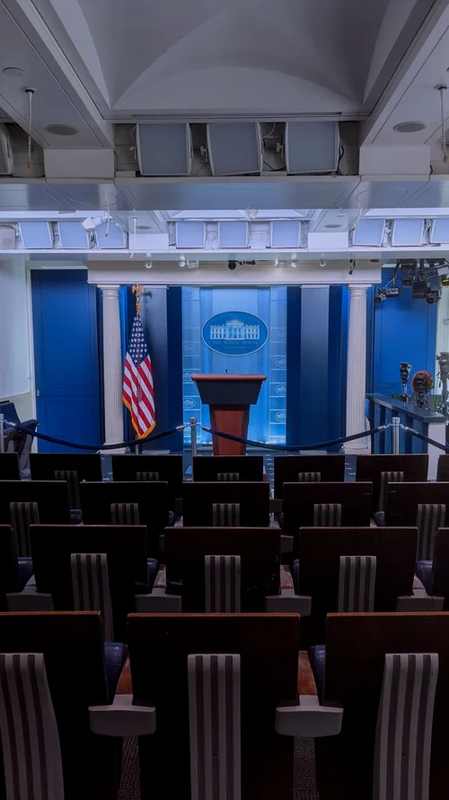
Zacharia would be the 37th White House press secretary and the seventh woman in a row to hold the job. The last man in the role was Sean Spicer, who left during Trump’s first term. The streak spans administrations and parties, making female leadership at the podium a durable modern pattern rather than a single-president anomaly.
The White House press secretary salary is not confirmed for Zacharia. Leavitt’s reported annual pay was about $195,200, so compensation near $200,000 is a reasonable benchmark, not an announced figure. The most politically consequential number is 25: the days between Zacharia’s appointment and the midterm vote. Her first month will unfold under campaign-level scrutiny before she has established a routine.
What happens next
The first briefing will set the operating rules
Reporters will watch whether Zacharia begins with a traditional policy-heavy briefing, a combative defense of the president or a mixture of both. They will also test her willingness to call on skeptical outlets, provide follow-up information and acknowledge uncertainty when the government does not yet have an answer.
Midterm messaging arrives immediately
She inherits difficult messaging on gasoline and diesel prices, the Iran war and the administration’s economic case. Trump’s diesel discussions with Vladimir Putin have already drawn a warning from Volodymyr Zelensky that Russian fuel revenue could prolong the war. The related Trump-Putin diesel deal analysis shows how quickly energy policy, diplomacy and campaign politics now collide.
The press operation must also navigate Trump’s reaction to the Nobel Peace Prize and Israel’s response, covered in our Trump-Nobel fallout report. At home, her relationship with the press corps will be judged against an active dispute over access. Read the background in our White House press-ban hearing coverage.
Durability is an open question
The job has experienced high turnover because it concentrates political pressure, policy complexity and the president’s changing preferences in one place. Zacharia’s loyalty may help her survive disagreements that would end another aide’s tenure. It may also raise expectations that she defend every presidential statement instantly. Her staying power will depend on whether trust inside the building can coexist with credibility outside it.
Conclusion
Trump’s choice ends a conspicuous vacancy and puts an experienced advocate, but a relatively new West Wing operator, in charge of the administration’s daily public case. Zacharia arrives with assets the president values—loyalty, television confidence and familiarity with Truth Social—and liabilities critics will test, including limited briefing-room experience and her defense of a disputed paid-access model.
The appointment will matter less for the praise surrounding it than for what happens at the podium: whether Zacharia can explain policy under pressure, give reliable answers during crises and speak beyond the president’s base. With the midterms only weeks away, she will not have long to demonstrate the difference between defending a political brand and communicating for the government.
Sources
- USA Today — appointment, announcement and biography.
- The Times — White House search and political context.
- New York Post — California background and appointment details.
- Fox News — Trump’s announcement and reaction.
- People — personal background and Leavitt transition.
- Newsmax — Zacharia’s response and media career.
- Wikipedia — education and biographical reference.
Reported facts are attributed to the listed sources. Assessments of factional influence, communications strategy and likely briefing-room tests are analysis and are identified as such.