judge blocks Trump Seattle prosecutor
Politics / U.S.A Yakima courtroom just drew the sharpest line yet around presidential power over federal prosecutors — and the Justice Department says it will appeal immediately.
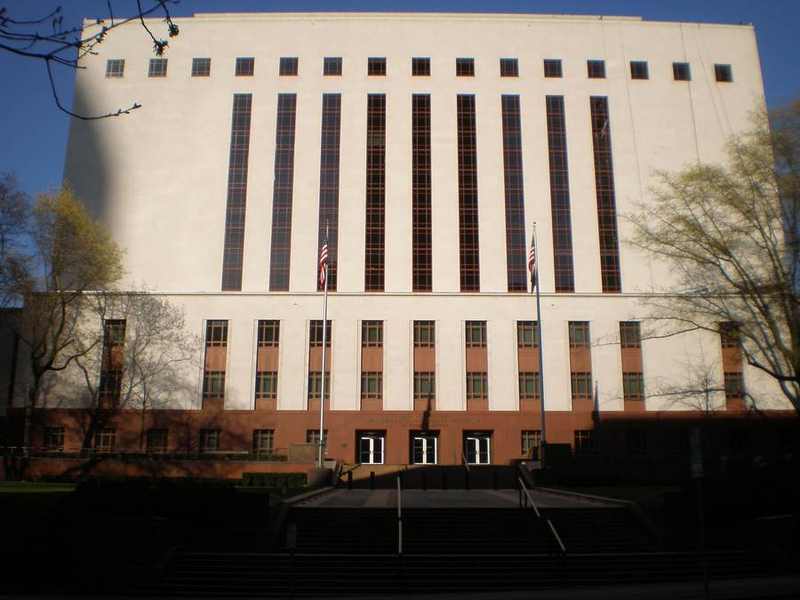
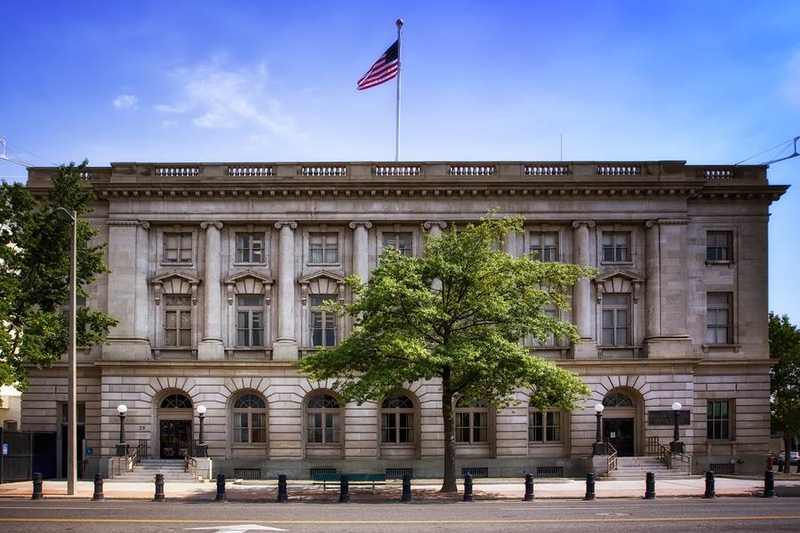
YAKIMA, Wash. — Less than three months after President Donald Trump fired Roger Rogoff as the top federal prosecutor in Seattle — less than an hour after Rogoff was even sworn in — a federal judge has ordered him reinstated. On Thursday, October 1, 2026, Chief Judge Stanley Bastian granted a preliminary injunction restoring Rogoff as U.S. attorney for the Western District of Washington, ruling that the president lacked the authority to remove a prosecutor appointed by the district's own judges.
Bastian's language was unsparing. "Congress did not give the power to fill this inferior office to the president alone," he wrote, adding that the president "cannot unilaterally fire a United States attorney appointed by the district court." Rogoff, the judge concluded, "has been the rightful holder of that office since July 15, 2026."
The ruling is the first legal victory for any of the court-appointed U.S. attorneys the Trump administration has removed — a group that also includes ousted prosecutors in New York, New Jersey and Virginia. Rogoff, a former judge and veteran prosecutor now with the Seattle firm Osborn Machler & Neff, was the first of them to sue, filing his challenge in July. The Justice Department said it disagreed with the decision and would "seek an immediate stay and will appeal."
Why this matters
This is a separation-of-powers case disguised as a personnel dispute. A president's power to fire executive-branch officials is at its strongest when Congress has said nothing about the office. Here Congress said a great deal: 28 U.S.C. § 546(d) hands the district court the power to appoint an interim U.S. attorney when the office sits vacant with no Senate-confirmed nominee — a stopgap Congress designed precisely for moments of political deadlock, so federal prosecutions don't become hostages to nomination fights. If the president can erase that appointment an hour after it is made, the statute is decoration. That was the core of Rogoff's attorney Hailyn Chen's argument: letting the president fire him would make the court-appointment provision meaningless. Bastian agreed — the appointment power Congress gave the courts necessarily carries protection against at-will presidential removal, or the courts' role is a fiction. The ruling also lands as part of a broader pattern of Trump testing the limits of executive power this fall, from his confrontations with state prosecutors to unilateral moves like the new IRS citizenship question on tax returns.
The one-hour firing: how we got here
The Seattle post had sat vacant with no Senate-confirmed nominee, led in the interim by Charles Neil Floyd, a former immigration judge installed by the Trump administration. On July 15, 2026, the Western District's judges unanimously appointed Rogoff under § 546(d). Trump ordered his removal less than an hour after the swearing-in — a speed that tells its own story about how little deliberation went into the decision, and how much it was about control of the office rather than Rogoff himself. Amid the litigation, Trump nominated Pete Serrano, the first assistant U.S. attorney in the Eastern District of Washington, for the Seattle post — the constitutional route that former Seattle U.S. attorney John McKay, in a supporting brief for Rogoff, insisted was the only lawful one: "You must follow the Constitution. You must nominate and seek Senate confirmation."
The courtroom exchange captured the stakes. DOJ attorney Joshua Ha told the court, "There's no dispute that the Western District of Washington has someone lawfully performing the duties of U.S. attorney right now" — the administration's position being that its own preferred leadership was already in place. Bastian's reply was dry and devastating: "I think that is a dispute. That's why we are here."
Who benefits, who loses
Rogoff himself is the immediate winner — "gratified that the district court recognized the importance of following the Constitution and following the law," he said, adding: "Now I need to get to work." But his victory is a preliminary injunction, not a final judgment; he returns to an office under legal siege, with the Justice Department promising an immediate stay.
The White House and the Justice Department are the immediate losers — not just of one office but of a legal theory. DOJ had maintained the firing was within the president's executive power; Bastian's ruling rejects that theory in terms the department will now have to answer on appeal. And the ruling is a template: the ousted court-appointed prosecutors in New York, New Jersey and Virginia now have a federal judge's reasoning to cite if they choose to follow Rogoff into court.
The Senate, oddly, is a quiet winner. The whole point of § 546(d) is that the judges' appointment is a bridge to Senate confirmation — McKay's brief made the constitutional moral explicit. The ruling vindicates the confirmation process itself as the only durable way to install a U.S. attorney, at a moment when the administration has preferred acting officials and end-runs.
Critics of the ruling — and there will be many in the administration's orbit — will frame it as judicial overreach into Article II, arguing the president must be able to control the prosecutors who wield federal power in his name. That argument has real pedigree in unitary-executive theory. But it runs headlong into the fact that Congress deliberately built the stopgap, and into Trump's own running confrontations with prosecutors he distrusts, including his attacks on New York's attorney general.
The losers nobody mentions: the career prosecutors of the Western District, who have now cycled through an interim, a one-hour appointee, disputed leadership, and a court-ordered restoration — all while trying to run one of the busiest federal dockets in the country.
What the numbers actually imply
Start with the statute's clock. Section 546 lets the attorney general install an interim U.S. attorney for 120 days; when that period lapses with no Senate-confirmed nominee, the district judges may appoint. That is what happened on July 15 — and the administration's answer came in under 60 minutes. Rogoff has now been, in the court's eyes, the rightful officeholder for roughly eleven weeks, most of them spent in litigation rather than leading the office.
Then the scoreboard: four court-appointed U.S. attorneys removed — Seattle, New York, New Jersey, Virginia — one lawsuit filed, one preliminary injunction granted. A 1-for-1 record for the courthouse so far, but the sample that matters is the appeal. And the Serrano nomination now sits in an unusual limbo: the Senate is being asked to confirm a nominee for an office a federal court says is already lawfully occupied.
What happens next: three scenarios
One — the Ninth Circuit grants the stay. The Justice Department has promised to "seek an immediate stay," and if it gets one, Rogoff is out again pending appeal, the administration's preferred leadership returns, and the case becomes a slow constitutional grind with the office in contested hands.
Two — the injunction holds through appeal. Rogoff actually gets to work, the Serrano nomination withers in the Senate — why confirm a nominee for a filled office? — and the administration eats a standing precedent the other three ousted prosecutors can wield.
Three — the case becomes the vehicle. The Justice Department has every incentive to push this toward the Supreme Court as a clean test of presidential removal power over inferior officers, and Bastian practically invited the fight with his "inferior office" framing. A Supreme Court ruling would settle not just Rogoff's fate but the New York, New Jersey and Virginia ousters in one stroke — for whichever side wins.
The smart money: the stay fight decides the next month, the Ninth Circuit decides the next year, and the separation-of-powers question at the heart of it — who really controls a prosecutor's office when the president and the courts disagree — is not going away.
Sources
- Reuters via Missouri Lawyers Media: Judge reinstates Seattle federal prosecutor fired by Trump, October 2, 2026
- Reuters via FroggyWeb: US judge restores court-appointed top federal prosecutor Trump fired in Seattle, October 1, 2026
- Washington Post via Tickle the Wire: Judge reinstates Seattle U.S. attorney fired by Trump
- Meyka: Federal judge blocks Trump from firing court-appointed U.S. attorney
- EuropeSays: coverage of the Rogoff reinstatement ruling