Trump Cornell 7 fair shake
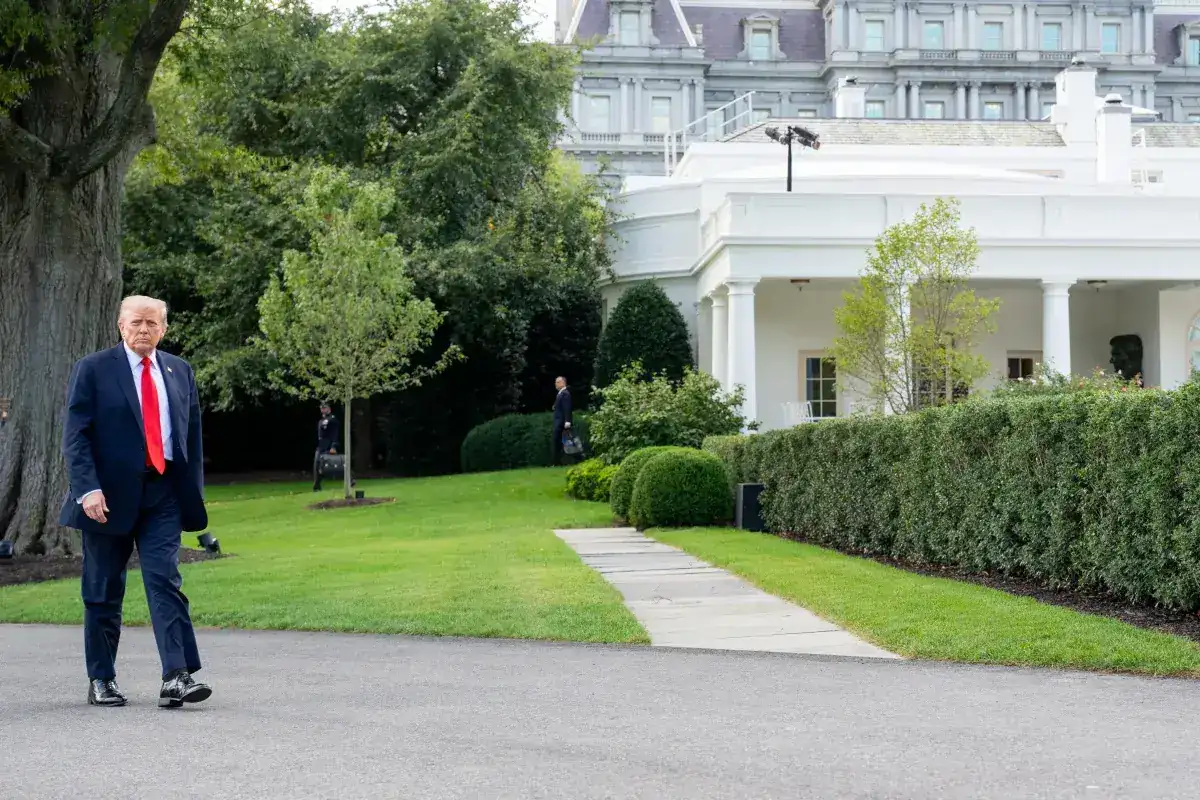
WASHINGTON — Trump told reporters on the White House South Lawn Friday that the seven Cornell fraternity brothers accused in a civil lawsuit of gang-raping a classmate would not get a “fair shake” with James leading the criminal investigation. The intervention came one day after Gov. Kathy Hochul signed an executive order removing Tompkins County District Attorney Matthew Van Houten from the case and naming James special prosecutor.
“Letitia James is a corrupt person. She's totally corrupt, and I can't imagine it,” Trump said. “And I feel badly for whoever she's looking at because they won't get a fair shake. Letitia James is a corrupt person.” The remarks were reported by the New York Post and the Washington Examiner.
Trump's charge is a political claim, not a finding about James's conduct or the Cornell allegations. All seven men have denied wrongdoing. None has been criminally charged, and the allegations have not been adjudicated. James said her office's work would be “guided by the facts and the law” and called the matter an “active criminal investigation.” Her office, she said, will “review the facts, gather evidence, interview witnesses, and if warranted pursue prosecutions.”
How the Cornell case became a test of two kinds of impartiality
The legal question is whether investigators can build a reliable record after a disputed local review. The political question is whether the new prosecutor can persuade both sides that her decisions are independent. Hochul's transfer was designed to answer the first problem. Trump's attack, and criticism of James's own public comments, immediately sharpened the second.
From an October 2024 allegation to a 101-page lawsuit
A woman identified only as Jane Doe alleges that seven members of Cornell's Chi Phi fraternity raped her at the fraternity house in October 2024 after she was plied with alcohol and ketamine. Her 101-page lawsuit, filed in Manhattan Supreme Court in September 2026, alleges that during the assault one man sent the message “free p--sy” to a 50-person Snapchat group called “Chi Phi Actives.” Those are allegations in a civil complaint, not established facts.
Cornell suspended the seven students and the chapter during its process; two students were expelled. The seven have denied wrongdoing. The civil suit and university discipline carry different standards from a criminal prosecution, where the state would have to prove each charged offense beyond a reasonable doubt.
The lawsuit made the case national news and forced scrutiny of the 2024 response. Our earlier Cornell case background traces the reopening from the civil filing through the local grand-jury discussion.

The six-page summary and the investigation that did not happen
Van Houten declined to prosecute after reviewing a six-page summary prepared by Cornell campus police. He later acknowledged that his office did not conduct an independent investigation and never interviewed Jane Doe. That admission moved the dispute beyond a disagreement about charging judgment: it raised a basic question about whether prosecutors had developed the evidence before deciding it was insufficient.
Hochul said Friday that the DA did not do the “bare minimum.” She said she was “deeply disturbed at Cornell University's police and how they handled this” and vowed, “I will not allow anyone to sweep this case under the rug.” Her executive order and appointment of James as special prosecutor give the attorney general authority to rebuild the file, interview witnesses and decide whether a grand-jury presentation is warranted.
Trump's escalation in forty-eight hours
On Wednesday, Trump had sounded restrained: “I don't know that much about it, but Cornell is a fine school, and I'm sure they'll do what's right.” By Friday he was not discussing Cornell's process; he was declaring that the person now leading the state investigation was corrupt and that anyone she scrutinized would be treated unfairly.
That shift matters because the case is active. Presidential commentary cannot decide admissibility, probable cause or guilt. It can, however, harden public camps before investigators finish interviewing witnesses and before any grand jury sees evidence. It may also give future defendants language for an argument that the prosecution was saturated with politics from the start.
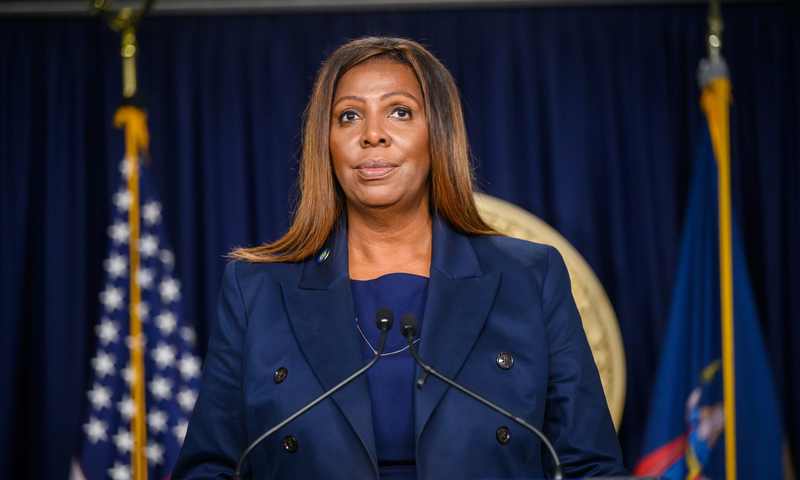
Why this matters: a president versus an active investigator
Analysis: The institutional stakes are larger than the Trump-James feud. A president publicly branding a lead investigator corrupt while she is handling an active state case tests the boundary between political speech and pressure on law enforcement. James is not subordinate to the president, but the power of his office gives his words unusual reach. Every future step — subpoena, interview, grand-jury presentation or decision not to charge — will now be read through an accusation Trump made before the renewed investigation produced a public result.
The risk runs in both directions. If James appears to answer Trump rather than the evidence, confidence in the prosecution suffers. If investigators retreat from necessary steps to avoid that appearance, the complainant and public lose the independent review Hochul promised. The only durable answer is a demonstrably complete process: full records, direct interviews, preserved digital evidence and legal reasoning that can withstand adversarial review.
Who benefits — and who loses
Victims' advocates benefit from a state-level investigation with broader resources and from Hochul's explicit refusal to accept a six-page summary as the final word. Their strongest argument is procedural: a complainant's allegation should not be rejected without the prosecutor's office interviewing her and independently testing the evidence.
The accused men gain a national advocate in Trump but may also lose the possibility of a lower-temperature review. His framing can help defense lawyers argue political contamination, yet it can also make any routine investigative step look like a showdown with the White House. Their core rights remain unchanged: presumption of innocence, counsel, access to discovery if charged and the state's burden to prove guilt beyond a reasonable doubt.
Hochul and James gain control of a case that had become a symbol of institutional failure, but they now own its outcome. An indictment unsupported by a careful record would validate due-process criticism. A decision not to charge, if transparently grounded after a complete inquiry, could show that independent review does not guarantee prosecution. Cornell and the local DA lose control of the narrative and face renewed questions about how the original account was summarized.
The due-process criticism James must answer
Due-process defenders point to James's September 28 post on X calling Jane Doe a “survivor” and writing, “We stand with you.” Reason argued on October 2 that those words can signal prejudgment from an official who is now supposed to act as an impartial special prosecutor. That is criticism, not a court ruling that James is disqualified.
The counterargument from victims' advocates is that expressing support for someone reporting sexual assault does not require a prosecutor to assume the accused are guilty, and that James has separately promised to follow facts and law. Both points can be true: public solidarity is not itself proof of bias, but a prosecutor inheriting a contested case should avoid language that makes neutrality harder to demonstrate.
The numbers behind the Trump-James history
The feud is not abstract. James brought the civil fraud case against Trump and the Trump Organization that produced a $454 million judgment. A state appeals court overturned that judgment last year. Separately, Trump's Justice Department charged James in 2025 with bank fraud and false statements related to a Virginia second home listed as a primary residence. A federal judge dismissed that indictment because acting U.S. Attorney Lindsey Halligan had served beyond the 120-day limit without Senate confirmation.
Analysis: Those outcomes give both camps material for familiar narratives. Trump supporters can point to the reversed judgment and dismissed indictment as evidence of politicized legal warfare. James's defenders can note that the federal dismissal turned on the prosecutor's appointment, not a judicial finding that every underlying allegation was false, and that her civil case was brought through state courts. Neither history answers what happened at Cornell. It explains why almost no one will view this investigation without suspicion.
What happens next
James's office can obtain the full campus-police record, interview Jane Doe and the accused men if they agree to speak, seek phone and Snapchat evidence, and question witnesses who were at the fraternity house. If prosecutors believe there is probable cause, they can present charges to a grand jury. The grand jury could indict, decline to indict or hear additional evidence. No outcome should be inferred from the decision to investigate.
If charges are filed, defense lawyers could seek dismissal or other relief by arguing selective or vindictive prosecution, conflict, prejudgment, evidentiary defects or prejudicial publicity. Those motions would require legal proof; Trump's statement and James's X post would be part of the political record, not automatic grounds to end a case.
The timing adds another layer. The November 3 midterms are weeks away. Trump can use the dispute to reinforce his campaign against James and Democratic prosecutors; Hochul can argue she intervened because institutions failed a woman reporting rape. That political payoff is immediate. The investigative payoff should not be. A credible prosecution or declination will depend on evidence developed carefully enough to survive after the election slogans are gone.