IRS citizenship question 1040

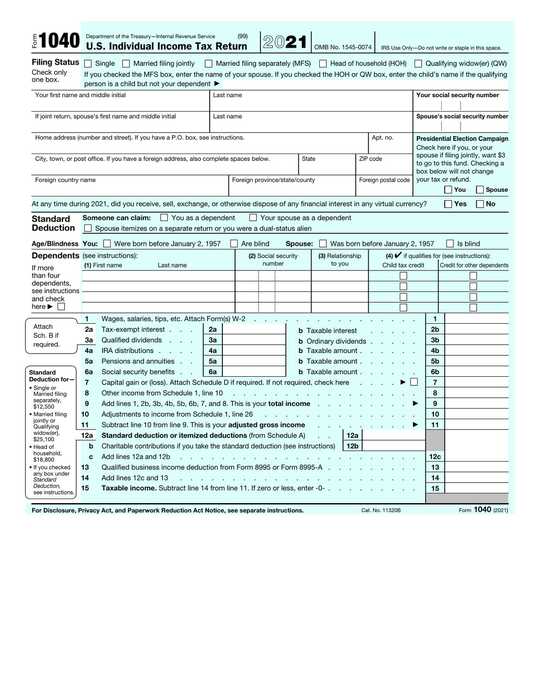
The most consequential line in the draft 2026 Form 1040 is not a tax rate or deduction. It is a status declaration: “At the time you file your return, are you, and your spouse if filing jointly, a U.S. citizen, U.S. national, or an alien lawfully authorized to work in the U.S.?” The draft posted by the Internal Revenue Service in late August supplies Yes and No boxes for the filer and, on a joint return, for the spouse.
A similar inquiry appears on draft Schedule 3-A, the form connected to refundable tax credits. Neither is presented as optional. The filer signs a return under penalty of law, converting what looks like one extra checkbox into a compulsory declaration with potential criminal consequences if the answer is false.
The Trump administration says the change would prevent people without permanent legal status from receiving federal benefits for which they are ineligible. Officials put the potential savings at as much as $2 billion and identify refundable parts of the Earned Income Tax Credit and Additional Child Tax Credit as targets. The objection is not merely that some households could lose money. It is that the IRS would collect immigration-status answers from nearly everyone who files, while the government has not answered the question critics consider decisive: whether those answers could be used by immigration authorities to locate people for arrest or deportation.
Why this matters: the IRS could become immigration infrastructure
The IRS works because tens of millions of people disclose more than the government could feasibly discover on its own: wages, family structure, employers, addresses, investment income and identifying numbers. That voluntary-compliance model depends on a compact. Taxpayers accept sweeping disclosure because they understand the information is being collected to administer tax law, protected by strict rules and not casually repurposed by other agencies.
An IRS citizenship status tax return requirement tests that compact. At a scale of roughly 150 million filers, a new field is not just a question. It is a standardized national dataset, updated annually, signed under penalty of perjury and attached to addresses, Social Security numbers, employers, spouses and dependents. That architecture is valuable precisely because it is comprehensive.
Critics therefore argue that the policy's deepest effect could occur even if no one ever loses a credit. If families conclude that filing a return creates an immigration-enforcement risk, some may retreat from the tax system. The IRS could then lose both revenue and visibility. A measure framed as guarding public money could weaken the compliance culture on which collection depends.
This is the central analytical point: the proposal does not simply ask who qualifies for a payment. It changes what the act of filing means. The tax return would become a place where every worker must affirm a relationship to U.S. citizenship or lawful work authorization, whether or not immigration status was previously relevant to the tax being calculated.
How a benefits rule became a tax-form mandate
Trump IRS tax form citizenship policy starts with PRWORA
The legal path begins with the Personal Responsibility and Work Opportunity Reconciliation Act of 1996, commonly called PRWORA. That welfare-reform law restricts access to certain “federal public benefits” based on immigration categories. In August 2026, the Treasury Department and IRS proposed regulations treating the refundable portions of certain individual tax credits as federal public benefits governed by those restrictions.
The distinction matters. A conventional tax credit reduces tax owed. A refundable credit can produce a payment even when the credit exceeds a household's income-tax liability. By classifying refundable amounts as benefits, Treasury is trying to apply a statute written for public-benefit eligibility to parts of the tax code administered through Form 1040.
Treasury Secretary Scott Bessent has said the administration intends to ensure that benefits do not go to people barred by law. In that framing, the form question is an administrative checkpoint: determine status, then decide whether a refundable payment is legally available. That is the strongest case for the proposal. Congress placed immigration limits on federal benefits, and an agency charged with paying them has an obligation to enforce eligibility.
But the contested issue is how far the statutory label reaches. Tax law already contains detailed eligibility rules, including identification requirements for credits. Applying PRWORA on top of those rules could exclude some people who have legal work authorization but do not fit the administration's preferred category for a refundable benefit. The legal fight will likely turn on statutory text, agency authority and whether the rulemaking adequately accounts for those consequences.

IRS tax data immigration enforcement is the unresolved fault line
A Treasury official said the collected information would be “subject to a variety of privacy, disclosure and other legal protections.” That is an assurance about the existence of rules, not an answer about use. The official did not say whether citizenship or work-authorization answers would be shared with federal immigration enforcement for targeting arrests or deportations.
The omission is especially important because an appeals court recently upheld an order blocking the IRS from sharing taxpayer data with Immigration and Customs Enforcement. The order does not automatically decide the legality of every future data-sharing arrangement. It does, however, place the proposal inside an active legal conflict over the boundary between tax administration and immigration enforcement.
The dispute recalls the administration's fight over adding a citizenship question to the 2020 census. The instruments are different, the statutes are different, and no court ruling in one automatically governs the other. The parallel is analytical: in both cases, a seemingly simple federal form question raised a larger concern that fear of government use would depress participation and damage the accuracy or reach of a nationwide system. Courts blocked the census effort after scrutinizing the government's stated rationale. Any Form 1040 challenge will stand on its own record, but judges are likely to examine purpose, process and practical effect with similar care.
What the proposed forms actually ask
The new 1040 form citizenship question applies to filer and spouse
The wording combines three categories into one Yes response: U.S. citizen, U.S. national, or an alien lawfully authorized to work in the United States. A filer who fits any one of them checks Yes. A filer who fits none checks No. Joint filers answer separately for themselves and their spouse.
That design is administratively simple but legally dense. Citizenship, nationality and lawful work authorization are not interchangeable concepts. People can possess employment authorization through temporary or deferred programs without having permanent status. Compressing those categories into a binary box makes the form easy to process while leaving the decisive eligibility rules to regulations and instructions.
The Schedule 3-A citizenship question creates a second gate
The parallel language on Schedule 3-A matters because that schedule is tied directly to refundable credits. The main Form 1040 answer would create a government-wide status declaration for filers; the schedule answer would operate closer to the payment decision. Together, they permit both broad collection and targeted credit administration.
The policy is therefore wider than an audit check. The IRS immigration status question would be answered before the agency has alleged an improper claim. It asks every filer to self-classify, rather than limiting status verification to returns where a relevant credit has been claimed or where existing records show a discrepancy.
To certify citizenship, IRS penalty of law language changes the stakes
The instruction to certify citizenship IRS penalty of law makes the legal point plain: this would be a sworn tax filing, not a voluntary survey.
A tax return's signature is not a survey response. Filers certify that the return is true, correct and complete under penalties of perjury. Knowingly making a material false statement can be prosecuted as a felony. That is why the No box is not merely informational and the Yes box is not harmless guesswork.
For taxpayers whose immigration categories are complicated, changing, or poorly explained, the risk may be confusion rather than deception. A work permit may expire or be renewed; a court order may alter a program; spouses may have different statuses. Clear final instructions would be essential. The draft question is concise, but the legal reality beneath it is not.
Who wins, who loses and what the numbers really say
EITC citizenship requirement 2026: the administration's case
The administration's beneficiaries are taxpayers who believe refundable credits should be policed more aggressively and the Treasury officials responsible for preventing ineligible payments. If the government can substantiate its estimate, savings of up to $2 billion would be significant. The policy also gives the IRS an explicit answer rather than requiring eligibility to be inferred across multiple records.
The administration's argument belongs in the same broader debate as other benefit and payment initiatives, including its approach to proposed Obamacare refund checks. In each case, the political question is not simply whether money changes hands. It is which legal categories control eligibility, what verification the government demands and what collateral costs the enforcement method creates.
DACA EITC loss IRS proposal: lawful work authorization may not be enough
The people at greatest risk are not limited to immigrants living in the country without authorization. The broader interpretation could reach some workers presently authorized to work, including recipients of Deferred Action for Childhood Arrivals, people with Temporary Protected Status and some H-1B temporary workers. A research paper published this week estimated that 671,000 people, including 309,000 children, would lose the Earned Income Tax Credit under the proposal.
Those figures measure a different side of the ledger from the $2 billion claim. The savings estimate describes money the government would not pay. The research estimate describes households that would no longer receive it. Neither number, standing alone, proves whether the legal interpretation is correct. Put together, they show that the policy's budgetary effect and human effect are the same transaction viewed from opposite sides.
The potential sweep also parallels the dispute over legal immigrants losing federal benefits. Status categories that are clear in immigration law can produce unexpected outcomes when imported into benefit systems. A person may be allowed to live and work in the United States, pay federal taxes and still be excluded from a program because a separate statute defines eligibility more narrowly.
IRS citizenship question immigrants already barred from EITC
A key fact complicates the case for necessity: undocumented immigrants generally already cannot claim the EITC. The credit requires a valid Social Security number, and the IRS checks identifying numbers against Social Security Administration records. That existing screen means the proposal is not simply closing an entirely unguarded door.
What changes, then? First, status becomes an affirmative self-certification under penalty of law. Second, the question covers more than the valid-SSN check and may distinguish among legally authorized workers. Third, Schedule 3-A could become a direct gate for refundable credits. Fourth, the answer creates information that can be retained, matched and—depending on legal protections not yet settled—sought by other parts of government.
That distinction is why critics see the proposal as simultaneously redundant and expansive: redundant for a credit that already rejects many ineligible Social Security numbers, expansive because the question reaches every filer and a wider set of immigration categories.
What critics say about motive, trust and enforcement
David Bier, the Cato Institute's director of immigration studies, offered the bluntest reading: “It could be used as an immigration enforcement tool and that is probably the reason why they are doing this.” Nina Olson, executive director of the Center for Taxpayer Rights, said, “It's dragging the IRS into this administration's immigration policies.”
Those critiques focus on institutional mission. The IRS is powerful because it receives information other agencies do not. Tax confidentiality is therefore not a courtesy; it is part of the system's operating logic. Privacy and taxpayer advocates warn that a citizenship answer attached to current addresses could become a ready-made map for locating and deporting people.
The recent litigation over IRS-to-ICE disclosures gives that warning concrete context. Separate incidents, such as the mistaken detention concerns examined in our coverage of an ICE detention involving a U.S. citizen, also show why status databases and enforcement decisions require reliable safeguards and correction procedures. That case does not prove misuse of tax data. It illustrates the consequences when enforcement systems act on disputed identity or status information.
Treasury's response—that legal protections apply—should not be dismissed. Federal tax information is covered by strong disclosure restrictions. But confidence requires more than citing protections in the abstract. The administration would need to state who can access the new answers, for what purpose, under what legal authority, with what audit trail and what remedy for improper disclosure. Those details are not yet public.
The filer's dilemma could cost the tax system
IRS citizenship question immigrants face two perilous answers
For a person living in the United States without authorization, the form presents a stark choice. Check No and place that fact on a federal return linked to an address and employer. Check Yes without a lawful basis and risk a false statement on a document signed under penalty of law—a felony. The third response, although not printed on the form, is to stop filing.
That third response is the policy's fiscal risk. Undocumented immigrants do pay taxes. Many have payroll taxes withheld and contribute to Social Security, even though they generally cannot collect Social Security benefits unless they later become eligible. Others file income-tax returns using permitted taxpayer-identification procedures. If fear drives people out of filing, the government may lose revenue from people who were never eligible for the refundable credits at issue.
Voluntary compliance is difficult to rebuild once damaged. Enforcement can compel some returns, but the government cannot audit everyone. The IRS depends on routine participation becoming a norm. Turning the return into a perceived immigration declaration may produce a chilling effect beyond the households the credit rules are intended to reach, including mixed-status families where citizens, lawful residents and unauthorized relatives live together.
What is not yet known
Three questions remain open. First, will the final Form 1040 and Schedule 3-A use the draft language unchanged? Draft forms can be revised. Second, will the proposed regulations survive public comment and litigation, and will courts accept Treasury's reading of PRWORA? Proposed rules are not final rules. Third, will any citizenship or work-authorization data be available to ICE or another enforcement body? Treasury has cited privacy protections but has not answered that use question.
There are other operational unknowns: what documentation, if any, the IRS would demand after a No response; how amended or changing statuses would be handled; whether a mixed-status joint return creates consequences for both spouses; and how the agency would correct an erroneous classification. Until final instructions appear, confident answers would outrun the record.
What happens next
The August regulations must move through the rulemaking process, including public comment and finalization. The draft form could be used for the 2026 tax year, but draft publication does not guarantee final adoption. Tax software companies, preparers and employers will need time to translate any final rule into guidance and filing systems.
Legal challenges appear highly likely. Plaintiffs could contest Treasury's interpretation of “federal public benefits,” the reach of PRWORA, the adequacy of the agency's reasoning and compliance with administrative-law requirements. Litigation over IRS data sharing with ICE supplies another active boundary. A court could block the form question, allow it, or narrow how the answer may be used.
Three scenarios are plausible. The administration could finalize the rule quickly and place the question on the 2026 return, forcing an immediate adjustment by filers and tax professionals. Lawsuits could tie up implementation before filing season, creating uncertainty over forms and instructions. Or litigation and public comment could narrow the policy—for example, limiting it to a specific refundable-credit schedule or adding stricter data-use protections.
For filers, the practical advice is restrained: nothing is final yet, do not assume a draft form determines your eligibility, and consult a qualified tax professional if your immigration or work-authorization category could affect a return. The legal consequences of a wrong answer are too serious for guesswork.
The bottom line
The proposal's defenders are right that the government should not issue payments prohibited by law. Its critics are right that a universal status declaration creates risks far beyond payment accuracy. The decisive policy question is whether the IRS can enforce whatever eligibility rules Congress imposed without turning a trusted tax-administration system into immigration-enforcement infrastructure.
The answer will not be found in the visual simplicity of two checkboxes. It will be found in the final regulatory text, the scope of tax-data protections, the treatment of legally authorized workers, the courts' response and, eventually, whether people continue to file. A form works only when the public believes answering it truthfully will be used for the purpose the government says it serves.
Sources
- Associated Press via LA Post — Ken Sweet's October 1 report on the draft forms, policy rationale, critics and affected workers.
- Fox News — Landon Mion's October 2 report, including the IRS-ICE appeals-court context.
- The Daily BS — explainer on the proposed Form 1040 question and filing implications.