World · Middle East · Jordan
Jordan’s State Security Court has sentenced three men to death by hanging for the October 23 gun attack on a Greek Orthodox funeral in Hamoud, Karak, that killed nine mourners — a verdict that now goes automatically to the Court of Cassation before any sentence can be carried out.
AMMAN, November 15, 2026 — Jordan’s State Security Court on Sunday sentenced three men to death for carrying out the October 23 attack on a Greek Orthodox church funeral in the southern governorate of Karak, an assault that killed nine mourners and wounded dozens more in one of the rarest and most shocking acts of violence against Jordan’s Christian minority in the kingdom’s modern history. The sentences, reported by the state news agency Petra and carried by Reuters on November 15, close the judicial chapter of the attack with the harshest penalty Jordanian law provides — death by hanging, according to a Jordanian military statement reported by Al Jazeera. But they do not close the case itself: under Jordanian law, every capital sentence from the State Security Court is subject to appeal and to automatic review by the Court of Cassation, and no execution can be treated as imminent or certain until that review, and the further steps Jordanian law requires, have run their course.
The verdict lands three weeks after the attack and less than three weeks after the three men were arrested, wounded, in a shootout at an abandoned house in Karak on October 26. It arrives, too, in a kingdom still working through the consequences of that October day — a day that began with gunfire inside a funeral, continued with Jordanian airstrikes across the border in southern Syria that killed seven people, including three children and a woman, and ended with Amman and Damascus constructing, in public, a joint security committee meant to make sure the crisis did not become something larger. Sunday’s sentences are the domestic, judicial end of that sequence: the state answering an attack on a church with the full weight of its security court, and doing so quickly enough that the answer itself becomes part of the message.
What the court ruled
The convictions, as reported by Reuters from Petra’s account of the ruling, rest on three pillars: carrying out terrorist acts resulting in death; possessing weapons and ammunition for terrorist purposes; and promoting the ideology of a terrorist group. Al Jazeera, reporting the Jordanian military statement issued on Sunday, adds the specifications that matter most to how the sentence will be read: the penalty is death by hanging; the men were convicted of conspiracy to commit terrorist acts; and one of the three was additionally convicted of providing funds intended to finance terrorist acts — a detail that widens the case beyond the gunmen themselves and into the small support structure, financial as well as ideological, that the prosecution says stood behind the shooting.
Two of the three men are Jordanian brothers, and the third is their relative by marriage, according to Al Jazeera’s reporting of the military statement. The court that sentenced them is not an ordinary criminal court. Jordan’s State Security Court is the kingdom’s specialised tribunal for terrorism and national-security cases, a court whose composition and procedures have drawn criticism from rights groups for years precisely because of cases like this one — and whose use, in a case involving an attack on a religious minority, signals that the state classified the funeral shooting from the outset not as a crime wave or a feud but as an act of terrorism against the kingdom itself.
The most important sentence in Sunday’s reporting may be the procedural one. Reuters, citing Petra, noted that the ruling is subject to appeal and to automatic review by the Court of Cassation, Jordan’s highest court. Automatic review means the file travels upward whether or not the defendants ask it to: the Cassation court must satisfy itself that the convictions and the capital sentences are sound in law before anything further can happen. Beyond the courts, Jordanian practice requires royal assent before an execution is carried out, and Jordan’s modern history includes long periods in which death sentences were pronounced by courts but not carried out. None of that softens what the State Security Court did on Sunday. All of it means that the distance between a death sentence in Amman and an execution remains, by design, a long and heavily reviewed road.
The October 23 funeral attack
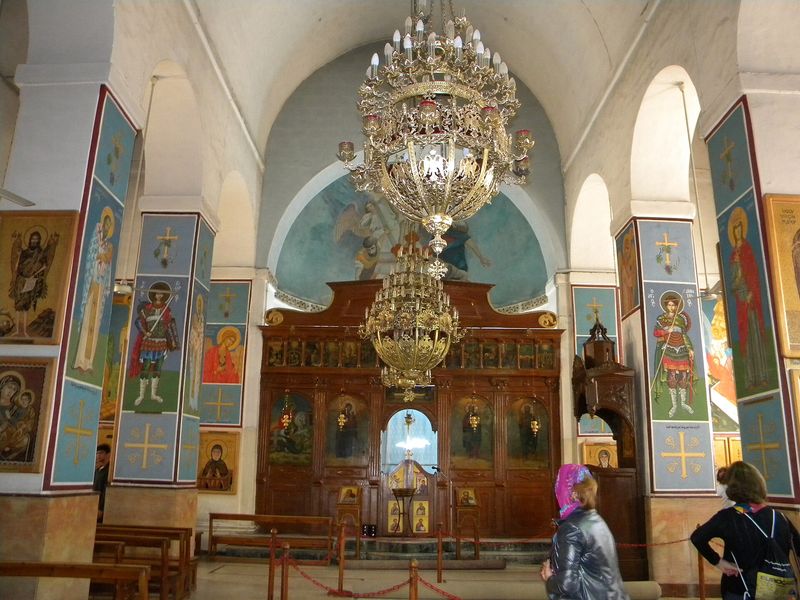
The attack the court was judging took place on October 23, during a funeral at a Greek Orthodox church in Hamoud — also transliterated Hammoud or Hmoud — in Karak governorate, south of the capital. Gunmen opened fire on mourners gathered for the funeral, killing nine people. The wounded count is one of the details on which the record has never fully settled, and precision matters here: Reuters reported 34 wounded in its November 15 sentencing report; Al Jazeera reported 25 wounded in its account of the same ruling; Signal Post News’ original October coverage reported 40 injured. The honest summary is that dozens were wounded, that the figures published by reputable outlets differ, and that no single wounded total should be presented as settled when the sources themselves do not agree.
What is not in dispute is the character of the target. Jordan’s Christians are a small minority — Al Jazeera’s context puts them at roughly 300,000 people in a population of some 11.5 million — and attacks on them are rare to the point of being generational events. Karak is not an anonymous place in Jordanian memory, either: the southern town and its Crusader-era castle were the scene of a major militant attack a decade ago, and the governorate sits at the conservative, tribal heart of the kingdom. A funeral is, by design, the most defenceless gathering a community holds: unarmed, predictable, crowded with the elderly and with families, and organised around grief rather than security. Whoever planned the October 23 shooting chose a target whose vulnerability was the point, and the court’s terrorism convictions reflect that reading of the crime.
The arrest on October 26
The three men did not remain at large for long. Jordan’s Public Security Directorate, as reported by Reuters, said security forces arrested all three on October 26 — three days after the attack — after a shootout at an abandoned house in Karak where they had taken refuge. All three were wounded in the exchange; no security personnel were injured. The speed of the arrest, and the fact that the suspects were taken alive and wounded rather than killed, shaped everything that followed: Jordan would get a trial, with named defendants, stated charges and a public verdict, rather than the unresolved aftermath of a manhunt. For a state whose deterrence message depends on demonstrating both reach and procedure, the distinction matters, and Sunday’s ruling is its completion — arrest, prosecution and capital sentence inside twenty days of the crime.
The trial itself proceeded under the State Security Court’s security-case procedures, and the public record of it is correspondingly spare: the charges, the convictions and the sentences are known because Petra and the military statement announced them, not because the proceedings were open in the way an ordinary criminal trial might be. That spareness is itself one of the standing arguments about the court, and it runs through the reactions any death sentence in Jordan produces. Supporters of the security-court model argue that terrorism cases involve intelligence, informants and ongoing networks that cannot be aired in open court without costing lives. Critics answer that a tribunal which can send men to the gallows on a partly closed record asks the public to trust the state at exactly the moment the state is exercising its most irreversible power. Sunday’s automatic Cassation review sits on top of that argument: it is the mechanism Jordanian law provides for a second, higher look at precisely the questions the first court’s procedures leave unasked in public.
Why this matters
Analysis. Begin with the community that was attacked. Jordan’s Christians are woven into the kingdom’s official self-image — a Hashemite monarchy that presents itself, domestically and to the world, as the guarantor of a plural society in a region where minorities have repeatedly been targeted for extermination. King Abdullah II’s response to the attack, in Al Jazeera’s account of the Sunday statement, was framed around the harshest penalties for those who attack the kingdom’s security and its people. A death sentence for a church attack is therefore doing several kinds of work at once. It is punishment for nine murders. It is a reassurance, addressed to a frightened minority, that the state ranks an attack on them as an attack on itself. And it is a deterrent signal addressed outward, to any network watching, that the price of sectarian violence in Jordan is set at the maximum the law allows.
Then there is the institutional question, which will outlast this case. The State Security Court exists because Jordan has decided, as a matter of structure, that terrorism belongs in a specialised security tribunal rather than in the ordinary civilian courts. Every high-profile verdict it delivers renews the argument about that choice. The government’s case is practical: speed, security expertise, protection of sources. The critics’ case is constitutional and evidentiary: military-influenced security courts, they argue, concentrate accusation and judgment too closely, and capital punishment magnifies every procedural weakness into a potentially irreversible error. Jordan is not the only state in the region to make the security-court choice, and the Cassation review is a real safeguard within it. But the safeguard’s existence does not settle the argument; it defines the ground on which the argument will now be fought, file by file, as the review proceeds.
Finally, there is Jordan’s position in the region, which the October attack tested in a way few domestic crimes do. Jordan is a long-standing United States partner against extremism, a state whose stability is treated by its allies as a regional asset and whose security services are regarded as among the most capable in the Arab world. An attack that killed nine mourners at a church funeral was, among other things, a claim that that competence had a hole in it. The state’s answer has been layered: a fast arrest, airstrikes against groups it linked to the attack across the Syrian border, a joint security committee with Damascus to manage the fallout, and now a capital verdict delivered in three weeks. Read together, the layers are a single sentence spoken in several dialects — military, diplomatic and judicial — and the sentence is that the hole has been closed.

The Syria airstrikes and the road since October
The judicial story is only the last of the three stories October 23 set running. Within hours of the funeral shooting, Jordan launched airstrikes on southern Syria against groups it linked to the attack. Syrian authorities said seven people were killed in those strikes, including three children and a woman — a toll that converted a Jordanian domestic atrocity into a bilateral crisis within a single day. Jordan later acknowledged civilian deaths in Syria, and the two countries agreed to form a joint security committee, a mechanism whose existence acknowledges the obvious: the networks that concern Amman do not stop at the border, and neither can the response to them, but a response that kills children in a neighbouring state creates its own emergency even when its targets are real.
Signal Post News covered each stage of that sequence as it happened, and the sentencing story cannot be understood without it. The funeral attack established the crime; the airstrikes established the regional stakes; the security committee established the diplomatic repair work. Sunday’s verdict now establishes the legal record on which the Jordanian state’s account of October 23 will ultimately rest — who did it, with what support, under what ideology, and at what price. If the Cassation review upholds the convictions, that record becomes final in Jordanian law. The Syrian file, by contrast, remains a matter of two governments and a committee, and it will not be closed by any verdict in Amman.
What happens next
The file now moves, automatically, to the Court of Cassation. That review is not a formality with a foregone conclusion: the Cassation court examines whether the State Security Court applied the law correctly, and capital cases receive the closest scrutiny the system offers. The defendants may also appeal. Only after the judicial process is exhausted does the question of royal assent arise, and Jordan’s recent history — in which executions have been episodic, separated by long pauses, and often clustered around moments of national trauma — offers no reliable basis for predicting when, or whether, these three sentences will be carried out. What can be said is what the law says: sentence, review, assent, in that order, with the state required to stop at each gate.
For the families of the nine mourners killed at Hamoud, and for a Christian community deciding how safe it is, the verdict’s meaning is simpler and heavier than the procedure around it. The men who attacked the funeral have been named, tried and sentenced to die. Whether that sentence is ultimately executed will be decided in courtrooms and palace offices over the months ahead. Whether it deters the next cell is a question no verdict can answer in advance. And whether Jordan’s answer to October 23 — swift, maximal and delivered through a security court — becomes the kingdom’s settled model for the next attack is the question that will still be open long after the Cassation court has ruled on this one.
Related coverage: Jordan Church Shooting: Gunmen Kill 9 at a Funeral in Karak, Shattering a Kingdom’s Calm · Jordan Airstrikes Southern Syria After Church Attack: Seven Killed, Nassib Crossing Closed, Damascus Denies Coordination · Jordan and Syria Form Joint Security Committee After Jordanian Airstrikes Kill Seven Civilians in Daraa
Sources
Reuters — reporting of November 15, 2026, on the State Security Court’s death sentences, reporting the state news agency Petra (convictions for terrorist acts resulting in death, weapons possession for terrorist purposes and promoting a terrorist group’s ideology; appeal and automatic Court of Cassation review; the October 23 Hamoud funeral attack and the October 26 arrest, citing the Public Security Directorate; 34 wounded in Reuters’ sentencing report). Al Jazeera — reporting of November 15, 2026, via the Jordanian military statement (death by hanging; conspiracy to commit terrorist acts; one defendant convicted of providing funds to finance terrorist acts; two Jordanian brothers and their relative by marriage; Christian minority context of roughly 300,000 in a population of 11.5 million; 25 wounded in Al Jazeera’s account). Wounded totals differ between outlets and are attributed in the text wherever used. Photographs: Petar Milošević (CC BY-SA 4.0), Britchi Mirela (CC BY-SA 4.0) and yeowatzup (CC BY 2.0), all via Wikimedia Commons.