Jordan church shooting: gunmen attacked a funeral at St. George's Greek Orthodox Church in Hamoud, in the Karak governorate, on Friday — at least seven mourners killed, dozens wounded, and the attackers still at large.
Three Gunmen Fired on a Crowd of Up to 200 Mourners at St. George's Greek Orthodox Church in Hamoud — in a Country Where an Attack Like This Has No Precedent
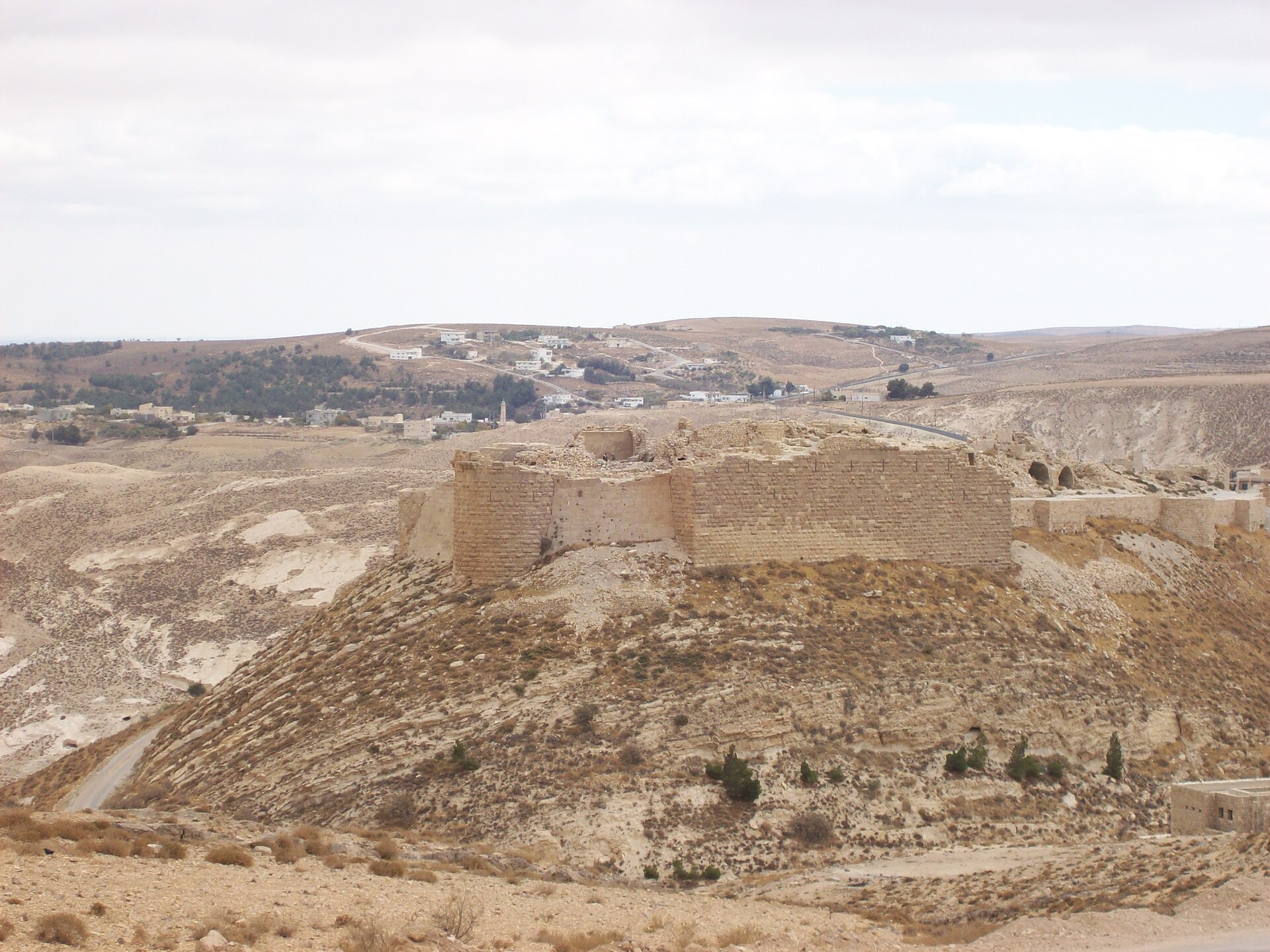
KARAK, Jordan — The Jordan church shooting struck at the most ordinary and most sacred of gatherings: a funeral, in a small Christian town, on a Friday. Mourners had filled St. George's Greek Orthodox Church in Hamoud — a town in Jordan's Karak governorate, roughly 110 miles (180 km) south of the capital, Amman — when, witnesses said, a vehicle stopped outside and gunmen got out and opened fire. Men who had been standing outside the church were among the first hit. Inside, mourners threw themselves to the floor; one woman who survived told CNN that she hid behind the altar with others as the shooting went on. When it stopped, minutes later, at least seven people were dead and the gunmen were gone.
Track it live: Wars and conflicts — live tracker
What happened in Hamoud
The fullest account of the attack's shape comes from the security-camera footage and the witnesses who spoke to Al-Mamlaka, Jordan's state-run television channel, and whose accounts were carried by Reuters, CNN and AP. The funeral was under way at St. George's on Friday when the attackers arrived. Witnesses put the crowd at between 150 and 200 people, inside the church and gathered around it — the scale of a funeral in a town where the church is the centre of communal life.
The footage aired by Al-Mamlaka showed three gunmen approaching and firing toward the church entrance. Witnesses described pistols and a rifle — an AK-47 in some accounts — and said the firing lasted several minutes, about five. Tamer Halasa, a witness who spoke to Al-Mamlaka, said men were standing outside the church when the attackers got out of a vehicle and started shooting. The woman who spoke to CNN described sheltering behind the altar with other mourners. Then, as suddenly as it had begun, the shooting stopped: the gunmen fled by vehicle, witnesses said, before security forces could reach the scene.
The human toll took hours to settle, and the numbers moved repeatedly during the day — a pattern familiar from the first hours of any mass-casualty attack, and one worth stating plainly so the figures below are read as the confirmed floor, not the whole of it. Reuters, CNN and AP all reported at least seven people killed. At a news conference, the head of Jordan's Public Security Directorate, Maj. Gen. Obeidallah al-Maaytah, said 34 people were wounded and 27 of them were still receiving hospital treatment; CNN's reporting put the injured figure at 40. The two numbers were not reconciled by Friday evening, and either may be revised. Local residents said most of the victims were between about 50 and 70 years old — the generation that turns out, in a town like Hamoud, to bury its own.
The manhunt and the investigation
By Friday evening, the attackers remained unidentified and uncaptured, and Jordanian security forces were conducting a manhunt across the Karak governorate and beyond. No group had claimed responsibility, and officials were careful, in public, not to fill that silence with a name. Interior Minister Mazen al-Faraya called the attack unprecedented, and officials said it was too early to establish links to any known militant organisation — a formulation that leaves open every possibility from a directed cell to a self-organised local group, and that investigators will spend the coming days narrowing.
What investigators have to work with is unusually concrete for an attack of this kind. The security-camera footage gives them the attackers' approach, their number and their direction of fire. The getaway vehicle — its make, its route out of Hamoud, the road network south toward the rest of the governorate and north toward Amman — will be traced through the same camera network. The weapons described by witnesses, pistols and a rifle, leave ballistic evidence at the scene. And the choice of target is itself evidence: a funeral, at a named church, in a Christian town, at a predictable hour. Whoever planned it knew the town's rhythms, which points investigators toward local knowledge even if the direction came from elsewhere.
The investigation also lands in a week when the machinery against militant networks was already visibly turning. In the United States, federal prosecutors have just dismantled a Hamas terror-finance network, as we reported in our coverage of the Justice Department's case — a reminder that the financing and facilitation trails investigators follow after an attack are now traced across borders as a matter of routine. Jordanian officials have drawn no such connection to Friday's shooting, and none should be inferred; but the questions Amman's investigators will ask first — who paid, who supplied the weapons, who communicated with whom — are the same questions, and they will be asked with the region's security services watching the answers.
The king's response: "an iron fist"
The response from the top of the Jordanian state was fast, personal and deliberately unsparing in its language. King Abdullah II condemned the shooting in a statement on X as a terrorist act, offered his condolences to the families of the dead, and vowed that Jordan would strike with "an iron fist" — promising the harshest response to those behind it. The king also went in person to the wounded, visiting the injured at Prince Ali Bin Al Hussein Hospital, the kind of appearance that in Jordan's monarchy is itself a message: the state, and the Hashemite crown, standing physically with a Christian community in its grief.
Prime Minister Jafar Hassan, speaking through the official Petra news agency, blamed an extremist ideology rooted in "takfir" — the practice of declaring other Muslims, and by extension their neighbours, apostates whose killing is sanctioned — and said all state agencies were working to bring the perpetrators to justice. The government declared three days of national mourning, with flags at half-staff: a kingdom-wide observance for seven dead in one small town, which is itself a measure of how the state intends the attack to be understood — not as a local crime, but as a wound to the whole country.
That framing — national, unified, above sect — ran through every official statement on Friday. It is the language Jordan reaches for at moments of danger, and officials used it consistently: the interior minister's word "unprecedented," the prime minister's focus on ideology rather than identity, the king's promise of an iron fist paired with a hospital visit. What none of them could yet supply, and what the coming days will demand, is the factual core: who the three men on the camera footage were, and how they came to be outside St. George's with rifles at a funeral.
Condemnation across the region
The reaction beyond Jordan's borders followed within hours. The United States Embassy in Jordan offered condolences and expressed solidarity with the victims and their families. The Latin Patriarchate of Jerusalem — the Roman Catholic authority whose diocese includes Jordan — condemned the attack on the Orthodox congregation. Lebanese President Joseph Aoun called it a heinous terrorist attack, and Iraq and Syria issued statements of condemnation as well. The breadth of that response matters for a specific reason: an attack on Christians in Jordan touches every state in the region that manages its own fragile sectarian balance, and each of them has an interest in the same sentence being said everywhere at once — that this was terrorism against a nation, not a chapter in a communal conflict.
A Christian town, an old community, and a grim echo from 2016
Christians make up about 2 percent of Jordan's population, and towns like Hamoud — also spelled Hmood or Hammoud — have been home to a Christian community for centuries, long predating the modern kingdom. Jordan's Christians are woven into the state's public life, with reserved representation and a monarchy that presents itself as a protector of the country's religious minorities and of Christian holy places. Sectarian attacks, as a result, are rare in Jordan to the point of near-absence: the country has suffered terrorism, including the 2005 Amman hotel bombings, but violence aimed at Jordanian Christians as Christians, in their own church, at a funeral, is the thing officials meant by "unprecedented."
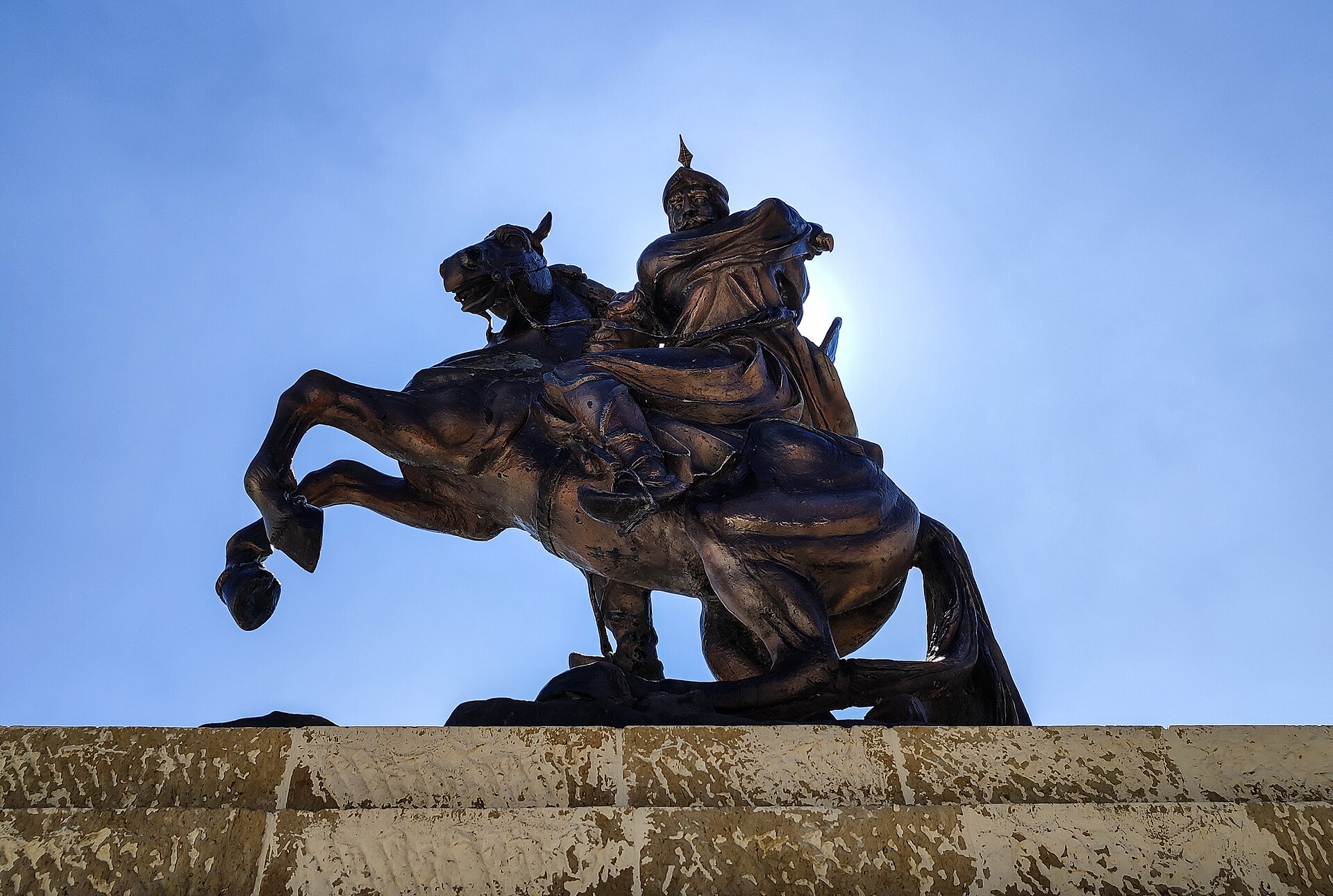
Karak itself carries one earlier scar, and officials and residents reached for it on Friday precisely because of how different it was. In 2016, gunmen attacked police targets in Karak, including the town's Crusader castle, killing 10 people — seven of them police officers — before security forces killed the attackers, as AP recalled in its reporting. That attack was aimed at the state: at police patrols, a police station and a symbol of national heritage crowded with visitors. Friday's was aimed at worshippers. The distinction is the whole of the difference between a country that has faced terrorism before and a country confronting a kind it has not: 2016 tested Jordan's security forces; 2026 tests whether the social fabric itself is the target.
Why this matters
Analysis. Jordan's stability rests on an unwritten bargain that is easy to state and hard to keep: a small, resource-poor kingdom, bordered by Syria, Iraq, Israel and Saudi Arabia and hosting generation upon generation of refugees, holds itself together through a competent security state, a unifying monarchy and a national identity deliberately built above tribe and sect. An attack like Friday's is engineered — whoever engineered it — to strike all three legs of that bargain at once. It asks the security state how three armed men reached a church door and left again. It asks the monarchy to perform unity convincingly, at funerals, for days. And it asks ordinary Jordanians, Muslim and Christian, whether the identity above sect is a fact or a slogan. The three days of mourning, the flags at half-staff and the king at the hospital are the state's answer; whether the answer holds depends on what the manhunt finds and how fast it finds it.
The national-unity test cuts both ways, and the government's framing deserves scrutiny as well as note. By defining the attack from the first hour as terrorism against Jordan — takfiri ideology, in the prime minister's words — Amman forecloses the sectarian reading before it can form. That is a practised and, on past form, effective discipline. But it also front-loads conclusions the investigation has not yet reached: officials themselves concede it is too early to link the attack to any known organisation, which means the ideology named on Friday is an inference from the target, not yet a finding about the perpetrators. The questions critics — in parliament, in the press and in Karak itself — will press are already visible. How did the attackers enter and leave a small town unchallenged, before and after five minutes of gunfire? Did intelligence miss a cell forming, or was there no cell to miss — a harder problem, because it implies the model Jordan's security services are built to detect did not apply? And was this local or directed? Each answer carries a different policy, and the state will be judged on whether its investigation is allowed to arrive at the uncomfortable ones.
The exposure runs beyond security. Jordan's places of worship — its churches now explicitly among them — will require a visible protective posture that the kingdom has historically been spared, and every such measure is an admission that something has changed. Tourism and pilgrimage, pillars of a strained economy, trade on Jordan's reputation as the calm centre of a burning region: Karak's castle is a standard stop on the King's Highway route, and the country's Christian sites draw pilgrims from around the world. And the timing cannot be separated from the region around it. The wider Middle East is at war; Jordan has absorbed the shock waves of those wars for years without importing their sectarian logic. Friday's shooting is the first serious attempt, by persons unknown, to import it — which is why the response of the next week, in Amman's statements and in Hamoud's streets, matters far beyond one governorate.
The numbers in context
Set the confirmed figures side by side and the attack's shape is stark. Seven dead, out of a crowd of 150 to 200: roughly one mourner in every 25 was killed. The wounded — 34 by the Public Security Directorate's count, 40 by CNN's, with 27 still in hospital on Friday — mean that somewhere between a fifth and a quarter of everyone at the funeral was shot. Most of the victims, residents said, were between 50 and 70 years old. Against the country's demography, the target was a community of about 2 percent of the population, in one of its oldest towns. And against Jordan's own history of terrorism, the comparison officials kept returning to — Karak in 2016, 10 dead, seven of them police officers — now has a companion figure with a different meaning: 2016's dead were mostly men in uniform, killed attacking the state. Friday's were civilians at prayer and at a burial, killed, on every account so far, for being where Christians gather. Both numbers belong in the same sentence only to show how far apart they stand.
What happens next
The manhunt comes first, and its possible shapes are limited. If the three gunmen are Jordanian and local, the camera trail and the vehicle give investigators a realistic path to arrests within days — and the state will want arrests, publicly, inside the mourning period, before the victims' own funerals fill the same church again. If the cell had help from outside the governorate or outside the country, the trail runs through communications and financing, and the timeline stretches. Investigators will be looking, in order, for the vehicle and its provenance; for the weapons and theirs; for any local who knew the funeral's timing and the church's layout; and for the digital residue — phones, messages, claims drafted but not yet posted — that modern cells almost always leave.
The claim of responsibility, or its absence, is the second watch. A claim by a known organisation would convert an atrocity into a campaign announcement and force Amman to answer questions about that organisation's presence in Jordan. Continued silence would leave the more unsettling possibility open: attackers who wanted the effect — a kingdom frightened along sectarian lines — without the signature. Either way, the three days of mourning now declared will be the attack's second test. The funerals of the seven will draw crowds to churches across Karak, under heavy security, in full view of the cameras that carried Friday's footage around the world. How Jordan buries its dead this week — together, as the government insists, one nation at half-staff — is the reply the gunmen were trying to prevent, and the one the whole region will be watching for.
Related reading: our report on the alleged terror plot against Nigel Farage, which saw a man charged in Britain this week, and our coverage of the United States withdrawing B-1 bombers from RAF Fairford as that plot's implications widened — two threads of the same week in which plots against public life, in very different countries, ran in parallel with Friday's attack in Karak.
Sources: Reuters (October 23, 2026) — unidentified gunmen opened fire at a church in Jordan causing deaths and injuries, per state television; at least seven killed, with Public Security Directorate chief Maj. Gen. Obeidallah al-Maaytah putting the wounded at 34, 27 of them still in hospital; CNN (October 23, 2026) — at least seven killed and 40 injured at the Greek Orthodox church funeral in Hamoud, a survivor describing hiding behind the altar, security-camera footage showing three gunmen, King Abdullah II visiting the injured at Prince Ali Bin Al Hussein Hospital and vowing the harshest response; Associated Press reporting (October 23, 2026) — at least seven killed at St. George's Greek Orthodox Church in Hamoud, Karak governorate, Prime Minister Jafar Hassan blaming takfiri extremist ideology via the Petra agency and declaring three days of mourning, Interior Minister Mazen al-Faraya calling the attack unprecedented, and the 2016 Karak attacks, in which gunmen killed 10 people including seven police officers, as the governorate's previous experience of terrorism. Casualty figures were revised repeatedly during the day and are stated here as reported by each source; no group had claimed responsibility as of publication, and the attackers had not been identified.