War · Middle East
Two days after Jordanian jets struck Islamic State sites inside Syria — and, by Syria’s account, killed seven civilians, three of them children — Amman and Damascus chose a committee over a crisis. Syria says the strikes were a sovereignty violation it was never told about; Jordan says they were coordinated and killed more than 20 militants. The joint security committee agreed early on Wednesday will examine the strikes and build the field and intelligence coordination both governments now effectively admit was missing. The two capitals still disagree about the most basic fact of Monday night: whether Damascus was told the jets were coming.
Track it live: Syria war map — follow the conflict in Syria and the fallout from the strikes in the south, alongside the wider regional picture on the Middle East tracker.
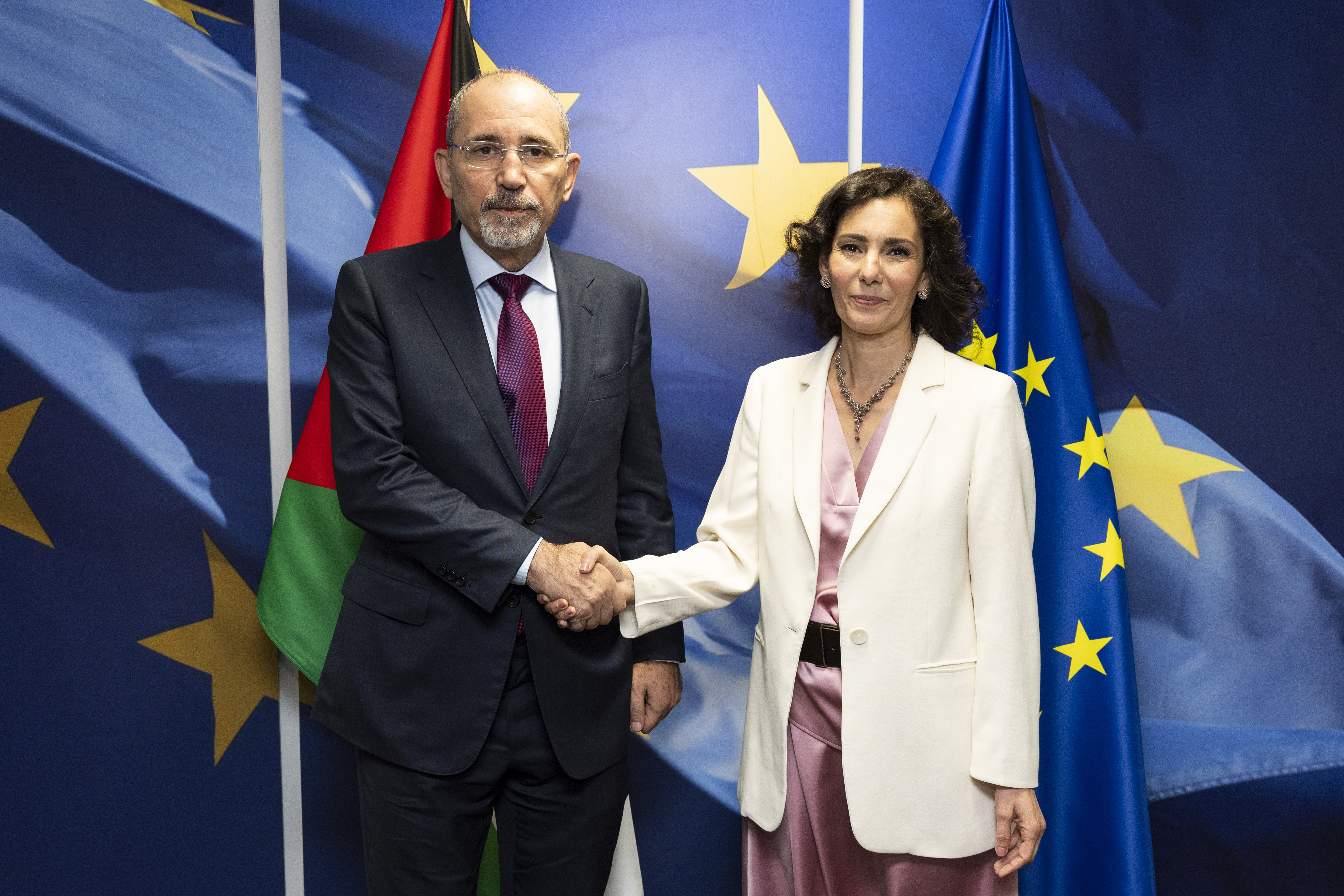
AMMAN — Jordan and Syria agreed early on Wednesday to form a joint security committee to examine the details and repercussions of recent Jordanian airstrikes against Islamic State sites in Syria, the two foreign ministries said in a joint statement — a Jordan Syria airstrikes security committee stood up, in effect, to investigate an operation the two governments still describe in incompatible terms. The agreement, reached in a phone call between Foreign Ministers Ayman Safadi and Asaad al-Shaibani, pairs the inquiry with practical machinery: the committee will also develop field and intelligence coordination on terrorist threats, cross-border drug and arms smuggling, and the protection of civilians.
The Ayman Safadi Asaad al-Shaibani call
The committee was born in a single phone call. According to the joint statement, Safadi told al-Shaibani that the strikes were based on field intelligence and aimed at neutralising confirmed threats and imminent attacks targeting Jordan’s security. He expressed deep regret over the civilian deaths, and stressed Jordan’s respect for Syria’s sovereignty and stability. The statement, carried by SANA and Petra, framed the committee as a joint instrument: it will examine what happened on Monday night and follow up on its repercussions, rather than leaving each capital to publish its own version unchallenged.
That framing matters, because the two versions diverge at the foundation. Jordan’s military said the strikes were conducted in coordination with Damascus. Syria’s government denied any prior coordination or notification, and its foreign ministry condemned the strikes as a violation of Syrian sovereignty and airspace and a unilateral action. Both statements were still standing on Wednesday, unretracted, as the two ministries issued their joint statement. The committee’s first task, before targets or munitions, is therefore a factual one that goes to trust: who knew what, and when.
Jordan airstrikes Syria Daraa: what Amman says it hit
Jordan’s account of Monday evening is a counterterrorism operation with a clear ledger. The Royal Jordanian Air Force struck Islamic State hideouts in Daraa province and the Suwayda countryside, government spokesperson Mohammad al-Momani said, in remarks carried by Petra. More than 20 Islamic State militants were killed, Jordan says, and a major weapons depot destroyed. Amman presents the targets as confirmed threats: cells preparing imminent attacks against Jordan, identified through field intelligence, in borderlands where militant groups and smuggling networks have operated for years.
Those figures are Jordan’s claims, stated by its government spokesperson, and they have not been independently verified. No names of the dead militants, no imagery of the depot, and no battle-damage assessment have been published that would allow an outside reader to test them. That does not make them false; militaries rarely publish their full evidence in 48 hours. But the Jordanian ledger, like the Syrian one below, currently rests on the word of the government that produced it — precisely the gap the joint committee is supposed to close.
Civilian deaths Daraa airstrikes: Syria’s reported toll
Syria’s account is a ledger of a different kind. Syrian authorities say the strikes killed seven civilians, including three children and a woman, and injured three others. Syria’s emergency and disaster authorities said their teams responded to attacks at four sites across the south. The deadliest incident, as reported, was in the village of al-Taf, in Daraa’s al-Lajat area, where a strike on a tent killed five members of one family: a man, a woman and three children. Near Nassib, in al-Shiyah, an 80-year-old man was killed; in Shuhaib, in the rural Suwayda countryside, a 60-year-old man was killed.
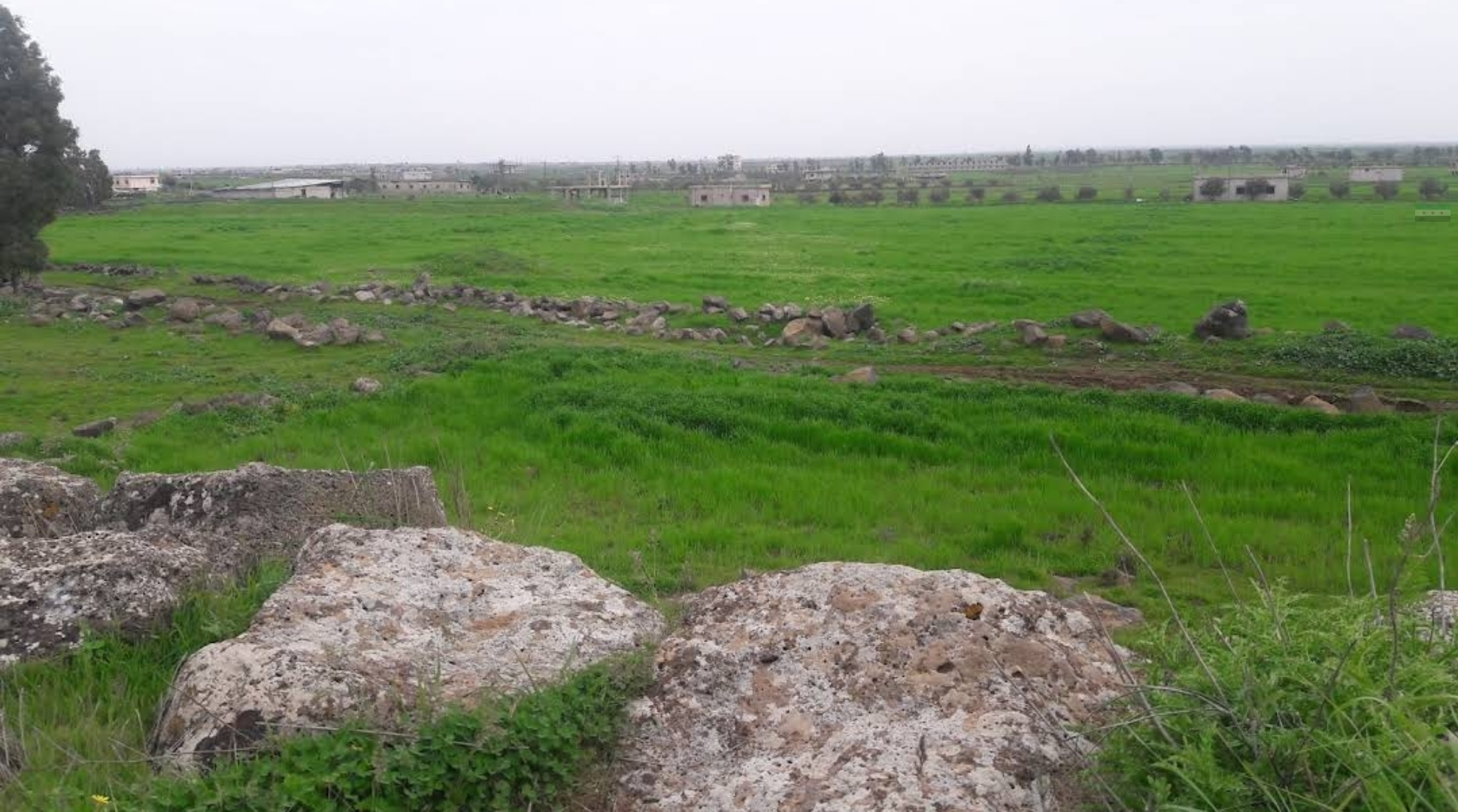
These details come from Syrian officials and state reporting, and they too have not been independently verified; no international investigators have published findings from the four sites. They should be read as Syria’s reported toll. But their specificity — named villages, ages, a family counted member by member — does political as well as informational work. A toll of “seven civilians” is a statistic; a tent in al-Lajat containing a man, a woman and three children is an accusation, and it is the version of Monday night that Syrian public anger, and the calls for an independent investigation described below, are built on. Jordan has expressed regret over civilian deaths without confirming Syria’s numbers, and the distance between that regret and Damascus’s itemised toll is something the committee will have to measure.
Syria sovereignty violation Jordan strikes: the coordination dispute
Underneath the casualty figures sits the dispute that gives this crisis its shape: Syria sovereignty violation Jordan strikes — two phrases for the same night, depending on which capital is speaking. Syria’s foreign ministry condemned the operation as a violation of Syrian sovereignty and airspace, a unilateral action taken without Damascus’s knowledge. Jordan’s armed forces said the operation was conducted in coordination with Damascus. Both claims cannot be wholly true: either Syrian officials were informed and are now denying it, or they were not and Jordan is claiming a coordination that did not happen, or some channel carried some message that each side is now characterising to suit itself.
The stakes run in both directions. For Syria’s government, admitting it was consulted about airstrikes that killed Syrian children would be domestically corrosive; denying coordination defends the principle that no one bombs Syria by arrangement. For Jordan, the claim is its legal and political cover: a strike with the host government’s knowledge is counterterrorism cooperation; without it, in Damascus’s language, a violation of sovereignty. The committee lets both governments park the contradiction in a closed room — but a committee that never publishes an answer will have parked it, not resolved it.
The Karak church attack Jordan says started it
Jordan’s case for acting begins not in Syria but in Karak. On Friday, October 23, gunmen attacked a Greek Orthodox church funeral in Jordan’s Karak governorate, killing nine people in one of the deadliest attacks on Jordanian soil in years. Jordanian security forces arrested suspects — reporting describes three men, two brothers and their brother-in-law, taken after a shootout — and Amman says the trail led across the border: the strikes, Jordan says, followed the Karak attack and targeted the networks behind it.
One element of the Karak story remains genuinely uncertain, and it should be flagged rather than smoothed over: responsibility. Jordan has linked the attackers to Islamic State. Reporting differs on whether ISIL/ISIS itself claimed the attack — some coverage carried a claim of responsibility, while Reuters reported that there had been no claim of responsibility by Islamic State. That distinction is not pedantry. Jordan’s justification rests on the Karak attackers belonging to the same Islamic State network Amman says it hit on Monday; if the group never claimed the funeral attack, the chain from Karak to the Daraa targets depends entirely on Jordanian intelligence that has not been made public. The committee is the first forum in which that chain could be examined by anyone outside Jordan’s security establishment.
Nassib border crossing reopens
If the committee is the crisis’s diplomatic answer, the border is its barometer — and on Wednesday morning the barometer moved. The Nassib border crossing reopens: SANA reported that the crossing, known as Jaber on the Jordanian side and Jordan’s only crossing with Syria, reopened on Wednesday morning, with normal passenger and commercial traffic resuming after its closure on Tuesday. A senior Syrian customs official, Mazen Alloush, told SANA that movement through the crossing would return to normal.
Nassib is not a minor checkpoint. It is the valve on the main overland artery between the two countries — the route for Syrian exports heading south to Jordanian markets and Aqaba, for Jordanian goods heading north, and for the travellers and traders whose lives straddle a border the war years turned into a wall. Closing it on Tuesday was Damascus’s most concrete act of protest; reopening it on Wednesday, before the committee has met, is the clearest signal that neither government wants this dispute to become a rupture. Trade, in this crisis, is a confidence measure: the trucks are rolling while the questions are still open.
Context and background: a young relationship meets its first crisis
To understand why both capitals moved so fast, it helps to remember how new this relationship is. Since the fall of Bashar al-Assad in December 2024, Jordan and Syria’s post-Assad government have been building a working partnership from a low base: security coordination against Islamic State remnants, cooperation against the drug and arms smuggling that has plagued the shared border for years, and the reopening of trade through Nassib. Amman is invested in the new Syria’s stability, reasoning that a functioning Damascus is Jordan’s best defence against the chaos — militants, Captagon, weapons — that an ungoverned south would export across the border.
Monday night tested every strand of that partnership at once. The militants killed Syria-side were, in Amman’s telling, the shared enemy the partnership exists to fight. The method — unilateral or coordinated — struck at the sovereignty the partnership is supposed to respect. And the civilian dead struck at its legitimacy in Syria, where the new government’s promise is, in part, that Syrians will no longer be bombed in their own country by anyone. The same days also brought the Houthi order to evacuate Aden airport and Kuwait’s summons of Iran’s ambassador over an alleged assassination plot — a reminder that this dispute is running in a region where several others are, too.
Why this matters
This is, by most accounts, the first major Jordan–Syria crisis since Assad’s fall, and its importance lies less in Monday’s strikes than in the precedent being negotiated now. Every state fighting Islamic State remnants in Syria’s borderlands faces Jordan’s dilemma: the targets are real, the intelligence is perishable, and Damascus is new, proud and not fully in control of its own south. If the answer that emerges is a working rule — notify, coordinate, verify together afterward — the committee becomes the template for post-Assad cross-border counterterrorism. If nothing is ever established, the template is the opposite: strike first, regret politely, and let the file close itself.
The civilian-protection question is the sharpest edge of that precedent. A family of five died in a tent, on Syria’s account, in an operation aimed at a weapons depot and militant hideouts. Whether that tent was a targeting error, an intelligence error, or a fiction is exactly what an investigation exists to determine — and the demand for one is not coming only from Damascus. In Jordan, a women’s and human-rights committee statement called for an independent investigation into the civilian deaths, a notable intervention in a country where the Karak funerals are fresh and sympathy for striking back is real. Both governments, for their own reasons, chose procedure over confrontation: Jordan gains a channel that legitimises future coordination, Syria gains a formal acknowledgment that the deaths require examination, and both gain time. Who loses if the committee fails is easier to name: the families in al-Taf, al-Shiyah and Shuhaib, whose dead would remain a disputed line in two governments’ statements.
The numbers, and what they do not prove
Strip the rhetoric away and the crisis reduces to a handful of figures, none of which currently corroborates another. Seven: the civilians Syria says were killed, three of them children. More than twenty: the Islamic State militants Jordan says it killed. Nine: the people killed at the Karak funeral. Four: the strike sites Syria’s emergency authorities say they responded to. Three: the injured in Syria’s account, and also the number of suspects reported arrested over Karak.
What do those numbers imply, held against each other? If Jordan’s figure is accurate, Monday’s operation destroyed a substantial militant concentration — more than twenty fighters and a major depot is a network, not a cell — strengthening Amman’s argument that the threat was imminent and the intelligence good. If Syria’s figure is accurate, the same operation killed seven civilians across four sites, including a whole family in a tent, suggesting either that the targets were intermingled with civilians to a degree the intelligence did not capture, or that some of the four sites were not militant positions at all. Both figures can be partly true at once — a strike package can kill militants at two sites and a family at a third — and that is precisely the scenario neither statement contemplates: Jordan’s account contains no civilians except as regret; Syria’s contains no militants at all. The truth almost certainly sits in the overlap: real targets, real civilians, and a coordination failure — or a coordination fiction — in between. Until findings are published, every number in this story should carry its owner’s name.
What happens next
The committee’s work now divides into three tests. The first is factual: will it produce a shared account of Monday night — the targets, the toll, and above all the coordination question — that both governments sign, and will any of it be published? A joint finding that names what happened at al-Taf would be a first in the region’s long history of disputed strikes. A committee that issues nothing will be read as a device for letting the news cycle move on.
The second test is procedural: whether the two sides formalise the rules whose absence caused the crisis. The committee’s remit already points that way — field and intelligence coordination on terrorist threats, joint work against cross-border drug and arms smuggling, and protection of civilians. Written notification procedures, shared targeting information, a channel that functions at 2 a.m. and not just in ministerial phone calls: these unglamorous artefacts will determine whether the next Karak produces a joint operation or another sovereignty crisis. The third test is economic and already under way at Nassib: trade through the crossing is a benefit each side can withdraw, and a second closure would signal that the committee track had failed.
The risk of recurrence is real, because the conditions that produced Monday night have not changed. Islamic State remnants remain in Syria’s south, the smuggling networks remain on the border, and Jordan has now demonstrated that it will strike across that border when it believes an attack is coming. Syria has demonstrated that it will condemn, close the crossing and then negotiate. Both demonstrations will be remembered by every actor watching, including the militants the strikes were aimed at. The pattern is a regional one — this week’s sea-drone strike on the Contship Jet off Bulgaria likewise produced demands for coordination machinery after the fact — but Jordan and Syria agreed theirs within roughly 36 hours, which is either a model of crisis management or an efficient way of burying one.
For now, the crisis sits in a fragile place: a border reopened, a committee agreed, two incompatible accounts of the same night still officially standing, and seven Syrian dead — three of them children, in a tent in al-Lajat — whose deaths two governments have promised, jointly, to explain. Whether that promise is kept will say more about the post-Assad Middle East than the strikes themselves did.
Sources: Reuters (October 27–28, 2026) on the agreement to form the joint security committee, the Safadi–al-Shaibani call and the joint foreign-ministry statement; Reuters (October 27, 2026) on Jordan’s claim of more than 20 Islamic State militants killed, Syria’s toll of seven dead including three children and a woman, the Karak arrests and the disputed coordination; Al Jazeera (October 28, 2026) on the reopening of the Syria–Jordan border and the probe into the strikes; joint foreign-ministry statement and official remarks carried by SANA (Syria) and Petra (Jordan), including spokesperson Mohammad al-Momani’s account and the Nassib reopening. Casualty figures are attributed to the governments that reported them throughout; neither toll has been independently verified, the two governments dispute whether the strikes were coordinated, and reporting differs on whether Islamic State claimed the Karak church attack.