Kyiv drone strike September 2026
Kyiv drone strike September 2026Russia jet drones KyivRussia strikes Odesa cargo vesselsUkraine jet drone interception rateBlack Sea shipping attacks Ukraine
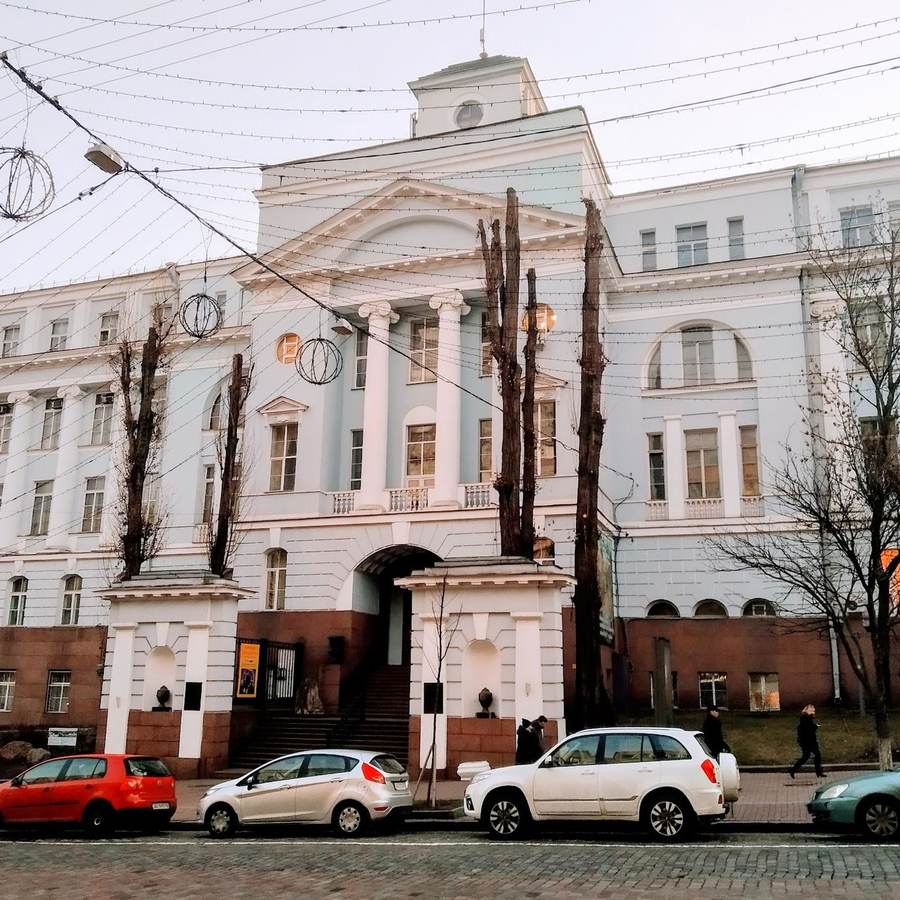
KYIV — The Kyiv drone strike September 2026 hit one of Ukraine's most important scientific institutions in the middle of the working day on Monday, September 28, killing at least one person and injuring 19 in the capital as Russia launched jet-powered drones against Kyiv, Dnipro and other targets. Mayor Vitali Klitschko said six of the injured were hospitalized. Three people were killed at a business centre in Dnipro and one at a logistics office in Synelnykove, southeast of the city, bringing the reported death toll from the attacks to at least five.
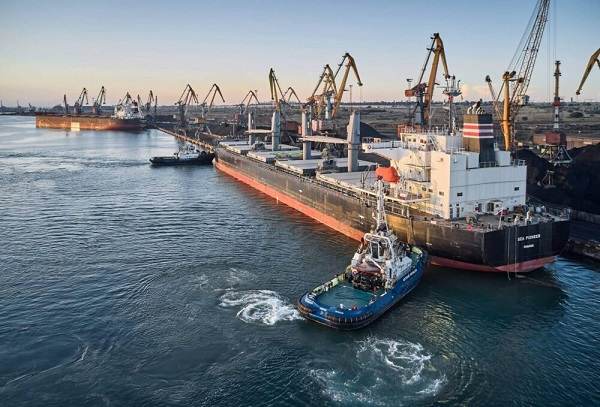
The assault reached beyond urban offices. Russia's Defence Ministry said its forces also struck fuel and telecommunications infrastructure in Kyiv, several data centres, three cargo vessels bound for Odesa, another ship in Chornomorsk and a repair facility at Izmail. Reuters said it could not independently verify those Russian claims. The result is a campaign that now appears designed to impose costs on several systems at once: civilian confidence, air-defence stocks, data connectivity, industrial logistics and the Black Sea trade route.
What happened on Monday: the Kyiv Academy of Sciences drone hit
At the historic National Academy of Sciences of Ukraine building in central Kyiv, fire and broken masonry filled the courtyard after the strike. Klitschko reported one person killed and 19 injured, six seriously enough to remain in hospital. Foreign Minister Andrii Sybiha accused Russia of deliberately striking “a scientific institution in the middle of the working day,” arguing that Moscow was again testing “the boundaries of what it believes the world will tolerate.”
Other Kyiv sites were also hit, according to Ukrainian officials: a pharmaceutical company, petrol stations and a medical facility. Those locations do not by themselves establish what Russian planners intended to hit, but they do show the breadth of the damage in a dense city where even attacks aimed at infrastructure can have a civilian cost.
The Dnipro business centre drone attack killed three people, local authorities said. A separate strike on a logistics office in Synelnykove killed one more. Together with the Kyiv death, those local reports put the day's confirmed Ukrainian toll at five. As with every fast-moving wartime casualty count, the figure may change as rescue teams complete searches and hospitals update conditions.
Moscow described a different target set. The Defence Ministry claimed strikes on Kyiv fuel and telecommunications infrastructure and several data centres. It also said three cargo vessels sailing toward Odesa were hit, along with a fourth vessel in Chornomorsk and a ship-repair facility in Izmail. Reuters could not independently verify the maritime or infrastructure claims, and Russia did not publicly provide evidence sufficient to establish the vessels' identities, cargoes or condition. Those points remain claims by a belligerent, not independently confirmed facts.
The jet-drone problem: Ukraine's interception rate is falling
President Volodymyr Zelenskyy said Saturday that Ukraine now intercepts only “just over half” of the faster, higher-flying jet drones, a markedly worse result than against older propeller-powered models. The Ukraine jet drone interception rate matters because each aircraft that reaches a city forces defenders to choose among scarce and differently capable weapons: mobile gun teams, electronic warfare, short-range missiles and, in the most dangerous cases, high-end interceptors.
From July through September, Ukrainian officials counted more than 350 drone and missile attacks in and around Kyiv. That total does not mean 350 successful impacts, nor does it isolate jet drones; it measures the frequency of threats that repeatedly drove residents to shelter and forced air defenders to reveal positions and expend ammunition. The operational logic is cumulative. An attacker does not need every drone to get through if each wave taxes radar coverage, crews and stocks while a fraction reaches economically valuable targets.
Jet propulsion changes the geometry. Faster, higher-flying drones shorten reaction time and can fly above the comfortable engagement envelope of some gun-based defences. Ukrainian officials also describe mesh-networked systems that can pass information among drones and preserve coordination when one node is jammed. Such claims are difficult to evaluate independently in real time, but the broader direction is clear: Russia is adapting its one-way attack systems faster than Ukraine can field a cheap, universal countermeasure.
The Ukraine air defense Patriot shortage compounds the problem. Patriot is Ukraine's only system with a demonstrated ability to intercept ballistic missiles, which means its expensive interceptors cannot simply be spent freely on every drone. Trump has agreed to grant Ukraine production licences, according to Ukrainian officials, but licensing is not the same as near-term output. Factories, trained labour, quality controls and component supply chains take years to establish. A years-away production solution does little for the battery commander deciding what to fire tonight.
Why this matters: Russia strikes Odesa cargo vessels and the wider economy
Analysis: the connective tissue between Monday's reported targets is economic. Warehouses, ports, power systems, telecoms, data centres and cargo vessels are not interchangeable, but together they keep an import-dependent wartime economy functioning. Ukrainian tallies say 31 warehouses were hit in July, 52 in August and 62 in September. The rising sequence suggests pressure moving beyond battlefield supply lines toward the storage and distribution systems used by businesses and households.
That is why some Ukrainian officials describe the pattern as a “total war on Ukraine's economy.” The phrase is advocacy, not a legal finding, but it captures the strategic argument: if Russia cannot rapidly impose its terms through a decisive ground advance, it can try to raise the cost of ordinary commerce, make winter energy less reliable and persuade investors, insurers and Western governments that supporting Ukraine requires an open-ended financial commitment.
The Academy strike adds a psychological and institutional layer. A national scientific institution is part workplace, part archive and part symbol of continuity. Damage there says that war can reach not only power equipment or military-adjacent industry but the civilian institutions that preserve knowledge and identity. Sybiha's warning about expanding “the boundaries of what it believes the world will tolerate” is Ukraine's case for a stronger response: each strike left unanswered, Kyiv argues, becomes a precedent for the next.
The maritime claims are equally consequential even before independent confirmation. Black Sea shipping attacks Ukraine by changing risk calculations as much as by damaging hulls. Shipowners and underwriters price uncertainty. If vessels bound for Odesa or operating in Chornomorsk and Izmail face a higher perceived chance of attack, war-risk premiums can rise, routes can be delayed, and exporters can receive less for grain or metal after transport costs are deducted.
How we got here: deep strikes and the Kremlin's “paying the price” statement
Monday's attacks came after another cycle of long-range strikes by both sides. Ukraine attacked Moscow during Russia's September parliamentary election period and launched drones toward St. Petersburg in June. Kyiv says such operations target the military, energy and logistics systems Russia uses to wage war. Moscow calls them attacks on Russian territory and cites them to justify continued retaliation.
Kremlin spokesman Dmitry Peskov said Ukraine was “paying the price” for its own attacks on Russia and that Russian forces would continue the operation “systematically.” The Kremlin Ukraine paying the price statement is a political framing, not evidence that Monday's individual targets were lawful or military. It nevertheless explains Moscow's public rationale: portray the expanded campaign as reciprocal pressure rather than unilateral escalation.
President Vladimir Putin said Friday that negotiations remain possible but that Moscow must assess its own interests. That formulation keeps a diplomatic door nominally open while refusing to separate talks from coercive leverage. The two messages fit together. Russia can signal willingness to negotiate and simultaneously intensify attacks intended to improve the position from which it would bargain.
Who benefits, who loses and what critics say
Moscow's potential benefit is leverage. By forcing Ukraine to protect cities, ports, power plants and communications nodes at once, Russia can disperse air defences and compel Kyiv to spend scarce interceptors. The pressure also lands indirectly on Western partners, which must decide whether to replace ammunition, finance repairs and insure reconstruction ahead of winter.
The clearest losers are civilians and firms that cannot relocate. Families bear deaths, injuries, damaged clinics and repeated air alerts. Import-dependent businesses face disrupted inventories and higher financing costs. Farmers and exporters can lose margin when port delays or insurance premiums rise. Black Sea crews and harbour workers absorb risks created far from the front line.
Critics of the Russian campaign, including economists, question whether attacking dispersed civilian and commercial infrastructure can produce a strategic payoff proportional to the cost in weapons and international condemnation. Human-rights monitors focus on the predictable civilian toll when explosive weapons are used in populated areas. Ukrainian officials make a more immediate argument: allowing attacks on institutions and trade routes to become routine encourages repetition.
Russia rejects that characterization and says its campaign is directed at fuel, communications, data and logistics targets that support Ukraine's war effort. The factual dispute is not resolved by either side's labels. It depends on target selection, proportionality, precautions and evidence about each strike — evidence that is often incomplete during an active conflict.
What the numbers actually mean
Three figures define the strategic picture. First, “just over half” is not a total air-defence failure, but it is a large leak rate when attacks arrive repeatedly over cities. Second, more than 350 drone and missile attacks around Kyiv in three months translate adaptation into sustained pressure: even a modest success rate can produce regular damage. Third, Ukraine says it retook 176 square kilometres in northern Donetsk in the separate Operation Vivaldi counteroffensive. That territorial claim has not been independently mapped in full, but it matters because it points in the opposite direction from the economic campaign.
Read together, the numbers show a war broadening rather than simply accelerating along one axis. Russia can widen attacks on data, shipping and urban institutions even as its frontline advances slow in places and Ukraine claws back ground elsewhere. The contest is migrating off the battlefield onto the economy: the ability to keep electricity, ports, communications, finance and public confidence functioning may matter as much as the control of another village.
What happens next
Winter infrastructure attacks are the first risk. Russia targeted power plants and substations in previous winters, and the addition of faster drones could make layered defence more difficult. Ukraine will try to disperse equipment, accelerate repairs and hold back high-end interceptors for the threats only they can defeat.
Black Sea risk will be repriced. If ship strikes are verified or repeated, insurers may demand higher premiums, narrower navigation windows or stronger guarantees. Even without a formal closure, higher costs can behave like a partial blockade by making some voyages uneconomic.
The defence race may not close quickly. New sensors, electronic warfare and lower-cost interceptors could improve the response to jet drones, but the adaptation cycle runs both ways. Patriot licensing is strategically meaningful; it is not an immediate answer to tonight's raids.
Diplomacy will absorb the battlefield and economic pressure. A U.S. push to restart negotiations would arrive while both Moscow and Kyiv are trying to show that time is not working against them. Russia will point to the costs it can impose; Ukraine will point to defensive resilience and counterattacks. Whether talks resume may depend less on a single statement than on whether each side believes another month improves its leverage.
Sources
Reporting basis: Casualty figures are attributed to Ukrainian officials. Russia's claimed strikes on cargo vessels and infrastructure are clearly labeled and were not independently verified by Reuters at publication.