Zelenskyy's announcement on October 1 puts Ukraine in the small club of states fielding domestic ballistic missiles — and frees Kyiv from the permission politics of Western long-range arms.
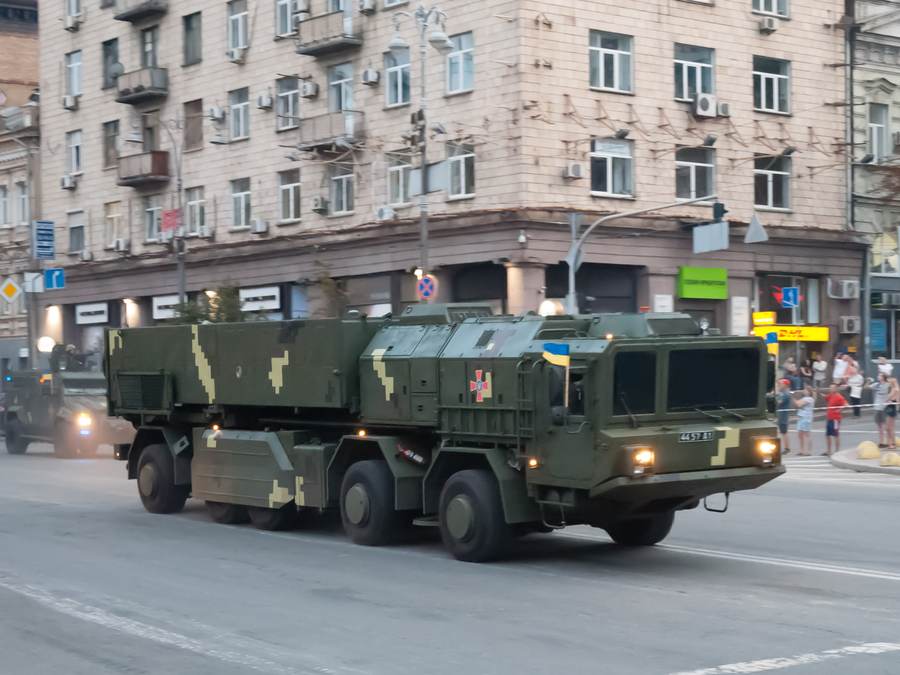
The Ukraine FP-7 ballistic missile has entered combat. President Volodymyr Zelenskyy announced the first use on Telegram on October 1, identifying the weapon as a Fire Point-built tactical ballistic missile. Ukrainian military analysts put its range at roughly 200 kilometres, while the manufacturer lists up to 250 kilometres. Kyiv disclosed neither the target nor the launch location or unit, leaving the result — and much of the missile's operational story — deliberately out of public view.
The announcement is brief, but the capability it signals is consequential. A domestic ballistic missile gives Ukraine a fast, hard-to-intercept strike option that it can employ without seeking permission from governments that supplied ATACMS or Storm Shadow/SCALP missiles. Whether the FP-7 becomes a strategic asset, however, depends less on a single successful launch than on how many Ukraine can reliably produce.
What Zelenskyy announced
Zelenskyy's short Telegram message read: “Ukrainian tactical ballistic missile FP-7. First combat use,” followed by, “Thank you for the result. Next - production.” Defence Blog rendered a fuller version as: “Ukrainian tactical ballistics. FP-7. First combat use. Thank you for the result. Next, production. Glory to Ukraine!” The difference is stylistic, not substantive: both versions frame the launch as a completed operational test and mass manufacture as the next problem.
Earlier this year, Zelenskyy had praised test results from Ukraine's tactical ballistic missile work, saying the systems showed good potential for military use. The October message moves the claim one rung higher — from a promising trial to use under combat conditions — while offering no evidence about the target, damage or reliability beyond the president's thanks for “the result.”
“Next - production” is therefore both a celebration and an admission. A prototype can prove a design; a sustained campaign requires repeatable components, trained crews, secure launchers and a supply chain able to survive Russian attack. The wording signals that Ukraine believes the engineering threshold has been crossed but not that an arsenal already exists.
The silence over the target, location and launching unit is also operationally useful. It deprives Russia of immediate clues about basing, trajectory, launcher type and battle-damage assessment, while preserving Kyiv's freedom to reveal more later if disclosure advances deterrence. It also keeps outside analysts from independently testing the claim, so the announcement must be treated as a Ukrainian government statement rather than a fully documented combat record.
What the FP-7 can do: range, payload, accuracy
The Fire Point FP-7 range specs describe a short-range tactical ballistic missile able to carry a 200-kilogram payload as far as 250 kilometres, with a claimed accuracy of 14 metres. Ukrainian military analysts have used a more conservative range figure of about 200 kilometres, or 125 miles. Manufacturer claims are not the same as independently verified battlefield performance, but even the lower figure would place a broad belt of Russian and Russian-held military infrastructure within reach from Ukrainian-controlled territory.
The same missile family has a second mission. Ukraine is developing the FP-7 as a ballistic interceptor within the European Freyja missile defence programme, launched this year. That is an unusually ambitious dual role: a weapon designed to follow a ballistic trajectory toward a ground target must, as an interceptor, detect, calculate and meet another fast-moving missile in flight.
Davyd Aloian, deputy secretary of Ukraine's National Security and Defence Council, said in July 2026 that the Freyja effort was targeting an interceptor prototype in the first half of next year. The H1 2027 objective turns the FP-7 from a national strike programme into a test of whether Ukraine's wartime engineering base can contribute to a broader European shield. It also creates competing demands for propulsion, guidance and production capacity between offensive and defensive variants.
Why this matters: the permission problem disappears
The strategic distinction in FP-7 vs ATACMS is not simply range. US-made ATACMS can reach roughly 300 kilometres, and the air-launched Storm Shadow/SCALP family about 250 kilometres, but both arrive with political conditions attached. Supplier governments have debated, narrowed or changed where and how Ukraine may use them. A Ukraine homegrown ballistic missile moves that decision from an alliance meeting to Kyiv's own chain of command.
That autonomy sends Moscow two messages. First, limits placed on Western weapons no longer define the entire geography of Ukrainian strike options. Second, destroying imported stocks or pressuring supplier capitals cannot by itself close the capability. The effect is deterrent only if Russia believes Ukraine has enough missiles, accurate enough targeting and resilient enough launch units to impose recurring costs.
Russia frequently uses Iskander and other ballistic missiles against Ukrainian targets, including cities and energy infrastructure. Ukraine has long described tactical ballistic missiles as an important defence need partly because air defence alone cannot eliminate that threat. The FP-7 does not erase Russia's much larger missile inventory, but it introduces a domestic answer that Moscow must now account for in protecting airfields, depots and command sites.
Background: how Ukraine got its own missile
Ukraine inherited major aerospace expertise from the Soviet Union, including the Yuzhnoye design bureau and an industrial base capable of designing rockets, engines and guidance systems. Independence did not automatically produce a deployable national ballistic missile. Funding was intermittent, export prospects uncertain and successive Hrim-2/Sapsan efforts advanced in fits and starts. The missile complex displayed in Kyiv in 2018 was evidence of ambition, not proof of a fielded force.
Russia's full-scale invasion changed the urgency and the economics. Ukraine needed weapons that could be designed around available components, dispersed across protected workshops and improved from combat feedback. Fire Point rose in that environment through its long-range FP-1 drones, showing how a newer Ukrainian company could move from rapid unmanned-aircraft production toward more demanding missile work.
The debut also lands in the middle of a deep-strike duel. On October 1, Ukraine said it struck the Samara oil refinery and targets in the Oryol and Bryansk regions; our report follows Ukraine's Samara refinery and Black Sea strikes. Russia, in turn, hammered Kyiv: a drone hit a school while children and staff sheltered below, covered in our report on the Kyiv school drone strike, and the previous night's barrage targeted the power grid. The FP-7 is not entering an empty contest; it is entering one in which both sides already reach far beyond the front.
Who benefits, who loses — and what the critics say
Ukraine gains the prospect of deterrence by denial and punishment: Russia must disperse assets, harden facilities and spend interceptors on another class of threat. Ukraine's defence industry gains a demanding production programme, while the Freyja European missile defence programme could connect that expertise to continental funding and procurement. If the interceptor variant succeeds, the same engineering base could support both a national strike capability and a European defensive layer.
Russia loses some confidence in rear-area sanctuary. Border-region airbases, ammunition depots and command-and-control sites in occupied territory become costlier to operate when a ballistic weapon can arrive faster than the long-range drones Ukraine has used most often. Yet Russia retains depth, layered air defences and the ability to hunt the factories, suppliers and launch units behind the programme.
Critics identify two serious risks. The first is escalation: a faster weapon with an uncertain trajectory can compress warning time and be misread before its target is clear. The second is scale. “Next — production” is not a production report. One successful combat use says little about monthly output, quality control or the ability to replace missiles after Russia attacks the industrial base. Those caveats do not negate the debut; they define the test that follows it.
What the numbers actually imply
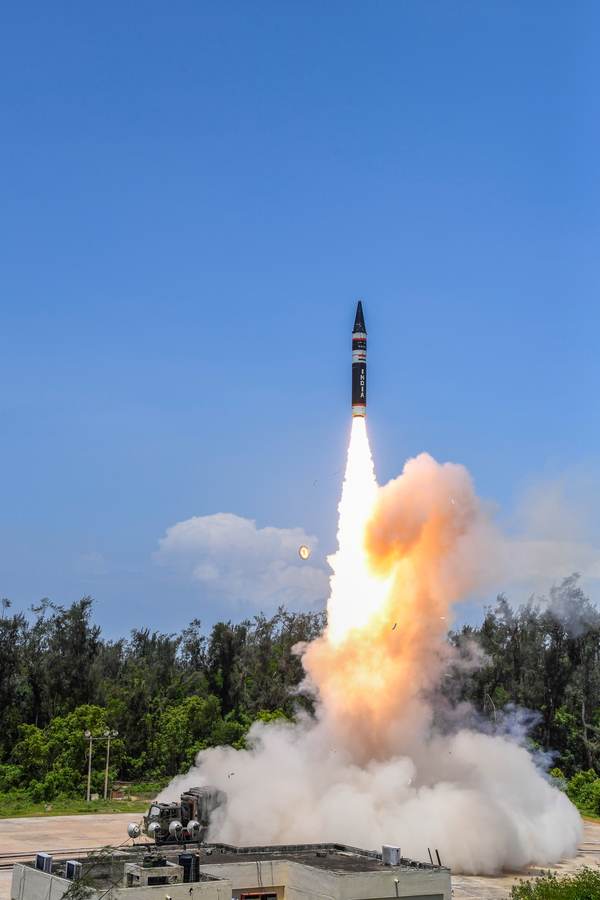
Read together, 200–250 kilometres × 200 kilograms × 14 metres describe a theatre weapon, not an intercontinental one. Fired from appropriate positions, that envelope could cover border-region airbases and logistics depots, command-and-control nodes in occupied Ukrainian territory, ammunition concentrations and other fixed military infrastructure. The 200-kilogram payload is large enough to damage such targets; the 14-metre accuracy claim, if achieved under combat conditions, would make it more useful against specific facilities than an area weapon.
The comparisons set its place. ATACMS reaches about 300 kilometres but is restricted by its supplier. Storm Shadow/SCALP is commonly credited with roughly 250 kilometres in export configuration and also remains subject to external controls. Russia's Iskander reaches around 500 kilometres and belongs to a larger, mature inventory. The FP-7 therefore does not outrange Russia or fully replace Western systems; it fills a politically unconstrained middle band.
Ballistic speed shortens reaction time and makes interception more demanding than it is against slower one-way attack drones. That does not make a ballistic missile invulnerable: modern Patriot-class defences can engage some trajectories, and predictable launch areas or poor tactics create opportunities to strike the launcher before or after firing. Drones remain cheaper, more plentiful and useful for saturation. The Ukraine 200 km strike capability matters because it adds speed and warhead weight to that mix, forcing defenders to prepare for unlike threats at once.
What happens next
Three tracks will show whether the announcement becomes a durable capability. The first is production scale-up: Ukraine domestic missile production in 2026 must move from a celebrated result to repeatable output without advertising factory locations or supply bottlenecks. The second is disclosure. Kyiv may eventually identify the first target, provide imagery or allow evidence of the strike to emerge; continued silence would protect operations but leave outside verification limited. The third is the Freyja prototype, due in the first half of 2027, which will test whether the FP-7 architecture can also serve missile defence.
Moscow has several response options. It can amplify rhetorical warnings about attacks on Russian territory, intensify efforts to strike Fire Point and its suppliers, move valuable assets outside the range ring, or answer with retaliatory missile and drone waves. None is cost-free: dispersal reduces efficiency, hardening takes time, and retaliation risks accelerating the very Ukrainian production Moscow wants to suppress.
The near-term scenarios range from a small inventory reserved for carefully chosen targets, through regular use alongside long-range drones, to a production bottleneck that turns the first launch into an isolated demonstration. The available evidence cannot yet distinguish among them. What is clear is that the FP-7 changes the arithmetic of an already-crowded escalation ladder.
Related coverage
- Zelenskyy visits the Lyman frontline as Operation Vivaldi reports gains
- Russia's overnight strike hits Kyiv and the power grid, killing a child
Sources
- Reuters — “Ukraine deploys FP-7 tactical ballistic missile in combat for first time, Zelenskiy says” (October 1, 2026)
- Defense News via scoopfeeds — FP-7 first combat use report (October 1, 2026)
- Defence Blog — “Ukraine confirms first combat use of new ballistic missile” (October 1, 2026)