Cybersecurity · Japan · Policy
The Japan emergency cybersecurity package announced on November 6 puts about ¥10 billion — roughly $63 million — of reserve funds behind AI-assisted inspections, police cyber capability and hardened government systems, after a four-month run of breaches that reached dozens of companies and agencies. It is a fast, serious response. It is also, honestly read, a down payment: funding starts the work of fixing Japan’s defences; it does not prove the weaknesses are fixed.
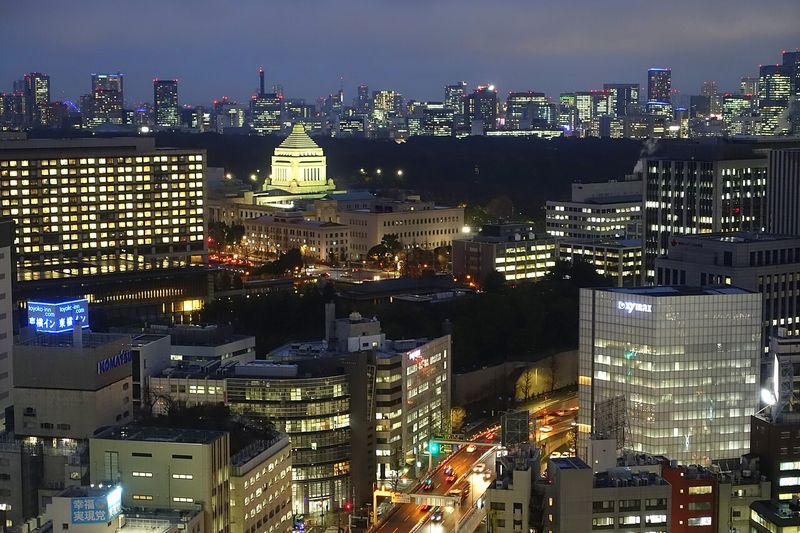
TOKYO, November 8, 2026 — Japan’s government announced an emergency cybersecurity package on November 6, with roughly ¥10 billion (about $63 million) approved from fiscal 2026 reserve funds at that day’s Cabinet meeting. The trigger was a relentless run of intrusions: dozens of companies and government agencies have suffered unauthorised access and customer-data leaks, with at least 81 incidents reported since July — by the government’s own framing, about a third of all attacks recorded in the past three years, compressed into a single summer and autumn. A drumbeat that dense stops looking like isolated failures and starts looking like a systemic condition, which is how the Takaichi government is treating it.
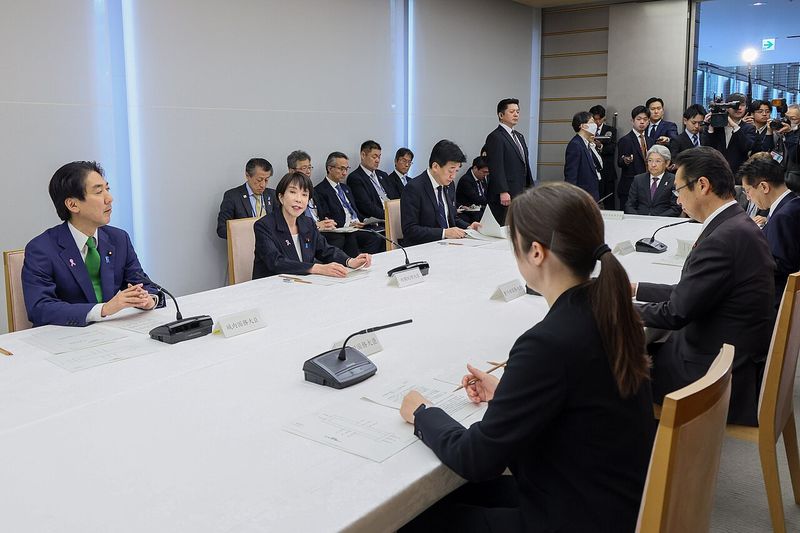
Prime Minister Sanae Takaichi’s package is organised around four pillars: AI-assisted basic defences; consolidated intelligence and investigation; a strategic capacity to respond to attacks; and stronger support for victims. The institutional build-out matches the pillars. The Ministry of Economy, Trade and Industry (METI) will stand up a specialist “top gun” team by the end of November that uses AI to hunt for weaknesses in important systems before attackers find them. A public-private cyber rescue team will act as first responder when organisations are hit. And for incidents touching national security, joint teams drawn from the Defence Ministry, the police and the National Cybersecurity Office will handle the response — an explicit admission that the line between criminal intrusion and state-backed operation can no longer be assumed in Japan’s favour.
Where the money goes
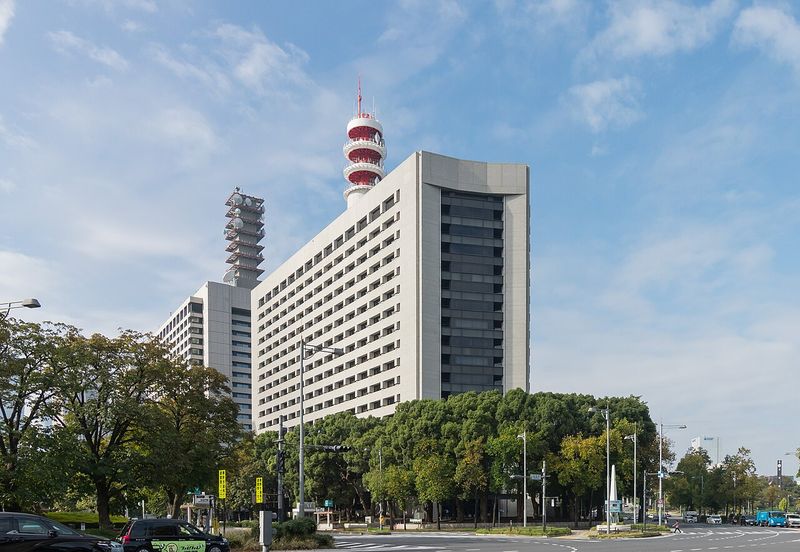
The itemised breakdown comes from Jiji Press reporting, and Signal Post News attributes it on that single-source basis: about ¥2 billion for AI-assisted vulnerability inspections of key government systems; about ¥4.1 billion for police cyber equipment and training; and about ¥3.8 billion to strengthen the Digital Agency’s systems. The shape is instructive. The largest share goes not to the centre but to the police — the people who investigate the intrusions Japan has actually been suffering — while the Digital Agency share acknowledges that the government’s own digital backbone is part of the attack surface, a vulnerability Japanese readers have had recent reason to contemplate in stories such as the outage that felled 128 shinkin banks this month.
Background: a summer that broke the pattern
Japan has been building cyber institutions for a decade — a cybersecurity basic law, a national centre for incident readiness, and, under Takaichi, a push toward a fuller intelligence architecture that Signal Post News covered in Tokyo’s move toward its own central intelligence capability. What it has repeatedly lacked is depth at the operational layer: enough skilled defenders, modern equipment outside a few flagship agencies, and rehearsed first-response capacity for the long tail of companies and local bodies that hold citizens’ data. Eighty-one incidents in four months is what that gap looks like when adversaries find it. Nor is Japan alone in the region: the same season brought AI-driven attacks on South Korean banks, and Tokyo’s package — AI used defensively, to inspect and hunt weaknesses, not only offensively feared — reads partly as an answer to that regional escalation.
Who gains, who loses, who pushes back
Government agencies and the police gain resources they have visibly lacked, delivered at emergency speed through reserve funds rather than a budget cycle. Japanese companies gain a first-responder structure — the public-private rescue team — that smaller firms in particular could never build for themselves. Victims of breaches gain an explicit pillar of the policy, a shift from treating data leaks as the breached company’s public-relations problem to treating the people in the data as the government’s concern.
The sceptics’ questions are about scale and proof. ¥10 billion is real money and small money at once — roughly $63 million against the defences of the world’s fourth-largest economy, spread across inspections, equipment, training and systems work. Comparative context sharpens the point: a single mid-sized breach at a major company can cost more than this entire package. Critics also note, correctly, that announcements of teams and tools are the beginning of capability, not capability itself — a “top gun” team stood up by November 30 is a roster and a mandate, and its value will be measured in vulnerabilities found and closed, figures no one can cite yet. The honest summary is the one the government’s own framing invites: this is an emergency down payment whose success will be proved, or not, in next summer’s incident count.
Why this matters
Incident density changed the politics
Eighty-one incidents since July — a third of three years’ attacks in four months — did what years of white papers could not: it made cybersecurity a Cabinet-meeting, reserve-fund, prime-ministerial subject. That shift in political altitude matters beyond this package, because Japan’s coming debates — active cyber defence powers, intelligence reform, public-private information sharing — all move faster once a prime minister has publicly owned the problem. The package is therefore best read as two things at once: a procurement list, and a political unlock for the harder legislation behind it.
AI is being bought as a defender, not only feared as a weapon
The most forward-looking line in the package is the smallest: ¥2 billion for AI-assisted vulnerability inspections, plus METI’s AI-driven “top gun” hunters. Japan is betting that the same technology compressing attackers’ timelines can compress defenders’ — that automated inspection can find the unpatched system and the exposed database before an adversary’s automated scan does. That bet is testable within a year, which makes it the part of the package to watch first.
What happens next
The calendar is explicit. METI’s specialist team is to be stood up by the end of November; the inspections of key government systems, the police equipment and training pipeline, and the Digital Agency strengthening all begin with the reserve-fund money now approved. Three measures will judge it. The incident count through the winter — whether the July-to-November density breaks or continues. The first published results of the AI-assisted inspections: how many critical weaknesses were found in key systems, and how fast they were closed. And the legislative follow-through, as the government’s broader cyber and intelligence bills move through the Diet with this summer’s 81 incidents as their Exhibit A. Funding starts the work; only those numbers will show whether the work is working.
What do you think — is ¥10 billion a serious down payment on Japan’s cyber defences, or a headline number too small for the problem? Follow Signal Post News for the METI team’s first findings, and share your thoughts below.
Sources
Sources: Prime Minister’s Office of Japan (Kantei) — Cabinet decision and the four-pillar framework; Associated Press reporting, via TechXplore, on the November 6 emergency package; Jiji Press, via Nippon.com — the ¥2 billion / ¥4.1 billion / ¥3.8 billion itemisation is attributed to Jiji Press reporting, as noted in the text. Photos: Wikimedia Commons, as credited in the captions.