Economy · Japan · Banking
At about 1:30 p.m. on Friday, a communications-equipment failure at the Shinkin Joint Center’s West Japan Center knocked out banking at 128 credit unions at the same moment — every ATM unusable, counter transactions halted at 3,430 branches, and no way to deposit, withdraw or transfer money. The center said it did not believe unauthorized access was involved, an assessment the shinkin association echoed by calling a cyberattack extremely unlikely, and it gave no timetable for a fix.
Track it live: Live markets tracker
TOKYO, November 6, 2026 — At about 1:30 p.m. on Friday, banking simply stopped across half of Japan. A system failure at the Shinkin Joint Center — the shared computer center that runs core banking for Japan’s shinkin credit unions — knocked out services at 128 institutions at the same moment: every shinkin from the Tokai region, around Shizuoka and Aichi, westward to the far end of the archipelago. All of their ATMs became unusable. Counter transactions halted at 3,430 branches. Deposits, withdrawals and transfers — the three things a bank exists to do — became impossible, and at many of the affected institutions internet banking and smartphone apps went down as well. The center said a communications-equipment failure at its West Japan Center caused the outage, that restoration work including system restart attempts was under way, and that it did not believe unauthorized access was involved. It gave no timetable for a fix.
The failure drew a line down the middle of the country. The joint system serves 236 shinkin banks — more than 90 percent of all the shinkin in Japan — but only the 128 served from the west went dark. Shinkin in eastern Japan, plugged into the same national network from the other side, kept transacting normally on Friday afternoon: same cooperative brands, same software family, same payday-weekend Friday, and two entirely different banking realities separated by nothing more than which data center a local credit union happens to connect to. That split is the whole story in miniature. The shinkin movement pooled its technology precisely so that no small regional lender would ever face a systems crisis alone. On Friday, the pooling worked exactly as designed — and 128 banks discovered what it means to share a fate.
What stopped, and where: every ATM dark, 3,430 branch counters halted
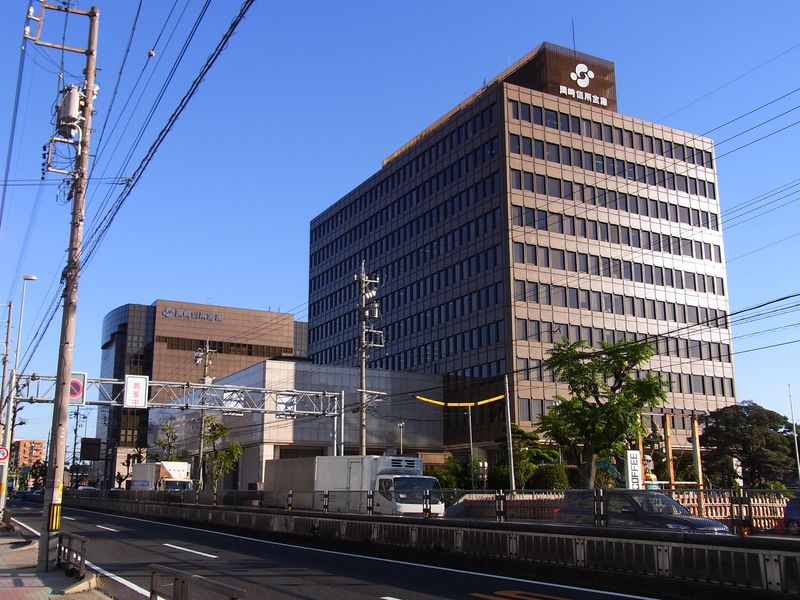
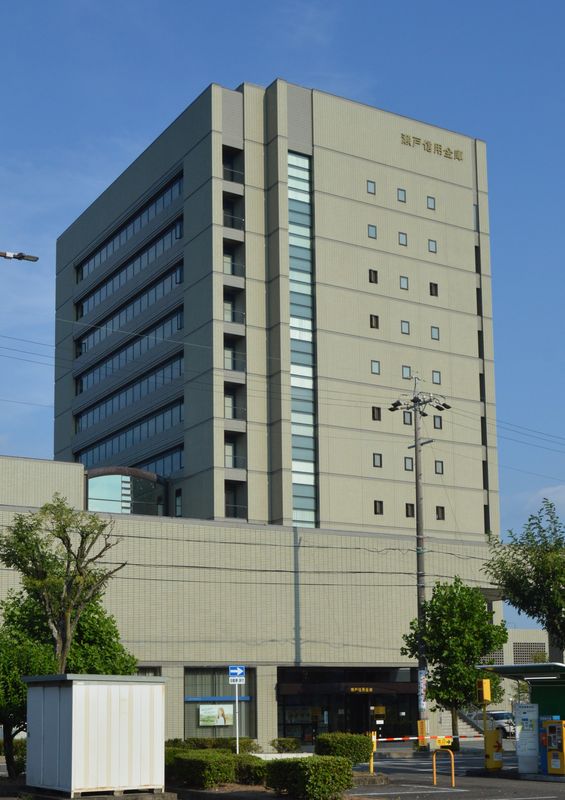
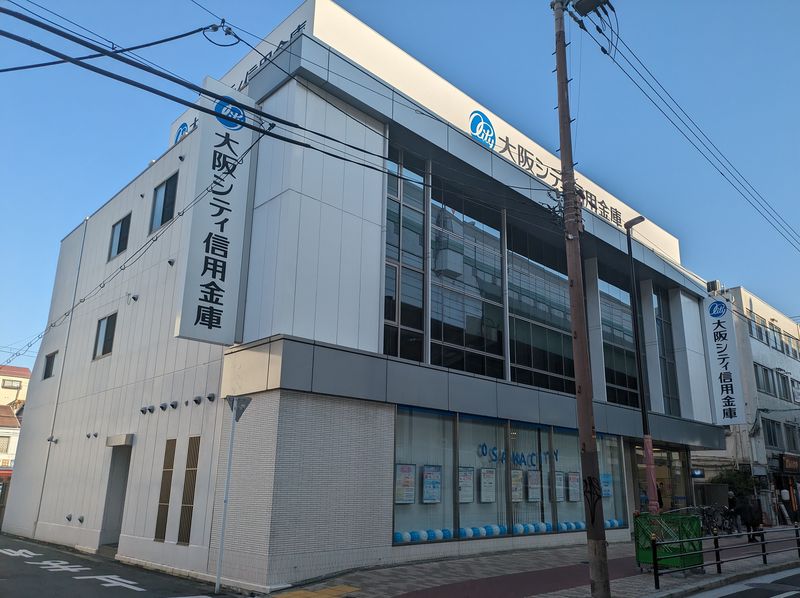
The outage was total within each affected institution. According to the Shinkin Joint Center and the banks’ own statements, all ATMs of the 128 shinkin became unusable, and counter transactions were halted at 3,430 branches across western Japan. Customers could not deposit money, could not withdraw money and could not send transfers. At many of the institutions, internet banking and banking apps were also unavailable, closing the digital workaround that customers of a single broken branch might normally use. The affected map covers every shinkin from the Tokai region — Shizuoka and Aichi prefectures — westward: the Kansai region around Osaka, the Chugoku region, Shikoku and Kyushu. Among the institutions named in the banks’ own notices and in Japanese media reports were Okazaki Shinkin, the largest shinkin across the three Tokai prefectures; Seto Shinkin; Gifu Shinkin; Aichi Shinkin; Osaka City Shinkin; and Hiroshima Shinkin — a roll call of the lenders that bank much of local Japan west of Nagoya.
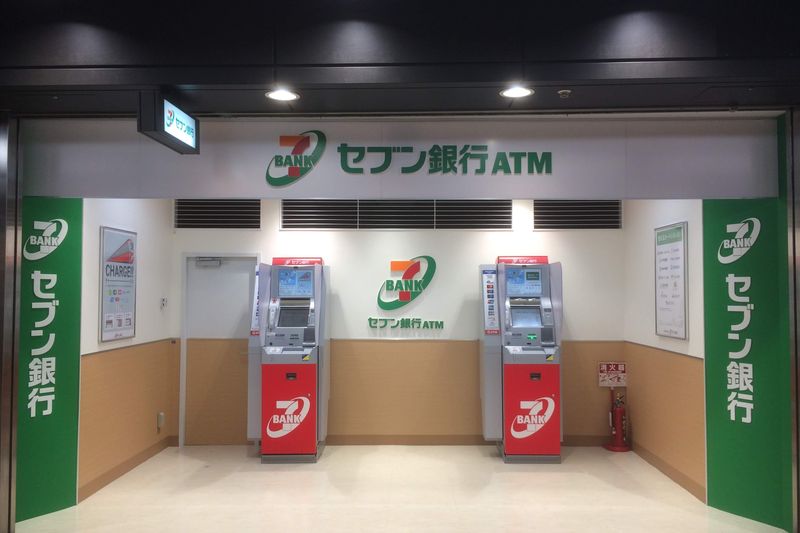
The failure also leaked beyond the shinkin’s own walls. Seto Shinkin, based in Seto, Aichi, advised customers that its cards were failing not only at its own machines but at partner institutions’ ATMs and at convenience-store ATMs — the dense network of cash machines in Japan’s convenience stores that normally makes a local bank’s card usable almost anywhere. Seto also said some direct debits were being delayed or held, a quiet detail with loud consequences: a direct debit that does not move is a utility bill, a supplier payment or a loan repayment that appears, to the receiving side, not to have been paid. Some affected banks advised customers who needed to make an urgent transfer to route it through a non-shinkin financial institution instead, or to consult staff at their branch — an extraordinary instruction from a bank, amounting to: for now, if it cannot wait, take your banking somewhere else.
The explanation so far: a communications failure at the West Japan Center, and no clock on the fix
The operator’s account, as it stood on Friday, was narrow and specific. The Shinkin Joint Center said the outage was caused by a failure in communications equipment at its West Japan Center, and that restoration work — including attempts to restart the affected systems — was in progress. It offered no restoration timetable. On the question every bank customer now asks first, the center said it did not believe unauthorized access was involved in the failure, and the shinkin association characterized a cyberattack as extremely unlikely. Those judgments should be read for exactly what they are: the operators’ early assessments, offered on the day of the failure and not, at publication time, accompanied by a published technical account that outsiders can test. Signal Post News reports them as attributed assessments, not as established fact. What is established is the shape of the event itself — simultaneous, regional, confined to one center’s territory, and consistent with the equipment failure the center describes.
The missing timetable is, operationally, the hardest part of the incident. A customer told that a system will return at a stated hour can plan around it; a business told nothing must improvise payroll, supplier payments and weekend cash in the dark. Japanese banking runs on a dense web of scheduled debits and credits, and Friday afternoon is when much of the week’s small-business money movement is completed. Every hour the outage runs without a horizon, the improvisation compounds — and the workaround the banks themselves are suggesting, using a different institution, quietly moves deposits, fees and habits to competitors. The center’s engineers are racing two clocks: the technical one, and the one that measures how long customers will wait before they stop waiting.
Why this matters
One shared core is efficient — until it is a single point of failure for 236 banks
The joint-center model is not an accident or a shortcut; it is the rational answer to a real problem. No forty-branch cooperative lender in a prefectural city can build, secure and staff a megabank-grade core banking system on its own. Pooling the technology through the Shinkin Joint Center buys 236 small institutions the resilience, security and modern apps that none could afford individually — and on an ordinary day, it works so well that nobody thinks about it. Friday exposed the other side of the bargain: correlation. The 128 western shinkin did not suffer 128 separate accidents on Friday afternoon. They suffered one accident, 128 times, simultaneously. Branding, governance and local knowledge remain beautifully diversified across the shinkin movement; the plumbing is not. Any honest accounting of shared banking utilities — in Japan or anywhere else — has to price that trade: a lower chance that any one bank fails alone, exchanged for a certainty that when the center fails, it fails at national scale.
Shinkin are the financial plumbing of local Japan — and Tokai is its workshop
It is easy, from a distance, to file credit unions under “small.” In aggregate they are nothing of the kind. Shinkin are cooperative, member-owned lenders rooted in their home prefectures, and they bank the Japan that does not appear in stock indices: the small manufacturers and parts suppliers of Aichi — the heartland of the country’s auto industry — the neighbourhood shops of Osaka, family firms, clinics, builders, and the pensioners whose monthly money arrives through a local branch they have used for decades. An outage at a Tokyo megabank is a market story. An outage across 128 shinkin is a story about whether a parts maker in Okazaki can pay its people, whether a shop in Hiroshima can bank Friday’s takings, and whether cash is available in towns where the shinkin is not one bank among many but the bank. The 3,430 dark counters sit in exactly those places.
“No sign of a cyberattack” is an assessment, and the distinction matters
Within hours of any modern banking outage, the public question splits in two: what broke, and was it an attack? The center and the association answered the second question quickly — unauthorized access is not believed to be involved; an attack is considered extremely unlikely — and that answer may well prove right; the failure pattern, a clean regional split at one center’s boundary, is consistent with the equipment failure described. But a fast all-clear is still an assessment, and the history of large outages argues for holding it at exactly that status until a component-level account is published. The distinction is not pedantry. If this was equipment, the lessons are about redundancy, failover and spare capacity. If intrusion were ever found, the lessons would be about the security of a utility on which more than 90 percent of a national banking sector depends. Customers and regulators are entitled to the verified version, and the center’s credibility now rests on publishing enough detail to let them check it.
Background: what a shinkin bank actually is
Shinkin banks are Japan’s cooperative credit unions: deposit-taking institutions owned by their members — local residents and small and medium-sized businesses in a defined home territory — and legally bound to lend and serve within that territory. They sit alongside regional banks and Japan Post Bank as one of the pillars of local finance, and their defining feature is proximity: the branch knows the borrower, and the borrower’s town is the bank’s whole world. That model long predates computers, but its technology is thoroughly modern and thoroughly shared. The Shinkin Joint Center operates the common core system through which 236 shinkin — over 90 percent of all shinkin in Japan — process their accounts, cards, ATMs and transfers, organized through eastern and western centers. That architecture is why Friday’s map looks the way it does: the failure respected the network’s internal geography, stopping at the boundary of the West Japan Center’s territory and leaving the east untouched. The same architecture also means the center is, functionally, critical national infrastructure wearing a cooperative’s clothes.
Japan has been here before: the Mizuho lesson
Japanese banking has a reference point for days like this, and it is not a comforting one. In 2021, Mizuho Bank — one of the country’s three megabanks — suffered a string of system failures in which ATMs malfunctioned on a national scale, in the most notorious episodes retaining customers’ cards and passbooks, and drew regulatory business-improvement orders and a public reckoning over ageing, heavily patched systems and the governance around them. The shinkin failure is architecturally different: not one bank’s legacy stack, but a shared utility’s communications equipment. Politically and publicly, though, the rhyme is exact. In Japan, a banking outage is never treated as a mere IT incident; it is treated as a governance event, and the Financial Services Agency can be expected to ask the Joint Center and the affected shinkin the questions it asked Mizuho: what precisely failed, what was the failover, why did it not engage, and why did customers learn the scope of the problem from the news. How completely the center answers those questions will decide whether Friday is remembered as an accident or as a scandal.
The numbers in context
One hundred twenty-eight: the shinkin knocked out, every one of them in the western half of the country. Two hundred thirty-six: the shinkin that ride on the joint system — more than 90 percent of the entire sector on one shared core. Three thousand four hundred thirty: the branches where counter transactions stopped. One hundred percent: the share of the affected banks’ ATMs that became unusable. One-thirty p.m.: the Friday-afternoon start, with the business day unfinished and the weekend’s cash needs unmet. And zero: the number of eastern-Japan shinkin affected — the accidental control group that proves both the diagnosis and the design question. A network built so that half the country can fail while the other half runs normally has demonstrated its containment. It has also demonstrated that containment, not prevention, is currently the strongest promise it can make.
What happens next
The immediate work is the center’s: restoration, including the restart attempts already under way, and the staged return of channels — in shared-core outages, counter systems, ATMs, apps and card networks typically come back institution by institution rather than all at once, and the order in which they return will tell customers much of what they need to know about where the failure sat. The second work is reconciliation. Direct debits delayed or held, like those Seto Shinkin flagged, must be reprocessed and matched; transfers queued on Friday afternoon must land or be visibly reversed; and customers who were charged, or who missed payments to third parties because their bank was dark, will ask who carries that cost — a question Japanese banks have historically answered with fee waivers and reimbursements after major outages, and which the shinkin will now have to answer in public.
Above both clocks hangs the calendar. The weekend gives engineers two quieter days that customers cannot see, and makes Monday’s business open the deadline that actually matters: a restoration completed by Sunday night is a bad Friday; one that runs into Monday becomes a national story with a regulator in it. Watch, in order, for a restoration timetable from the center, which has so far offered none; for the first institutions to announce full service, and whether ATMs and cards return together or separately; for the Financial Services Agency’s response; and for the center’s promised account of the failed equipment — the document on which the difference between “accident” and “attack,” and between “contained” and “lucky,” will finally rest. The shinkin movement’s promise to local Japan has always been that it is close, personal and dependable. On Friday, 128 of its banks were none of those things at once, for reasons located in a single equipment room. The repair that matters most is the one that makes that sentence impossible to write twice.
Related coverage: Japan’s manufacturing gauge hits a seven-month low and Japan’s disaster agency asks households to stockpile food and water.
Sources
Bloomberg, November 6, 2026 — reporting on the Shinkin Joint Center system failure, the 128 affected shinkin banks across western Japan, the communications-equipment failure at the center’s West Japan Center, and the absence of a restoration timetable. NHK, November 6, 2026 — reporting on the outage’s scope: all ATMs unusable, counter transactions halted at 3,430 branches, deposits, withdrawals and transfers unavailable, and the center’s position that unauthorized access was not believed to be involved. TV Asahi News / ANN, via ABEMA, November 6, 2026, and Nippon TV News, November 6, 2026 — reporting on the affected region from the Tokai area westward and on institutions including Okazaki Shinkin, Seto Shinkin, Gifu Shinkin, Aichi Shinkin, Osaka City Shinkin and Hiroshima Shinkin. ITmedia, November 6, 2026 — reporting on internet banking and app outages at many affected institutions. Statements of the Shinkin Joint Center and of affected shinkin banks, November 6, 2026 — including Seto Shinkin’s notice that its cards were failing at partner and convenience-store ATMs and that some direct debits were delayed or held, and affected banks’ advice that customers needing urgent transfers use a non-shinkin institution or consult their branch. Historical context on the 2021 Mizuho Bank system failures is drawn from the public record of that episode. Photos: Wikimedia Commons, as credited in the captions; all are file photographs of the institutions shown, and no photograph of the outage itself has been published.