Japan building own CIA spy agency
A 17-member expert panel, a July-born National Intelligence Bureau, and a March 2028 target for a CIA-like foreign service: Japan is rebuilding the spy apparatus it dismantled after World War II.
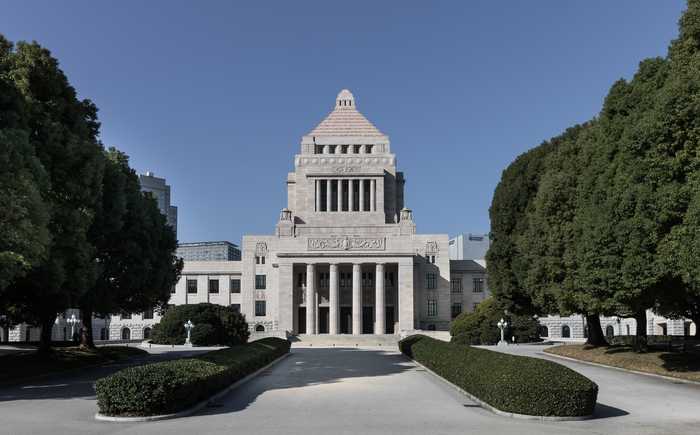
Japan building own CIA spy agency sounds like the plot of a thriller. But on September 28, 2026, it became stated government policy. Prime Minister Sanae Takaichi convened a 17-member panel of academics, journalists, business leaders and government officials at her Tokyo office and pledged to publish a National Intelligence Strategy — the blueprint for what her government openly describes as a CIA-like foreign intelligence agency, aimed for launch by March 2028. It was the second blow in a transformation that began on July 31, when Tokyo stood up the National Intelligence Bureau: the first centralized intelligence body Japan has had since 1945.
Why this matters
Every so often a government announces a reform so freighted with history that the announcement itself is the story. This is one of those. For eighty years, Japan — the world's fourth-largest economy, host to the largest concentration of American military power outside the United States, and the state with arguably the most to lose from a Taiwan crisis — has run its intelligence like an afterthought: fragmented across ministries, legally timid, and structurally incapable of telling its own prime minister a complete story about the threats around it. The United States, by treaty and by habit, filled the gap, handing Tokyo finished foreign intelligence as part of the alliance bargain.
That bargain is now changing shape. A Japan that runs its own foreign human-intelligence operations — recruiting agents, running officers abroad, collecting secrets rather than merely receiving them — is a Japan with its own independent picture of Chinese military movements, North Korean missile programs and Russian hybrid operations. For Washington, that is a stronger ally and, inevitably, a more demanding one: better intelligence buys a louder voice in alliance decisions, from Taiwan contingencies to technology controls. For Beijing and Moscow, it is a new adversary service to penetrate, deceive and evade. And for the Japanese public, it is the most intimate test yet of a question the postwar settlement never fully answered: can a democracy that renounced war run a real spy agency without becoming what it fears?
The numbers sketch the ambition. The National Intelligence Bureau opened with roughly 700 people — about the size of a single CIA division, dwarfed by an American intelligence community of tens of thousands. The gap between 700 coordinators and a true foreign service is precisely the distance the March 2028 target is meant to close. Whether it closes on schedule will tell us whether this is a genuine strategic pivot or the most elaborate rebranding in Japanese bureaucratic history.
Eighty years of deliberate blindness
To understand why this matters, you have to start in the rubble of 1945. The victorious Allies dismantled Japan's wartime intelligence networks root and branch, and the postwar democratic settlement deliberately kept the new Japanese state on a short leash. Surveillance powers that had been used to crush dissent were treated as contaminated by association; the preference was for a state that knew less, not more. When foreign intelligence was needed, the United States agreed to supply it under the security arrangement — a patchwork of small agencies scattered through the Japanese bureaucracy handled domestic matters, and that was that.
The arrangement calcified. It was not until the mid-1980s that Japan created anything resembling a central coordinator, the Cabinet Intelligence and Research Office (CIRO) — and even that body, as every serious history of the subject notes, lacked real authority to compel Japan's siloed ministries to share what they knew. The National Police Agency, the Foreign Ministry and the Defense Ministry each collected in their own lanes and guarded their product like family heirlooms. Japan did not even possess a proper system for classifying state secrets until 2013, when the Act on the Protection of Specially Designated Secrets took effect amid fierce public protest. Foreign intelligence professionals had a nickname for the result: a "spy's paradise" — a major economy where, as one current analysis puts it, a foreign intelligence officer can cultivate commercial sources and build procurement networks without committing a crime, provided the material was never formally designated secret.
The politics of the issue have been frozen for almost as long. A counter-espionage bill with harsh criminal penalties died in the Diet in 1983 and was never revived. Prime ministers, in the memorable phrase of Nihon University professor Ken Kotani reported by TV Asahi/ANN, historically left intelligence to the "sushi chef" — to be sliced and served by subordinates, never touched by the top. James D.J. Brown of Temple University's Japan campus has described the core dysfunction plainly: agencies that do not share intelligence cannot produce intelligence worth acting on. The July and September moves are, in effect, Japan's first serious attempt to prove both men wrong.
What the National Intelligence Bureau and the National Intelligence Council actually are
The legal groundwork was laid in May 2026, when the Diet passed the National Intelligence Council Establishment Act. On July 24 the cabinet agreed to launch the new bureau on July 31, and on that day the National Intelligence Bureau opened its doors, replacing and upgrading the old CIRO with an initial workforce of around 700. Its first director-general is Kazuya Hara, the last director of CIRO; his deputy is Hiroyuki Matsuo, previously deputy head of mission at Japan's embassy in South Korea.
Two features distinguish the NIB from everything that came before it. First, ministries are now under a statutory duty to share intelligence with the bureau — the compulsion power CIRO never had. Second, the bureau serves as the secretariat of a newly formed National Intelligence Council chaired by Takaichi herself, alongside her top ministers, putting intelligence at the center of political decision-making rather than in the bureaucratic basement. Chief Cabinet Secretary Minoru Kihara called the launch "the first step in Japan's intelligence reforms," and the council's inaugural meeting approved its operating framework, including measures to strengthen classified-information protection.
Nuance matters here, because the coverage has occasionally blurred it. CIRO existed since the mid-1980s, so the NIB is not literally Japan's first intelligence body since the war — it is the first with statutory power to compel sharing and to coordinate foreign intelligence across the government. The government has set December 2026 as the target for full operation. Everything after that — the strategy, the laws, the foreign agency — is scaffolding still to be built.
The September 28 panel and the March 2028 target
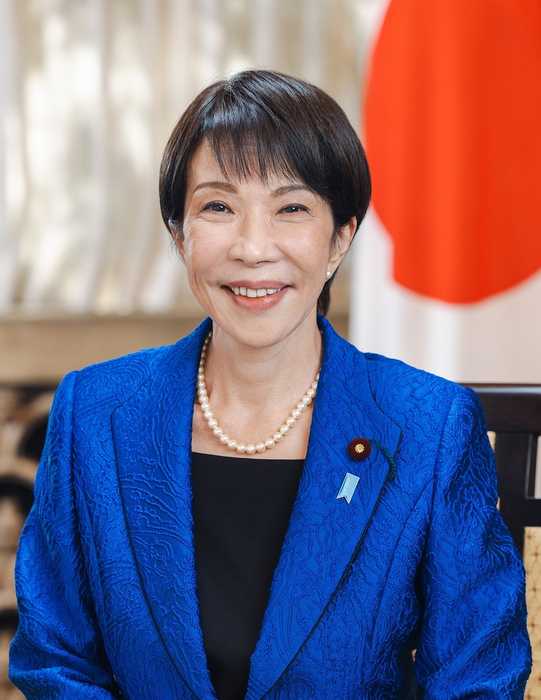
The September 28 meeting was stage two. Seventeen experts from academia, the media, business and government sat down in a closed-door session at the prime minister's office; reporters were admitted only for Takaichi's closing remarks. What she said was blunt. Warning of "cyberattacks, illicit leakage of advanced technologies involving foreign intelligence operatives" and the "spread of disinformation," she told the panel that "strengthening Japan's intelligence capabilities is an urgent priority." Her threat picture was explicit: "In the region surrounding Japan, China and North Korea are strengthening their military capabilities, while we are also seeing closer cooperation between China and Russia, as well as between Russia and North Korea."
“Strengthening Japan's intelligence capabilities is an urgent priority.”
Prime Minister Sanae Takaichi, September 28, 2026
The deliverables she promised are threefold. First, a published National Intelligence Strategy setting the government's medium- and long-term direction — the first document of its kind in Japanese history. (Reports differ on timing, with some saying within the fiscal year and others pointing to January 2027; treat any date as provisional.) Second, anti-espionage legislation: the LDP's proposals under discussion include mandatory foreign-agent registration, criminal penalties for spying, and stronger defenses against technology theft, disinformation and foreign interference — studied against the American, British, French, Australian and Canadian models. Third, and most strikingly, an independent CIA-like external intelligence agency targeted for March 2028, the end of fiscal 2027.
That third goal has the most detailed paper trail. An October 2025 coalition agreement between the ruling LDP and the Japan Innovation Party committed to establishing an independent foreign agency by the end of fiscal 2027. An LDP intelligence-strategy panel followed with an August 2026 proposal sketching full-scale human-intelligence operations across diplomatic, security and economic issues — the kind of work Japan's existing overseas unit, the Foreign Ministry's counter-terrorism intelligence cell created in 2015, was never authorized to do. Defense analysts report the LDP favors modeling the new body on Britain's Secret Intelligence Service and Australia's ASIS, operating as a standalone agency overseen by the foreign minister, with authority for covert HUMINT that Japan has lacked under postwar constitutional and political constraints.
Attribution discipline is essential here: March 2028 is the government's stated aim, reported across multiple outlets — it is not enacted law, and no agency yet exists. But the direction of travel is no longer deniable. Japan is legislating, staffing and strategizing toward a foreign spy service, and saying so in public.
The GRU network that broke the dam
Reforms need detonators, and this one had a spectacular one. A New York Times investigation published July 13, 2026 documented that Russia's GRU military intelligence had run a weapons-component procurement network out of a Tokyo office building since February 2024 — seventeen months of quiet operation in the capital of a G7 state, exposed only by foreign journalism. The timing, landing barely two weeks before the NIB's launch, could hardly have been more politically useful to the reformers.
The case illuminated the legal vacuum with unusual clarity. Japan has no domestic anti-espionage law, which means a foreign intelligence officer operating in Tokyo can legally cultivate commercial sources, build supply-chain relationships and coordinate the procurement of weapons-enabling components without committing a crime — as long as the information is not material the government has formally designated secret under the 2014 secrets law. The old siloed architecture was poorly positioned to assess the network in any coordinated way, and the new bureau, for all its compulsory-sharing powers, can for now only map threats the law cannot yet punish. Until an anti-espionage statute passes, as one analysis of the reform put it, the NIB is an intelligence coordinator for threats Japan legally cannot stop. That sentence is the entire reform argument in miniature — and the reason the anti-spy legislation, not the bureau itself, is the true test of the Takaichi program.

The allies lending Tokyo a hand
Japan is not building this alone, and its friends have noticed. Western allies — the United States, Australia and Germany's BND foreign intelligence service — are advising the buildup, according to reporting on the reform. Professor Kotani has noted that the NIB's establishment was welcomed by Japan's allies, which is diplomatic understatement for something closer to relief: for years, allied services have limited what they share with Tokyo precisely because of the silos and the missing legal protections.
There is a pattern here worth naming. The 2013 secrets law was widely understood at the time as the price of admission to deeper intelligence sharing with Washington. An anti-espionage law would be the second installment — the credential that lets Japan sit closer to the inner circle of allied intelligence exchange, even without formal Five Eyes membership. Every briefing Tokyo gives its partners about the NIB is also an audition. The allies' advice is genuine, and it is also self-interested: a Japan that can protect secrets is a Japan you can tell secrets to.
Who wins and who loses
The winners are easy to name. Japan's defense and security establishment gains the institutional heft it has sought for decades. Alliance managers in Washington gain a partner that can contribute finished intelligence rather than merely consuming it — a shift with real operational value in a Taiwan contingency, where Japanese sensors and human sources would sit closer to the action than anyone else's. Japanese technology firms, long exposed to state-backed theft of advanced research, stand to gain legal protections that do not currently exist; the prime minister's explicit mention of "illicit leakage of advanced technologies involving foreign intelligence operatives" was aimed squarely at boardrooms as much as at spies.
The losers are equally clear. Foreign intelligence services that have treated Tokyo as permissive terrain — Russian, Chinese and North Korean networks first among them — face a closing window. The GRU procurement network is unlikely to be the last exposure; it may simply be the first conducted under a government structurally capable of connecting the dots. Privacy advocates and civil-liberties lawyers lose the comfort of the old settlement, in which the state's self-restraint was guaranteed by its incompetence. And small and mid-sized Japanese firms could find themselves caught in the compliance machinery of technology-transfer controls and foreign-agent registration — the unglamorous administrative price of every serious counter-espionage regime, from Washington's FARA to Canberra's foreign-influence register.
The deepest analysis, though, is about leverage. Intelligence is the one domain where Japan has been a pure consumer in its most important alliance. A Tokyo that produces its own assessments of Chinese intentions — rather than reading American ones — will argue differently in alliance councils, hedge differently on technology controls, and calculate risk differently in a crisis. The CIA comparison is imperfect, but it captures the real shift: from client to peer, or at least to junior partner with its own sources.
The critics' case
The opposition case deserves a full hearing, because it is not frivolous. Chinese Foreign Ministry spokesperson Mao Ning said in January 2026 that the intelligence buildup reflected a dangerous "remilitarization" trend undermining regional peace; Chinese state commentators have warned of a blurred line between wartime and peacetime and what one called a "quasi-wartime regime." However self-serving Beijing's framing, it registers a real regional anxiety: Japan's neighbors remember what a Japanese intelligence state looked like the last time one existed, and no organizational chart can fully answer that memory.
The domestic critics are more specific. Opposition lawmaker Mizuho Fukushima of the Social Democratic Party has argued that not having an agency like the NIB was itself a choice — "Japan's commitment to being a peaceful nation that renounces war, and the result of lessons learned from its own history" — and warned the bureau points toward a surveillance state. Tetsufumi Hirai of the Japan Lawyers Association for Freedom has said citizens' freedoms will be severely restricted. The Japan Times has criticized the government for brushing past fears of overreach and the historical shadow of the prewar Special Higher Police. A Jiji opinion poll taken after the legislation passed found 19 percent of respondents opposed, with around 40 percent indifferent — hardly a groundswell, but hardly a mandate either. Notably, even some members of Takaichi's own expert panel have called for public consultation and privacy safeguards, a sign that the democratic-legitimacy question will shadow every subsequent step.
The honest assessment is that both sides are describing real risks. A state that cannot see cannot defend itself; a state that sees everything can oppress. Japan's wager is that legal architecture — warrants, oversight, published strategy — can thread a needle that history suggests is very narrow. The critics' wager is that it cannot. Neither side has proof yet; the proof will be in the first scandal, the first prosecution, the first leak.
What happens next: three scenarios
Scenario one is full speed: the strategy is published on schedule, the anti-espionage law passes the Diet, the foreign agency stands up by March 2028, and Japan enters the 2030s with a complete intelligence toolkit — coordinator, strategy, criminal law and foreign service. In this world, Tokyo becomes a net contributor to allied intelligence on China and North Korea, and the "spy's paradise" era is remembered as a strange interlude.
Scenario two is the slow grind, and Japanese legislative history gives it weight. Security bills in Japan have a habit of dying in committee rooms — the 1983 counter-espionage bill is the precedent that haunts this one. Privacy fights, coalition friction with the Japan Innovation Party, or a single overreach scandal could stall the anti-spy law, leaving the NIB as a well-staffed coordinator presiding over threats it still cannot punish. The March 2028 target slips; the agency arrives eventually, smaller and later.
Scenario three is the scandal test, and it may arrive regardless of the legislative timetable. The first foreign-agent prosecution, the first exposed penetration of the new bureau, the first leak of the published strategy's classified annex — any of these would become the stress test that defines the institution's legitimacy for a generation. Intelligence agencies are rarely judged by their founding statutes. They are judged by their first crisis.
What to watch, concretely: whether the NIB hits its December 2026 full-operation target; when the National Intelligence Strategy actually appears and how much of it is published versus classified; whether the anti-espionage bill reaches the Diet floor; and whether the expert panel's autumn deliberations produce an organizational blueprint for the foreign agency or another round of beautifully worded delay. The story of Japan building its own CIA is no longer a question of whether. It is a question of how fast, how far, and at what cost to the postwar settlement it is dismantling.
Sources and reporting notes
- Cybernistas: Japan creates its first true national intelligence agency — September 28 panel, CIA-like aim
- tut0ugh: Japan launches intelligence panel as Takaichi advances national security reforms — 17-member panel, March 2028 target
- NewsNation Online (sourcing The Japan Times): Japan launches intelligence panel to strengthen national security capabilities
- Tech Times: Japan launches National Intelligence Bureau after GRU ran 17-month Tokyo missile-parts network
- StratNews Global: Japan launches National Intelligence Bureau in major security overhaul
- Asian Military Review: Plans emerge for Japanese MI6-style agency by fiscal 2027
- Focus News: Japan launches intelligence overhaul to bolster security, ally cooperation — NIB first phase
- Wikipedia: National Intelligence Bureau (Japan) — establishment timeline and structure
Reporting note: The March 2028 target and the CIA-like foreign agency are the Japanese government's stated aims as reported by multiple outlets — not enacted law. "First centralized intelligence body since WWII" carries the nuance that the Cabinet Intelligence and Research Office existed from the mid-1980s but lacked statutory authority; the NIB is the first with power to compel intelligence-sharing and coordinate foreign intelligence. Quoted remarks by Prime Minister Takaichi, Chief Cabinet Secretary Minoru Kihara, Prof. Ken Kotani and James D.J. Brown are drawn from the cited reporting, including TV Asahi/ANN's September 29, 2026 coverage. Scenario, beneficiary and risk analysis is Signal Post News analysis.
Signal Post News will update this report as the National Intelligence Strategy is published and the foreign-agency legislation moves through the Diet.
Back to all stories